

TL;DR:
- Infection control in podiatry involves strict hygiene and sterilization practices to prevent serious foot and ankle infections. High-risk patients, such as diabetics, require enhanced protocols due to slower healing and higher infection rates. Consistent staff training and validation of sterilization processes are essential to maintaining safety and reducing complications.
Infection control in podiatry is the consistent application of rigorous hygiene, sterilization, and clinical protocols to prevent infections during foot and ankle care. The importance of infection control in podiatry becomes clear when you examine the numbers: surgical site infections occur in 4.1% of foot and ankle procedures overall, with diabetic patients reaching 7.4% superficial and 8.7% deep infection rates. These figures represent real patients facing prolonged recovery, additional surgery, and serious complications. Regulatory bodies including OSHA and the CDC have established binding standards for podiatry settings precisely because the consequences of lapses are severe, especially for high-risk populations such as diabetics and elderly patients.
What is the importance of infection control in podiatry?
Infection control in podiatry directly determines patient safety outcomes. Without structured prevention protocols, foot and ankle procedures carry a measurable risk of surgical site infections (SSIs), wound breakdown, and systemic complications. The clinical term for this discipline is “infection prevention and control” (IPAC), and it encompasses everything from hand hygiene to instrument sterilization to preoperative patient preparation.
The economic consequences are equally serious. SSIs can increase initial hospitalization costs by up to 300% compared to uninfected cases. That figure reflects extended stays, additional procedures, and antibiotic therapy costs that fall on both the healthcare system and the patient. Effective IPAC programs prevent these costs before they occur.
Podiatrists treat the feet and ankles, structures that are anatomically distant from the heart and carry a naturally reduced blood supply compared to more proximal body parts. This makes wound healing slower and infection risk higher, particularly after surgery. Understanding this anatomy is the starting point for every infection prevention decision you make in the clinic.
What are the main infection risks and sources in podiatric practice?
The primary infection risks in podiatry come from four sources: contaminated instruments, patient skin flora, the clinical environment, and patient-specific vulnerabilities. Each source requires a distinct control strategy.
Key infection risk categories in podiatry:
- Surgical site infections: SSIs are the most serious complication in foot and ankle surgery. A 2026 analysis of 9,591 cases confirmed that diabetic patients face dramatically higher infection rates than the general surgical population, making glycemic control a preoperative priority.
- Instrument contamination: Reusable instruments that are not properly cleaned, disinfected, and sterilized carry pathogens between patients. Nail files, curettes, and surgical tools all fall into this category.
- Skin flora: The foot harbors a dense microbial population. Staphylococcus aureus, including methicillin-resistant strains (MRSA), colonizes the skin and can enter surgical wounds during procedures.
- Environmental surfaces: Pedicure basins, treatment tables, and floor surfaces accumulate pathogens between patient visits. Inadequate surface disinfection creates a reservoir for transmission.
- Patient-specific risks: Patients with diabetes, peripheral vascular disease, or immunosuppression have impaired healing and reduced ability to fight infection. These patients require heightened screening and tailored protocols.
- Respiratory and contact transmission: Clinicians working in close proximity to patients must manage respiratory secretions and contact precautions, particularly for patients with known resistant organisms.
Hand hygiene is the single most effective intervention across all of these risk categories. The CDC’s five moments of hand hygiene apply directly to podiatry: before patient contact, before an aseptic procedure, after body fluid exposure, after patient contact, and after contact with the patient’s environment.
Pro Tip: Post a laminated hand hygiene reminder at every sink and at the entry to each treatment room. Compliance rates rise significantly when the prompt is visible at the point of care.
Which infection control measures are essential in podiatry clinics?
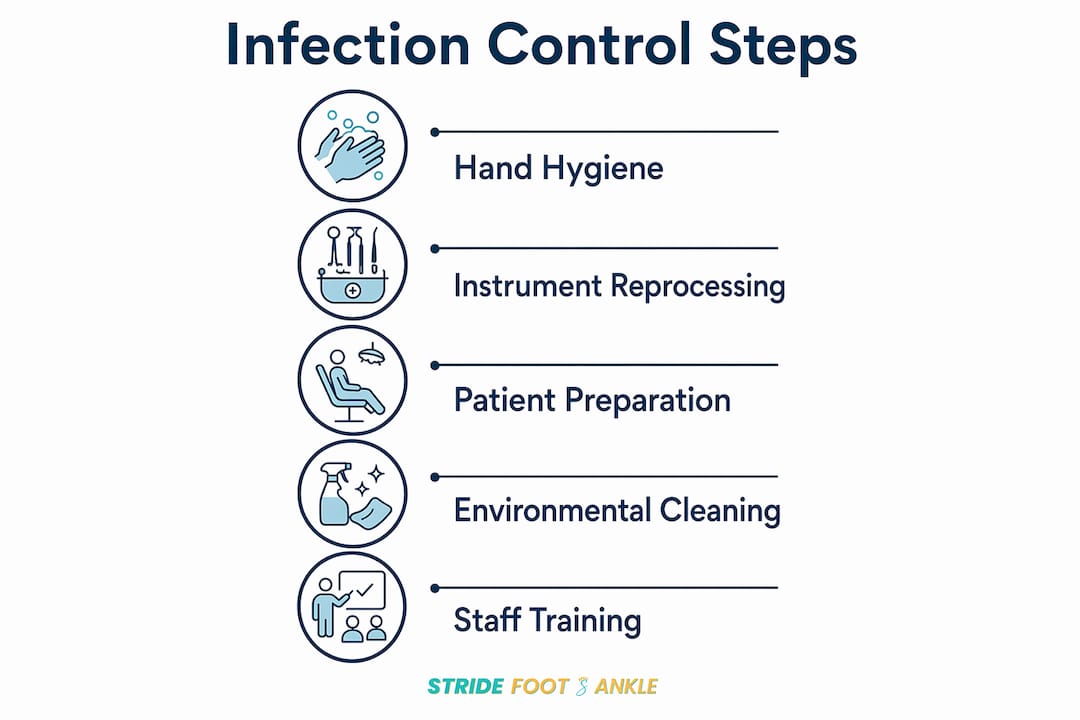
The core infection control measures in podiatry clinics fall into six categories: hand hygiene, instrument reprocessing, environmental cleaning, personal protective equipment (PPE), patient screening, and preoperative preparation. Each category has specific requirements under OSHA and CDC guidelines.
Instrument reprocessing: the non-negotiable standard
Instrument reprocessing follows a defined sequence: cleaning, inspection, packaging, sterilization, and storage. Skipping or shortcutting any step creates infection risk. Autoclave sterilization must meet specific time, temperature, and steam quality parameters, and every cycle must be documented. This documentation is not optional. The OSHA Bloodborne Pathogens Standard mandates a written Exposure Control Plan and sterilization records for any clinic with blood exposure risk.
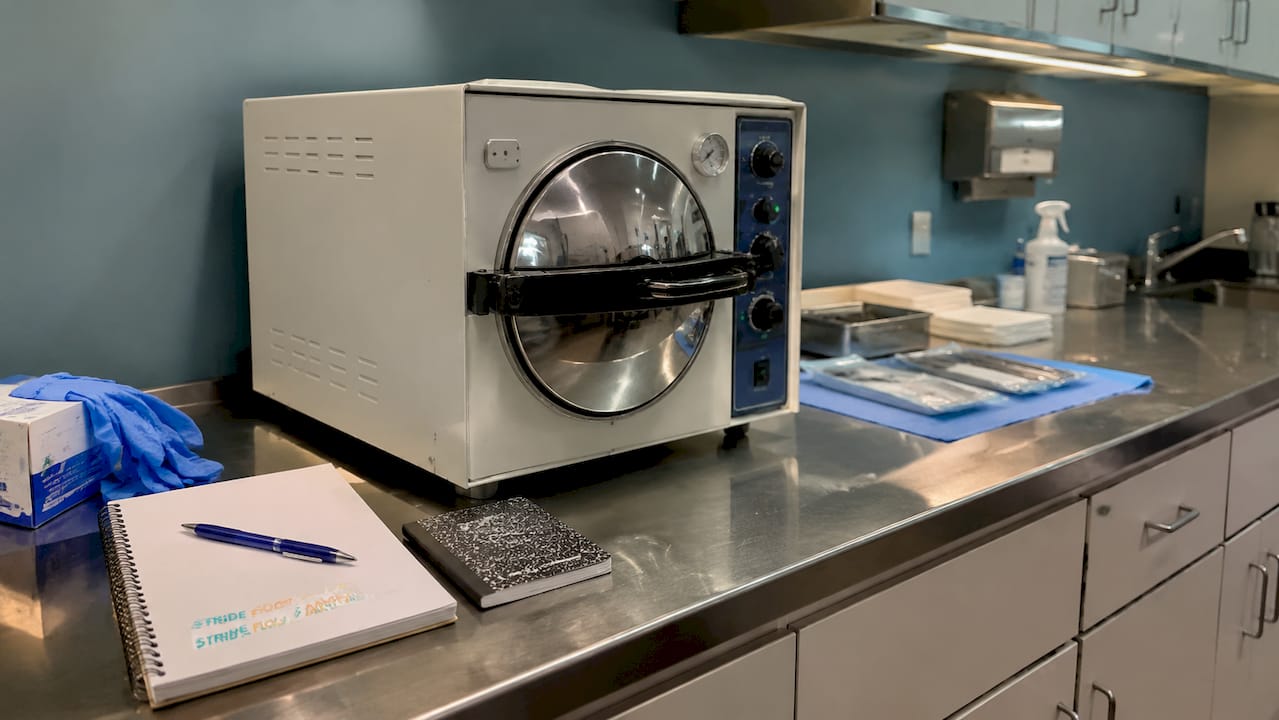
Weekly biological indicator testing using Geobacillus stearothermophilus spores confirms that your autoclave is actually achieving sterilization, not just completing a cycle. Physical parameters alone (temperature gauges, cycle timers) do not prove sterilization efficacy. Spore testing does.
Pro Tip: Log every autoclave cycle in a dedicated sterilization record book. Include the date, cycle type, temperature, duration, operator initials, and biological indicator result. This record protects your clinic during regulatory audits and adverse event reviews.
Essential infection control measures: a structured overview
The table below summarizes the core measures, their purpose, and the relevant standard or guideline.
| Control Measure | Purpose | Standard or Guideline |
|---|---|---|
| Hand hygiene (5 moments) | Interrupt pathogen transmission between patients and surfaces | CDC Hand Hygiene Guidelines |
| Autoclave sterilization with documentation | Eliminate all microbial life from reusable instruments | OSHA Bloodborne Pathogens Standard |
| Weekly biological indicator testing | Validate actual sterilization efficacy beyond physical parameters | OSHA and manufacturer protocols |
| Surface and foot basin disinfection | Remove environmental pathogen reservoirs between patients | CDC Environmental Infection Control |
| PPE: gloves, masks, eye protection | Protect clinicians and patients from cross-contamination | OSHA Bloodborne Pathogens Standard |
| Preoperative chlorhexidine wash and glycemic control | Reduce skin bacterial load and optimize patient healing capacity | Evidence-based SSI prevention protocols |
Preoperative patient preparation
Evidence-based SSI prevention protocols include glycemic control, smoking cessation, preoperative chlorhexidine gluconate wash, appropriate antibiotic timing, and scheduled postoperative wound checks. These steps address patient-side risk factors that no amount of instrument sterilization can compensate for. A patient who arrives for surgery with uncontrolled blood glucose presents a fundamentally different infection risk than a well-prepared patient.
Nasal decolonization with mupirocin ointment targets S. aureus carriage before elective procedures. This step is standard in hospital settings and applies equally to outpatient podiatric surgery. The combined approach of decolonization, antibiotic timing, and surgical technique adjustments forms the foundation of modern SSI prevention.
- Screen patients for diabetes, vascular disease, and immunosuppression at the first visit.
- Order preoperative HbA1c for diabetic patients and delay elective surgery if glycemic control is poor.
- Instruct patients to shower with chlorhexidine gluconate the night before and morning of surgery.
- Administer prophylactic antibiotics within 60 minutes of incision, per current guidelines.
- Limit tourniquet time to under two hours, with reperfusion intervals every 15–20 minutes, to reduce tissue trauma and infection risk.
- Conduct a wound check at 48–72 hours postoperatively and document findings.
How do infection control challenges in podiatry differ from other healthcare settings?
Podiatry clinics face a distinct set of infection control challenges that hospital settings do not. The gap is not just about resources. It reflects structural, demographic, and procedural differences that require purpose-built solutions.
Infection prevention in podiatry requires rigorous sterilization standards equivalent to hospital settings, despite smaller teams, limited physical space, and complex instrument reprocessing demands. A solo practitioner or two-person clinic cannot rely on a central sterile processing department. Every staff member must be trained and competent in the full reprocessing sequence.
Unique challenges in podiatric infection control:
- High-risk patient concentration: Podiatry clinics see a disproportionate share of diabetic and elderly patients. Diabetic patients face a significantly higher risk of wound complications, making the margin for error in infection control extremely narrow.
- Instrument complexity: Podiatric instruments include fine-tipped curettes, nail splitters, and rongeurs with multiple joints and crevices. These designs trap organic material and resist cleaning if not processed immediately after use.
- MRSA and resistant organisms: Foot skin is a common colonization site for MRSA. Patients with prior hospitalizations or chronic wounds may carry resistant organisms without symptoms. Screening protocols must account for this.
- Pedicure basin contamination: Foot soaking basins, if not disinfected between patients with an EPA-registered disinfectant, become a direct transmission route for Pseudomonas aeruginosa and fungal pathogens.
- Training gaps: Smaller clinics often lack formal infection control training programs. Staff may follow habits rather than evidence-based protocols, creating inconsistency.
- Regulatory oversight variation: Hospital infection control programs face regular accreditation reviews. Outpatient podiatry clinics may go years without a formal audit, reducing the external pressure that drives compliance.
“Given the vulnerability of diabetic and immunocompromised patients, infection control is a critical professional commitment with little tolerance for error. The consequences of a single lapse in a high-risk patient can include limb-threatening infection, hospitalization, and amputation.”
The cultural dimension of infection control is often underestimated. Protocols written in a policy manual do nothing if staff do not follow them consistently. Building a clinic culture where every team member treats infection prevention as a shared professional responsibility is as important as the protocols themselves.
Elderly patients present a separate set of challenges. Aging skin is thinner, less vascular, and slower to heal. Elderly patients also take more medications, including immunosuppressants and anticoagulants, that alter infection risk and wound healing. Podiatrists who care for seniors must apply heightened vigilance at every stage of care.
What practical steps can podiatrists take to implement effective infection control programs?
An effective infection control program in a podiatry clinic requires written policies, trained staff, validated equipment, and a workflow that makes compliance the path of least resistance. The following steps build a program that holds up under both daily practice and regulatory scrutiny.
Write and maintain a formal infection control policy. The policy must cover hand hygiene, instrument reprocessing, PPE use, environmental cleaning, and patient screening. Review and update it annually or after any adverse event. OSHA requires a written Exposure Control Plan; your infection control policy should incorporate it directly.
Train every staff member at hire and annually thereafter. Training must be documented with dates, content covered, and staff signatures. Competency checks, not just attendance, confirm that staff can perform reprocessing steps correctly. A staff member who attended a training session but cannot demonstrate proper autoclave loading has not been adequately trained.
Validate your sterilization equipment weekly. Run biological indicator tests every week and log the results. If a spore test fails, quarantine all instruments processed since the last passing test, investigate the cause, and reprocess before returning to clinical use. This protocol protects patients and documents your due diligence.
Adjust scheduling to allow proper instrument processing time. Booking patients back-to-back without accounting for instrument reprocessing time forces shortcuts. Build processing time into your schedule as a non-negotiable block, not an afterthought.
Educate patients on foot hygiene before and after procedures. Patients who understand foot care hygiene are more likely to follow wound care instructions, report early signs of infection, and maintain the skin integrity that reduces their baseline risk. Give written instructions at every visit.
Optimize preoperative risk factors proactively. For elective procedures, schedule a preoperative visit specifically to address modifiable risks: glycemic control, smoking status, nutritional status, and medication review. Delaying surgery by four to six weeks to achieve better glycemic control is a clinical decision that prevents far more serious delays caused by postoperative infection.
Pro Tip: Assign one staff member as your clinic’s infection control lead. This person owns the policy, tracks biological indicator results, and coordinates annual training. Distributed responsibility often means no one takes ownership. A named lead changes that.
Properly performed clinical procedures with standard infection control keep complication rates below 2%. That benchmark is achievable in any podiatry clinic with consistent protocols and trained staff. The gap between a 2% complication rate and a 7% rate is not luck. It is the result of deliberate, documented infection prevention practice.
Post-surgical wound care is the final link in the infection prevention chain. Clear written instructions, scheduled follow-up calls, and a defined escalation pathway for early infection signs close the loop that begins in the preoperative assessment.
Key takeaways
Rigorous infection control in podiatry, from preoperative patient preparation through validated sterilization and staff training, is the most direct way to reduce surgical site infections and protect high-risk patients.
| Point | Details |
|---|---|
| SSI rates are measurably higher in diabetic patients | Diabetic foot surgery carries 7.4% superficial and 8.7% deep infection rates, requiring targeted preoperative protocols. |
| Autoclave validation requires weekly spore testing | Biological indicator tests using Geobacillus stearothermophilus confirm actual sterilization beyond physical cycle parameters. |
| OSHA mandates written sterilization records | A documented Exposure Control Plan and cycle logs are legally required in any clinic with blood exposure risk. |
| Preoperative preparation reduces SSI risk | Chlorhexidine wash, glycemic control, and timed antibiotic prophylaxis form the evidence-based foundation of SSI prevention. |
| Clinic culture determines protocol compliance | Written policies only work when staff treat infection prevention as a shared professional commitment, not a checklist. |
Infection control is a professional standard, not a compliance exercise
After years of working in and around podiatric care, the pattern I see most often is not ignorance of infection control standards. It is the gradual drift that happens when protocols are treated as paperwork rather than clinical practice. A clinic passes its initial setup review, files the policy binder, and then slowly returns to habit-based routines. The autoclave log gets skipped on busy days. The biological indicator test gets pushed to “next week.” Staff turnover brings in new people who were never formally trained.
What I have found is that the clinics with the best infection outcomes are not necessarily the largest or best-funded. They are the ones where the lead clinician treats infection control as a personal professional standard. When the podiatrist models hand hygiene, documents sterilization cycles, and asks about biological indicator results in team meetings, the rest of the clinic follows. Culture flows from the top of the clinical hierarchy.
The regulatory framework, OSHA, CDC, and state health department requirements, exists because voluntary compliance alone is not sufficient. But compliance and genuine safety are not the same thing. A clinic can pass an audit and still have gaps that put patients at risk. The goal is not to satisfy an inspector. The goal is to ensure that every patient who walks through your door leaves without an infection they did not have when they arrived.
Diabetic patients deserve particular attention here. A superficial wound infection in a diabetic patient is not a minor complication. It is a potential pathway to osteomyelitis, hospitalization, and amputation. The clinical credentials that matter most to these patients are not the ones on your wall. They are the ones demonstrated in your daily practice.
Ongoing training and regular audit are not burdens. They are the mechanisms that keep your clinical standards from drifting. Schedule a formal infection control review every six months. Bring in an external reviewer annually. Treat every near-miss as a learning event, not a secret to manage. That commitment is what separates a good podiatry practice from a great one.
— Ramil
Infection control at Stridefootankle: a standard of care, not an afterthought
Stridefootankle, led by Dr. Nahad Wassel in Las Vegas, applies the infection prevention standards described throughout this article to every patient encounter, from routine foot care to complex surgical procedures.

Every instrument is processed through validated sterilization cycles. Every high-risk patient receives a preoperative assessment that addresses modifiable infection risk factors. The clinic’s general foot and ankle care services are built on the same evidence-based protocols that guide hospital-level infection prevention, adapted for the outpatient setting. If you are a patient or a referring clinician looking for a Las Vegas practice that treats infection control as a clinical priority, Stridefootankle is equipped to meet that standard. Schedule a consultation to learn more about how Dr. Wassel’s team approaches patient safety at every stage of care.
FAQ
What is the overall surgical site infection rate in foot and ankle surgery?
The overall SSI rate in foot and ankle procedures is 4.1% superficial and 1.4% deep infections. Diabetic patients face significantly higher rates of 7.4% superficial and 8.7% deep infections.
How often should podiatry clinics run biological indicator tests on autoclaves?
Podiatry clinics should run biological indicator tests using Geobacillus stearothermophilus spores weekly. Weekly testing validates actual sterilization efficacy beyond physical cycle parameters and is required under OSHA standards.
What does OSHA require from podiatry clinics for infection control?
OSHA requires a written Exposure Control Plan and documented sterilization records for any clinic with blood exposure risk. These records must be maintained and available for regulatory review.
How does diabetes affect infection risk in podiatric procedures?
Diabetes impairs circulation and immune response, raising surgical site infection rates to more than double the general population average. Preoperative glycemic control and targeted screening are required to manage this elevated risk.
What is the most effective single infection control measure in podiatry?
Hand hygiene at the CDC’s five defined moments is the most effective single measure for interrupting pathogen transmission in any clinical setting, including podiatry.
Recommended
- Clinical Credentials in Podiatry: What Patients Must Know – Stride Foot & Ankle – Dr. Nahad Wassel
- The Role of Imaging in Podiatry: A Clinical Guide – Stride Foot & Ankle – Dr. Nahad Wassel
- Why foot care matters: prevent pain, injuries, and complications – Stride Foot & Ankle – Dr. Nahad Wassel
- Why See a Podiatrist? Your Complete Foot Health Guide – Stride Foot & Ankle – Dr. Nahad Wassel
Recent Comments