

TL;DR:
- Warts are benign skin growths caused by HPV infection that often resolve naturally within two years. They spread through skin contact, contaminated surfaces, minor trauma, and auto-inoculation, especially in vulnerable groups like children and immunocompromised individuals. Effective treatments include salicylic acid, cryotherapy, and immunotherapy, with prevention focusing on hygiene and skin protection.
Warts are benign skin growths caused by infection with the human papillomavirus (HPV), a common virus that triggers abnormal cell growth in the outer skin layer. They appear on hands, feet, faces, and around nails. Most are harmless and resolve on their own, with 50% clearing within one year and 67% within two years. Still, they can spread, cause discomfort, and persist for years without treatment.
What causes warts and how do they spread?
Warts are caused by HPV infecting the top layer of skin, where the virus stimulates excess keratin production, creating the characteristic thickened, rough growth. Over 100 strains of HPV exist, but only specific strains cause the common skin warts most people encounter. The virus does not need a deep wound to enter. A small cut, scrape, or area of softened skin is enough.
Transmission happens in two main ways: direct skin-to-skin contact with an infected person, or touching a contaminated surface such as a pool deck, locker room floor, or shared towel. Communal areas are particularly high-risk because HPV survives on surfaces for short periods. Shaking hands with someone who has a wart on their finger, or walking barefoot where an infected person walked, can be enough to pick up the virus.
Not everyone who contacts HPV develops a wart. Your immune system plays a major role. Children and teenagers are more susceptible because their immune defenses against HPV are still developing. People who are immunocompromised, including those on immunosuppressive medications or living with conditions like HIV, face a significantly higher risk of developing multiple or persistent warts.
- Minor skin trauma creates entry points for HPV. Biting nails, shaving, or frequent hand washing that causes cracking all increase risk.
- Shared personal items including razors, nail files, and socks can carry the virus from one person to another.
- Wet environments like public showers and swimming pools soften skin, making it easier for HPV to penetrate.
- Auto-inoculation is possible. Touching one of your own warts and then touching another area of skin can spread the virus to a new site.
Pro Tip: If you have a wart, avoid shaving directly over it. The razor can nick the wart, spread viral particles across the skin surface, and create new lesions in adjacent areas.
What are the different types of warts?
Accurate identification of the type of skin growth you have guides the right treatment choice and sets realistic expectations. Wart type determines location, appearance, and the level of discomfort involved. The six main types each have distinct characteristics.
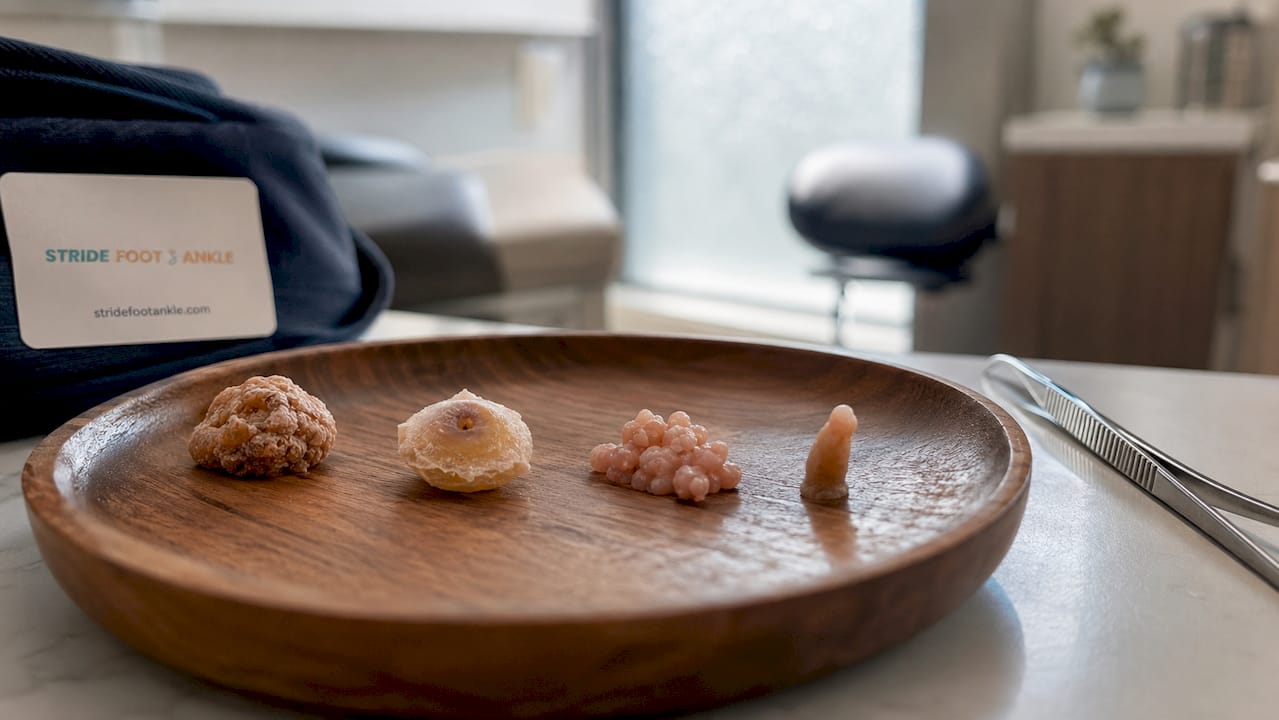
Common warts (verruca vulgaris) are the type most people picture. They appear as rough, raised bumps with a cauliflower-like surface, most often on the fingers, hands, and knees. Look closely and you may see small black dots inside. Those are clotted blood vessels, not dirt, and their presence confirms you are looking at a wart rather than a corn or callus. For comparison, corns and calluses lack those black dots and form from friction rather than viral infection.
Plantar warts grow on the soles of the feet and behave differently from other types because body weight pushes them inward. They often feel like a pebble under the foot and can cause significant pain when walking or standing. The hard, thick skin that forms over them makes them harder to treat than warts in other locations.
Flat warts (verruca plana) are small, smooth, and flat-topped. They tend to appear in clusters on the face, forehead, or legs. Because they are subtle, people often mistake them for pimples or minor skin irritation. They are more common in children and teenagers.
Filiform warts are slender, thread-like growths that project outward from the skin. They typically appear around the mouth, nose, or eyelids. Their location on the face makes self-treatment risky, and professional evaluation is strongly recommended.
Periungual warts grow around or under the fingernails and toenails. They can cause the nail to lift, crack, or become painful. Because they affect nail structure, they are among the more difficult types to treat and carry a higher risk of recurrence.
Genital warts are a distinct category caused by specific HPV strains (primarily HPV 6 and HPV 11). They require medical evaluation and are not addressed with the same over-the-counter methods used for skin warts.
| Wart type | Location | Appearance | Pain level |
|---|---|---|---|
| Common | Hands, fingers, knees | Rough, raised, black dots visible | Low |
| Plantar | Soles of feet | Hard, thick, grows inward | Moderate to high |
| Flat | Face, legs, forehead | Small, smooth, flat-topped clusters | Low |
| Filiform | Face, around nose and mouth | Slender, thread-like projections | Low to moderate |
| Periungual | Around or under nails | Rough, can lift or crack nails | Moderate |
| Genital | Genital area | Soft, flesh-colored clusters | Variable |
What are the most effective wart treatment options?
The most effective wart treatment options include topical salicylic acid, cryotherapy with liquid nitrogen, cantharidin, curettage, laser therapy, and immunotherapy. The right choice depends on wart type, location, patient age, and pain tolerance. No single treatment suits every patient, and realistic expectations matter as much as the treatment itself.
Topical salicylic acid
Salicylic acid is the standard first-line treatment for common and plantar warts. Products like Compound W and Dr. Scholl’s Freeze Away use concentrations up to 26% to break down the thickened skin layer over time. Apply it daily after soaking the wart in warm water for five minutes. Consistency is the key variable. Most people see results over six to twelve weeks, not days.
One step most people skip is skin preparation. Removing hyperkeratotic skin before each application significantly improves how well the acid penetrates. Use a disposable emery board or pumice stone to file down the dead tissue, then apply the treatment. Use a fresh file each time and discard it immediately. Reusing files spreads the virus to other skin areas.
Pro Tip: After filing and applying salicylic acid, cover the wart with medical tape overnight. Occlusion increases the acid’s effectiveness and may also stimulate a local immune response that helps clear the virus.
Cryotherapy with liquid nitrogen
Cryotherapy is the most common in-office wart removal method. A clinician applies liquid nitrogen directly to the wart, freezing the tissue and destroying it. The treatment is typically repeated every 2–3 weeks. After six sessions without improvement, clinicians recommend switching to a different approach. Cryotherapy works well for common and plantar warts but is not appropriate for very young children due to pain.
Other medical treatment options
- Cantharidin is a blistering agent applied in-office that causes the skin under the wart to blister and lift. It is painless during application, though blistering occurs within 24 hours. It works well for children and for warts resistant to salicylic acid.
- Curettage involves physically scraping or cutting out the wart under local anesthesia. It is fast and effective but carries a small risk of scarring. Clinicians often combine it with electrosurgery to destroy remaining tissue.
- Laser therapy uses a pulsed dye laser to destroy the blood vessels feeding the wart. It is typically reserved for warts that have not responded to other treatments and is more expensive than first-line options.
- Immunotherapy stimulates the body’s immune system to fight the HPV infection directly. Options include topical imiquimod, intralesional injections of Candida antigen, or oral cimetidine. This approach is particularly useful for patients with multiple or recurrent warts.
- Duct tape occlusion is a low-cost home method with mixed evidence. Some patients report clearance after covering the wart with duct tape for six days, removing it, filing the wart, and repeating the cycle for up to two months.
Avoid aggressive home remedies that cause pain, bleeding, or skin damage. High-strength acids applied to the face or genital area can cause permanent scarring and secondary infection without improving clearance rates. If a wart bleeds, shows signs of infection like pus, or is located on the face or genitals, see a clinician before attempting any self-treatment. For patients who are immunocompromised or diabetic, professional wound care guidance is especially relevant before treating any skin lesion at home.
How can you prevent warts from spreading?
Preventing warts means reducing HPV exposure and protecting your skin from the minor trauma that lets the virus enter. Avoiding direct contact with warts and keeping feet dry are the two most effective prevention strategies. Everything else builds on those two principles.
- Wash your hands thoroughly after touching any wart, whether your own or someone else’s. HPV transfers easily on fingertips.
- Never share towels, razors, nail files, socks, or shoes. These items can carry viral particles from one person to another even when no visible wart is present.
- Wear shower shoes or flip-flops in communal areas including gym locker rooms, public pool decks, and hotel showers. Transmission in these environments is common because the warm, wet surfaces are ideal for viral survival.
- Keep your skin intact. Moisturize regularly to prevent cracking, especially on the feet. Dry, cracked skin around the heels or between the toes creates easy entry points for HPV. A foot ulcer prevention routine that keeps skin healthy also reduces wart risk.
- Cover existing warts during swimming or contact sports. Waterproof bandages reduce the chance of spreading the virus to others or to other areas of your own skin.
- Do not pick at or scratch warts. Picking breaks the skin, releases viral particles, and dramatically increases the chance of spreading the growth to new sites.
- Keep feet dry between wearings. Moisture softens skin and makes it more susceptible to HPV. Rotate footwear to allow shoes to dry fully, and use moisture-wicking socks.
Children are particularly vulnerable, and pediatric foot health guidance recommends teaching kids early to wear footwear in communal areas and to avoid touching other people’s skin growths.
Key takeaways
Warts are a viral skin condition caused by HPV that respond best to consistent, patient-specific treatment combined with strict hygiene practices to prevent spread.
| Point | Details |
|---|---|
| HPV causes all warts | Direct skin contact and contaminated surfaces transmit HPV; minor skin trauma creates entry points. |
| Most resolve without treatment | 50% of warts clear within one year and 67% within two years, especially in children. |
| Salicylic acid is first-line | Apply daily after soaking and filing; consistent use over weeks produces the best results. |
| Recurrence is common | Removal does not eradicate HPV from surrounding tissue; monitor for new growths after treatment. |
| Prevention centers on hygiene | Avoid sharing personal items, wear footwear in communal areas, and keep skin intact and dry. |
Why patience and professional care matter more than quick fixes
I have seen patients come in after weeks of aggressive home treatment, frustrated that the wart is still there and now the surrounding skin is raw and irritated. That frustration is understandable. Warts feel like a simple problem that should have a simple solution. The reality is more complicated.
The virus that causes warts does not disappear the moment the visible growth is gone. HPV persists in surrounding tissue, which is why recurrence rates remain significant even after successful removal. Patients who expect a single treatment to solve the problem permanently are often the ones who end up with scarring from over-treatment or repeated frustration from regrowth.
What actually works is a combination of consistent, gentle treatment and realistic expectations. Filing the wart before each salicylic acid application, covering it overnight, and repeating the process for weeks is tedious. Most people give up too soon. The patients who clear their warts are the ones who treat it like a long-term commitment rather than a quick fix.
The other mistake I see regularly is self-treating warts in the wrong locations. Filiform warts on the face, periungual warts under the nail, and anything in the genital area require professional evaluation. The skin in those areas is too sensitive for over-the-counter acids, and the risk of permanent damage from improper treatment is real. If you are immunocompromised, older, or a smoker, your recurrence risk is elevated, and a clinician can help you build a monitoring plan rather than just treating each outbreak reactively.
Prevention is the part of this conversation that gets the least attention. Most people focus entirely on treatment and ignore the behaviors that keep reinfecting them. Wearing footwear in the gym shower, not sharing a nail file, keeping cracked skin moisturized. These habits are not glamorous, but they are the reason some people never deal with warts while others cycle through them repeatedly.
— Ramil
Get expert foot care for persistent or painful warts
Plantar warts on the feet deserve specialized attention, especially when they cause pain with every step. Stridefootankle, led by Dr. Nahad Wassel in Las Vegas, provides expert evaluation and personalized treatment for foot and ankle conditions including plantar warts. Whether you need conservative care or a more targeted procedure, the team at Stridefootankle builds a plan around your specific situation.

If home treatment has not worked after several weeks, or if your wart is painful, bleeding, or located in a sensitive area, do not wait. Visit the general foot and ankle care page to learn more about available services, or explore the dedicated wart treatment for feet page for condition-specific guidance. You can also browse over-the-counter wart care products at Mybestpharmacy.net as a starting point for mild cases.
FAQ
Do warts go away on their own without treatment?
Yes. 50% of warts resolve within one year and 67% within two years without any intervention. Children tend to clear warts faster than adults.
What is the fastest way to remove a wart?
Cryotherapy with liquid nitrogen is the fastest clinically proven removal method, typically requiring sessions every 2–3 weeks. Topical salicylic acid is effective but works more gradually over weeks to months.
Can warts come back after treatment?
Yes. Warts recur because HPV persists in the surrounding skin tissue even after the visible growth is removed. Recurrence risk is higher in immunocompromised individuals, older adults, and smokers.
When should I see a doctor about a wart?
See a clinician if the wart is on your face or genitals, shows signs of infection such as pus or bleeding, has not responded to six weeks of home treatment, or if you are immunocompromised or diabetic. Medical consultation is strongly recommended in these situations.
Are plantar warts different from other warts?
Yes. Plantar warts grow on the soles of the feet and are pushed inward by body weight, making them painful to walk on. The thick skin that forms over them also makes them harder to treat than warts in other locations.
Recommended
- Treating Warts on the Feet – Stride Foot & Ankle – Dr. Nahad Wassel
- Corns and Calluses: Causes, Treatment, and Prevention – Stride Foot & Ankle – Dr. Nahad Wassel
- Ingrowing Toenails: Causes, Relief, and Treatment – Stride Foot & Ankle – Dr. Nahad Wassel
- Fungal Toenails: Treatments, Remedies, and Prevention – Stride Foot & Ankle – Dr. Nahad Wassel
Recent Comments