

TL;DR:
- Arthritis includes over 100 joint diseases that cause pain, stiffness, and inflammation affecting people of all ages.
- Early diagnosis and understanding the specific type of arthritis ensure effective treatment, preventing long-term joint damage.
Arthritis is defined as a group of over 100 joint diseases involving pain, inflammation, and stiffness that can affect people of all ages. It is the leading cause of disability in the U.S., limiting mobility and reducing quality of life for millions. Symptoms range from mild morning stiffness to chronic, debilitating joint pain. Understanding what type of joint condition you are dealing with is the first step toward getting the right care and staying active.
What are the main types of arthritis and how do they differ?
The two most common forms are osteoarthritis and rheumatoid arthritis, but the full spectrum of joint disease includes over 100 distinct conditions. Each type has a different cause, affects different joints, and requires a different treatment approach. Knowing which type you have is not just useful. It is the foundation of effective care.
Osteoarthritis
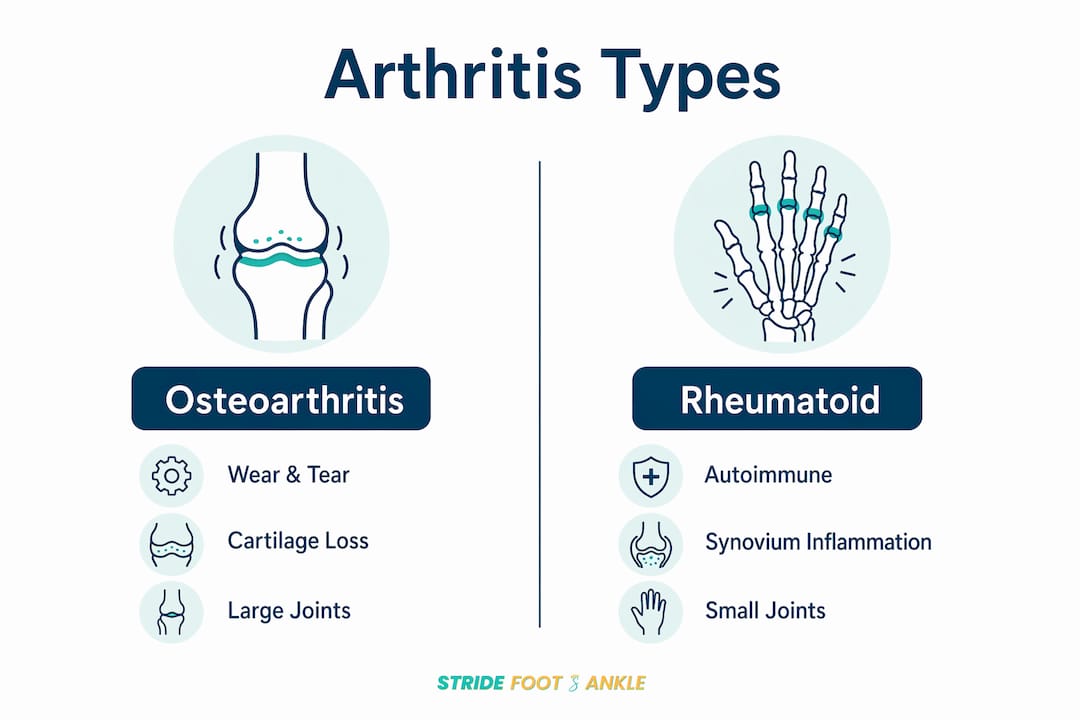
Osteoarthritis is the most common form of joint disease. It was once described simply as “wear and tear,” but the Arthritis Foundation now recognizes it as a disease of the whole joint, including bone, cartilage, ligaments, and the surrounding tissue, with a significant inflammatory component. That distinction matters because it changes how doctors treat it. Purely mechanical solutions are no longer the full answer. Osteoarthritis generally appears after age 40 and most often affects weight-bearing joints like the hips, knees, and spine.

Rheumatoid arthritis
Rheumatoid arthritis (RA) is an autoimmune condition. The immune system mistakenly attacks the joint lining, called the synovium, causing systemic inflammation and progressive joint damage. RA typically affects people aged 30 to 60 and often targets the hands, wrists, and feet symmetrically. Left untreated, it causes permanent structural damage. Early treatment is not optional with RA. It is urgent.
Juvenile idiopathic arthritis
Juvenile idiopathic arthritis (JIA) is the most common form of arthritis in children. Diagnosis requires persistent joint inflammation lasting at least 6 weeks in children under 16. That threshold exists to rule out temporary infections or injuries. JIA can affect growth and development, making early specialist involvement critical.
Other types at a glance
| Type | Primary Cause | Joints Commonly Affected |
|---|---|---|
| Osteoarthritis | Joint degeneration and inflammation | Hips, knees, spine, hands |
| Rheumatoid arthritis | Autoimmune attack on joint lining | Hands, wrists, feet (symmetrical) |
| Psoriatic arthritis | Autoimmune, linked to psoriasis | Fingers, toes, spine |
| Gout | Uric acid crystal buildup | Big toe, ankles, knees |
| Juvenile idiopathic arthritis | Autoimmune, onset in childhood | Knees, wrists, fingers |
Psoriatic arthritis and gout are less common but still significant. Gout, for example, causes sudden and severe pain episodes, often in the big toe, driven by uric acid crystals depositing in the joint. Each of these conditions responds to different medications and lifestyle strategies, which is why accurate diagnosis drives everything else.
What are the key symptoms and signs that indicate arthritis?
Arthritis symptoms center on joint pain, stiffness, swelling, warmth, and reduced range of motion. These symptoms vary by type, stage, and individual. Recognizing the pattern early gives you the best chance of preventing long-term damage.
Common symptoms to watch for
- Joint pain that worsens with activity or after periods of rest
- Morning stiffness lasting more than 30 minutes, which is a classic sign of inflammatory arthritis like RA
- Swelling and warmth around one or more joints, indicating active inflammation
- Redness over the affected joint, particularly common during gout flares
- Reduced range of motion, making everyday tasks like gripping, climbing stairs, or walking difficult
- Fatigue and general malaise, especially in autoimmune forms like RA and psoriatic arthritis
How symptoms change over time
Arthritis symptoms rarely stay constant. Inflammatory types like RA follow a pattern of flares and remissions. During a flare, pain and swelling intensify. During remission, symptoms ease but joint damage may still progress silently. Osteoarthritis tends to worsen gradually, with symptoms tied closely to activity levels and weather changes. Many patients report increased stiffness in cold or damp conditions.
The impact on daily life is real and measurable. Opening a jar, walking to the mailbox, or sitting through a workday can become genuinely difficult. Recognizing that these limitations are symptoms, not just aging, prompts people to seek care sooner.
When to see a doctor
Seek medical evaluation if joint pain or swelling persists for more than a few weeks, if morning stiffness lasts longer than 30 minutes, or if you notice joint deformity. Early intervention in inflammatory arthritis is critical to prevent permanent joint damage. Waiting for symptoms to become severe before seeking care is one of the most common and costly mistakes patients make.
Pro Tip: Keep a simple symptom journal for two weeks before your first appointment. Note which joints hurt, when pain peaks, and how long morning stiffness lasts. This information helps your doctor distinguish between osteoarthritis and inflammatory types far more quickly.
What treatment and management options are available for arthritis?
Arthritis treatment combines medication, physical therapy, lifestyle changes, and in some cases surgery. No single approach works for every patient. The goal is to reduce pain, protect joint function, and slow disease progression.
Medications used in arthritis care
- NSAIDs (nonsteroidal anti-inflammatory drugs) such as ibuprofen and naproxen reduce both pain and inflammation. They are a first-line option for osteoarthritis and mild inflammatory arthritis.
- Corticosteroids like prednisone provide fast, powerful anti-inflammatory relief. Doctors typically use them short-term or as injections directly into affected joints.
- DMARDs (disease-modifying antirheumatic drugs) such as methotrexate target the underlying immune dysfunction in RA and psoriatic arthritis. They slow or stop joint destruction rather than just masking pain.
- Biologics are a newer class of DMARDs derived from biological sources. Drugs like adalimumab (Humira) and etanercept (Enbrel) block specific immune proteins that drive inflammation in RA and related conditions.
- Topical treatments such as diclofenac gel provide localized relief for osteoarthritis in accessible joints like the hands and knees, with fewer systemic side effects.
Physical therapy and exercise
Physical therapy is one of the most effective non-drug treatments for joint disease. A licensed physical therapist designs a program that strengthens the muscles around affected joints, reducing the load placed directly on cartilage and bone. Regular low-impact exercise improves joint mobility, reduces muscle wasting, and lessens systemic stiffness. Swimming, cycling, and walking are ideal because they build strength without high-impact stress.
Pro Tip: Water-based exercise, also called aquatic therapy, is especially effective for patients with severe knee or hip osteoarthritis. The buoyancy reduces joint load by up to 90 percent compared to land-based activity, allowing full range-of-motion movement without pain spikes.
Lifestyle modifications
Weight management reduces joint stress and systemic inflammation, directly slowing osteoarthritis progression. Every pound of body weight translates to roughly four pounds of force on the knee joint during walking. Losing even a modest amount of weight produces a measurable reduction in pain and improved mobility. Diet also plays a role. Anti-inflammatory foods such as fatty fish, leafy greens, berries, and olive oil support joint health, while processed foods and excess sugar can amplify inflammation.
Surgical options
Surgery becomes relevant when conservative treatments no longer control pain or when joint damage is severe. Joint replacement surgery, most commonly of the hip or knee, reliably restores function in advanced osteoarthritis. Arthroscopic procedures can remove loose cartilage fragments or repair damaged tissue. Joint fusion is used in smaller joints like the ankle or wrist when replacement is not appropriate. Surgeons typically recommend exhausting all non-surgical options first, and a second opinion before any joint surgery is always reasonable. You can explore nonsurgical treatment approaches for foot and ankle conditions as part of that process.
How can lifestyle choices and home care improve arthritis outcomes?
Daily habits have a direct and measurable effect on joint health. The right lifestyle choices reduce pain, slow joint damage, and preserve independence over the long term.
Exercise and movement
Patients often fear that exercise will worsen their symptoms. Clinical guidance is clear: consistent low-impact activity preserves joint health and reduces stiffness. Complete rest weakens the muscles that support joints, making pain worse over time. Aim for at least 150 minutes of moderate activity per week, broken into manageable sessions.
Diet and weight management
- Omega-3 fatty acids found in salmon, sardines, and walnuts reduce inflammatory markers in the body
- Vitamin D and calcium support bone density, which is especially important when joint disease limits weight-bearing activity
- Limiting alcohol and purine-rich foods such as red meat and shellfish directly reduces gout flare frequency
- Staying well hydrated supports synovial fluid production, which lubricates joints during movement
Reducing body weight through diet and exercise directly impacts joint degradation rates in osteoarthritis beyond the mechanical benefit of reduced load. Inflammation driven by excess body fat accelerates cartilage breakdown independently of physical stress on the joint.
Joint protection and assistive tools
- Use ergonomic tools with padded, wide grips to reduce hand and wrist strain
- Wear supportive footwear with cushioned soles to absorb impact and reduce foot and ankle stress
- Use a cane or walking aid on the side opposite the affected hip or knee to redistribute load
- Modify your home with grab bars, raised toilet seats, and non-slip mats to reduce fall risk
Managing flare-ups at home
Dynamic symptom management means adjusting activity levels during flares rather than stopping movement entirely. Apply ice packs for 15–20 minutes to acutely inflamed joints to reduce swelling. Use heat, such as a warm towel or heating pad, on stiff joints before activity to improve flexibility. Pacing activities throughout the day, rather than pushing through pain and then crashing, reduces cumulative joint stress. Mental health support, including counseling or arthritis support groups, helps patients manage the emotional weight of chronic pain. You can find additional self-care strategies for pain relief that complement medical treatment.
How is arthritis diagnosed and what specialists should patients consult?
Arthritis diagnosis combines symptom history, physical examination, laboratory tests, and imaging. The process is designed to identify not just that arthritis is present, but which type, because treatment differs significantly between forms.
The diagnostic process
Diagnosis involves symptom review, physical exam, lab tests, and imaging to differentiate arthritis types and plan treatment. A doctor will assess which joints are affected, the pattern of involvement, and how symptoms behave over time. Blood tests such as rheumatoid factor (RF), anti-CCP antibodies, and C-reactive protein (CRP) help identify inflammatory and autoimmune forms. Uric acid levels confirm gout. X-rays show joint space narrowing and bone changes in osteoarthritis. MRI and ultrasound detect soft tissue damage and early inflammation before it appears on X-rays.
Diagnostic tools and what they reveal
| Test | What It Detects | Most Useful For |
|---|---|---|
| Rheumatoid factor (RF) | Autoimmune antibodies | Rheumatoid arthritis |
| Anti-CCP antibodies | Early RA marker | Early rheumatoid arthritis |
| Uric acid blood test | Elevated uric acid | Gout |
| X-ray | Bone changes, joint space loss | Osteoarthritis, advanced RA |
| MRI / Ultrasound | Soft tissue, early inflammation | Early inflammatory arthritis |
| CRP / ESR | Systemic inflammation levels | All inflammatory types |
Which specialist should you see?
Accurate diagnosis by specialists like rheumatologists is critical to distinguish autoimmune from degenerative arthritis. Rheumatologists specialize in autoimmune and inflammatory joint diseases. Orthopedic surgeons focus on structural joint damage and surgical repair. Podiatrists like Dr. Nahad Wassel at Stridefootankle address arthritis specifically affecting the foot and ankle, where joint changes are common but often overlooked. Waiting for visible damage on imaging before seeking specialist care delays treatment and worsens long-term outcomes. Arthritis in the foot, for example, can be painless in early stages, making specialist evaluation even more important.
Key takeaways
Arthritis is a group of over 100 joint conditions requiring accurate type-specific diagnosis, because the right treatment for osteoarthritis differs fundamentally from the treatment for rheumatoid arthritis or gout.
| Point | Details |
|---|---|
| Early diagnosis matters | Inflammatory arthritis causes permanent joint damage before symptoms become severe or visible on X-rays. |
| Type determines treatment | Osteoarthritis, rheumatoid arthritis, and gout each require different medications and management strategies. |
| Exercise is non-negotiable | Low-impact activity preserves joint function and reduces stiffness; rest alone worsens outcomes. |
| Weight and diet affect joints | Reducing body weight and eating anti-inflammatory foods directly slow joint degradation. |
| Specialist care improves outcomes | Rheumatologists, orthopedists, and podiatrists each address different aspects of joint disease. |
What I have learned from watching patients manage arthritis over time
Most people arrive at a specialist’s office after months of dismissing their symptoms as normal aging. That delay is understandable. Joint stiffness after 50 feels like an expected part of life. The problem is that for inflammatory types like rheumatoid arthritis, those months of waiting allow damage to accumulate in ways that cannot be reversed.
The single biggest shift I have seen in arthritis care is the recognition that osteoarthritis is not purely mechanical. It has a real inflammatory component. That means patients who were told to “just lose weight and take ibuprofen” were getting incomplete advice. Integrated care, combining medication, physical therapy, dietary change, and specialist follow-up, produces better outcomes than any single approach alone.
Patients who do best are not the ones who push through pain heroically. They are the ones who learn to pace themselves, stay consistently active at a sustainable level, and advocate for early specialist referral rather than waiting for a crisis. Realistic goal-setting matters too. The goal is not to eliminate all pain. The goal is to preserve function, maintain independence, and keep moving.
One thing I tell every patient: arthritis in the feet and ankles is frequently underdiagnosed because it can be silent in early stages. If you have been diagnosed with arthritis elsewhere in your body, get your feet evaluated. Foot joint changes affect your gait, which then stresses your knees, hips, and spine. Catching it early changes the trajectory of your whole musculoskeletal health.
— Ramil
How Stridefootankle supports patients with arthritis in the foot and ankle
Joint disease in the feet and ankles deserves the same focused attention as arthritis in the knees or hips. At Stridefootankle, Dr. Nahad Wassel provides specialized evaluation and personalized care plans for patients experiencing foot and ankle arthritis in Las Vegas. Whether your symptoms are mild stiffness or significant mobility loss, early intervention makes a measurable difference.

Dr. Wassel’s approach prioritizes conservative treatment first, including custom orthotics, targeted physical therapy, anti-inflammatory injections, and footwear guidance, before considering surgical options. Patients benefit from a care plan built around their specific arthritis type and activity goals. Explore foot and ankle care services at Stridefootankle to learn more, or request an appointment online to take the first step toward better joint health.
FAQ
What is arthritis, exactly?
Arthritis is a term covering over 100 conditions that cause joint pain, inflammation, and stiffness. It is the leading cause of disability in the U.S. and affects people of all ages, not just older adults.
What is the difference between osteoarthritis and rheumatoid arthritis?
Osteoarthritis is a degenerative joint disease involving whole-joint inflammation and cartilage breakdown, typically appearing after age 40. Rheumatoid arthritis is an autoimmune condition that attacks the joint lining, causing systemic inflammation and structural damage, most often in adults aged 30 to 60.
Can arthritis affect the feet and ankles?
Yes. Arthritis commonly affects the foot and ankle joints, and in early stages it can be painless, making it easy to miss. A podiatrist can identify subtle joint changes before they progress to significant mobility loss.
What are the best treatments for arthritis pain relief?
Treatment depends on the type of arthritis. NSAIDs and corticosteroids reduce inflammation and pain. DMARDs and biologics slow disease progression in autoimmune forms. Physical therapy, weight management, and low-impact exercise are effective across all types. Explore comprehensive pain management strategies for non-pharmaceutical options that complement medical care.
When should I see a specialist for joint pain?
See a specialist if joint pain or swelling persists for more than a few weeks, if morning stiffness lasts longer than 30 minutes, or if you notice any joint deformity. Early specialist evaluation by a rheumatologist, orthopedist, or podiatrist prevents the permanent joint damage that delayed diagnosis allows.
Recommended
- Tendonitis: Symptoms, Causes, and Treatment Options – Stride Foot & Ankle – Dr. Nahad Wassel
- Arthritis Can Be Painless in your Feet – Stride Foot & Ankle – Dr. Nahad Wassel
- Flat Foot: Causes, Symptoms, and Treatment Options – Stride Foot & Ankle – Dr. Nahad Wassel
- Foot Pain: Causes, Symptoms, and Treatment Options – Stride Foot & Ankle – Dr. Nahad Wassel
Recent Comments