

TL;DR:
- Joint pain can result from mechanical, inflammatory, or infectious causes, with symptoms persisting beyond six weeks indicating a need for evaluation. Effective management focuses on movement, weight control, conservative therapies, and early intervention to prevent joint deterioration. Addressing foot mechanics and seeking timely medical advice can significantly improve long-term joint health and mobility.
Joint pain is defined as discomfort, aching, or inflammation in one or more of the body’s joints, and it affects millions of Americans across every age group. The condition ranges from a mild, temporary ache after exercise to severe, chronic joint pain that limits daily movement. Symptoms lasting beyond 6 weeks, accompanied by persistent swelling or fever above 38.5°C, require formal medical evaluation. Understanding what drives your pain is the first step toward choosing the right treatment and getting back to moving freely.
What are the most common causes of joint pain?
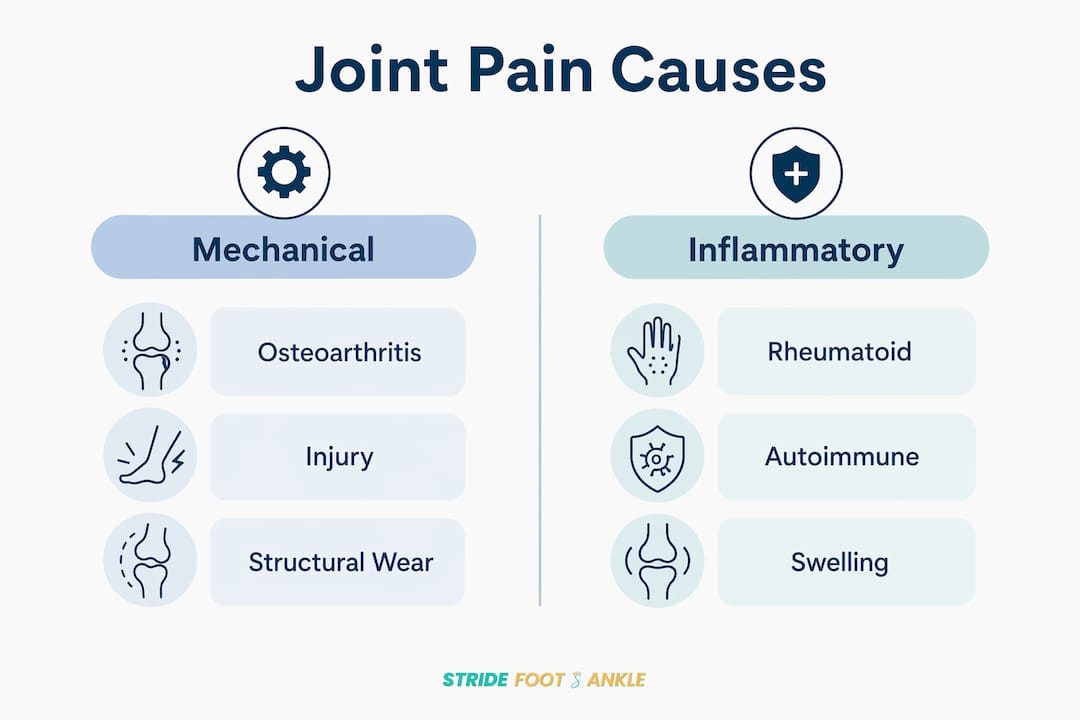
Joint pain causes fall into three broad categories: mechanical, inflammatory, and infectious. Identifying which category applies to you directly shapes the treatment path. Mechanical causes respond to physical therapy and activity modification. Inflammatory causes often require medication to control immune activity. Infectious causes need prompt diagnosis to prevent permanent joint damage.
Mechanical causes
Mechanical joint pain results from physical wear, injury, or structural breakdown. Osteoarthritis is the most common form, occurring when cartilage between bones gradually wears away. Stiffness in osteoarthritis typically resolves within 30 minutes of moving around. Stiffness lasting longer than 30 minutes points toward inflammatory arthritis rather than simple wear-and-tear. Sprains, strains, bursitis, and tendinitis also fall into this category, each involving damage to the soft tissue structures surrounding a joint.
Inflammatory causes
Inflammatory arthritis pain is driven by an overactive immune system attacking joint tissue. Rheumatoid arthritis is the most recognized example, producing symmetric joint swelling, prolonged morning stiffness, and fatigue. Psoriatic arthritis, lupus, and gout also generate significant joint inflammation. Gout, caused by uric acid crystal deposits, typically strikes the big toe joint first and produces sudden, intense pain. These conditions require rheumatologic evaluation and often long-term medication management.
Infectious and systemic causes
Septic arthritis, caused by bacterial infection inside a joint, is a medical emergency. It produces rapid swelling, warmth, and fever and requires immediate treatment to prevent permanent damage. Lyme disease, viral infections like parvovirus, and systemic conditions such as fibromyalgia can also produce widespread joint discomfort without direct joint destruction.
Here is a quick comparison of the key distinguishing features:
- Osteoarthritis: Stiffness resolves within 30 minutes, affects weight-bearing joints, worsens with activity
- Rheumatoid arthritis: Morning stiffness exceeds 45 minutes, symmetric joint involvement, systemic fatigue
- Gout: Sudden severe pain, often in the big toe, triggered by diet or dehydration
- Septic arthritis: Rapid onset, fever, single hot swollen joint, requires emergency care
- Injury-related pain: Linked to a specific event, localized, improves with rest and rehabilitation
How do symptoms and duration guide diagnosis?
Symptom duration and pattern are the two most reliable early indicators of whether joint pain is routine or serious. Acute pain lasting less than 6 weeks after a clear injury is usually mechanical and self-limiting. Pain that persists beyond 6 weeks without a clear cause requires evaluation for inflammatory or systemic conditions.
Pain lasting 6 weeks or longer without injury is a recognized diagnostic marker aligned with American College of Rheumatology criteria for inflammatory arthritis. This threshold exists because transient soreness from overuse typically resolves within days to weeks. When it does not, the body is signaling something more complex.
Symptom thresholds that require medical attention
The table below outlines the key clinical thresholds that separate routine soreness from conditions requiring professional evaluation.
| Symptom | Threshold | What It May Indicate |
|---|---|---|
| Pain duration | Beyond 6 weeks | Inflammatory or systemic arthritis |
| Joint swelling | Persisting over 72 hours | Inflammatory process or infection |
| Fever with joint pain | Above 38.5°C | Septic arthritis or systemic disease |
| Morning stiffness | Exceeding 45 minutes | Rheumatoid or inflammatory arthritis |
| Joint locking or giving way | Any occurrence | Mechanical instability or cartilage damage |
Diagnostic red flags also include joint locking, a sensation of the joint “giving way,” and visible deformity. These signs suggest structural damage that imaging and specialist evaluation can confirm. Stridefootankle recommends that patients in Las Vegas experiencing any combination of these symptoms seek an in-person assessment rather than waiting to see if symptoms resolve on their own.
Pro Tip: Keep a simple pain journal for two weeks before your appointment. Note the time of day pain peaks, which joints are affected, and how long morning stiffness lasts. This information cuts diagnostic time significantly and helps your provider identify patterns you might otherwise miss.
What are effective treatment options for relieving joint pain?
Effective joint pain treatment options range from over-the-counter medications to emerging biological therapies, and the right choice depends on the underlying cause and pain type. Pain specialists differentiate resting pain from movement pain, with each type responding to different interventions. Resting pain, which is often neuropathic in nature, may respond to antidepressants or anti-seizure medications. Movement pain, which is typically inflammatory, responds better to anti-inflammatory treatments.
Medications: oral and topical options
Nonsteroidal anti-inflammatory drugs, known as NSAIDs, are the most widely used first-line treatment for arthritis pain and joint inflammation relief. Oral NSAIDs require monitoring for kidney function and blood pressure, particularly with long-term use. Topical NSAIDs like 1% diclofenac gel deliver localized relief directly to the affected joint with fewer systemic side effects. For patients who cannot tolerate oral medications, topical options are a clinically sound alternative.
Corticosteroid injections provide short-term relief for severe flares. Hyaluronic acid injections, used in knee osteoarthritis, aim to restore joint lubrication, though evidence on their long-term benefit remains mixed.
Emerging therapies worth knowing
A 28-day randomized controlled trial found that topical curcumin gel (VAS-101) produced significant pain improvement in 39.3% of knee osteoarthritis patients, compared to 13.3% in the placebo group. That is nearly three times the placebo response, which is a meaningful clinical signal for a topical natural compound. Researchers are also developing injectable smart hydrogels that release medication slowly inside the joint to control pain and protect cartilage over time. These hydrogels are not yet widely available, but they represent the direction joint pain management is heading.
Physical therapy and movement-based care
Movement is the most effective medicine for most forms of joint pain. Complete rest leads to muscle weakness, stiffness, and joint instability, which worsen pain over time. Physical therapy teaches you how to move safely, strengthen the muscles that support affected joints, and reduce mechanical load on damaged cartilage.
Effective movement-based strategies include:
- Low-impact aerobic exercise: Swimming, cycling, and walking reduce pain without stressing joints
- Strength training: Quadriceps strengthening reduces knee pain in osteoarthritis by improving joint stability
- Range-of-motion exercises: Daily stretching prevents stiffness from becoming permanent
- Aquatic therapy: Warm water reduces joint load while allowing full movement, ideal for severe arthritis pain
- Tai chi and yoga: Both have clinical evidence supporting pain reduction and improved balance in arthritis patients
Pro Tip: Start with 10 minutes of low-impact movement per day if pain is severe. Consistency matters more than intensity. Patients who move daily, even briefly, report better pain control than those who exercise hard twice a week and rest the other five days.
Natural remedies and anti-inflammatory diet
Natural remedies for joint pain work best as complements to, not replacements for, clinical treatment. An anti-inflammatory diet built around omega-3 fatty acids (found in salmon, sardines, and walnuts), colorful vegetables, and whole grains reduces systemic inflammation markers. Turmeric, the source of curcumin, has growing clinical support as a topical agent, as the VAS-101 trial demonstrates. Fish oil supplements have modest evidence for reducing morning stiffness in rheumatoid arthritis. Weight loss is the single most impactful natural intervention for knee and hip osteoarthritis. Every pound of body weight removed reduces knee joint load by approximately four pounds during walking.
How can you maintain joint health and prevent worsening pain?
Preventing joint pain from progressing requires consistent daily habits, not occasional interventions. The Arthritis Foundation recommends standard conservative care including weight loss, physical therapy, and exercise before considering advanced treatments like joint denervation or embolization. This sequence matters because conservative care resolves or significantly reduces symptoms in the majority of patients who follow it consistently.
Here is a practical sequence for protecting your joints over time:
- Commit to daily low-impact movement. Even 20 minutes of walking reduces joint stiffness and maintains cartilage health. Avoiding prolonged immobility is one of the most important things you can do for long-term joint function.
- Manage your weight. Excess body weight accelerates cartilage breakdown in weight-bearing joints. A 10-pound weight loss produces measurable pain reduction in knee osteoarthritis within weeks.
- Choose supportive footwear. Shoes with adequate cushioning and arch support reduce the mechanical stress transmitted to ankle, knee, and hip joints. Worn-out footwear is a common and overlooked contributor to chronic joint pain.
- Use braces and orthotics strategically. Knee braces reduce load on damaged compartments. Custom orthotics correct biomechanical imbalances that drive foot and ankle joint pain. A podiatrist can assess whether orthotics are appropriate for your specific gait pattern.
- Pursue conservative foot care before considering surgery. Most foot and ankle joint conditions respond to non-surgical approaches when addressed early. Waiting until pain is severe limits your options and extends recovery time.
- Schedule regular professional assessments. Annual podiatric evaluations catch structural changes before they become symptomatic. Early intervention consistently produces better outcomes than reactive treatment.
Ergonomic adjustments at work and home also matter. Standing desks, anti-fatigue mats, and proper seating posture reduce cumulative joint stress over an eight-hour workday. For Las Vegas patients who spend long hours on hard floors, these modifications can produce noticeable relief within days.
Key takeaways
Effective joint pain management requires identifying the underlying cause, respecting clinical symptom thresholds, and committing to movement-based care before reaching for advanced interventions.
| Point | Details |
|---|---|
| Know your symptom thresholds | Pain beyond 6 weeks, swelling over 72 hours, or fever above 38.5°C requires formal medical evaluation. |
| Cause determines treatment | Mechanical pain responds to physical therapy; inflammatory pain requires medication to control immune activity. |
| Movement beats rest | Daily low-impact exercise reduces stiffness, strengthens supporting muscles, and improves long-term joint stability. |
| Topical therapies are advancing | Topical curcumin gel VAS-101 showed nearly three times the pain relief of placebo in a 2026 clinical trial. |
| Conservative care comes first | Weight loss, physical therapy, and exercise should precede advanced procedures like joint denervation or injections. |
What i have learned from watching patients ignore the 6-week rule
I have spent years reviewing how patients describe their joint pain before they finally seek care, and the pattern is consistent. Most people wait far too long. They assume the ache will pass, they try rest, and then they try more rest. By the time they arrive for an evaluation, what started as manageable discomfort has become a chronic condition with measurable muscle loss and joint instability.
The 6-week threshold is not arbitrary. It reflects how the body actually heals from mechanical injury versus how inflammatory arthritis behaves. Mechanical injuries improve with time and movement. Inflammatory conditions do not. They progress quietly, and the window for the most effective intervention narrows the longer you wait.
What I find most underappreciated is the role of the foot and ankle in whole-body joint health. When foot mechanics are off, the knee, hip, and lower back compensate. That compensation creates secondary joint pain that patients often attribute to aging or overuse, when the real source is a correctable biomechanical problem in the foot. Physical therapy for foot pain addresses this chain reaction directly, and the results often surprise patients who expected to need surgery.
My honest recommendation is this: treat the 6-week mark as a hard deadline, not a suggestion. If your pain has not improved meaningfully by then, get evaluated. Do not wait for it to become severe. The patients who do best are the ones who act early, stay active, and work with a provider who treats the cause rather than just the symptom.
— Ramil
How Stridefootankle can help you move without pain
Foot and ankle joints are among the most commonly affected sites for chronic joint pain, and they are also among the most treatable when addressed by a specialist. Stridefootankle, led by Dr. Nahad Wassel in Las Vegas, offers comprehensive foot and ankle care focused on relieving pain and restoring mobility through both conservative and surgical approaches.
Whether you are managing arthritis pain in your ankle, dealing with post-injury stiffness, or noticing that your foot mechanics are affecting your knees and hips, Dr. Wassel’s team provides personalized evaluations and individualized treatment plans. The practice prioritizes conservative care first, using physical therapy, orthotics, and targeted interventions before recommending surgery. If you are ready to stop managing pain and start addressing its source, scheduling an assessment with Stridefootankle is the right next step.
FAQ
What is joint pain and what causes it?
Joint pain is discomfort, aching, or inflammation in one or more joints, caused by mechanical wear, inflammatory conditions like rheumatoid arthritis, injury, or infection. Osteoarthritis is the most common cause in adults over 50.
When should joint pain be evaluated by a doctor?
Seek evaluation when pain lasts beyond 6 weeks, swelling persists for more than 72 hours, or you develop a fever above 38.5°C alongside joint symptoms. These thresholds indicate a condition that will not resolve without medical intervention.
What helps joint pain most effectively?
Low-impact exercise, physical therapy, and weight management are the most consistently effective strategies for chronic joint pain. Topical NSAIDs like diclofenac gel and emerging options like topical curcumin gel also provide targeted relief with fewer side effects than oral medications.
Are natural remedies effective for joint pain relief?
Natural remedies for joint pain, including anti-inflammatory diets, omega-3 supplementation, and turmeric-based topical gels, can reduce symptoms when used alongside clinical treatment. A 2026 clinical trial found topical curcumin gel produced significant pain improvement in 39.3% of knee osteoarthritis patients.
How does foot health affect joint pain in other parts of the body?
Poor foot mechanics alter the way force travels through the knee, hip, and lower back, creating secondary joint pain in those areas. Correcting foot alignment through orthotics or physical therapy often reduces pain in joints well above the ankle.
Recommended
- Foot Pain: Causes, Symptoms, and Treatment Options – Stride Foot & Ankle – Dr. Nahad Wassel
- Ingrowing Toenails: Causes, Relief, and Treatment – Stride Foot & Ankle – Dr. Nahad Wassel
- Why Do Feet Hurt? Causes, Symptoms, and Relief – Stride Foot & Ankle – Dr. Nahad Wassel
- Foot pain podiatry: Las Vegas diagnosis and treatment guide – Stride Foot & Ankle – Dr. Nahad Wassel
Recent Comments