

TL;DR:
- Ingrown toenails occur when the nail edges grow into the surrounding skin, causing pain and potential infection. Proper trimming, footwear choice, and hygiene are essential in prevention, while mild cases can be managed at home with soaking and careful lifting of the nail edge. Professional care is necessary for recurring cases, infections, or if underlying conditions like diabetes are present.
That sharp, throbbing ache on the side of your toe is one of the most recognizable pains in podiatry. Ingrowing toenails, clinically known as onychocryptosis, happen when the edge of a toenail curves and grows into the surrounding skin, causing pain, swelling, and redness. They affect people of all ages, and without the right care, a mild case can turn into a genuine infection. This guide covers exactly why they happen, what you can do at home today, and when it is time to see a professional.
Table of Contents
- Key Takeaways
- What causes ingrowing toenails
- Preparing for safe home treatment
- Step-by-step home treatment for relief
- When to seek professional care
- Prevention strategies that actually work
- What I’ve seen patients get wrong about ingrown toenails
- Let Stride Foot & Ankle help you find lasting relief
- FAQ
Key Takeaways
| Point | Details |
|---|---|
| Causes go beyond trimming | Tight shoes, nail shape, genetics, and even moisture all contribute to ingrown nail development. |
| Home care works for mild cases | Warm soaks with Epsom salts, gentle lifting, and topical antibiotics resolve early-stage cases safely. |
| Know when to stop self-treating | No improvement after 48 to 72 hours, pus, or fever means you need professional evaluation right away. |
| Diabetics need specialist care | Patients with diabetes should never attempt home treatment due to the risk of rapid infection. |
| Proper trimming prevents recurrence | Cutting nails straight across at moderate length is the single most effective prevention habit. |
What causes ingrowing toenails
Ingrowing toenails develop when the nail edge, most often on the big toe, presses into the soft skin of the nail fold. Several factors push that edge in the wrong direction. Understanding them is the first step toward both treating the current problem and stopping it from coming back.
The most common cause is improper nail trimming. Cutting nails too short or rounding the corners encourages the regrowth to curve into the skin rather than grow forward cleanly. Many people trim the sides too aggressively, thinking a shorter nail is a healthier nail. It is not.
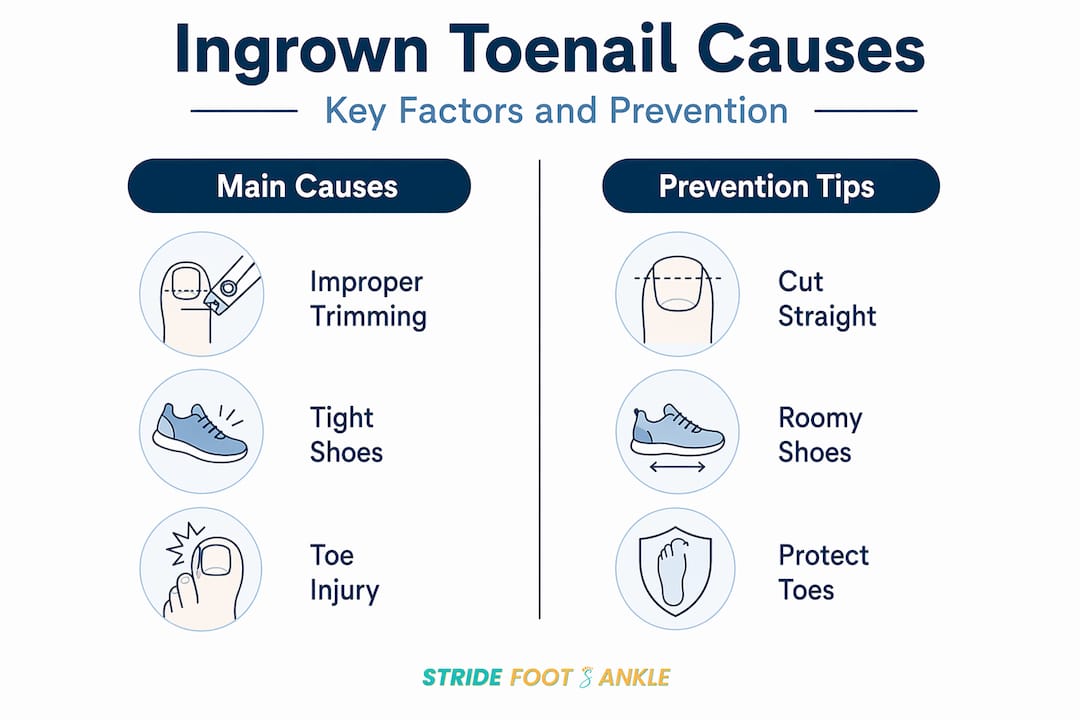
Footwear plays a large role as well. Shoes with a narrow toe box squeeze the toes together and push the nail into the surrounding flesh with every step you take. This is especially common in runners, athletes, and people who spend long hours in dress shoes or work boots. Repetitive pressure is just as damaging as a single bad trim.
Anatomical factors also matter. Some people simply inherit nails that are naturally thicker or more curved. These nail shapes are more prone to digging into the skin regardless of how carefully they trim. Trauma to the toe, such as stubbing it or dropping something heavy on it, can alter how the nail grows afterward.
Other risk factors include:
- Excessive moisture or sweating. Soft, macerated skin around the nail fold is far easier for a nail edge to penetrate.
- Poor foot hygiene. Bacteria thrive in warm, damp environments, raising the risk of secondary infection once the skin breaks.
- Systemic conditions. Diabetes and circulatory disorders do not cause the nail to grow inward, but they dramatically increase how dangerous the problem becomes.
- Fungal nail infections. Onychomycosis thickens and deforms nails, making ingrowth more likely over time.
- Repetitive pressure from sports. Kicking, pivoting, and downhill running all create pressure patterns that push the nail into the skin.
Pro Tip: If you get ingrown toenails repeatedly on the same side, take a close look at how you trim. Most people shave the inner corner without realizing it, and that single habit drives the majority of recurrent cases.
Preparing for safe home treatment
Before you touch anything, take a moment to assess your situation. Home care for ingrown toenails is appropriate for mild, non-infected cases. That means some tenderness and redness at the nail edge, but no pus, no spreading redness up the foot, and no fever.
Stop and see a doctor before starting home treatment if you have diabetes, peripheral artery disease, or any condition that impairs sensation or circulation in your feet. Diabetics should never attempt self-treatment for ingrown or thickened toenails. What seems like a minor issue can escalate to a serious wound or infection within days due to nerve damage and reduced blood flow.
For everyone else, gather these supplies before you begin:
| Supply | Purpose |
|---|---|
| Warm water (not hot) | Softens skin and nail tissue to reduce pain during care |
| Epsom salts or mild liquid soap | Reduces swelling and keeps the area clean during soaking |
| Sterile gauze and cotton wisps | Gently lifts nail edge and protects the skin fold |
| Topical antibiotic ointment | Prevents bacterial infection in the broken or irritated skin |
| Bandages or sterile dressings | Covers and protects the treated area between soaks |
| Nail clippers (straight-edged) | Reserved only for trimming after the nail edge has softened |
Wash your hands thoroughly before and after every step. Work in a clean, well-lit space. And resist the urge to dig aggressively at the nail with scissors or instruments that are not sterile. The term “bathroom surgery” exists for a reason. It describes exactly the kind of improvised cutting that turns a mild case into one requiring a podiatrist’s intervention.
Step-by-step home treatment for relief
These steps follow evidence-based guidance for managing mild ingrown toenail symptoms at home. Follow them consistently and you should see clear improvement within two to three days.
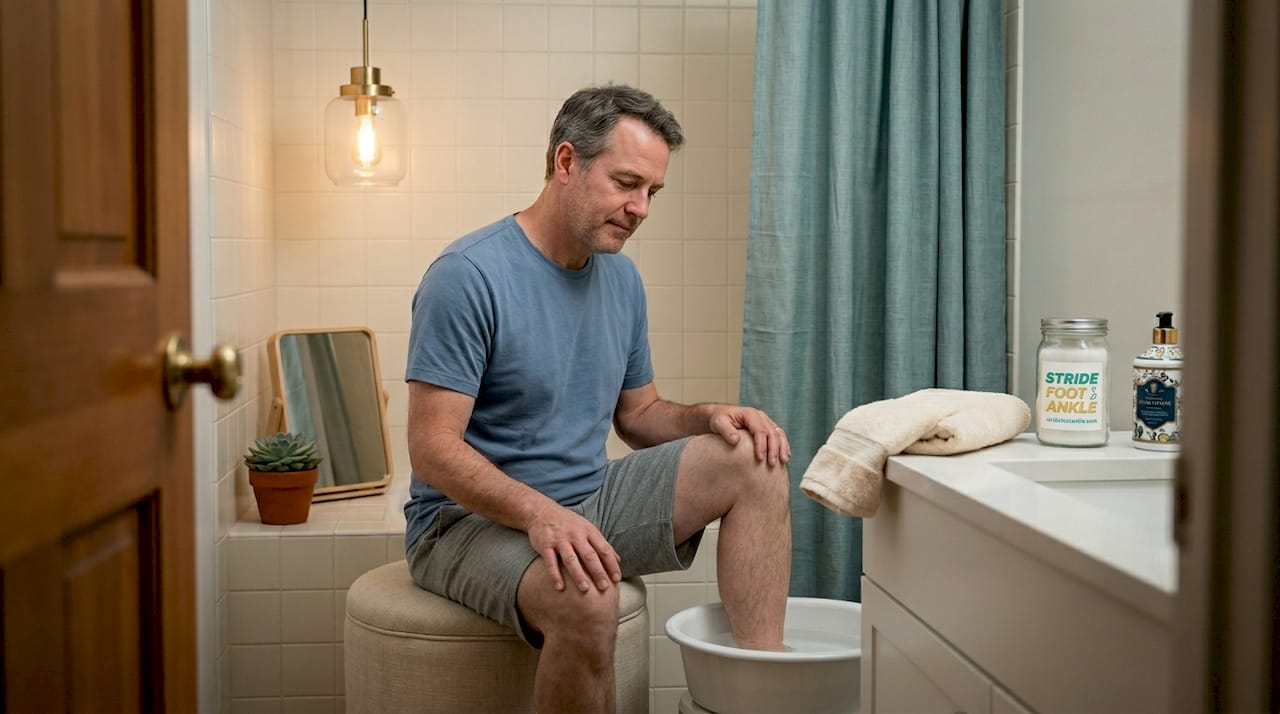
Soak your foot. Fill a basin with warm water and add a tablespoon of Epsom salts or a few drops of mild soap. Soak for 15 to 20 minutes, two to three times per day. This reduces swelling, softens the skin, and eases the pain enough to make the next steps manageable. Do not use water hot enough to cause discomfort.
Gently lift the nail edge. After soaking, while the skin is still soft, use a small wisp of sterile cotton or unwaxed dental floss to carefully tuck under the embedded nail corner. The goal is to lift the edge just slightly off the skin, creating a small buffer that guides regrowth away from the flesh. Do not force it. If the lifting causes sharp pain, stop.
Apply topical antibiotic ointment. Antibiotic ointments help prevent bacterial infection in the irritated skin fold. Apply a thin layer after each soak and after any cotton or floss placement. Bacitracin or a triple antibiotic formula works well for this purpose.
Dress the toe. Cover the area with a clean bandage or sterile gauze after applying ointment. Change the dressing after each soak. A clean, protected environment heals faster and resists infection more effectively.
Manage your pain. Acetaminophen or NSAIDs like ibuprofen help reduce discomfort while the nail and skin heal. Take them as directed on the label. Do not rely on pain medication as a reason to ignore worsening symptoms.
Choose better footwear. While you heal, wear open-toed shoes or sandals whenever possible. If you must wear closed shoes, choose styles with a wide toe box that give the toes room to spread without pressure.
Replace the cotton wisp daily. Each time you soak, remove the old cotton or floss, clean the area, and place a fresh wisp. Old cotton retains bacteria. Fresh placement also allows you to reassess whether the nail edge is moving in the right direction.
Pro Tip: Some people apply a small amount of tea tree oil diluted in a carrier oil to the nail fold between soaks. While not a replacement for antibiotic ointment, its natural antibacterial properties can support hygiene in mild cases. Never apply it undiluted to broken skin.
Monitor your progress honestly. If the redness is spreading, the pain is getting worse, or you can see any drainage, those are your signs to stop home care and call a podiatrist.
When to seek professional care
Professional care for ingrown toenails is needed when symptoms escalate beyond minor irritation. Podiatrists diagnose and treat onychocryptosis daily, and there are clear clinical signals that tell you when home care is no longer enough.
Seek professional evaluation if you notice any of the following:
- Increasing redness, warmth, pus, or fever after 48 to 72 hours of home care. These are signs of active infection that require medical management.
- Spreading redness that moves up the toe or foot. This can indicate cellulitis, a serious bacterial skin infection.
- No meaningful improvement despite consistent home treatment for three days.
- You have diabetes, poor circulation, or any neuropathy in your feet. These conditions require prompt specialist care from a podiatrist, not a nail salon or a wait-and-see approach.
- This is a recurring problem. If the same nail keeps growing in every few weeks, the underlying nail structure likely needs clinical correction.
What a podiatrist will do
Here is how clinical treatments compare for different levels of severity:
| Treatment | Best for | Recovery |
|---|---|---|
| Oral or topical antibiotics | Mild to moderate infection without structural nail issue | Days to one week |
| Partial nail avulsion | Recurring or deeply embedded nail edge | One to two weeks of wound care |
| Matricectomy (partial) | Chronic recurrence, prevention of regrowth in affected segment | Two to four weeks, minimal restriction |
| Full nail removal | Severe deformity or widespread infection | Four to six weeks |
Partial nail avulsion with matricectomy is the most effective long-term solution for chronic ingrown toenails. The procedure is done under local anesthetic in a clinical office. A podiatrist removes only the problematic section of the nail and applies a chemical agent to prevent that specific segment from regrowing. Most patients walk out the same day and return to normal activity within a couple of weeks.
The phrase “surgery for ingrown toenails” sounds daunting to many people, but it is one of the most routine and low-risk procedures in podiatry. Avoiding it when it is clearly needed only delays relief and increases the risk of serious infection.
Prevention strategies that actually work
The most reliable way to deal with ingrown toenails is to stop them before they start. Good habits, applied consistently, make recurrence rare.
Trim correctly, every time. Cut nails straight across at a moderate length and resist the urge to round the corners or cut down the sides. The nail edge should extend just slightly past the tip of the toe. Use a clean, sharp nail clipper with a straight blade rather than curved scissors.
Evaluate your footwear honestly. Shoes that crowd the toes create constant low-grade pressure on the nail edges. A wide toe box gives each toe room to move naturally without pressing against the nail fold. This applies to everyday shoes, athletic footwear, and work boots equally. If you cannot wiggle your toes comfortably inside your shoes, the fit is wrong.
Other prevention habits worth building:
- Keep feet clean and dry. Change socks daily, dry between the toes after bathing, and wear moisture-wicking socks if your feet tend to sweat heavily.
- Protect your feet during sports. Wear properly fitted athletic shoes and use toe guards or padding for high-impact activities. Runners should replace shoes before the cushioning breaks down, which typically happens around 300 to 500 miles of use.
- Inspect your feet regularly. People over 60, those with diabetes, and anyone with recurring foot problems should check their feet weekly. Catching a nail edge before it penetrates is far easier than treating one that already has.
- See a specialist for foot structure issues. If you have naturally curved or thick nails, or if you have had recurring ingrown toenails despite following proper care, a podiatrist can assess whether preventive foot care strategies or a minor procedure would give you lasting relief.
Pro Tip: Soak your feet briefly before trimming your toenails. Softened nails cut more cleanly and are less likely to split or leave a jagged corner that can pierce the skin during regrowth.
What I’ve seen patients get wrong about ingrown toenails
I’ve watched too many patients wait through weeks of worsening pain before finally coming in, convinced that digging at the nail themselves would eventually solve it. In my experience, that approach almost always makes things worse. The nail does not come out cleanly. The skin tears. Bacteria get in. What could have been managed in one appointment becomes a longer, more uncomfortable recovery.
The other pattern I see regularly is patients with diabetes who underestimate how quickly their situation can change. What looks like mild redness in the morning can become a spreading infection by evening if circulation is compromised and sensation is dulled. I’ve seen that play out more times than I care to count, and every time the patient says the same thing: “I thought it would get better on its own.”
What genuinely works in practice is catching the problem early and being consistent with home care when it is appropriate. The cotton-wisp technique sounds almost too simple to work, but when patients actually do it correctly after every soak, the results are real. The nail edge gradually lifts off the skin as it grows, and the inflammation subsides without any cutting needed.
My honest take on nail salon treatments for ingrown toenails: avoid them for any case beyond mild cosmetic discomfort. A pedicurist is not trained to assess infection risk or nail pathology. Seeking podiatric evaluation early costs far less time and discomfort than fixing a problem that was made worse by unqualified handling.
— Ramil
Let Stride Foot & Ankle help you find lasting relief
If home care has not resolved your symptoms, or if you are simply tired of dealing with the same painful nail again and again, it is time to talk to a specialist.

At Stridefootankle, Dr. Nahad Wassel and the team provide personalized, patient-centered podiatric care right here in Las Vegas. From first-visit conservative treatment to advanced in-office procedures like partial nail avulsion, you will receive a clear diagnosis and a treatment plan built around your specific situation. For patients with diabetes or circulatory concerns, the practice’s focused expertise in general foot and ankle care means your risk is managed with the level of attention it requires. You do not have to keep tolerating this pain. Request your appointment at Stridefootankle and take the first confident step toward pain-free walking.
FAQ
What are the first signs of an ingrown toenail?
The earliest ingrown toenail symptoms include tenderness along one side of the nail, mild redness, and slight swelling at the nail fold. The area may feel sore when pressure is applied, especially inside a shoe.
How do I relieve ingrown toenail pain at home?
To relieve ingrown toenail discomfort, soak your foot in warm water with Epsom salts for 15 to 20 minutes, two to three times daily, then gently lift the nail edge with a sterile cotton wisp. Apply antibiotic ointment and wear open-toed footwear while healing.
When is surgery needed for an ingrown toenail?
Surgery, specifically partial nail avulsion with or without matricectomy, is recommended when an ingrown toenail recurs repeatedly, does not respond to home care within 48 to 72 hours, or shows signs of active infection such as pus or spreading redness.
Can ingrown toenails come back after treatment?
Yes, they can return if the underlying causes are not addressed. Proper nail trimming technique, well-fitted footwear, and regular foot care are the most reliable ways to prevent recurrence after both home treatment and clinical procedures.
Are ingrown toenails dangerous for people with diabetes?
Yes. Diabetics face a higher risk of serious infection and poor wound healing, meaning even a minor nail issue can escalate rapidly. Professional podiatric care is mandatory for any diabetic patient with toenail problems. Home self-treatment is not safe for this group.
Recommended
- Ingrowing Toenails Can Be Treated – Stride Foot & Ankle – Dr. Nahad Wassel
- Can a Nail Salon Fix an Ingrown Toenail? – Stride Foot & Ankle – Dr. Nahad Wassel
- Toe walking in children: Causes, treatments, and when to seek help – Stride Foot & Ankle – Dr. Nahad Wassel
- How Conservative Foot Care Relieves Pain and Prevents Surgery – Stride Foot & Ankle – Dr. Nahad Wassel
Recent Comments