

TL;DR:
- High arches, or pes cavus, affect 10 to 15% of people by concentrating weight on the heel and ball, increasing injury risk. Proper evaluation distinguishes flexible from rigid arches, guiding appropriate conservative or surgical treatment, and optimal footwear features include cushioning, a firm shank, and high-volume fit. Early podiatric assessment and customized orthotics can prevent long-term complications like pain, instability, and stress fractures.
A high arched foot, known medically as pes cavus, is defined as an abnormally elevated medial longitudinal arch that creates rigid structure and concentrates body weight on the heel and ball of the foot rather than distributing it evenly. Pes cavus affects 10 to 15% of the general population and commonly leads to lateral ankle instability, metatarsalgia, and stress fractures. If you have noticed persistent foot pain, frequent ankle sprains, or calluses forming under the ball of your foot, your arch height may be the root cause. Understanding what drives this condition, how to evaluate it properly, and which footwear and treatment options actually work gives you a clear path forward.
What is a high arched foot and how does it affect biomechanics?
A high arched foot shifts body weight onto the heel and metatarsal heads while leaving the midfoot largely unloaded. This uneven distribution, sometimes called a tripod loading pattern, reduces the foot’s natural ability to absorb shock and adapt to uneven surfaces. The result is concentrated stress at two points instead of three, which accelerates tissue breakdown over time.
Causes: genetic, idiopathic, and neurological
The causes of pes cavus fall into two broad categories. The first is structural or idiopathic, meaning the arch simply developed high without an identifiable underlying disease. The second, and more clinically significant, is neurological. Conditions like Charcot-Marie-Tooth disease, a hereditary peripheral neuropathy, are among the most common neurological drivers of progressive high arches in adults. Spinal cord abnormalities, cerebral palsy, and polio can also produce cavus deformity.
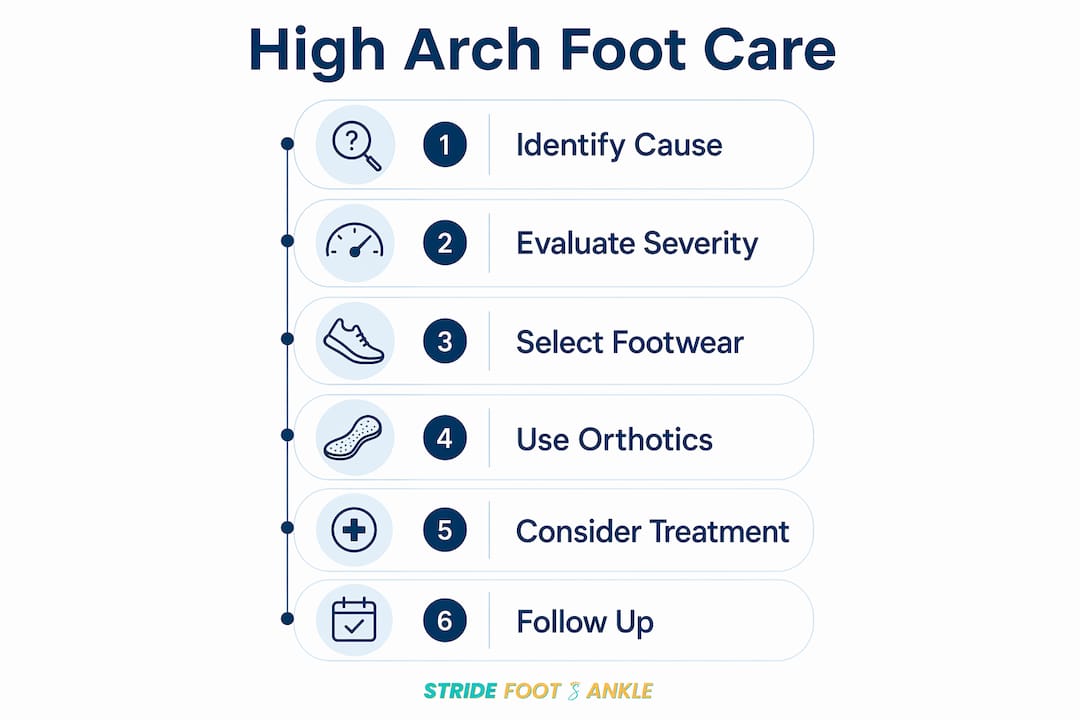
Identifying the cause matters because a neurological origin means the arch may continue to worsen over time, requiring a different long-term management strategy than a purely structural case.
How high arches alter gait and increase injury risk
High arches shift weight onto the heel and metatarsal heads, which changes how the entire lower limb absorbs force during walking and running. The foot cannot pronate adequately, so the ankle, knee, and hip compensate with altered mechanics. Over time, this compensation pattern contributes to secondary problems well beyond the foot itself.
Common biomechanical consequences include:
- Lateral ankle instability: The supinated foot position places the ankle in a vulnerable, inward-tilted alignment during every step.
- Metatarsalgia: Excess pressure under the metatarsal heads causes pain and callus formation at the ball of the foot.
- Plantar fasciitis: The tight plantar fascia in a high arch is under constant tension, making it prone to microtears.
- Claw toes: Muscle imbalances caused by altered mechanics pull the toes into a flexed, claw-like position.
- Stress fractures: Reduced shock absorption concentrates repetitive impact forces, particularly in the metatarsals and lateral foot.
A rigid cavus foot does not simply cause localized pain. It creates a chain reaction of compensatory strain that can affect the ankle, shin, knee, and lower back if left unaddressed.
How are high arched feet evaluated in clinical settings?
Clinical evaluation of a high arched foot determines whether the arch is flexible or rigid, whether symptoms are present, and whether an underlying neurological condition is driving the deformity. This distinction directly shapes treatment decisions. A flexible, asymptomatic arch in a young patient may need only monitoring, while a rigid, symptomatic arch in an adult warrants active intervention.
Step-by-step clinical assessment
A thorough podiatric evaluation follows a structured sequence:
- Visual inspection and gait analysis: The clinician observes foot alignment during standing and walking, noting heel varus (inward tilt), forefoot drop, and claw toe formation.
- Flexibility testing: The Coleman block test is the standard method. The patient stands on a wooden block with the lateral forefoot unsupported. If the heel corrects to neutral, the deformity is flexible and driven by forefoot mechanics. If it does not correct, the hindfoot is rigid.
- Neurological screening: Sensation testing, deep tendon reflexes, and muscle strength assessment help identify peripheral neuropathy. Neurological evaluation is critical because high arches can signal hereditary or progressive neuropathies that influence treatment choices and prognosis.
- Imaging: Weight-bearing X-rays measure the Meary angle (the angle between the talus and first metatarsal) and calcaneal pitch to quantify arch severity. MRI is used when soft tissue pathology or spinal involvement is suspected.
- Nerve conduction studies: When Charcot-Marie-Tooth disease or another neuropathy is suspected, nerve conduction velocity testing confirms the diagnosis and guides referral to neurology.
Classification by severity and flexibility
| Category | Arch Flexibility | Symptoms | Typical Management |
|---|---|---|---|
| Mild flexible | Corrects on Coleman block | Minimal or absent | Supportive footwear, monitoring |
| Moderate flexible | Partial correction | Intermittent pain, calluses | Orthotics, physical therapy |
| Moderate rigid | No correction | Persistent pain, instability | Custom orthotics, bracing, PT |
| Severe rigid | No correction | Severe pain, deformity | Surgical reconstruction |
This classification framework, used by podiatrists and orthopedic surgeons, prevents both under-treatment of progressive cases and over-treatment of benign ones. Stridefootankle uses this same structured approach to ensure every patient receives a diagnosis that reflects the full clinical picture, not just a snapshot of current symptoms.
What footwear and orthotic solutions work best for high arches?
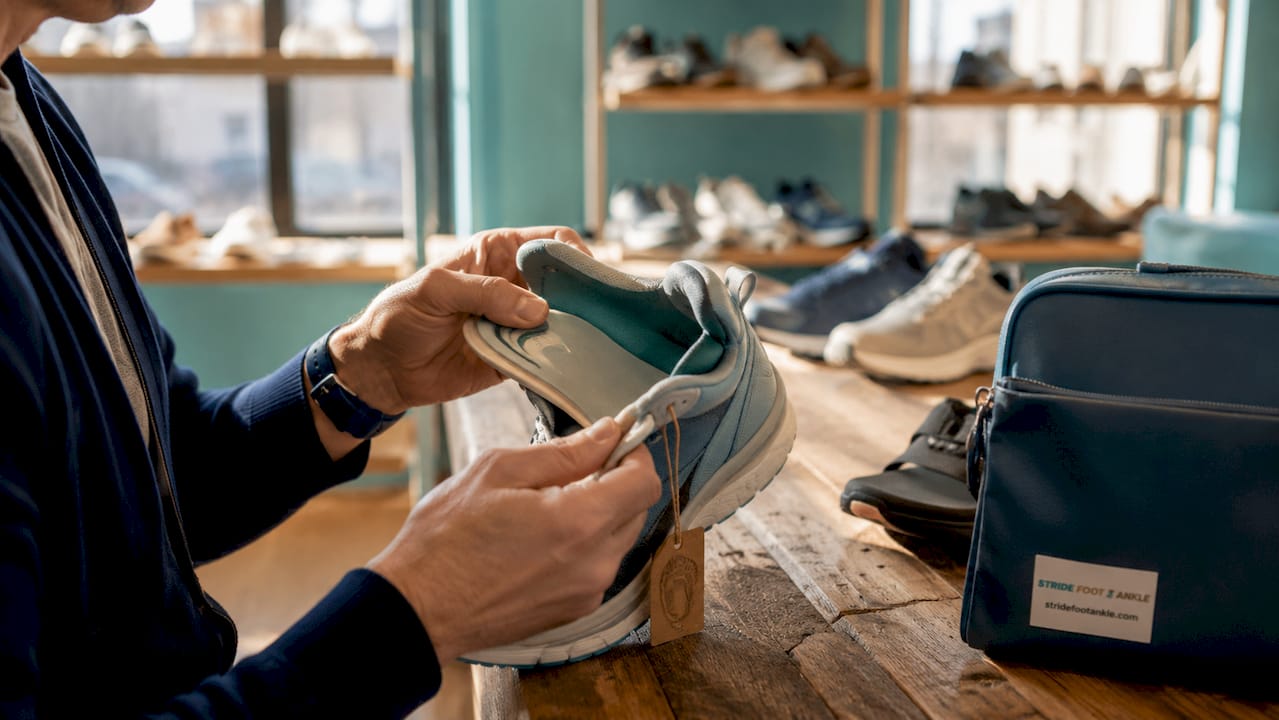
The right footwear for a high arched foot must accomplish three things: accommodate the elevated arch volume, cushion the heel and forefoot where pressure concentrates, and provide a firm shank to prevent the foot from rolling outward. Most standard shoes fail on at least one of these criteria.
Key features to look for in high arch shoes
Optimal shoes for high arches include a cushioned midsole, a firm shank, and a roomy toe box. Each feature serves a specific mechanical purpose. The cushioned midsole absorbs impact at the heel and ball of foot. The firm shank resists torsional flex through the midfoot, preventing the foot from collapsing laterally. The roomy toe box accommodates claw toes and prevents forefoot compression.
A feature that many buyers overlook is overall shoe volume. High-volume footwear is necessary to accommodate the extra space created by a high arch. A standard-volume shoe will press down on the arch, creating new pressure points at the dorsum (top) of the foot. Look for shoes labeled “high volume” or test fit by checking that the arch of the insole actually contacts your arch rather than sitting below it.
Comparing shoe types for high arched feet
| Shoe Type | Best For | Key Advantage | Watch Out For |
|---|---|---|---|
| Neutral cushioned running shoe | Daily wear and running | Maximum midsole cushioning | May lack lateral stability |
| Motion control shoe | Severe supination | Firm shank and heel counter | Can feel stiff for flexible arches |
| Trail running shoe | Uneven terrain | Outsole grip and torsional rigidity | Heavier than road shoes |
| Dress shoe with orthotic | Work and formal wear | Removable insole allows custom insert | Limited cushioning in most styles |
Choosing insoles and orthotics
Custom orthotics provide stability and pressure redistribution for high arches, while overly soft insoles often worsen symptoms. This is a critical distinction. A soft foam insole compresses under the arch and fails to provide the structural correction a rigid or semi-rigid cavus foot needs. Custom orthotics, prescribed after a biomechanical assessment, are molded to the specific contour of your foot and can include a lateral wedge to correct heel varus, metatarsal pads to offload the ball of the foot, and a deep heel cup for stability.
Over-the-counter options like Superfeet Green or Powerstep Pinnacle can work for mild, flexible arches, but they are not a substitute for custom devices in moderate to severe cases. You can learn more about orthotic options for foot pain to understand when a custom device is worth the investment.
Pro Tip: When buying new shoes for high arches, bring your custom orthotics to the store and test the fit with them inside the shoe. The orthotic raises your foot position, so you may need a half size up or a wider width to avoid forefoot cramping.
What treatment options exist for high arch symptoms and complications?
Treatment for pes cavus ranges from conservative care to surgical reconstruction, depending on arch rigidity, symptom severity, and the presence of an underlying neurological condition. Flexible asymptomatic arches may not need treatment, but rigid symptomatic ones often require orthotics or surgery. Starting with the least invasive approach is standard practice, with escalation based on response.
Conservative treatment options
Conservative care addresses the majority of high arch cases and includes:
- Custom orthotics: Redistribute plantar pressure, correct heel varus, and improve gait mechanics. These are the cornerstone of non-surgical management.
- Supportive footwear: Shoes with the features described above reduce daily impact stress and slow symptom progression.
- Physical therapy: Stretching the plantar fascia, Achilles tendon, and calf muscles reduces tension in the arch. Strengthening the intrinsic foot muscles and peroneals improves ankle stability. Physical therapy for foot pain is particularly effective when combined with orthotic support.
- Ankle bracing: A lace-up or semi-rigid ankle brace reduces lateral instability risk during high-demand activities like hiking or court sports.
- Anti-inflammatory management: NSAIDs and targeted corticosteroid injections address acute flares of plantar fasciitis or metatarsalgia.
Leaving high arches unmanaged increases risk of plantar fasciitis, shin splints, ankle instability, and long-term structural injuries. Early intervention consistently produces better outcomes than waiting until pain becomes severe.
Pro Tip: Strengthening exercises for high arches should target the peroneus longus and brevis muscles, which run along the outer ankle. Resistance band eversion exercises, performed daily for 10 to 15 minutes, measurably improve lateral ankle stability within six to eight weeks.
When is surgery considered?
Surgery is reserved for severe cases of rigid, symptomatic high arches where conservative treatments have failed over a sustained period, typically six to twelve months. Surgical options include plantar fascia release, calcaneal osteotomy (realigning the heel bone), metatarsal osteotomy (correcting forefoot drop), and in complex cases, triple arthrodesis (fusing the hindfoot joints for permanent correction). The choice of procedure depends on which structural elements are driving the deformity. Neurological cases require coordination with a neurologist before surgery, since progressive neuropathy can cause recurrence of the deformity after correction.
How to care for high arched feet daily and prevent long-term damage
Daily foot care for high arched feet is not complicated, but it requires consistency. The goal is to manage the mechanical stress your foot generates with every step before it accumulates into injury.
Practical daily habits that protect high arched feet include:
- Monitor pain patterns: Note where pain occurs, when it starts, and what activities trigger it. Changes in pain location or intensity can signal a new injury or progression of the underlying condition.
- Rotate footwear: Wearing the same pair of shoes every day compresses the midsole foam and reduces cushioning effectiveness. Rotating between two or three pairs extends shoe life and maintains consistent support.
- Perform daily stretching: Calf stretches, plantar fascia stretches, and toe extension stretches take less than five minutes and significantly reduce morning pain and stiffness.
- Check shoe wear patterns: Excessive wear on the outer heel and lateral forefoot confirms supination and signals that your current shoes or orthotics need adjustment.
- Avoid barefoot walking on hard surfaces: Hard floors concentrate pressure directly on the heel and metatarsal heads without any cushioning buffer.
- Schedule regular podiatric check-ins: Even if symptoms are stable, an annual review of your orthotics and footwear ensures your support system keeps pace with changes in foot structure or activity level.
Proactively managing high arches prevents long-term structural injuries and secondary pain, even when current symptoms are mild. The patients who maintain the best outcomes are those who treat foot care as a routine, not a reaction to pain. You can find additional guidance on preventing foot injuries to build a complete protection plan.
Key takeaways
High arched feet require structural support and biomechanical correction, not just cushioning, to prevent chronic pain, ankle instability, and progressive injury.
| Point | Details |
|---|---|
| Define and recognize pes cavus | High arched feet affect 10 to 15% of people and cause uneven pressure on the heel and ball of the foot. |
| Evaluate flexibility first | The Coleman block test distinguishes flexible from rigid arches, which directly determines whether conservative or surgical care is appropriate. |
| Choose footwear with three features | Cushioned midsole, firm shank, and high-volume fit are non-negotiable for managing high arch symptoms in daily wear. |
| Prioritize custom orthotics over soft insoles | Structural correction through custom devices outperforms cushioning alone, especially for moderate to rigid arches. |
| Act before symptoms worsen | Early podiatric assessment and consistent daily care prevent plantar fasciitis, stress fractures, and ankle instability from developing. |
What I have learned from years of watching patients manage high arches
The most consistent mistake I see is patients arriving after years of self-managing with gel insoles and soft-soled shoes, frustrated that nothing has improved. The logic seems sound: a painful foot needs cushioning. But a rigid high arch does not need more softness. It needs structural correction. Cushioning without biomechanical support is like putting a thick rug on a slanted floor. It feels better briefly, then the underlying problem reasserts itself.
The second pattern I notice is how often the neurological dimension gets skipped entirely. A patient in their 30s or 40s who develops progressively higher arches without a clear trauma history deserves nerve conduction testing, not just new shoes. Charcot-Marie-Tooth disease is more common than most people realize, and catching it early changes the entire management trajectory.
What actually works, in my observation, is a combination of three things applied consistently: properly fitted high-volume footwear, custom orthotics built from a weight-bearing mold, and a targeted strengthening program for the peroneal muscles and intrinsic foot muscles. None of these alone is sufficient. Together, they address the mechanical, structural, and muscular dimensions of the problem simultaneously.
One more thing worth saying directly: if your arches are high but you are currently pain-free, do not wait for pain to arrive before seeking an assessment. The foot care habits you build now determine whether you are managing a stable condition at 50 or recovering from a stress fracture.
— Ramil
Get expert high arch care at Stridefootankle in Las Vegas
If you are dealing with foot pain, ankle instability, or calluses that keep coming back, a professional evaluation is the most direct path to relief.
Stridefootankle, led by Dr. Nahad Wassel, provides specialized podiatric care for patients with high arched feet in Las Vegas. From biomechanical gait analysis and custom orthotic fabrication to conservative treatment plans and surgical consultation when needed, the practice covers every stage of pes cavus management. Dr. Wassel’s approach combines clinical precision with patient-centered communication, so you leave each appointment with a clear understanding of your condition and a concrete plan. Schedule your evaluation through the general foot and ankle care page and take the first step toward lasting comfort.
FAQ
What does it mean to have a high arched foot?
A high arched foot, or pes cavus, has an abnormally elevated medial longitudinal arch that concentrates body weight on the heel and ball of the foot rather than distributing it across the entire sole. This reduces shock absorption and increases the risk of pain, ankle instability, and stress fractures.
Are high arches genetic or caused by a medical condition?
High arches can be idiopathic (no identifiable cause) or driven by neurological conditions like Charcot-Marie-Tooth disease, cerebral palsy, or spinal cord abnormalities. A clinical evaluation including neurological screening is necessary to determine the cause, since progressive neurological cases require different long-term management.
What are the best shoes for high arches?
The best shoes for high arches combine a cushioned midsole, a firm shank for lateral stability, a roomy toe box, and a high-volume fit that accommodates the elevated arch without pressing down on it. Neutral cushioned running shoes and motion control shoes are the most commonly recommended categories.
Do high arches always need orthotics?
Not always. Flexible, asymptomatic high arches may need only supportive footwear and monitoring. Moderate to rigid arches with pain, instability, or callus formation benefit significantly from custom orthotics, which provide structural correction that over-the-counter insoles cannot replicate.
When should you see a podiatrist for high arches?
See a podiatrist if you experience recurring foot pain, frequent ankle sprains, calluses under the ball of the foot, or if your arches appear to be getting higher over time. Early assessment through a Las Vegas podiatry consultation identifies whether your condition is stable or progressive before complications develop.
Recommended
- Flat Foot: Causes, Symptoms, and Treatment Options – Stride Foot & Ankle – Dr. Nahad Wassel
- Foot Pain: Causes, Symptoms, and Treatment Options – Stride Foot & Ankle – Dr. Nahad Wassel
- How to Prevent Foot Ulcers: a Guide for At-Risk Patients – Stride Foot & Ankle – Dr. Nahad Wassel
- Why Do Feet Hurt? Causes, Symptoms, and Relief – Stride Foot & Ankle – Dr. Nahad Wassel
Recent Comments