

For most people with ball-of-foot pain, metatarsalgia treatment starts with rest, ice, short-term OTC NSAIDs like ibuprofen, and switching to cushioned, wide-toe-box shoes. From there, the evidence-based path escalates to metatarsal pads and orthotics, targeted physical therapy, and, if needed, corticosteroid injections. Surgery is reserved for structural problems that fail adequate conservative care. Stride Foot & Ankle and Dr. Nahad Wassel guide patients through every step of this process.
Key Takeaways
Effective metatarsalgia treatment follows a clear stepwise path: start with rest, ice, and footwear changes, escalate to orthotics and physical therapy over six to twelve weeks, and reserve surgery for structural cases that fail conservative care.
| Point | Details |
|---|---|
| Start self-care immediately | Rest, ice, OTC NSAIDs, and cushioned wide-toe-box shoes reduce acute pain within days. |
| Add pads and orthotics by week 2 | Metatarsal pads and arch-support insoles redistribute forefoot pressure; custom orthotics if off-the-shelf options fail. |
| Exercise daily for 6–12 weeks | Calf stretches, towel scrunches, and plantar fascia stretches reduce forefoot load and support lasting recovery. |
| See a clinician if no improvement by week 6–8 | Persistent or worsening pain warrants imaging and a professional evaluation to rule out stress fracture or plantar plate injury. |
| Stride Foot & Ankle offers full-spectrum care | Dr. Nahad Wassel provides diagnosis, custom orthotics, injection therapy, and surgical consultation in Las Vegas. |
Table of Contents
- What is metatarsalgia and what causes ball-of-foot pain?
- How clinicians diagnose metatarsalgia
- First-line conservative treatments you can start today
- Which exercises reduce forefoot pressure and speed recovery?
- What do injections and other non-operative treatments actually do?
- When is surgery considered, and what procedures are used?
- What recovery looks like and how to prevent relapse
- When should you make an appointment right away?
- How to prevent metatarsalgia from coming back
- A clinical perspective from Stride Foot & Ankle and Dr. Nahad Wassel
- What realistic outcomes actually look like
- Stride Foot & Ankle can help when pain persists
- Sources
- FAQ
What is metatarsalgia and what causes ball-of-foot pain?
Metatarsalgia is pain and inflammation under the metatarsal heads, the bony prominences at the base of your toes that bear your full body weight with every step. A peer-reviewed review supports classifying it as primary (mechanical overload), secondary (systemic or structural disease), or iatrogenic (caused by prior surgery or treatment).
Common causes include:
- Overuse or sudden increases in running or walking distance
- High heels or shoes with a narrow toe box
- Forefoot anatomy variations, such as a long second metatarsal
- Hammer toes, bunions, or other toe deformities
- Limited ankle dorsiflexion (equinus), which shifts load forward
- Excess body weight
- Inflammatory conditions such as rheumatoid arthritis
The typical symptom pattern is a sharp, burning, or aching pain directly under one or more metatarsal heads. Pain worsens with activity and often intensifies when walking barefoot on hard floors. Several causes can coexist in the same foot, which is why targeted treatment depends on identifying the specific driver.
How clinicians diagnose metatarsalgia
Diagnosis is primarily clinical: a thorough history combined with a weight-bearing physical exam. Clinical reviews recommend weight-bearing X-rays to assess metatarsal length and alignment. MRI or ultrasound is reserved for cases where the exam is inconclusive and a stress fracture, plantar plate tear, or Morton neuroma needs to be ruled out.
What to bring to your appointment:
- Your most-worn shoes (the clinician will check wear patterns)
- A brief activity log noting when pain started and what makes it worse
- Any previous imaging, including X-rays or MRI reports
- A current medication list, especially if you take anti-inflammatories
What the exam typically covers:
- Palpation of each metatarsal head to locate the exact pain source
- Weight-bearing gait observation
- Range-of-motion testing of the ankle (to screen for equinus)
- Mulder’s click test and toe-pull test to screen for Morton neuroma or plantar plate injury
- Callus location assessment, which often maps directly to the overloaded metatarsal
Common conditions clinicians watch for alongside metatarsalgia include Morton neuroma, stress fracture, and second MTP capsulitis. Getting the differential right early prevents weeks of misdirected treatment.
First-line conservative treatments you can start today
The clinical treatment algorithm is clear: footwear modification, padding, orthotics, NSAIDs, and physical therapy come first. Surgery is considered only after these measures have been adequately trialed. Here is a practical, ordered plan:
- Reduce load immediately. Rest from high-impact activity. Apply ice wrapped in a cloth for 15–20 minutes, two to three times daily, during the first few days of a flare.
- Take a short course of OTC NSAIDs. Ibuprofen or naproxen sodium can reduce acute inflammation. Follow package directions and check with your pharmacist if you have kidney, stomach, or cardiovascular concerns.
- Change your footwear now. Switch to shoes with a cushioned midsole, a wide toe box, a low heel (under one inch), and a slightly rocker-shaped sole. Avoid flat, rigid soles and high heels entirely during the recovery period.
- Add a metatarsal pad. A small dome-shaped pad placed just behind (proximal to) the painful metatarsal heads redistributes pressure away from the sore area. Conservative treatment research supports metatarsal pads and decompression insoles as effective pressure-redistribution tools.
- Try an off-the-shelf orthotic insert. Cushioned arch-support insoles from a pharmacy can help in mild cases. If pain persists after four to six weeks, a podiatrist can fit you for custom orthotics tailored to your specific mechanical problem, such as equinus or a long second metatarsal.
- Address calluses. Focal plantar calluses over a painful metatarsal head often signal chronic overload. A podiatrist can safely debride them and apply local padding for faster symptomatic relief.
- Gradually return to activity. Once pain is below a 3 out of 10 during daily walking, begin a graded return, adding no more than 10% volume per week.
Pro Tip: The maintenance phase is where most people relapse. Once pain resolves, keep wearing supportive shoes and continue your daily stretching routine. Returning to unsupportive footwear or previous training loads before the foot has fully adapted is the most common reason symptoms return.
Conservative foot care that addresses shoe mechanics and padding is the backbone of lasting metatarsalgia relief.
Which exercises reduce forefoot pressure and speed recovery?
Targeted calf stretching, intrinsic toe strengthening, plantar fascia mobilization, and metatarsalgia taping can meaningfully reduce forefoot load and support long-term recovery. Toe exercises have been reported to improve toe flexion strength and reduce plantar loading in case series. Try these four to six exercises daily:
- Wall calf stretch (gastrocnemius). Stand facing a wall, place both hands on it, step one foot back, and press the heel flat to the floor. Hold 30 seconds, three repetitions per side. Tight calves increase forefoot load, so this stretch is non-negotiable.
- Seated soleus stretch. Sit in a chair, place a resistance band around the ball of your foot, and gently pull the toes toward you with the knee bent at 90 degrees. Hold 20–30 seconds per side.
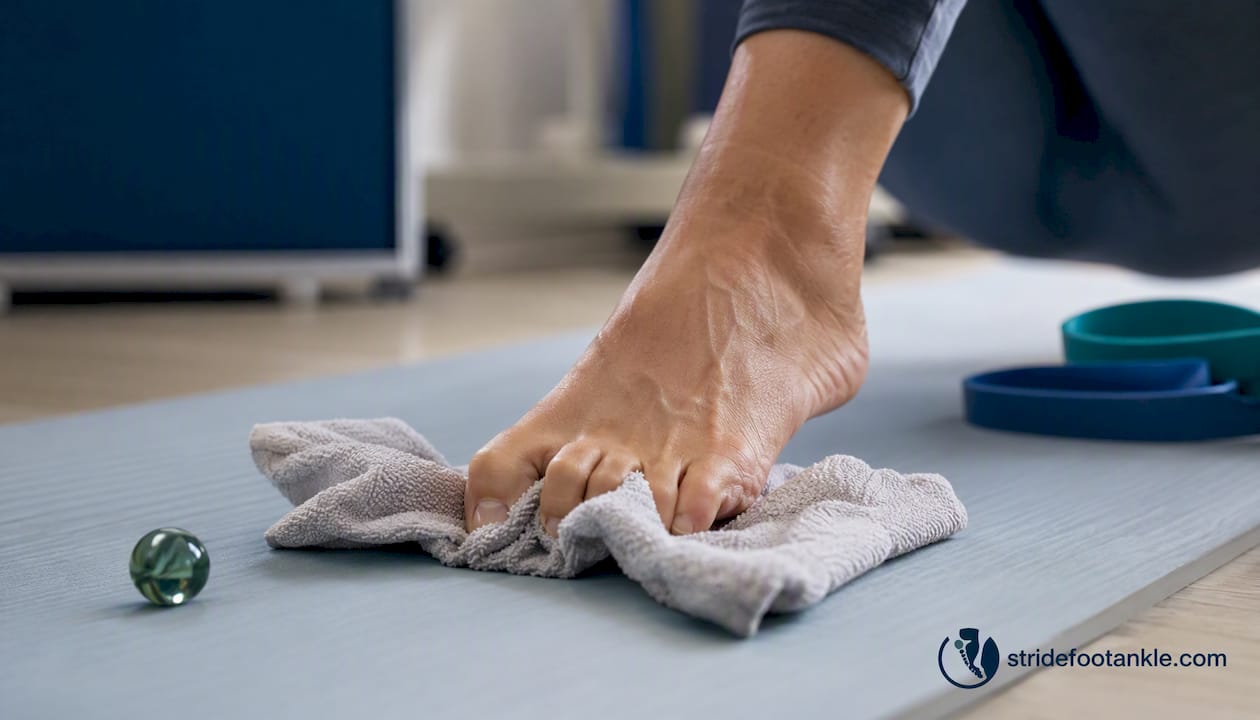
- Towel scrunches. Sit barefoot with a small towel flat on the floor. Scrunch it toward you using only your toes. Three sets of 15 repetitions builds intrinsic foot muscle strength.
- Marble pickups. Place 10 marbles on the floor and pick them up one at a time using your toes, dropping each into a cup. This trains the toe flexors that help offload the metatarsal heads.
- Plantar fascia stretch. Before your first step in the morning, sit on the edge of the bed and pull your toes back toward your shin until you feel a stretch along the arch. Hold 30 seconds, three times.
- Metatarsalgia taping (low-dye or forefoot offloading tape). Apply a strip of rigid sports tape or kinesiology tape across the ball of the foot to support the transverse arch. A podiatrist or physical therapist can show you the exact technique; done correctly, it can provide noticeable relief during activity.
Stop any exercise that increases sharp pain, causes numbness, or produces tingling. If those symptoms appear, contact a clinician before continuing. For more detailed foot mobility exercises, Stride Foot & Ankle provides additional progressions.
What do injections and other non-operative treatments actually do?
Corticosteroid injections can provide meaningful short-term pain relief that allows you to participate in physical therapy, but they are not curative on their own. Long-term improvement requires correcting the underlying footwear and biomechanical problems.
Common non-operative interventions include:
- Corticosteroid injection: Reduces local inflammation quickly. Relief typically lasts weeks to a few months. Most useful when acute pain is preventing therapy participation.
- Local anesthetic block: Sometimes combined with corticosteroid for diagnostic and therapeutic purposes.
- Platelet-rich plasma (PRP): Used in some practices for plantar plate or capsular pathology; evidence is still emerging and it is not universally covered by insurance.
- Extracorporeal shockwave therapy (ESWT): Offered by some podiatry and sports medicine practices for chronic cases; may stimulate tissue healing in refractory metatarsalgia.
Pro Tip: Injections work best as a bridge, not a destination. Pair every injection with corrective footwear, orthotics, and a structured exercise program. Repeated steroid injections without addressing mechanics can weaken plantar soft tissue over time. Discuss the number and frequency of injections with your provider before proceeding.
Nonsurgical treatment options at Stride Foot & Ankle include guided injection therapy alongside orthotic fitting and physical therapy referrals.
When is surgery considered, and what procedures are used?
Surgery is reserved for patients who have failed adequate conservative care, typically after several months of targeted nonoperative treatment, or when a clear structural lesion requires correction. Clinical practice guidance confirms that failure of nonoperative treatments is the primary surgical indication.
Common procedures and what they address:
- Weil osteotomy: The most common technique worldwide for mechanical metatarsalgia; shortens and elevates the metatarsal head to relieve propulsive overload. Used when metatarsal length or alignment is the primary driver.
- Metatarsal shortening osteotomy: Addresses a disproportionately long metatarsal causing focal overload.
- Gastrocnemius recession: Lengthens the gastrocnemius muscle to correct equinus and reduce forefoot pressure. Often combined with other procedures.
- Plantar plate repair: Addresses a torn plantar plate at the MTP joint, which can cause instability and secondary metatarsalgia.
High-level surgical timeline:
| Phase | Typical Window |
|---|---|
| Hospital stay | Outpatient (same-day discharge) |
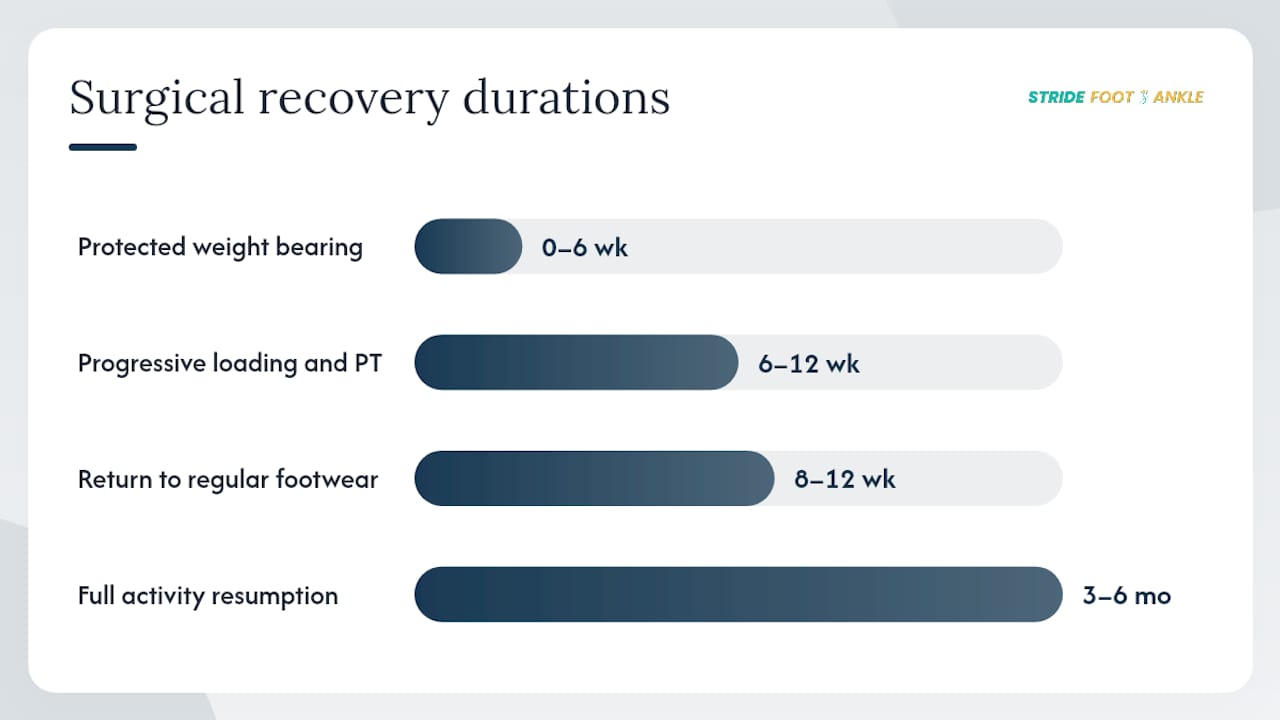
| Protected weight bearing | 0–6 weeks (surgical shoe or boot) |
| Progressive loading and PT | 6–12 weeks |
| Return to regular footwear | 8–12 weeks (varies by procedure) |
| Full activity resumption | 3–6 months |
Potential risks and complications to discuss with your surgeon:
- Floating toe (reduced toe purchase on the ground after Weil osteotomy)
- Transfer metatarsalgia (pain shifting to an adjacent metatarsal)
- Wound infection
- Delayed bone healing or nonunion
- Recurrence if underlying biomechanics are not corrected
Surgical decisions at Stride Foot & Ankle are made collaboratively. Dr. Nahad Wassel reviews each patient’s imaging, activity goals, and prior treatment history before recommending any operative approach. For a broader overview of what surgical recovery involves, the ankle surgery guide covers expectations in detail.
What recovery looks like and how to prevent relapse
Prognosis is generally good with conservative care. Many patients see meaningful improvement within six to twelve weeks of consistent footwear changes, padding, and exercise. Surgery can relieve pain when a structural cause is corrected, though full recovery takes months.
Conservative care recovery milestones:
- Weeks 1–2: Reduced acute pain with rest, ice, and footwear change
- Weeks 3–6: Progressive improvement with orthotics, exercises, and activity modification
- Weeks 6–12: Most patients with primary mechanical metatarsalgia reach significant relief; those with secondary causes may take longer
Post-operative recovery phases:
- 0–6 weeks: Protected weight bearing in a surgical shoe or boot; wound care and swelling management
- 6–12 weeks: Progressive loading, physical therapy, and gradual return to normal shoes
- 3–6+ months: Full activity resumption; ongoing strengthening and footwear maintenance
Relapse prevention habits:
- Replace athletic shoes every 300–500 miles or when midsole cushioning feels compressed
- Continue daily calf and plantar fascia stretching even after symptoms resolve
- Maintain a healthy body weight to reduce forefoot load
- Schedule a follow-up if symptoms return, rather than waiting for pain to become severe
When should you make an appointment right away?
Make an appointment promptly if you experience any of the following. Do not wait out these symptoms with home remedies alone.
Red flags that warrant timely evaluation:
- Severe pain that prevents normal weight bearing
- Visible deformity, swelling, or bruising after an acute injury
- Progressive numbness or tingling in the toes (possible neurovascular involvement)
- Signs of infection: redness spreading beyond the injury site, warmth, fever
- No improvement after 6–8 weeks of consistent conservative care
- Suspected stress fracture (point tenderness along a metatarsal shaft, pain with a tuning fork test)
What to bring and ask at your appointment:
- Worn shoes and any inserts you have tried
- A symptom diary noting pain levels, triggers, and what has helped
- Questions about imaging, orthotic options, and realistic timelines
- Ask specifically whether a stress fracture or plantar plate injury should be ruled out
Urgent imaging or specialist referral is appropriate when a stress fracture or neurovascular compromise is suspected. Early diagnosis prevents a minor overuse injury from becoming a more complex problem.
How to prevent metatarsalgia from coming back
Consistent use of supportive, cushioned shoes with a wide toe box and a moderate heel is the single most effective long-term prevention strategy. Shoe modification and orthoses remain the mainstay of nonoperative management for both treatment and prevention.
What to look for when choosing shoes:
- Cushioned midsole (EVA or similar foam, not a flat hard sole)
- Wide toe box that does not compress the forefoot
- Heel height under one inch
- Slight rocker or curved sole to reduce peak forefoot pressure
- Firm but flexible midsole that does not collapse under load
Prevention checklist:
- Manage body weight to reduce chronic forefoot load
- Increase training volume gradually (no more than 10% per week)
- Stretch calves and plantar fascia daily as a long-term habit
- Strengthen toe flexors with towel scrunches or marble pickups three times per week
- Replace worn shoes before the midsole loses its cushioning
- Use preventive foot care strategies to stay ahead of recurring symptoms
A clinical perspective from Stride Foot & Ankle and Dr. Nahad Wassel
At Stride Foot & Ankle, the clinical priority is correcting the mechanical drivers of metatarsalgia, not just quieting symptoms temporarily. Temporary fixes alone, such as a single injection without footwear correction, consistently lead to recurrence.
A typical patient pathway at the clinic begins with a weight-bearing exam and X-rays to identify the mechanical cause. Most patients with primary metatarsalgia respond well to custom orthotics, a structured home exercise program, and footwear guidance within six to twelve weeks. Those with structural lesions, such as a long second metatarsal or a plantar plate tear, are counseled on surgical options after conservative care has been adequately trialed. The goal at every stage is to get you back to full activity with a plan that holds.
For persistent symptoms, contact Stride Foot & Ankle to schedule an evaluation with Dr. Wassel.
What realistic outcomes actually look like
Most patients with mechanical metatarsalgia improve meaningfully with conservative care when they follow through consistently. Outcomes vary by cause: primary mechanical cases tend to respond faster than secondary cases tied to inflammatory disease or significant structural deformity.
The honest reality is that recovery is rarely linear. Pain often fluctuates in the first few weeks as you adjust footwear and begin exercises. Patients who stay the course through that adjustment period, rather than abandoning the plan after two weeks, are the ones who reach lasting relief. When symptoms persist beyond twelve weeks of targeted conservative care, that is the signal to pursue a more thorough clinical evaluation and discuss whether imaging or procedural options are appropriate.
Stride Foot & Ankle can help when pain persists
If ball-of-foot pain has not responded to six to eight weeks of home remedies and footwear changes, a clinical evaluation with Dr. Nahad Wassel at Stride Foot & Ankle is the logical next step.
The clinic offers the full spectrum of metatarsalgia care in Las Vegas:
- Diagnostic imaging coordination (weight-bearing X-rays, MRI, ultrasound referral)
- Custom orthotic fitting tailored to your specific mechanical problem
- Guided physical therapy plans and exercise prescription
- Corticosteroid injection therapy when appropriate
- Surgical consultation for structural cases that require operative correction
Dr. Wassel’s approach is conservative-first and patient-centered. Surgery is never the first recommendation. Every patient receives a clear explanation of their diagnosis, a stepwise treatment plan, and realistic expectations for recovery. To get started, visit the general foot and ankle care page and schedule an evaluation.
Sources
- PubMed: Weil osteotomy for mechanical metatarsalgia
- Clinical indications and treatment guidance for lesser metatarsalgia (ASH link)
- NCBI PMC review on metatarsalgia
- Conservative treatment for primary metatarsalgia (OrthoJournal)
- Metatarsalgia treatment overview (News-Medical)
FAQ
What is the fastest way to relieve metatarsalgia?
Rest from impact activity, apply ice for 15–20 minutes two to three times daily, take a short course of ibuprofen or naproxen, and switch immediately to cushioned shoes with a wide toe box. Adding a metatarsal pad just behind the painful area can reduce pressure noticeably within the first few days.
Will metatarsalgia go away on its own?
Mild cases tied to a temporary overuse spike can resolve with rest and footwear changes alone. Cases driven by structural causes, such as a long metatarsal, equinus, or toe deformity, typically require targeted treatment and will recur without correcting the underlying mechanics.
What are the best exercises for metatarsalgia?
Wall calf stretches, seated soleus stretches, towel scrunches, marble pickups, and plantar fascia stretches are the most clinically supported options. Toe-strengthening exercises have been reported to improve toe flexion strength and reduce plantar loading, making them a key part of any home remedy for foot pain.
Can you tape your foot for metatarsalgia?
Yes. Low-dye taping or forefoot offloading tape applied across the ball of the foot supports the transverse arch and can reduce pain during activity. A podiatrist or physical therapist can demonstrate the correct technique; metatarsalgia taping works best as a short-term adjunct alongside footwear and orthotic changes, not as a standalone fix.
When should you see a podiatrist for ball-of-foot pain?
See a podiatrist if pain prevents normal weight bearing, if you notice numbness or tingling in the toes, if there is visible deformity after an injury, or if symptoms have not improved after six to eight weeks of consistent conservative care. Stride Foot & Ankle and Dr. Nahad Wassel offer evaluation and imaging coordination in Las Vegas for exactly these situations.
This article provides general health information and is not a substitute for professional medical advice. Consult a qualified healthcare provider or podiatrist to confirm the right treatment plan for your specific condition.
Recommended
- Step-by-step foot care routines for pain relief – Stride Foot & Ankle – Dr. Nahad Wassel
- Foot pain podiatry: Las Vegas diagnosis and treatment guide – Stride Foot & Ankle – Dr. Nahad Wassel
- Physical therapy for foot pain: recovery and relief – Stride Foot & Ankle – Dr. Nahad Wassel
- Why Treat Foot Arthritis: Pain Relief and Mobility Guide – Stride Foot & Ankle – Dr. Nahad Wassel
Recent Comments