

TL;DR:
- Treating foot arthritis early prevents irreversible joint damage and preserves mobility. Conservative care, including orthotics and supportive footwear, effectively relieves symptoms for most patients. Surgery becomes necessary only when pain persists despite non-surgical treatments.
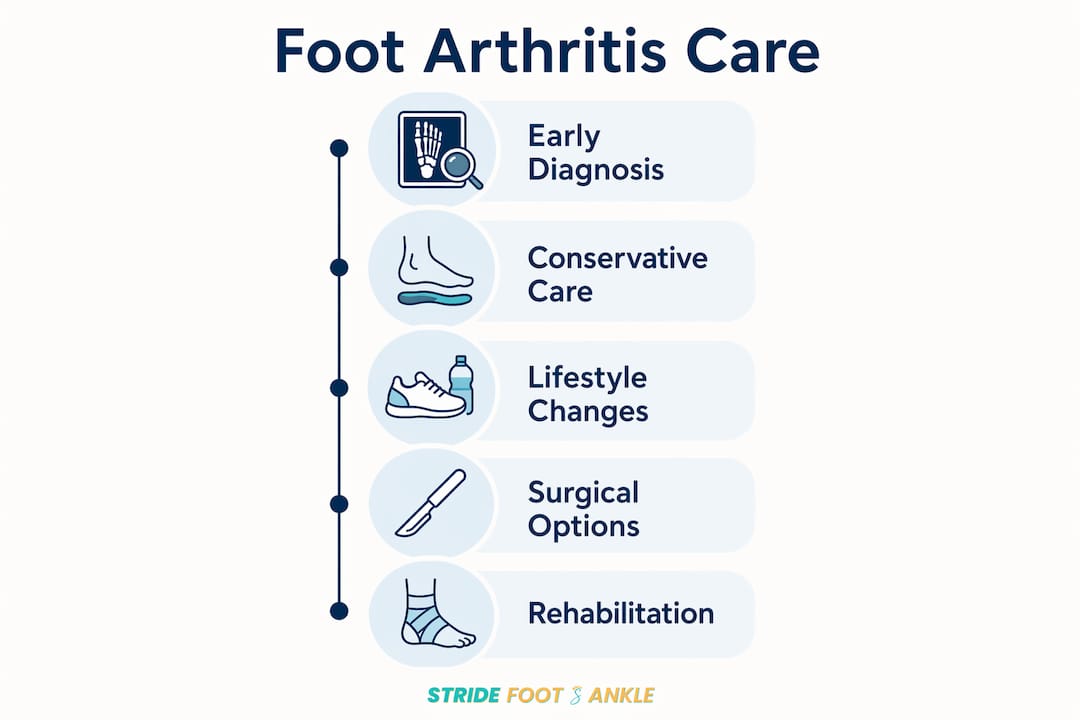
Foot arthritis is defined as inflammation of one or more joints in the foot, causing pain, stiffness, and reduced mobility that directly limits daily function. Treating foot arthritis matters because untreated joint inflammation leads to permanent joint deformity, altered gait, and cascading damage to the knees, hips, and spine. Clinical consensus in 2026 supports early intervention as the most effective way to control symptoms, slow cartilage loss, and preserve your ability to walk, work, and stay active. The good news is that conservative care relieves pain for the vast majority of patients without surgery.
Why treat foot arthritis before it gets worse?
Treating foot arthritis early is the single most effective way to prevent irreversible joint damage and maintain your quality of life. Early treatment preserves joint function and makes symptom control significantly easier than managing advanced disease. Every week of delay allows cartilage to wear further, and cartilage does not regenerate once it is gone.

Foot arthritis affects the joints of the toes, midfoot, and ankle. The most common forms are osteoarthritis (mechanical wear of cartilage), rheumatoid arthritis (an autoimmune condition), and post-traumatic arthritis (damage following a fracture or sprain). Each type causes joint inflammation, but the triggers and progression rates differ. Recognizing which type you have shapes the entire treatment plan.
Pain and stiffness are the most obvious symptoms, but the functional consequences run deeper. Patients who avoid addressing foot pain often shift their weight unconsciously to protect the sore joint. That compensation changes how you walk, and altered gait transfers stress to the knees, hips, and lower back. The secondary injuries that develop are frequently harder to treat than the original foot problem.
Treating foot arthritis also protects your cardiovascular health. Reduced mobility from untreated foot pain limits physical activity, which raises the risk of weight gain, cardiovascular disease, and metabolic decline. Staying mobile is not just about comfort. It is a direct contributor to long-term health.
What happens if you don’t treat foot arthritis?
Unmanaged foot arthritis causes progressive, irreversible joint damage that compounds over time. The longer inflammation goes unchecked, the faster cartilage erodes and the more likely deformity becomes.
The consequences of ignoring foot arthritis include:
- Permanent joint deformity. Chronic inflammation reshapes joint structures. Bunions, hammertoes, and midfoot collapse are direct results of untreated arthritic stress on the foot’s architecture.
- Cartilage loss. Cartilage has no blood supply and cannot repair itself. Once it is gone, bone grinds against bone, producing severe pain and rigidity.
- Gait changes and secondary injuries. Ignoring foot pain transfers stress to other joints. Knee, hip, and back pain frequently develop as the body compensates for a painful foot.
- Increased fall risk. Stiff, painful feet reduce balance and proprioception, raising the risk of falls and fractures, especially in older adults.
- Reduced cardiovascular health. Chronic pain limits walking and exercise. That physical inactivity compounds systemic health risks far beyond the foot itself.
Pro Tip: If you notice that you are favoring one side when you walk or that your shoes are wearing unevenly, see a podiatrist. Uneven wear is a visible sign that your gait has already changed to protect a painful joint.
The deformities that develop from untreated arthritis are not cosmetic concerns. Bunions and hammertoes alter the mechanics of every step. They create new pressure points, cause skin breakdown, and make finding comfortable footwear nearly impossible. Correcting these deformities surgically is far more complex than managing the underlying arthritis early.
Inflammatory arthritis, such as rheumatoid arthritis, carries additional risks. Without disease-modifying treatment, systemic inflammation damages multiple joints simultaneously and can affect internal organs. Co-management between a podiatrist and a rheumatologist is the standard of care for these patients.
How does conservative treatment help manage foot arthritis symptoms?
Conservative treatment controls foot arthritis symptoms effectively for the vast majority of patients. Over 90% of patients manage foot arthritis successfully with non-surgical approaches, with surgery reserved for cases that do not respond to conservative care. Starting with the least invasive options is both clinically sound and practical.
The core conservative treatments, in order of typical application, are:
Custom orthotics. A podiatrist prescribes orthotics molded to your foot’s exact shape. Custom orthotics redistribute joint loading, which slows mechanical cartilage wear that is otherwise irreversible. Off-the-shelf insoles provide cushioning but do not address the biomechanical root cause.
Supportive footwear. Stiff-soled, rocker-bottom shoes reduce painful joint motion, particularly for big toe arthritis (hallux rigidus). A wide toe box prevents compression of inflamed joints. Choosing the right shoe is not a minor detail. It is a primary treatment tool. Some patients also benefit from arthritis-specific footwear designed to reduce joint stress with every step.
Physical therapy. Targeted stretching and strengthening exercises maintain joint range of motion and reduce pain. Low-impact activities like swimming or cycling preserve mobility without loading arthritic joints. A physical therapist designs a program specific to your foot’s limitations.
Activity modification. The 10% rule applies here: increase activity intensity or duration by no more than 10% per week to avoid flares. Swapping high-impact activities like running for walking or cycling protects joints while keeping you active.
Anti-inflammatory medications. Nonsteroidal anti-inflammatory drugs (NSAIDs) such as ibuprofen reduce inflammation and pain during flares. They are most effective when combined with mechanical interventions like orthotics and footwear changes, not used alone.
Corticosteroid injections. Injections provide rapid short-term relief of acute inflammation, typically lasting up to three months. Podiatrists limit these to four injections per year to protect joint integrity. Injections are a bridge to function, not a long-term solution on their own.
Pro Tip: Most patients who adjust their footwear and receive orthotics see significant pain relief within 4–8 weeks. If your symptoms have not improved after 12 weeks of consistent conservative care, request a formal re-evaluation. Persistent pain beyond that window warrants imaging and a revised treatment plan.
The timeline for improvement matters. Most foot conditions improve within 4–8 weeks with consistent conservative care. Patients who follow through with orthotics, footwear changes, and physical therapy consistently outperform those who rely on medication alone. The combination of mechanical support and targeted exercise addresses the cause, not just the symptom.
For inflammatory arthritis, conservative podiatric care works alongside rheumatology treatment. Disease-modifying antirheumatic drugs (DMARDs) and biologics control systemic inflammation, while the podiatrist addresses foot-specific symptoms, joint protection, and deformity prevention. Neither specialty replaces the other.
When and why does surgery become necessary for foot arthritis?
Surgery is the right choice when conservative care has failed and pain or deformity significantly limits function. The decision is never taken lightly, and it is never the first step. Surgery addresses the structural consequences of arthritis. It does not cure the underlying disease.
The main surgical options differ significantly in what they preserve and what they sacrifice:
| Procedure | What it does | Best for | Key trade-off |
|---|---|---|---|
| Joint fusion (arthrodesis) | Permanently stabilizes the joint by fusing bones together | End-stage arthritis with severe pain | Eliminates joint motion; highly reliable pain relief |
| Joint-preserving procedures | Realigns bones or removes bone spurs without fusing | Moderate arthritis with preserved cartilage | Maintains motion; requires adequate cartilage remaining |
| Joint replacement (arthroplasty) | Replaces damaged joint surfaces with implants | Selected ankle arthritis cases | Restores motion; longer recovery; revision risk |
Joint fusion surgery eliminates pain by stabilizing severely arthritic joints and delivers reliable functional outcomes for end-stage disease. Patients lose joint motion at the fused site, but most adapt well and return to normal daily activities. The trade-off is worth it when pain is constant and conservative care has been exhausted.
Recovery from foot arthritis surgery typically spans 6–12 weeks of protected weight-bearing, followed by physical therapy to rebuild strength and gait. Realistic expectations matter. Surgery restores function and eliminates pain at the affected joint. It does not restore the foot to its pre-arthritis state. Patients who understand this recover with better satisfaction.
Inflammatory arthritis cases require coordinated care between the podiatrist and rheumatologist before and after surgery. Biologic medications may need to be paused perioperatively to reduce infection risk. That coordination is a clinical standard, not optional.
Lifestyle and self-care strategies to support foot arthritis management
Daily habits have a measurable impact on foot arthritis symptoms. Professional treatment works best when you reinforce it with consistent self-care at home.
The most effective lifestyle strategies include:
- Regular low-impact exercise. Walking on supportive surfaces, swimming, and cycling maintain joint mobility and muscle strength without overloading arthritic joints. Consistent movement reduces stiffness more effectively than rest.
- Weight management. Every pound of body weight adds roughly four pounds of force across the foot joints during walking. Reducing body weight directly reduces joint load and slows cartilage wear.
- Proper footwear selection. Replace worn shoes regularly. Shoes lose their structural support long before they look worn out. A podiatrist can evaluate your footwear as part of a gait analysis, identifying stress contributors that a general practitioner typically misses. Patients who need extra support between appointments often find that barefoot-style orthopedic shoes help reduce joint stress during daily wear.
- Avoiding high-impact activities and poor footwear. High heels, narrow toe boxes, and flip-flops worsen arthritic symptoms. Running on hard pavement without adequate support accelerates joint wear.
- Home remedies for flare management. Epsom salt soaks reduce swelling and provide temporary pain relief during acute flares. Compression socks help control edema and improve circulation, particularly after long periods of standing.
- Monitoring your symptoms. Track pain levels, swelling, and stiffness patterns. If symptoms worsen, spread to new joints, or stop responding to your usual management, schedule a podiatry appointment promptly.
Physical therapy for foot pain is most effective when combined with these daily habits. Exercises prescribed by a therapist lose their benefit quickly if you return to unsupportive footwear or high-impact activities between sessions. Consistency is the deciding factor in long-term outcomes.
Key Takeaways
Treating foot arthritis early with conservative care is the most effective way to prevent permanent joint damage, preserve mobility, and avoid surgery.
| Point | Details |
|---|---|
| Early treatment prevents deformity | Starting care before cartilage is lost stops bunions, hammertoes, and midfoot collapse from developing. |
| Conservative care works for most patients | Over 90% of patients manage foot arthritis successfully without surgery using orthotics, footwear, and physical therapy. |
| Untreated arthritis harms more than the foot | Altered gait from foot pain causes secondary knee, hip, and back injuries that are harder to treat. |
| Symptom improvement takes 4–8 weeks | Consistent conservative care typically delivers significant pain relief within 4–8 weeks; re-evaluate if pain persists beyond 12 weeks. |
| Lifestyle habits reinforce professional treatment | Weight management, low-impact exercise, and proper footwear directly reduce joint load and slow disease progression. |
What I’ve learned from watching patients wait too long
The pattern I see most often is not dramatic. A patient notices morning stiffness in the big toe joint. They assume it will pass. They switch to softer shoes, take ibuprofen on bad days, and keep going. Six months later, they are in my office with a rigid joint, a developing bunion, and knee pain they did not connect to their foot.
The delay is understandable. Foot pain feels manageable until it is not. But the window for conservative treatment is real, and it closes. Once cartilage is gone, no amount of orthotics or physical therapy brings it back. What changes at that point is the goal: from preserving function to compensating for its loss.
What surprises most patients is how much a proper footwear and gait evaluation changes the picture. A podiatrist’s mechanical gait analysis reviews the shoes you actually wear every day, not just the ones you bring to the appointment. That step alone identifies stress contributors that drive joint damage. General practitioners rarely perform this assessment, which is why patients often arrive having tried “everything” without addressing the actual mechanical cause.
The other thing I want patients to understand is that achieving good symptom control is a realistic goal. Arthritis does not have to mean constant pain or giving up the activities you love. Patients who commit to conservative management early, follow through with their orthotics, and make the footwear changes their podiatrist recommends consistently return to normal work and leisure activities. That outcome is available to most people. The barrier is usually time, not biology.
— Ramil
Foot arthritis care at Stridefootankle in Las Vegas
Stridefootankle, led by Dr. Nahad Wassel, provides comprehensive podiatric care for patients managing foot arthritis in Las Vegas. The practice follows a conservative-first approach: custom orthotics, targeted physical therapy, corticosteroid injections, and footwear guidance before any surgical discussion. When surgery is the right choice, Dr. Wassel’s board-certified surgical training covers joint fusion, joint-preserving procedures, and joint replacement with clear recovery planning.
Same-week appointments are available, and the practice accepts most major insurance plans. If foot pain is limiting your daily life, a formal evaluation is the first step toward a plan built around your specific joints, activity level, and goals. Schedule your consultation with Stridefootankle and get back on your feet with a clear path forward.
FAQ
What is foot arthritis?
Foot arthritis is inflammation of one or more foot joints that causes pain, stiffness, and reduced mobility. The most common types are osteoarthritis, rheumatoid arthritis, and post-traumatic arthritis, each with different causes and treatment approaches.
Why treat foot arthritis instead of waiting it out?
Untreated foot arthritis causes irreversible cartilage loss and joint deformity that cannot be reversed with later treatment. Early care preserves joint function and makes symptom control significantly more effective than managing advanced disease.
How long does conservative treatment take to work?
Most patients see significant pain relief within 4–8 weeks of consistent conservative care including orthotics, supportive footwear, and physical therapy. Symptoms that persist beyond 12 weeks warrant a formal re-evaluation and possible imaging.
When is surgery necessary for foot arthritis?
Surgery is indicated when severe pain and functional limitation persist after exhausting conservative care. Joint fusion is the most reliable option for end-stage arthritis, delivering consistent pain relief with good functional outcomes.
Can lifestyle changes actually slow foot arthritis progression?
Yes. Weight management reduces joint load directly, and low-impact exercise maintains cartilage nutrition and joint mobility. Proper footwear selection and avoiding high-impact activities on hard surfaces are clinically recognized strategies for slowing disease progression.
Recommended
- Arthritis Can Be Painless in your Feet – Stride Foot & Ankle – Dr. Nahad Wassel
- Joint Pain: Causes, Relief Options, and Treatment – Stride Foot & Ankle – Dr. Nahad Wassel
- Arthritis: Symptoms, Types, and Treatment Options – Stride Foot & Ankle – Dr. Nahad Wassel
- Physical therapy for foot pain: recovery and relief – Stride Foot & Ankle – Dr. Nahad Wassel
Recent Comments