

TL;DR:
- Many sports injuries involve damage to muscles, bones, tendons, or ligaments caused by athletic activities. A significant percentage of these injuries are preventable through warm-up, technique, and load management, with proper treatment supporting full recovery. Recognizing injury types and following structured rehab reduces the risk of chronic issues and re-injury.
Sports injuries are defined as damage to muscles, bones, tendons, or ligaments caused by athletic activity or exercise. They affect millions of athletes annually, from recreational runners in Las Vegas to professional competitors, and range from minor ankle sprains to complete ACL tears requiring surgery. 50 to 60% of sports injuries are preventable with proper warm-up, technique training, and workload management. Understanding the types of injuries, how to treat them, and how to rehabilitate effectively is the difference between a full recovery and a chronic problem that limits your performance for years.
What are the most common sports injuries?
The most common sports injuries fall into two categories: acute injuries, which happen suddenly from a single event, and overuse injuries, which develop gradually from repetitive stress on tissues. Recognizing which type you are dealing with shapes every decision that follows, from how you treat it in the first 48 hours to how long your rehabilitation will take.
Acute vs. overuse injuries
Acute injuries include ankle sprains, muscle strains, bone fractures, joint dislocations, and ligament tears such as ACL ruptures. They typically produce immediate pain, swelling, and loss of function. Overuse injuries, by contrast, build slowly. Conditions like tendonitis, shin splints, and stress fractures develop when repetitive loading exceeds the tissue’s ability to recover. Both categories are serious, and both respond to structured treatment.
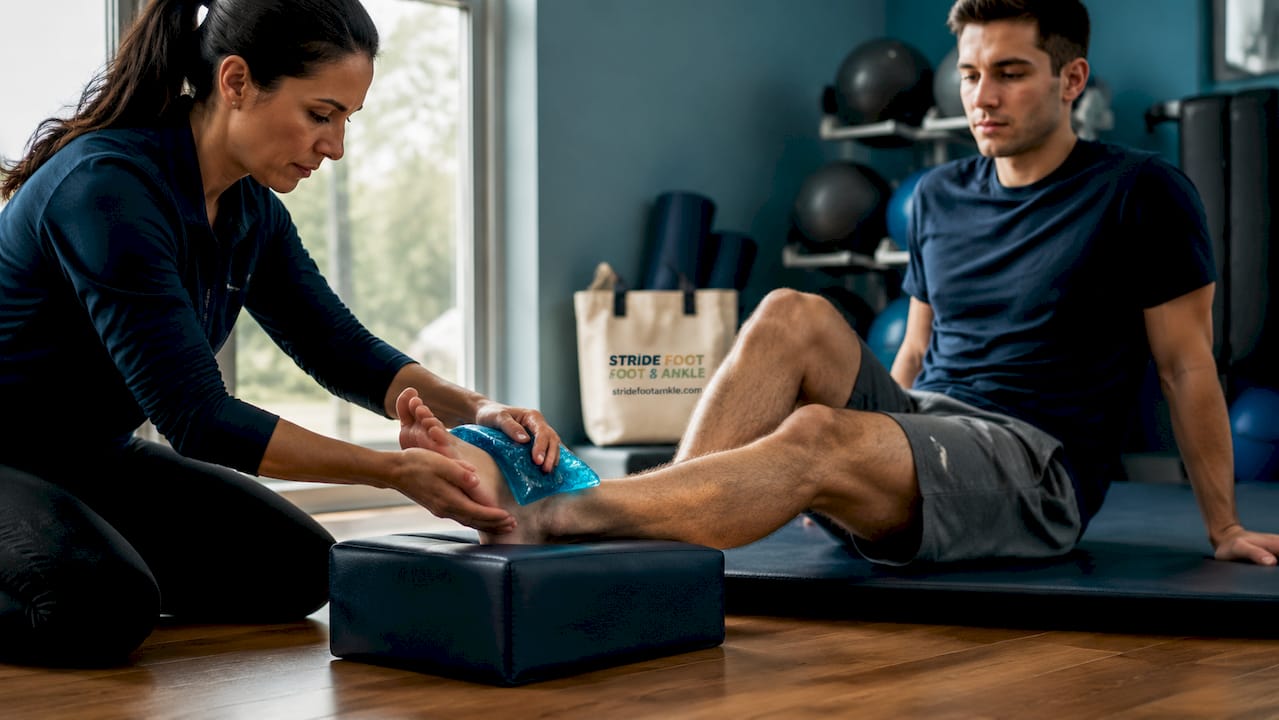
The signs of sports injuries differ by type and severity. Acute injuries usually present with sharp pain at the moment of impact, rapid swelling, bruising, and instability in the affected joint. Overuse injuries tend to announce themselves with dull aching during activity, stiffness after rest, and localized tenderness that worsens over days or weeks. Ignoring either set of signals accelerates tissue damage.
Youth athletes face a distinct set of concerns. Conditions like Osgood-Schlatter disease, which causes pain just below the knee, and Little League elbow, an overuse injury of the growth plate at the elbow, are specific to growing bodies. About half of pediatric sports injuries are overuse injuries, a figure that rises sharply with early sport specialization and year-round play. Parents and coaches should treat persistent pain in a young athlete as a red flag, not a sign of weakness.
Common injury types at a glance
| Injury Type | Category | Typical Symptoms |
|---|---|---|
| Ankle sprain | Acute | Swelling, bruising, instability |
| Muscle strain | Acute | Sharp pain, muscle weakness, spasm |
| ACL tear | Acute | Popping sound, knee instability, swelling |
| Tendonitis | Overuse | Dull aching, stiffness, localized tenderness |
| Shin splints | Overuse | Aching along the shin, worse during runs |
| Stress fracture | Overuse | Point tenderness on bone, pain with weight-bearing |
| Growth plate injury | Acute or overuse | Pain near joint in youth athletes, swelling |
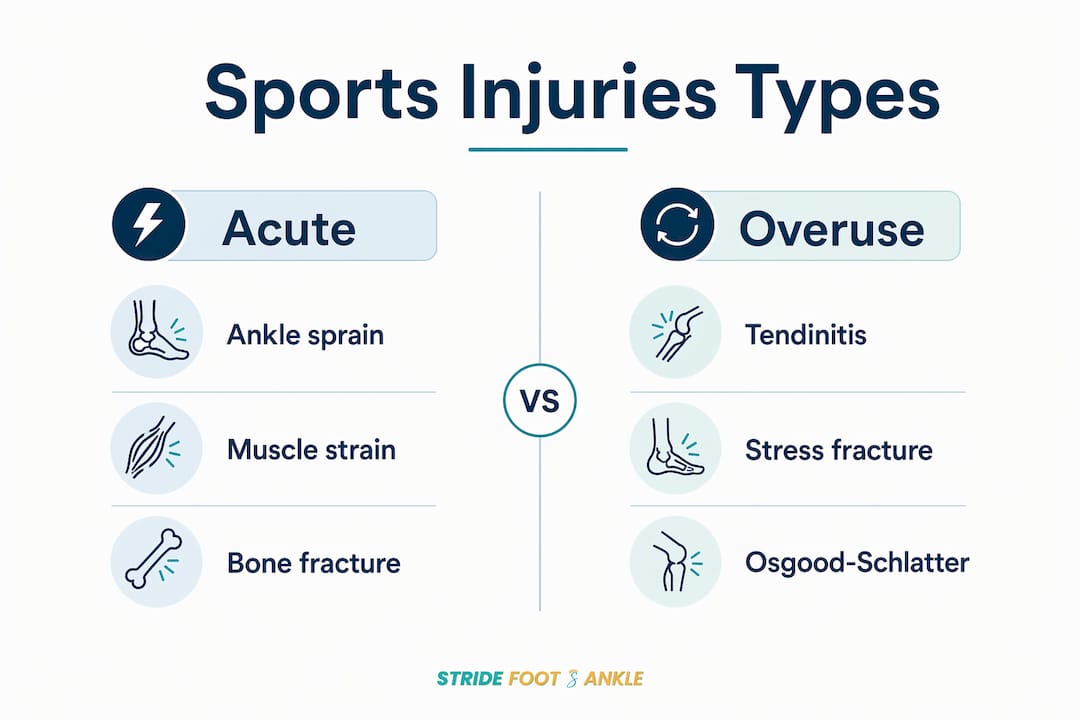
Foot and ankle injuries make up a significant share of all sports-related cases. Ankle sprains are the single most common acute sports injury across virtually every sport. Understanding the causes and recovery process for ankle sprains gives you a practical foundation for managing one of the most frequently mishandled injuries in recreational athletics.
How can you prevent sports injuries effectively?
Preventing sports injuries requires three things working together: a properly structured warm-up, progressive training load management, and adequate recovery time. Dynamic, sport-specific warm-ups outperform static stretching in preparing muscles and the nervous system for activity, which means holding a quad stretch before a soccer match is less protective than performing leg swings, lateral shuffles, and short sprints. The goal is to activate the exact muscles and movement patterns you will use during competition.
A step-by-step prevention framework
Start every session with a dynamic warm-up. Spend 10 to 15 minutes on movements that mirror your sport. Runners benefit from high knees, butt kicks, and hip circles. Basketball players should include lateral shuffles and jump landings. Static stretching is better placed after activity, not before.
Apply progressive load management. Mayo Clinic experts confirm that gradually increasing training intensity and volume is a foundational injury prevention principle. A common guideline is to increase weekly training load by no more than 10% at a time. Sudden spikes in mileage or intensity are among the leading causes of overuse injuries.
Incorporate neuromuscular training. Programs like the FIFA 11+ protocol, developed specifically for soccer players, reduce ankle, knee, and ACL injuries by 43 to 50%. These programs train the body to control joint position under load, which is the mechanism behind most non-contact ligament injuries. You do not need to be a soccer player to benefit from the principles.
Cross-train and schedule rest. Repeating the same movement patterns daily without variation overloads specific tissues. Rotating between running, swimming, cycling, and strength training distributes stress across different muscle groups. Rest days are not optional. They are when adaptation actually occurs.
Follow age-appropriate guidelines for youth athletes. The National Athletic Trainers Association recommends that the number of hours per week a child spends in organized sport should not exceed their age in years. This age-to-hours ratio significantly lowers overuse injury rates. A 12-year-old, for example, should not train more than 12 hours per week in a single sport.
Prioritize sleep and hydration. Tissue repair happens during sleep, and dehydrated muscles are less pliable and more prone to strains. Athletes training in hot climates, including Las Vegas, face elevated dehydration risk that compounds injury vulnerability.
Pro Tip: Watch for subtle changes in your movement quality before pain appears. Early signs of injury often manifest as slight stiffness, altered gait, or reduced range of motion. Addressing these signals immediately prevents a minor issue from becoming a structural problem.
For a deeper look at foot-specific prevention strategies, Stridefootankle has published expert guidance on foot injury prevention that covers footwear selection, surface considerations, and load management for runners and field sport athletes.
What are the best treatment options for sports injuries?
Treatment for sports injuries depends on injury type, severity, and how quickly you seek care. For most acute injuries, the RICE method, which stands for Rest, Ice, Compression, and Elevation, remains the standard first-line response within the first 48 to 72 hours. It reduces swelling, limits secondary tissue damage, and creates the conditions for healing to begin. Apply ice for 15 to 20 minutes at a time, never directly on skin, and elevate the injured limb above heart level when resting.
Non-surgical treatment options
Most sports injuries do not require surgery. The following non-surgical approaches cover the majority of cases:
- Physical therapy: A licensed physical therapist designs a program targeting strength deficits, movement compensations, and tissue healing. This is the most evidence-supported non-surgical intervention for sprains, strains, tendonitis, and post-fracture recovery.
- Bracing and orthotics: Ankle braces reduce re-sprain risk during return to sport. Custom orthotics address biomechanical contributors to overuse injuries like plantar fasciitis and shin splints.
- Anti-inflammatory medications: Nonsteroidal anti-inflammatory drugs (NSAIDs) such as ibuprofen reduce pain and swelling in the acute phase. They are not a long-term solution and should not mask pain to allow continued training.
- Corticosteroid injections: Used selectively for persistent tendonitis or bursitis that has not responded to physical therapy. Overuse of injections can weaken tendon tissue, so they are typically limited to two or three per site.
- Platelet-rich plasma (PRP) therapy: An emerging option for tendon and ligament injuries, PRP uses concentrated growth factors from your own blood to accelerate tissue repair. Evidence is strongest for chronic tendinopathy.
Stridefootankle outlines the full range of nonsurgical tendon and ligament options available for foot and ankle injuries, which is particularly relevant for athletes dealing with Achilles tendinopathy, peroneal tendon injuries, or chronic ankle instability.
When surgery becomes necessary
Surgery is indicated when ligaments are completely torn, fractures are displaced, or conservative treatment fails after an appropriate trial period. Recovery timelines range from weeks for minor hamstring tears to several months for complete tears requiring surgical repair. ACL reconstruction, for example, typically requires 9 to 12 months of rehabilitation before return to competitive sport. Pediatric cases involving growth plates require specialized surgical planning to avoid disrupting bone development. Parents navigating these decisions can find detailed guidance on when kids need ankle surgery at Stridefootankle.
How does rehabilitation support recovery from sports injuries?
Sports injury rehabilitation is a structured process that moves through distinct phases, each building on the last. Skipping phases or rushing the timeline is the primary reason athletes re-injure themselves within the first season of return. Rehabilitation is not simply resting until pain disappears. It is active, progressive work that restores tissue strength, joint stability, and movement quality.
The four phases of sports injury rehabilitation
Phase 1: Acute management. The goal is to control pain and swelling while protecting the injured tissue. This phase uses RICE, gentle range-of-motion exercises, and non-weight-bearing or partial weight-bearing movement depending on injury severity. Duration ranges from a few days to two weeks.
Phase 2: Progressive strengthening. Once swelling subsides and pain is manageable, targeted strengthening begins. Eccentric exercises, which involve lengthening a muscle under load, are particularly effective here. Eccentric exercises help tissues absorb force and are essential in reducing re-injury risk for hamstring strains and tendonitis. A classic example is the Nordic hamstring curl, which has strong evidence for both treatment and prevention of hamstring injuries.
Phase 3: Neuromuscular control and balance. Injured joints lose proprioception, the body’s sense of joint position in space. Balance training on unstable surfaces, single-leg exercises, and reactive drills rebuild this neural awareness. Athletes who skip this phase return to sport with joints that cannot respond quickly enough to prevent re-injury.
Phase 4: Sport-specific training and return to play. The final phase reintroduces the exact demands of your sport. A soccer player progresses from jogging to cutting to full-speed sprinting to contact drills. Return-to-play clearance should be based on objective performance benchmarks, not just the absence of pain.
Pro Tip: Compliance with your rehabilitation program between clinic visits determines outcomes more than any single treatment session. Athletes who complete their home exercise program consistently recover faster and with lower re-injury rates than those who only exercise during supervised appointments.
Rehabilitation timelines by injury type
| Injury | Typical Rehab Duration | Key Milestone |
|---|---|---|
| Grade I ankle sprain | 1 to 3 weeks | Full weight-bearing without pain |
| Grade II ankle sprain | 3 to 6 weeks | Single-leg balance restored |
| Hamstring strain (minor) | 3 to 6 weeks | Full sprint speed without compensation |
| Achilles tendinopathy | 8 to 16 weeks | Pain-free eccentric loading |
| ACL reconstruction | 9 to 12 months | Limb symmetry index above 90% |
For a detailed, phase-by-phase breakdown of ankle sprain recovery, Stridefootankle’s ankle sprain rehab guide covers the full process from acute care through return to sport.
Key takeaways
Effective recovery from sports injuries requires matching the right treatment to the injury type, following a structured rehabilitation program, and building prevention habits into every training session.
| Point | Details |
|---|---|
| Prevention is achievable | 50 to 60% of sports injuries are preventable through warm-up, load management, and technique training. |
| Acute vs. overuse distinction matters | Treatment and timeline differ significantly; misidentifying the injury type delays recovery. |
| RICE is the first-line response | Rest, Ice, Compression, and Elevation within 48 to 72 hours limits damage and accelerates healing. |
| Eccentric training reduces re-injury | Eccentric strengthening in rehab rebuilds tissue resilience and lowers the risk of the same injury recurring. |
| Youth athletes need different rules | The age-to-hours ratio and mandatory rest days are evidence-based guidelines that reduce pediatric overuse injuries. |
Why I think most athletes are solving the wrong problem
Athletes who come in with recurring injuries almost always share one pattern: they treated the symptom and skipped the cause. A sprained ankle gets taped, rested for a week, and the athlete returns to the same training load with the same movement deficits that caused the sprain in the first place. Two months later, the same ankle goes again.
The uncomfortable truth about sports injury management is that pain relief and recovery are not the same thing. An ankle can stop hurting while still having 40% of its pre-injury strength and significantly impaired proprioception. That gap between feeling fine and being structurally ready is where most re-injuries live.
What I have observed consistently is that athletes who treat injury prevention as part of their training, not as something separate they do after getting hurt, sustain far fewer injuries over a career. The FIFA 11+ program is a perfect example. It takes about 20 minutes, it is built into the warm-up, and it cuts ACL and ankle injury rates nearly in half. The athletes who use it are not doing extra work. They are doing smarter work.
Youth athletes deserve a specific mention here. The pressure to specialize early and train year-round is real, and it is producing a generation of young athletes with overuse injuries that used to be seen only in adults. Multi-sport participation through adolescence builds more resilient athletes, not less competitive ones. Rest is not lost training time. It is when adaptation happens.
My advice is straightforward: if you are dealing with a recurring injury, stop asking how to get out of pain faster and start asking why the tissue keeps failing. That question leads to better answers and longer careers.
— Ramil
Get expert foot and ankle care at Stridefootankle
If you are dealing with a persistent foot or ankle sports injury that has not responded to rest or basic home care, professional evaluation changes your outcome.
Stridefootankle, led by Dr. Nahad Wassel in Las Vegas, provides comprehensive foot and ankle care for athletes at every level. From conservative treatment plans for tendon and ligament injuries to surgical intervention when it is genuinely necessary, the practice builds individualized care plans around your injury, your sport, and your recovery goals. If pain is limiting your training or daily movement, scheduling a consultation is the most direct step toward getting back on your feet with confidence.
FAQ
What counts as a sports injury?
A sports injury is any damage to muscles, bones, tendons, or ligaments that results from athletic activity or exercise. Both acute trauma and gradual overuse conditions qualify.
How long does it take to recover from a sports injury?
Recovery ranges from one to three weeks for minor sprains to 9 to 12 months for ACL reconstruction. Timeline depends on injury severity, the tissue involved, and how consistently you follow your rehabilitation program.
What are the signs that a sports injury needs medical attention?
Seek medical evaluation if you experience significant swelling, inability to bear weight, joint instability, numbness, or pain that does not improve within 48 to 72 hours of rest and ice. Growth plate pain in youth athletes always warrants prompt assessment.
Can sports injuries be prevented entirely?
Not entirely, but 50 to 60% of sports injuries are preventable with dynamic warm-ups, progressive load management, and neuromuscular training. Structured programs like FIFA 11+ demonstrate that systematic prevention significantly reduces injury rates.
What is the difference between a sprain and a strain?
A sprain is a stretch or tear of a ligament, which connects bone to bone. A strain is a stretch or tear of a muscle or tendon, which connects muscle to bone. Both are graded from mild (Grade I) to complete rupture (Grade III).
Recommended
- Ankle Sprain Recovery Process: Your 2026 Rehab Guide – Stride Foot & Ankle – Dr. Nahad Wassel
- Ankle Sprain: Causes, Treatment, and Recovery Guide – Stride Foot & Ankle – Dr. Nahad Wassel
- Nonsurgical Options for Tendon and Ligament Injuries – Stride Foot & Ankle – Dr. Nahad Wassel
- How to Prevent Foot Ulcers: a Guide for At-Risk Patients – Stride Foot & Ankle – Dr. Nahad Wassel
Recent Comments