

An ingrown toenail (onychocryptosis) occurs when the edge or corner of the nail plate grows into the surrounding soft tissue, causing pain, redness, and swelling. It most often affects the big toe. Seek care immediately if you notice spreading redness, pus, fever, or if you have diabetes or poor circulation.
Act now if you notice:
- Pus or discharge from the nail fold
- Redness spreading beyond the toe
- Fever alongside toe pain
- Any nail issue and you have diabetes or peripheral vascular disease
Statistic: Ingrown toenails represent roughly 20% of foot problems seen in some primary care settings, making them one of the most common reasons patients visit a podiatrist.
Table of Contents
- What is an ingrown toenail and who does it affect?
- What does an ingrown toenail look and feel like?
- What causes ingrown toenails, and which factors can you change?
- When should you see a doctor, and what happens at the visit?
- How do you treat an ingrown toenail safely?
- What does recovery look like after treatment?
- How can you prevent ingrown toenails from coming back?
- Special considerations: diabetes, poor circulation, and children
- What to expect at a Stride Foot & Ankle appointment
- Key Takeaways
- The case for acting sooner than you think you need to
- FAQ
What is an ingrown toenail and who does it affect?
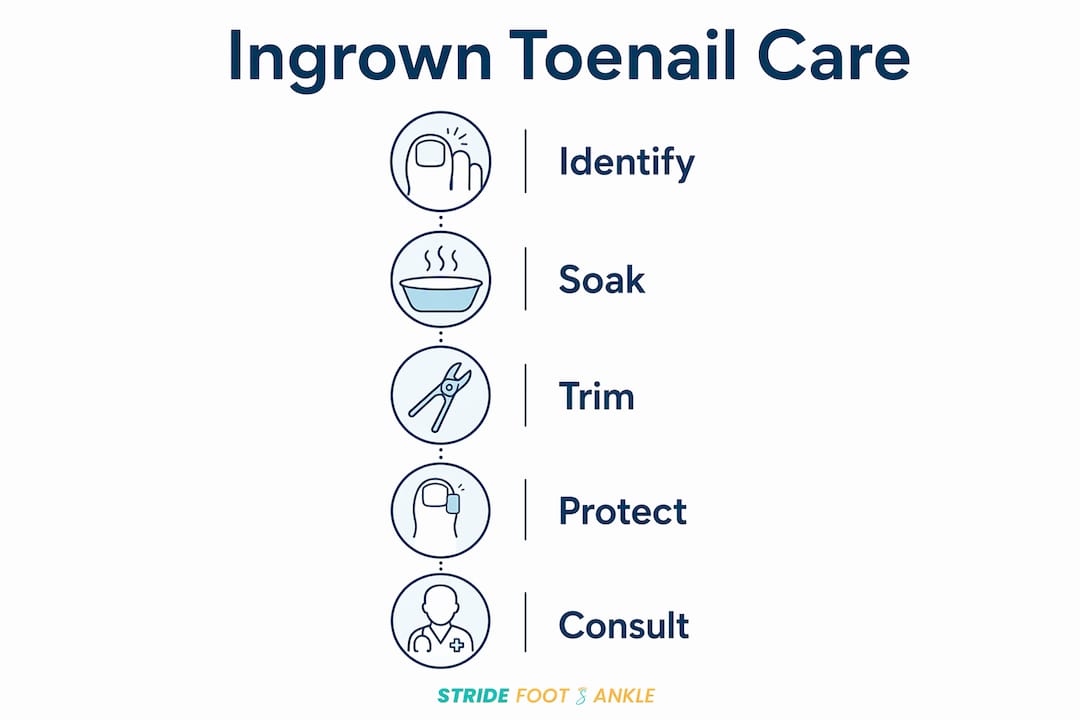
An ingrown toenail develops when the nail plate’s edge pierces the periungual tissue (the soft skin bordering the nail), triggering inflammation and, if bacteria enter, secondary infection. Clinicians also call it unguis incarnatus; when infection is present, the surrounding tissue may be labeled paronychia. The hallux (big toe) is affected in the vast majority of cases, though any toe can be involved.
The condition is genuinely common. Primary care and podiatry practices see it across all age groups, from teenagers in athletic shoes to older adults with edema-related soft-tissue changes. Anyone can develop one, but certain habits and anatomical traits raise the odds considerably.
Pro Tip: If you can see the nail edge disappearing under the skin fold, that is a clinical sign, not just soreness. Do not wait for pus to form before calling your provider.
What does an ingrown toenail look and feel like?
Symptoms range from mild tenderness to a visibly infected, draining wound. Knowing where you fall on that spectrum helps you decide whether home care is reasonable or a clinic visit is overdue.
Common symptoms include:
- Localized pain along one or both sides of the nail
- Redness and warmth around the nail fold
- Swelling of the periungual tissue
- Drainage or pus when infection is present
- Granulation tissue (a raised, beefy-red overgrowth) that forms over the nail edge in chronic cases
- Bleeding when the area is disturbed
Infected vs. non-infected: Simple inflammation produces pain, redness, and swelling without any discharge. Once bacteria enter, you will typically see cloudy or yellow drainage, increasing warmth, and sometimes a foul odor. Granulation tissue almost always signals a more advanced or chronic case that needs clinical attention rather than continued home management.
What causes ingrown toenails, and which factors can you change?
Improper nail trimming and constrictive footwear are the two leading causes, but anatomy and lifestyle both play a role. Understanding which factors are in your control makes prevention far more practical.
| Factor | Modifiable? | Examples |
|---|---|---|
| Nail trimming technique | Yes | Rounding corners, cutting too short |
| Footwear choice | Yes | Narrow toe box, tight athletic shoes |
| Activity and trauma | Partially | Running, repetitive pressure |
| Foot hygiene and moisture | Yes | Excessive sweating, fungal nails |
| Congenital nail curvature | No | Naturally curved or wide nail plate |
| Bone shape or bunions | No | Structural pressure on nail fold |
| Age-related edema | No | Increased soft-tissue pressure around nail |
| Obesity or peripheral edema | Partially | Soft-tissue pressure changes alter nail-to-fold relationship |
Repetitive trauma from running or tight athletic shoes is a frequently overlooked contributor. Even a shoe that feels comfortable at rest can exert inward pressure on the toe box during activity, gradually pushing the nail into surrounding tissue.
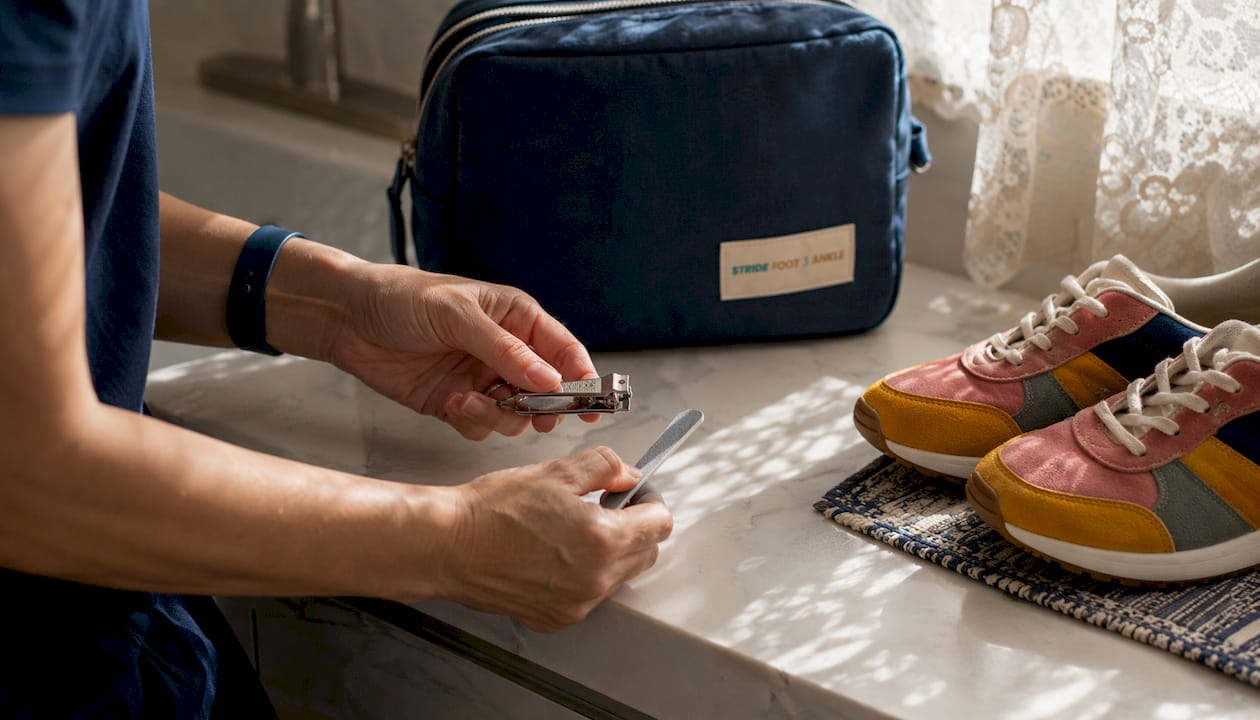
Pro Tip: Cut nails straight across and leave them level with the tip of the toe. Rounding the corners is the single most common trimming mistake that leads to ingrown nails.
When should you see a doctor, and what happens at the visit?
See a provider promptly if any of the following apply:
- Spreading redness beyond the immediate nail fold
- Pus or cloudy discharge
- Fever or chills alongside toe symptoms
- Severe pain or inability to bear weight
- Diabetes, peripheral vascular disease, or poor circulation — immediate podiatric evaluation is recommended at the first sign of any nail issue in these patients
At a typical clinic visit, the provider will review your history (trimming habits, footwear, prior episodes), examine the nail and surrounding tissue, and assess for signs of deep infection. A wound culture may be taken if drainage is present and not responding to initial treatment. Local anesthesia is used for any in-office procedure, so the exam itself is not painful once the area is numb.
Imaging (X-ray) is considered in recurrent or unusual cases, particularly in younger patients, to rule out bony causes such as osteochondroma or to evaluate for osteomyelitis when deep infection is suspected.
How do you treat an ingrown toenail safely?
Treatment depends on severity. Mild cases can often be managed at home; moderate to severe cases need clinical care. Skipping straight to self-surgery is the fastest route to a worse problem.
Safe home care steps for mild cases
- Soak the foot in warm (not hot) water for 15–20 minutes, two to three times daily.
- Gently dry the area and apply a topical antiseptic.
- Place a small piece of cotton or unwaxed dental floss under the nail edge to encourage it to grow away from the skin.
- Wear open-toed or wide-toed footwear until symptoms improve.
- Take over-the-counter pain relievers as directed if needed for discomfort.
Office procedures
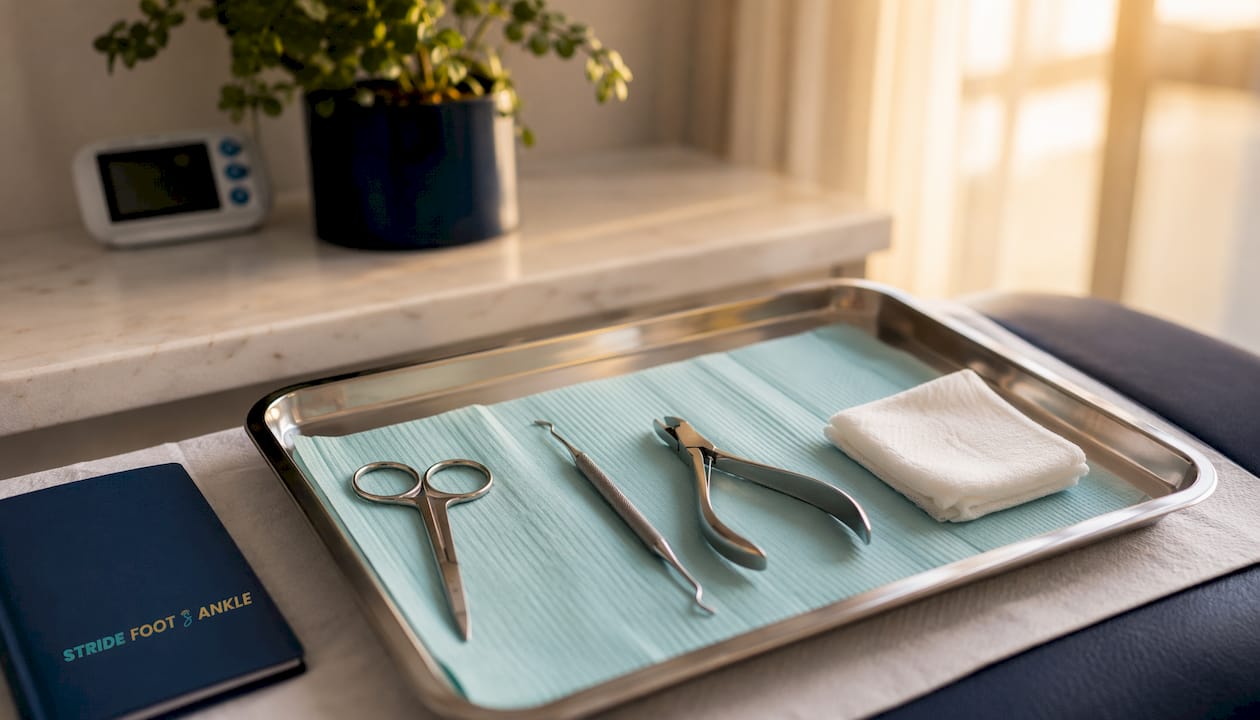
- Partial nail avulsion: The offending nail edge is removed under local anesthesia. This is the most common in-office procedure for recurrent or infected cases.
- Partial matricectomy with chemical phenolization: After removing the nail edge, the nail matrix is treated with phenol to prevent regrowth of that portion. This significantly reduces recurrence.
- Simple wedge removal: A conservative option for early-stage cases without significant infection.
Oral antibiotics are indicated when cellulitis (spreading skin infection) is present or when the infection does not respond to local wound care. Topical antibiotics alone are generally insufficient for established infections. If drainage is cultured and shows resistant organisms, antibiotic selection is adjusted accordingly.
A clear warning: Self-surgery, including digging or cutting into the nail fold, is the most common reason patients develop severe secondary infections that require more invasive treatment. A nail salon is also not equipped to manage an infected ingrown nail. If you are unsure whether your case qualifies as mild, a podiatrist can evaluate and treat it safely in a single visit.
What does recovery look like after treatment?
Realistic timelines help you know when healing is on track and when to call your provider.
With conservative home care, mild cases typically improve within a few days to a couple of weeks, provided the underlying cause (trimming, footwear) is corrected. Splint-based non-surgical management generally heals over 2–12 weeks, depending on how advanced the case was at the start.
After a partial nail avulsion, the nail plate regrows over roughly 2–4 months. The wound site is typically dressed and kept covered for the first one to two weeks. Most patients can return to normal footwear within a few days, though tight shoes should be avoided until the area is fully healed. Detailed post-procedure wound care instructions from your provider will specify soaking frequency, dressing changes, and activity restrictions.
Delayed healing, increasing pain after the first few days, or new drainage after initial improvement are all reasons to schedule a follow-up rather than wait.
How can you prevent ingrown toenails from coming back?
Prevention is mostly about two habits: trimming correctly and wearing shoes that give your toes room.
Nail trimming:
- Cut straight across; never round the corners
- Leave the nail level with or just slightly past the tip of the toe
- Use podiatric nippers rather than household clippers to avoid splintering the nail plate; for thick or fungal nails, clinical debridement is safer than home trimming
- Trim after bathing, when nails are softer and easier to cut cleanly
Footwear checklist:
- Choose shoes with adequate toe box depth and width
- Avoid pointed-toe styles during high-activity periods
- Wear moisture-wicking socks to reduce sweating and maceration
- Replace athletic shoes when the toe box shows visible compression
Pro Tip: If you cannot see or reach your toes comfortably, or if your nails are very thick, have a podiatrist trim them. Patients with reduced flexibility or vision impairment who attempt home correction are at higher risk of creating sharp nail spicules that later penetrate soft tissue.
OTC nail-care products designed for thick or fungal nails can help soften the nail plate between clinical visits, making home trimming safer when the nail is not severely thickened.
Special considerations: diabetes, poor circulation, and children
Diabetes and peripheral vascular disease require a different standard of urgency. For patients with neuropathy or poor circulation, a minor-looking nail injury can rapidly become limb-threatening. Do not attempt home treatment. Contact a podiatrist at the first sign of redness, and review foot ulcer prevention strategies with your care team.
Pediatric cases deserve prompt evaluation when a child’s ingrown nail recurs repeatedly or does not respond to conservative care. Imaging may be considered to rule out structural contributors. A parent’s guide to pediatric ingrown toenails can help families understand when a specialist visit is warranted versus when watchful waiting is appropriate.
Recurrence is best reduced by addressing both the nail matrix (partial matricectomy where indicated) and external contributors: shoe fit, activity modification, and fungal nail treatment when thickened nails are part of the picture.
What to expect at a Stride Foot & Ankle appointment
A first appointment at Stridefootankle typically runs 30–45 minutes. The provider reviews your history, examines the nail, and explains the treatment options before anything is done. If a partial avulsion is indicated, it is usually performed the same day under local anesthesia, with the patient walking out in a post-procedure dressing.
Come prepared with a list of your current medications, any prior nail treatments, and a photo of the toe taken in good lighting if symptoms are intermittent. Bring or wear open-toed sandals or a wide shoe you can slip back on after the procedure.
Questions worth asking at your appointment:
- “Is this infected, or just inflamed?”
- “Do I need antibiotics, or will local treatment be enough?”
- “What is the recurrence risk with the procedure you’re recommending?”
- “When can I return to running or my regular shoes?”
The answers will shape your post-visit care plan and help you set realistic expectations for the weeks ahead.
Key Takeaways
Ingrown toenails are treatable at every stage, but early action and correct trimming technique prevent most cases from escalating to infection or surgery.
| Point | Details |
|---|---|
| Definition | Onychocryptosis: nail edge grows into periungual tissue, causing pain, redness, and possible infection. |
| Red flags | Spreading redness, pus, fever, or any nail issue in a diabetic or poor-circulation patient requires prompt care. |
| Home care window | Mild cases may respond to soaking, cotton splinting, and footwear changes; improvement should appear within days to weeks. |
| Recovery timelines | Splint healing takes 2–12 weeks; nail regrowth after partial avulsion takes 2–4 months. |
| Stridefootankle | Stridefootankle offers same-day in-office evaluation and partial avulsion for Las Vegas patients, with clear post-procedure guidance. |
The case for acting sooner than you think you need to
Most patients who end up needing a procedure waited longer than they should have. The pattern is consistent: mild soreness gets dismissed, home remedies are tried for weeks, and by the time the appointment is made, there is granulation tissue or early cellulitis that complicates what would have been a simple office visit.
What the research actually shows is that conservative care works well, but only when the case is genuinely mild and the underlying cause is corrected at the same time. Soaking alone does not fix a rounding trimming habit or a shoe that compresses the toe box. Patients who improve with home care and then relapse within a few months almost always have an unaddressed contributor, whether it is nail shape, footwear, or a fungal nail that thickens the plate over time.
The other underappreciated point: the 2–12 week healing window for non-surgical management requires patience and consistency. Patients often misjudge progress and either give up too soon or push through warning signs that should prompt a call to the clinic. If the toe is not clearly improving by week two of conservative care, that is the moment to schedule an evaluation, not week six.
Stride Foot & Ankle is here when you need expert care
Ingrown toenails are among the most treatable foot conditions, and most patients leave a single appointment with significant relief. At Stridefootankle in Las Vegas, Dr. Nahad Wassel provides same-day evaluation and in-office procedures, so you are not managing a worsening infection through a waiting list.

Whether your case is mild and you want guidance on home care, or you have been dealing with a recurring problem for months, general foot and ankle care at Stridefootankle covers both conservative and surgical options under one roof. You can schedule a podiatrist appointment online in minutes.
If you have diabetes, peripheral vascular disease, or notice spreading redness and fever, do not wait. Seek care today.
Authoritative sources and further reading
- Ingrown Toenails, StatPearls, NCBI Bookshelf (NIH) — comprehensive clinical overview of causes, diagnosis, and treatment options
- Ingrown Toenail Overview, InformedHealth.org, NCBI Bookshelf — patient-oriented summary of symptoms and when to seek care
- Ingrown Toenails, Mayo Clinic — treatment and recovery guidance from a leading academic medical center
- Ingrown Toenails, American Podiatric Medical Association (APMA) — podiatry-specific guidance including diabetes urgency recommendations
- Ingrown Toenail, Merck Manual Professional Edition — clinical reference for risk factors and procedural considerations
- Ingrown Toenails, Cleveland Clinic — patient guidance including warnings against self-surgery
- Stridefootankle: Ingrowing Toenails Can Be Treated — clinic-level overview of conservative and surgical approaches in Las Vegas
FAQ
What exactly is an ingrown toenail?
An ingrown toenail (onychocryptosis) is a condition where the nail plate’s edge grows into the adjacent soft tissue, causing pain, redness, and swelling, most commonly on the big toe.
How do you treat an ingrown toenail at home?
For mild cases, soak the foot in warm water two to three times daily, place a small cotton or dental-floss splint under the nail edge, and switch to wide-toed footwear. If symptoms do not improve within one to two weeks, see a podiatrist.
When does an ingrown toenail need surgery?
A partial nail avulsion (in-office removal of the offending nail edge under local anesthesia) is recommended when infection is present, conservative care has failed, or the nail recurs repeatedly. Full surgical removal is rarely necessary.
How long does it take for an ingrown toenail to heal?
Conservative management typically shows improvement within days to weeks. After a partial nail avulsion, the nail plate regrows over roughly 2–4 months, with most patients returning to normal footwear within a few days of the procedure.
Why are ingrown toenails dangerous for people with diabetes?
Patients with diabetes or peripheral vascular disease have reduced circulation and often reduced sensation, meaning a minor nail injury can progress to a serious infection or wound without obvious pain. Immediate podiatric evaluation is recommended at the first sign of any toenail problem in these patients.
Recommended
- Ingrowing Toenails: Causes, Relief, and Treatment – Stride Foot & Ankle – Dr. Nahad Wassel
- How to Treat an Ingrown Toenail: Relief and Recovery – Stride Foot & Ankle – Dr. Nahad Wassel
- Pediatric Ingrown Toenails: A Parent’s Complete Guide – Stride Foot & Ankle – Dr. Nahad Wassel
- Can a Nail Salon Fix an Ingrown Toenail? – Stride Foot & Ankle – Dr. Nahad Wassel
Recent Comments