

TL;DR:
- A foot fracture is a break or crack in any of the 26 bones composing the foot, ranging from stress fractures to complete breaks.
- Proper diagnosis and treatment are essential to restore function and prevent long-term complications, with treatment options depending on fracture severity and alignment.
A foot fracture is a break or crack in one or more of the 26 bones that make up the foot. Fractures range from hairline stress fractures to complete breaks where the bone separates entirely. Both the American College of Foot and Ankle Surgeons and the Mayo Clinic recognize foot fractures as injuries requiring accurate diagnosis and appropriate treatment to restore function and prevent long-term complications.
Key facts about foot fractures at a glance:
- Partial fractures involve a crack that does not go all the way through the bone.
- Complete fractures split the bone into two or more separate pieces.
- Any of the foot’s 26 bones can fracture, from the heel to the smallest toe.
- Displaced fractures, where bone ends shift out of alignment, typically require surgery.
- Non-displaced fractures usually heal with conservative care such as casting or a walking boot.
Table of Contents
- What bones in your foot are most vulnerable to fractures?
- What causes a foot fracture?
- How do you recognize the signs of a foot fracture?
- How are foot fractures diagnosed?
- What are your treatment options for a foot fracture?
- What should you do immediately after a suspected foot fracture?
- How long does a foot fracture take to heal?
- How can you reduce your risk of a foot fracture?
- Open fractures and high-risk patients: what you need to know
- How does a foot fracture affect your mobility and daily life?
- Rebuilding strength: rehabilitation after a foot fracture heals
- Foot fracture care at Stridefootankle in Las Vegas
- Key Takeaways
- FAQ
What bones in your foot are most vulnerable to fractures?
The foot’s 26 bones fall into three groups, each with a distinct role in weight-bearing and movement.
- Tarsals (7 bones): The heel bone (calcaneus) and the midfoot bones, including the navicular and cuboid, absorb the bulk of impact during walking and running.
- Metatarsals (5 bones): These long bones connect the midfoot to the toes and are among the most commonly fractured. The fifth metatarsal, on the outer edge of the foot, fractures more often than any other metatarsal.
- Phalanges (14 bones): The toe bones, particularly the big toe, are vulnerable to stubbing injuries and direct trauma.
- Sesamoids: Two small bones beneath the big toe joint take on significant load during push-off and can develop stress fractures in runners and dancers.
Pro Tip: If you feel sharp pain along the outer edge of your foot after rolling your ankle, suspect a fifth metatarsal fracture. This injury is frequently mistaken for a sprain and undertreated without imaging.
What causes a foot fracture?
Foot fractures result from two broad mechanisms: sudden trauma and repetitive stress. Understanding which applies to your situation helps guide both diagnosis and treatment.
Traumatic causes:
- Falls from height or onto a hard surface
- Direct blows, such as dropping a heavy object on the foot
- Motor vehicle accidents
- Sports collisions or awkward landings
Stress-related causes:
- Sudden increases in training volume or intensity (common in runners and military recruits)
- Repetitive impact on hard surfaces without adequate footwear
- Returning to activity too quickly after a prior injury
Medical risk factors that raise fracture susceptibility include:
- Osteoporosis, which reduces bone density
- Diabetic neuropathy, where impaired sensation allows repeated stress to go unnoticed
- Rheumatoid arthritis, which weakens bone and joint structures
- Charcot foot, a neuropathic condition where undetected fractures lead to progressive deformity if untreated
How do you recognize the signs of a foot fracture?
Pain, swelling, and difficulty walking are the hallmark foot fracture symptoms, but the full picture is more nuanced. Stress fractures, for example, often produce only a dull ache that worsens with activity and eases with rest.
Common signs to watch for:
- Localized pain that intensifies when you press directly on the injured bone
- Swelling and bruising that develops within hours of injury
- Tenderness along the top, bottom, or sides of the foot
- Difficulty bearing weight or walking normally
- Visible deformity or an abnormal angle to the foot or toe
- Numbness or tingling, which may signal nerve involvement near the fracture site
Pro Tip: Pain often decreases well before the bone has fully healed. Feeling better is not a green light to resume normal activity. Premature weight bearing is one of the most common reasons fractures fail to heal correctly.

How are foot fractures diagnosed?
Diagnosis begins with a physical examination and is confirmed through imaging. A clinician will assess tenderness, swelling, range of motion, and your ability to bear weight.
| Diagnostic Method | When It’s Used | Key Limitation |
|---|---|---|
| Physical examination | First step for all suspected fractures | Cannot confirm bone integrity alone |
| X-ray | Standard initial imaging for most fractures | May miss stress fractures early on |
| MRI | Used when X-ray is negative but symptoms persist | Higher cost; not always immediately available |
| Bone scan | Detects stress fractures and subtle injuries | Less specific than MRI for soft tissue detail |
| CT scan | Complex fractures, surgical planning | Higher radiation dose |
Stress fractures can take up to six weeks to appear on X-rays. If your pain continues after a negative X-ray, your provider may order an MRI or bone scan to confirm the diagnosis. Catching a stress fracture early prevents it from progressing to a complete break.
What are your treatment options for a foot fracture?
Treatment depends primarily on fracture alignment, not pain severity. A non-displaced fracture, where the bone ends remain in their correct position, responds well to conservative care. A displaced fracture, where bone ends have shifted, typically requires surgical correction to restore proper function.
Conservative treatment:
- Casting or a walking boot to immobilize the foot and protect healing bone
- Crutches to keep weight off the injured foot
- NSAIDs (such as ibuprofen or naproxen) for pain and inflammation control
- Elevation and ice in the first 48–72 hours to manage swelling
Surgical treatment:
- Surgical fixation using pins, screws, or plates to realign displaced bone ends
- Indicated for open fractures, significantly displaced fractures, or fractures that fail to heal with conservative care
- Followed by a structured rehabilitation program
For patients exploring non-surgical options, conservative foot care can effectively manage many fracture types when alignment is maintained.
What should you do immediately after a suspected foot fracture?
The steps you take in the first hour matter. Proper first aid limits swelling, protects the injury, and sets the stage for faster healing.
- Stop all weight bearing. Sit or lie down and keep the foot still.
- Immobilize the foot using a splint, firm pillow, or rolled towel if available.
- Apply ice wrapped in a cloth for 20 minutes at a time to reduce swelling. Never apply ice directly to skin.
- Elevate the foot above heart level to minimize fluid buildup.
- Seek medical evaluation promptly. An X-ray is needed to confirm the fracture and rule out displacement.
Pro Tip: If the bone is visibly breaking through the skin (an open fracture), this is a medical emergency. Go to an emergency room immediately. Open fractures require intravenous antibiotics and surgical wound cleaning to prevent deep infection.
How long does a foot fracture take to heal?
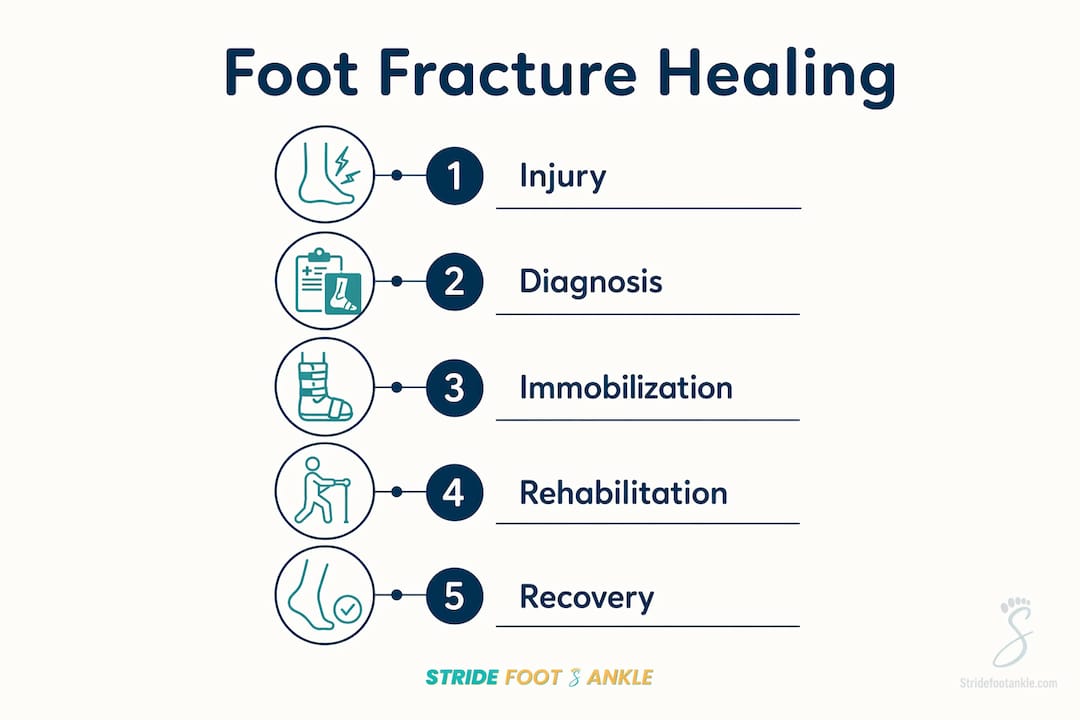
Most foot fractures heal without complications in about six weeks, but full symptom resolution and return to normal activity often takes several months. Stiffness and discomfort can persist for three to six months after the bone itself has knit together.
What to expect during recovery:
- Weeks 1–2: Swelling and pain are at their peak. Immobilization and elevation are priorities.
- Weeks 3–6: Bone healing progresses. Pain typically decreases, but the fracture is not yet stable.
- Months 2–4: Gradual return to weight bearing under medical guidance. Soft tissue recovery lags behind bone healing.
- Months 4–6+: Full strength and function return with consistent rehabilitation.
Complications that can extend recovery include nonunion (the bone fails to heal), malunion (the bone heals in a misaligned position), and infection in surgical cases. Following your provider’s weight-bearing timeline is the single most effective way to avoid these outcomes. A structured injury recovery plan from a rehabilitation specialist can help you stay on track.
How can you reduce your risk of a foot fracture?
Prevention is straightforward once you know where the risk lies. Most foot fractures are preventable with the right habits and equipment.
- Wear supportive footwear appropriate for your activity. Worn-out soles and poor arch support increase fracture risk significantly.
- Increase training intensity gradually. A common guideline is no more than a 10% increase in weekly mileage for runners.
- Strengthen the muscles around your feet and ankles to absorb impact more effectively.
- Maintain bone density through adequate calcium and vitamin D intake, and weight-bearing exercise.
- Manage underlying conditions like osteoporosis and diabetes proactively with your physician.
- Use protective gear in contact sports, construction work, and other high-risk environments.
- Improve home safety to prevent falls, particularly for older adults: remove loose rugs, improve lighting, and install grab bars.
Open fractures and high-risk patients: what you need to know
Open fractures and patients with significant medical comorbidities require a different level of care than straightforward closed fractures.
Open fractures occur when the broken bone pierces or is exposed through the skin. The American College of Foot and Ankle Surgeons recommends immediate intravenous antibiotics and fracture stabilization to reduce deep infection rates. Importantly, research shows no significant difference in infection rates between early and delayed debridement performed within 30 hours of injury, meaning the grade and severity of the fracture matter more than the precise timing of surgery.
“Patients with diabetes, rheumatoid arthritis, or those on anticoagulant therapy require careful perioperative medication review and adjustment before foot and ankle surgery. Managing these comorbidities proactively improves healing outcomes and lowers the risk of surgical complications.” — American College of Foot and Ankle Surgeons Clinical Consensus Statement
For patients with diabetic neuropathy, the stakes are especially high. Charcot foot, a condition where repeated unnoticed stress fractures cause progressive bone collapse, can develop silently and lead to severe deformity if not caught early. Infection prevention in these cases is a clinical priority, and podiatric infection control protocols play a direct role in outcomes.
How does a foot fracture affect your mobility and daily life?
A foot fracture touches nearly every aspect of daily function. Walking, driving, working, and even sleeping can become difficult, particularly in the first two to four weeks.
Most patients with non-displaced fractures can manage with a walking boot and crutches, maintaining some independence. Displaced fractures or those requiring surgery typically mean a longer period of restricted weight bearing, which affects employment, household tasks, and mental well-being. Patients who work in physically demanding jobs often face extended time away from work.
Swelling and stiffness can make standard footwear unwearable for weeks after the boot comes off. Planning ahead, including arranging transportation, modifying your workspace, and setting up your home for limited mobility, makes a meaningful difference in how smoothly recovery goes.
Rebuilding strength: rehabilitation after a foot fracture heals
Bone healing is only the first phase of recovery. Soft tissue, including tendons, ligaments, and muscles, takes longer to regain full strength and flexibility. This gap between bone healing and functional recovery is where many patients run into trouble.
A structured physical therapy program typically includes:
- Range-of-motion exercises to restore ankle and toe flexibility
- Strengthening exercises targeting the intrinsic foot muscles and calf complex
- Balance and proprioception training to reduce reinjury risk
- Gradual return-to-activity protocols tailored to your specific fracture and lifestyle
Working through a rehabilitation checklist with a physical therapist helps you progress safely without skipping steps that protect long-term function. Patients who complete formal rehabilitation consistently return to full activity faster than those who manage recovery on their own.
Foot fracture care at Stridefootankle in Las Vegas
Stridefootankle, led by Dr. Nahad Wassel, offers patients in Las Vegas direct access to board-certified podiatric expertise for foot fractures, from initial diagnosis through surgical care and recovery. The practice combines advanced imaging interpretation, conservative treatment planning, and surgical fixation when needed, all under one roof.

Where many patients spend weeks bouncing between urgent care, radiology, and orthopedics, Stridefootankle provides a coordinated, patient-centered path from the first X-ray to the final physical therapy milestone. Dr. Wassel’s approach prioritizes the least invasive treatment that achieves proper alignment, with surgery reserved for cases where conservative care cannot restore function. For patients managing diabetes, arthritis, or other conditions that complicate healing, the practice builds individualized care plans that account for those risks from day one.
Schedule your evaluation through Stridefootankle’s general foot and ankle care page and get a clear diagnosis and treatment plan without the runaround.
Key Takeaways
Most foot fractures heal in about six weeks, but full recovery, including soft tissue strength and pain resolution, often takes three to six months and requires following your provider’s weight-bearing guidelines precisely.
| Point | Details |
|---|---|
| Fracture type determines treatment | Displaced fractures require surgical fixation; non-displaced fractures heal with casting or a boot. |
| Stress fractures need advanced imaging | X-rays may miss stress fractures for up to six weeks; MRI or bone scans confirm the diagnosis when symptoms persist. |
| Pain relief does not mean healed | Bone structural integrity lags behind pain reduction; premature weight bearing causes displacement and failed healing. |
| High-risk patients need tailored care | Diabetes, rheumatoid arthritis, and anticoagulant use require preoperative medication review to optimize surgical outcomes. |
| Stridefootankle offers coordinated care | Dr. Nahad Wassel provides diagnosis, conservative treatment, and surgical care for foot fractures in Las Vegas. |
FAQ
Can you walk on a fractured foot?
Walking on a fractured foot depends on the fracture type and location. Non-displaced fractures of the toes or metatarsals sometimes allow limited weight bearing in a protective boot, but doing so without medical clearance risks displacing the fracture and complicating healing.
How serious is a foot fracture?
Most foot fractures are manageable injuries that heal fully with proper treatment. Open fractures, displaced fractures, or fractures in patients with diabetes or osteoporosis carry higher complication risks and require more intensive medical management.
How long does a foot fracture take to heal?
Bone healing typically takes about six weeks, but stiffness and discomfort can persist for three to six months. Full return to normal activity depends on fracture severity, treatment type, and adherence to rehabilitation.
What will a doctor do for a fractured foot?
A doctor will perform a physical examination and order X-rays to confirm the fracture and assess alignment. Treatment ranges from immobilization with a cast or walking boot for non-displaced fractures to surgical fixation with pins or screws for displaced or complex breaks.
Is a foot fracture the same as a sprain?
No. A fracture is a break or crack in bone, while a foot sprain involves torn or stretched ligaments. Both cause pain and swelling, but they require different treatments. Imaging is needed to confirm the diagnosis.
Recent Comments