

TL;DR:
- Wounds disrupt skin tissue and trigger the body’s repair process, which moves through four overlapping phases. Proper wound identification is essential for effective treatment, as different types require specific care to prevent complications. Chronic wounds stall in inflammation and need advanced therapies, while acute wounds often heal within weeks with correct management.
Wounds are defined as any disruption to living tissue that breaks the skin’s protective barrier and triggers the body’s repair response. The wound healing process moves through four overlapping phases: hemostasis, inflammation, proliferation, and remodeling. Acute wounds typically resolve within 4–6 weeks under proper care, while chronic wounds stall beyond 3 months, often locked in prolonged inflammation. Knowing which type of wound you are dealing with directly determines which treatment approach will work. Getting that identification right from the start is the single most important step in effective wound management.
What are the main types of wounds and how do they differ?
Wounds fall into two broad clinical categories: acute and chronic. Acute wounds result from a sudden event, such as a cut, surgical incision, or burn, and follow a predictable healing timeline. Chronic wounds fail to progress through normal healing stages after more than 3 months, signaling a biological stall that requires specialized attention.
Beyond the acute versus chronic distinction, clinicians classify wounds by how they close. Wound closure follows three recognized intentions:
- Primary intention: Wound edges are brought together immediately, as with sutures or staples after surgery. This method carries the lowest infection risk and heals fastest.
- Secondary intention: The wound heals from the inside out, filling in with new tissue over time. Pressure ulcers and infected wounds often close this way.
- Tertiary intention: Also called delayed primary closure. The wound is left open initially to manage infection, then closed surgically once it is clean.
The table below summarizes the most common wound types you are likely to encounter:
| Wound Type | Cause | Typical Closure | Key Risk |
|---|---|---|---|
| Laceration | Blunt or sharp trauma | Primary or secondary | Infection, scarring |
| Abrasion | Friction against a surface | Secondary | Contamination |
| Surgical wound | Planned incision | Primary intention | Dehiscence |
| Pressure ulcer | Prolonged pressure on skin | Secondary intention | Deep tissue damage |
| Diabetic foot ulcer | Neuropathy plus poor circulation | Secondary or tertiary | Amputation risk |
| Puncture wound | Sharp object penetration | Secondary | Deep infection |
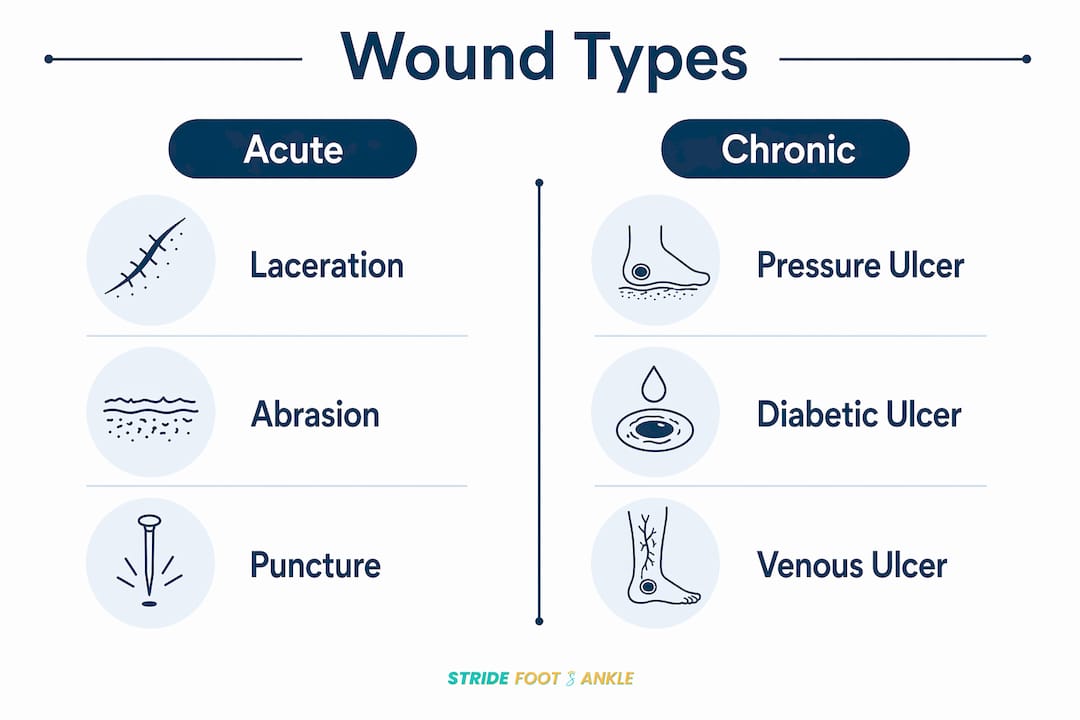
Correct identification matters because treatment varies by wound type. A pressure ulcer managed with the same approach as a surgical incision will not heal. Misclassification leads directly to ineffective care and preventable complications.
What happens during each phase of the wound healing process?
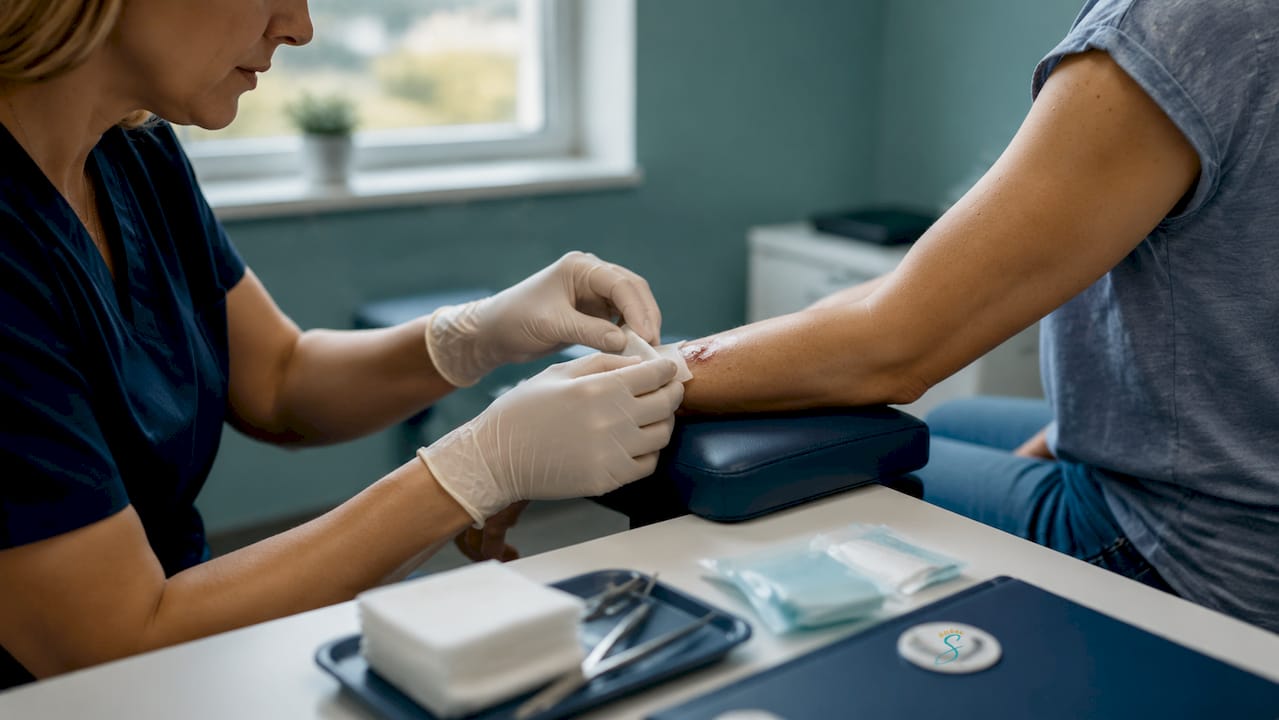
The body heals tissue through four phases that overlap rather than follow a strict sequence. Understanding each phase helps you recognize what normal healing looks like and when something has gone wrong.
Phase 1: Hemostasis
Hemostasis begins within seconds of injury. Blood vessels constrict, platelets aggregate at the wound site, and a fibrin clot forms to stop bleeding. This clot also acts as a temporary scaffold for the cells that arrive next. Without successful hemostasis, the remaining phases cannot begin.
Phase 2: Inflammation
Inflammation starts immediately after hemostasis and typically lasts 4–6 days. Neutrophils arrive first to kill bacteria and clear debris. Macrophages follow, continuing pathogen clearance and releasing chemical signals that recruit repair cells. Neutrophils and macrophages are not just defenders. They are the coordinators of the entire repair process. A wound stuck in chronic inflammation has failed to make this transition.
Phase 3: Proliferation
Proliferation runs from roughly day 5 through day 21. Fibroblasts migrate into the wound and deposit collagen, building a new extracellular matrix. New blood vessels grow through a process called angiogenesis, supplying oxygen and nutrients to the rebuilding tissue. The wound contracts as myofibroblasts pull the edges together. This is the phase where you see visible tissue filling in.
Phase 4: Remodeling
Remodeling is the longest phase, often lasting one year or more. The body replaces the weaker type III collagen laid down during proliferation with stronger type I collagen. Collagen fibers realign along lines of mechanical stress, increasing tensile strength. Scar tissue forms during this phase, and its final appearance depends heavily on how well the earlier phases resolved.
Pro Tip: If a wound looks healed on the surface but feels firm or tight underneath, remodeling is still active. Avoid aggressive pressure on that area until the tissue fully matures.
One critical insight: healing phases overlap significantly. Inflammation does not end before proliferation begins. This is why disrupting inflammation too aggressively with certain medications can actually slow tissue repair.
What are the best practices for wound care and treatment?
Effective wound care combines proper cleaning, the right dressing, pain control, and knowing when to call a professional. Each step builds on the last, and skipping any one of them increases the risk of infection or delayed healing.
Cleaning and debridement
Clean the wound with saline solution or clean running water as soon as possible after injury. Avoid hydrogen peroxide or iodine directly in the wound bed. Both damage the new cells needed for repair. Debridement, the removal of dead or contaminated tissue, is often necessary for deeper wounds and should be performed by a healthcare provider.
Choosing the right dressing
Wound dressings serve three functions: they protect the wound from contamination, maintain a moist healing environment, and absorb excess fluid. Common options include:
- Hydrocolloid dressings: Best for shallow wounds with low to moderate drainage. They create a gel over the wound bed.
- Foam dressings: Suited for wounds with moderate to heavy drainage. They absorb fluid without drying the wound.
- Alginate dressings: Derived from seaweed, these handle heavy drainage and are often used in diabetic foot ulcers.
- Antimicrobial dressings: Contain silver or iodine to reduce bacterial load in infected or high-risk wounds.
Change dressings according to the manufacturer’s instructions or your provider’s guidance. Leaving a dressing on too long creates a breeding ground for bacteria.
Pain management
Pain control is a core component of wound management. Wound evaluation, cleaning, and dressing changes are often painful, and uncontrolled pain reduces patient cooperation with care plans. Over-the-counter options like acetaminophen or ibuprofen work for mild to moderate wound pain. Severe or persistent pain warrants a clinical evaluation to rule out infection or deeper tissue involvement.
Pro Tip: Warm the dressing slightly before removal by soaking it with saline. This loosens adhesion and significantly reduces pain during dressing changes.
When to seek professional care
See a healthcare provider if the wound is deep, has jagged edges, involves a joint, or was caused by an animal bite. Patients with diabetes, peripheral vascular disease, or compromised immune systems should seek professional evaluation for any wound on the foot or lower leg. Specialized wound management is required for pressure injuries, venous ulcers, and diabetic foot wounds. These conditions do not respond reliably to standard home care.
How do chronic wounds develop and what challenges do they present?
A chronic wound is defined clinically as one that fails to progress through normal healing stages after 3 months. The most common causes are diabetes, venous insufficiency, arterial disease, and prolonged pressure. Each of these conditions disrupts the biological signals that move a wound from inflammation into repair.
The central problem in chronic wounds is a stalled inflammatory phase. Macrophages fail to switch from their inflammatory role to their repair-signaling role. Microbial biofilms, hyperglycemia, and mechanical stress are the three primary drivers of this failure. Biofilms are communities of bacteria encased in a protective matrix that standard antibiotics cannot penetrate. Hyperglycemia impairs immune cell function and reduces collagen synthesis. Repeated mechanical stress, such as walking on a diabetic foot ulcer, physically disrupts new tissue before it can establish.
The table below outlines the most common chronic wound types and their primary drivers:
| Chronic Wound Type | Primary Cause | Key Biological Barrier |
|---|---|---|
| Diabetic foot ulcer | Neuropathy, poor circulation | Hyperglycemia, biofilm |
| Venous leg ulcer | Venous insufficiency | Chronic inflammation, edema |
| Pressure injury | Sustained pressure, shear | Ischemia, tissue necrosis |
| Arterial ulcer | Peripheral artery disease | Ischemia, poor oxygen delivery |
Chronic wounds require treatments that go beyond standard dressings. Advanced options now include bioactive dressings, negative pressure wound therapy, and cellular therapies. Advanced wound care in 2026 integrates biointeractive therapies designed to restart stalled healing phases rather than simply cover the wound. Patients with chronic wounds benefit most from a structured care plan developed with a wound care specialist, not from generic home remedies. Learning to prevent foot ulcers before they become chronic is the most effective strategy for at-risk patients.
What first aid and home care steps treat wounds effectively?
Immediate and correct first aid reduces infection risk and sets the stage for faster healing. The steps below apply to most minor to moderate wounds. Deep wounds, wounds that will not stop bleeding, or wounds showing signs of infection require professional evaluation.
- Stop the bleeding. Apply firm, direct pressure with a clean cloth or gauze for 10–15 minutes without lifting to check. Elevate the injured area above heart level if possible.
- Clean the wound. Rinse thoroughly with clean running water or saline for at least 5 minutes. Remove visible debris gently with clean tweezers if needed.
- Apply a dressing. Cover the wound with an appropriate dressing. For minor cuts, a standard adhesive bandage works. For larger wounds, use a non-stick sterile pad secured with medical tape.
- Change the dressing regularly. Replace the dressing daily or whenever it becomes wet or soiled. Keep the wound moist but not waterlogged.
- Monitor for infection. Check the wound at each dressing change for the warning signs listed below.
Recognizing wound infection symptoms
Infection is the most common complication of home-managed wounds. Watch for these signs:
- Increasing redness spreading beyond the wound edges
- Warmth and swelling that worsen after the first 48 hours
- Pus or cloudy discharge
- Fever above 100.4°F
- Red streaks radiating from the wound (a sign of spreading infection)
Any of these signs means the wound needs professional evaluation the same day.
Nutrition and lifestyle support
Healing tissue demands protein, vitamin C, and zinc. Protein provides the amino acids for collagen synthesis. Vitamin C is a direct cofactor in collagen production. Zinc supports immune cell function. Patients who smoke heal more slowly because nicotine constricts blood vessels and reduces oxygen delivery to tissue. Staying well-hydrated and controlling blood sugar, if you have diabetes, are the two lifestyle factors with the greatest direct impact on healing speed.
Pro Tip: Add a daily serving of lean protein, such as eggs, chicken, or Greek yogurt, during active wound healing. Protein deficiency is one of the most underrecognized reasons wounds heal slowly.
For patients managing foot wounds at home, the Las Vegas foot home care guide from Stridefootankle provides practical, locally relevant guidance on keeping wounds clean in a dry desert climate.
Key takeaways
Proper wound identification is the foundation of effective treatment. Treating the wrong wound type with the wrong approach delays healing and increases complication risk.
| Point | Details |
|---|---|
| Acute vs. chronic distinction | Acute wounds resolve in 4–6 weeks; wounds stalled past 3 months are classified as chronic. |
| Four healing phases | Hemostasis, inflammation, proliferation, and remodeling overlap and must all complete for full recovery. |
| Closure method matters | Primary, secondary, and tertiary intention closures each suit different wound types and infection risk levels. |
| Chronic wound barriers | Biofilms, hyperglycemia, and mechanical stress prevent the immune transition needed for repair. |
| Professional care threshold | Diabetic, vascular, or non-healing wounds require specialist evaluation, not home remedies alone. |
What I’ve learned about wounds that most guides get wrong
After years of observing how patients manage wounds, the pattern I see most often is this: people focus almost entirely on what they put on a wound and almost nothing on the conditions around it. The dressing matters. The cleaning matters. But the wound environment, meaning blood sugar control, nutrition, offloading pressure, and circulation, determines whether any of those surface treatments actually work.
The second misconception I encounter constantly is that aggressive treatment is always better. Patients scrub wounds with antiseptics, change dressings four times a day, and pick at healing tissue because it looks wrong to them. All of that disrupts the biological process. The inflammation phase exists for a reason. The body is not malfunctioning when a wound looks red and swollen in the first few days. That is the repair system working.
The third thing I would push back on is the idea that chronic wounds are just slow acute wounds. They are not. A wound that has been present for more than 3 months has a fundamentally different biology. The immune environment is dysregulated. Biofilm has likely established. Standard wound care products will not restart that process. These wounds need clinical assessment, not more gauze.
Conservative foot care is genuinely underutilized for wounds that are not yet chronic. Catching a wound early, offloading pressure, and optimizing the healing environment can prevent the transition to a chronic state entirely. That window of opportunity closes faster than most patients realize.
— Ramil
Expert wound care at Stridefootankle in Las Vegas
Foot and ankle wounds carry unique risks, especially for patients with diabetes, neuropathy, or vascular disease. A wound on the foot that seems minor can progress quickly without proper evaluation and structured care.

Stridefootankle, led by Dr. Nahad Wassel, provides specialized wound care services for patients across Las Vegas. Dr. Wassel’s approach combines clinical wound assessment, appropriate dressing selection, debridement when needed, and patient education to support healing at every stage. For patients managing complex or non-healing wounds, professional evaluation is the most reliable path to recovery. Schedule a consultation through Stridefootankle’s general foot and ankle care page to get a personalized care plan built around your specific wound type and health history.
FAQ
What is the difference between an acute and a chronic wound?
An acute wound heals within 4–6 weeks under proper care. A chronic wound fails to progress through normal healing stages after 3 months, indicating a biological stall usually in the inflammatory phase.
What are the four phases of wound healing?
The four phases are hemostasis, inflammation, proliferation, and remodeling. They overlap rather than occur in strict sequence, with remodeling lasting one year or longer in some cases.
What are the warning signs of a wound infection?
Key infection signs include increasing redness spreading beyond the wound edges, worsening swelling after 48 hours, pus or cloudy discharge, fever above 100.4°F, and red streaks radiating from the wound.
Why do diabetic foot wounds take longer to heal?
Hyperglycemia impairs immune cell function, reduces collagen synthesis, and promotes biofilm formation. These three factors together prevent the macrophage transition needed to move a wound from inflammation into active repair.
When should I see a doctor instead of treating a wound at home?
See a provider immediately if the wound is deep, will not stop bleeding after 15 minutes of pressure, shows signs of infection, or if you have diabetes or vascular disease and the wound is on your foot or lower leg.
Recommended
- Wound Care – Stride Foot & Ankle – Dr. Nahad Wassel
- Warts: Causes, Types, Treatment, and Prevention – Stride Foot & Ankle – Dr. Nahad Wassel
- Sports Injuries: Treatment, Prevention, and Recovery Guide – Stride Foot & Ankle – Dr. Nahad Wassel
- How to Prevent Foot Ulcers: a Guide for At-Risk Patients – Stride Foot & Ankle – Dr. Nahad Wassel
Recent Comments