

TL;DR:
- A fracture and a broken bone are the same injury, with no medical distinction between them. Proper classification, timely treatment, and disciplined rehabilitation are essential for full recovery. Patients often underestimate healing time and should follow medical advice closely to avoid setbacks.
A fractured bone is defined as any break or crack in bone continuity, and the terms “fracture” and “broken bone” are clinically identical. No medical distinction separates them. Doctors use “fracture” in official records and “broken bone” in everyday conversation, but both describe the same injury. Understanding this matters because patients who believe a fracture is less serious than a break sometimes delay care. That delay can turn a manageable injury into a complex one. This guide covers causes, broken bone symptoms, types of bone fractures, fractured bone treatment, and the full fracture recovery process so you can act with confidence.
What causes a fractured bone and what are the signs?
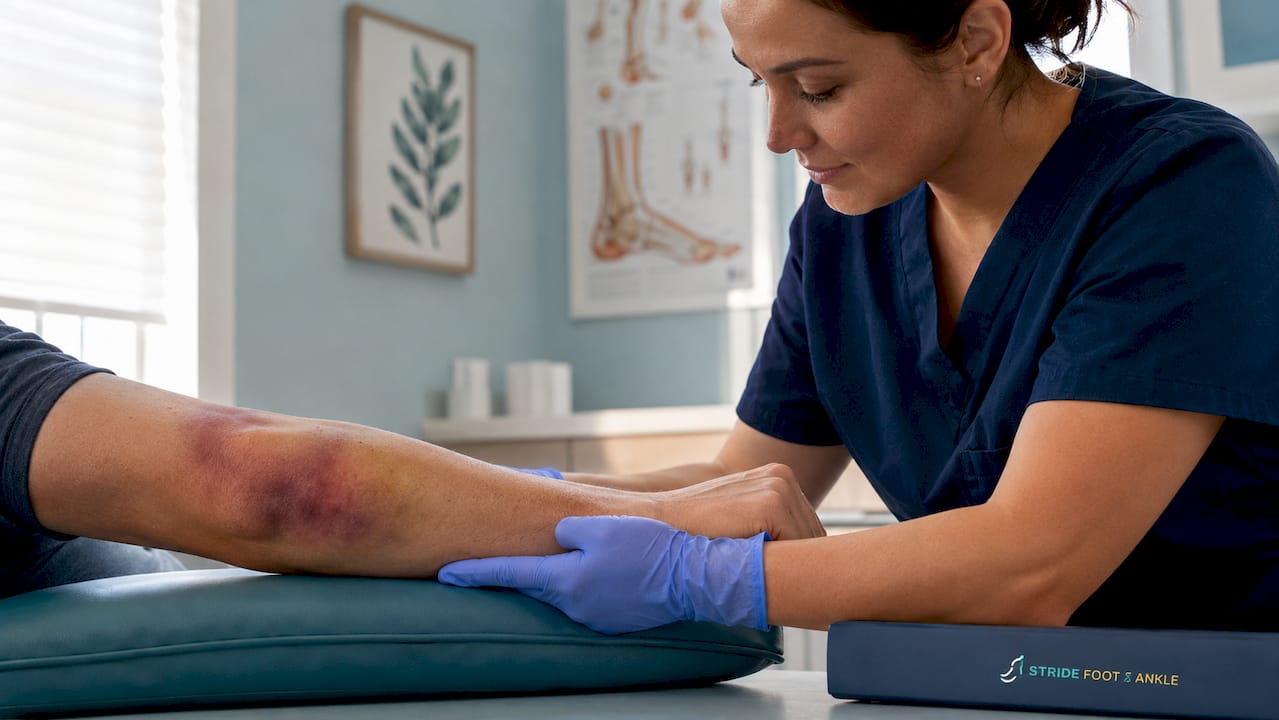
A fractured or broken bone results from three main causes: sudden trauma, repetitive stress, and bone fragility from conditions like osteoporosis. Knowing the cause helps predict the injury pattern and guides treatment decisions from the start.
Common causes
- Trauma: Falls, car accidents, and contact sports are the most frequent triggers. A direct blow or awkward landing transfers force that exceeds bone strength.
- Repetitive stress: Stress fractures develop gradually in athletes and military recruits. The metatarsals in the foot are a classic site, where repeated impact accumulates micro-damage faster than bone can repair itself.
- Fragility fractures: Over 2 million osteoporosis-related fractures occur yearly in the United States, with hip and spine fractures making up two-thirds of those cases. That figure shows how significantly low bone density multiplies fracture risk even from minor falls.
Signs of a broken bone
Recognizing broken bone symptoms early leads to faster, more effective care. The most consistent signs include:
- Immediate, sharp pain at the injury site that worsens with movement or pressure
- Swelling and bruising appearing within minutes to hours
- Visible deformity such as an abnormal angle or shortening of a limb
- Inability to bear weight on the affected area, especially in foot and ankle fractures
- A snap or crack sound at the moment of injury
- Numbness or tingling near the fracture, which may signal nerve involvement
Open fractures, where bone breaks through the skin, carry additional signs: a visible wound, significant bleeding, and an extremely high infection risk. Closed fractures keep the skin intact but still require prompt evaluation. Stress fractures often produce dull, aching pain that builds over days rather than appearing suddenly.
Pro Tip: If you suspect a foot or ankle fracture, avoid putting weight on it before imaging confirms the injury type. Bearing weight on an unstable fracture can shift bone fragments and complicate treatment.
What are the types of bone fractures?
Fracture classification directly determines treatment. A fracture type tells the surgeon whether bone fragments are stable, how much soft tissue is involved, and whether surgery is necessary. The table below summarizes the most clinically relevant types.
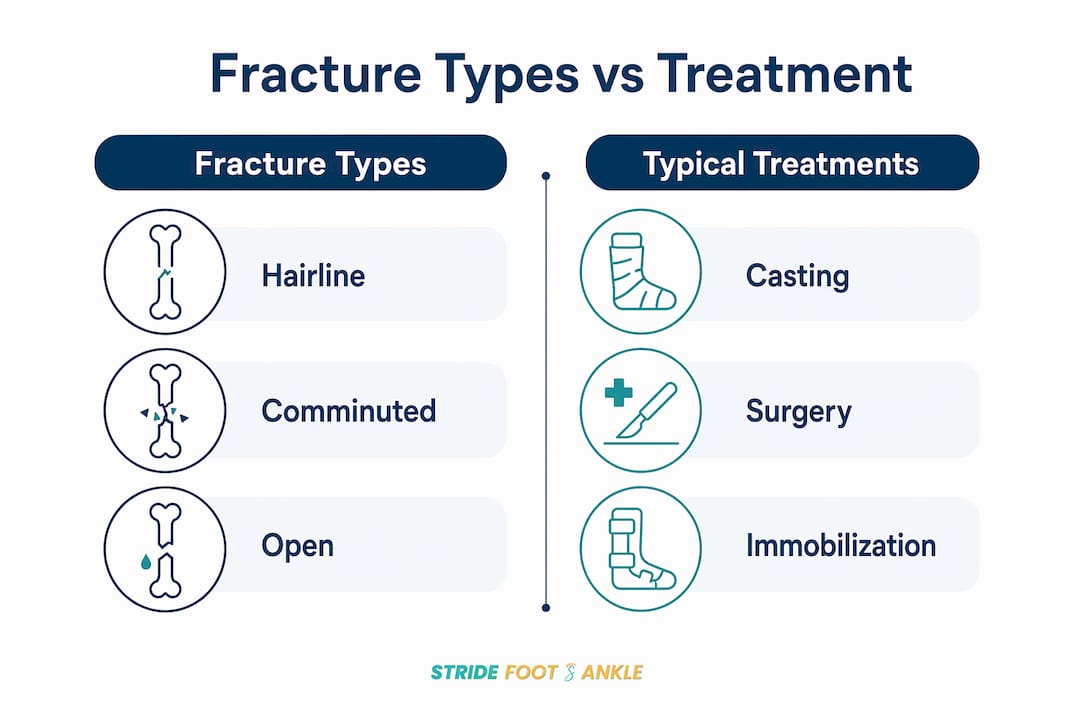
| Fracture type | Key characteristics | Typical treatment |
|---|---|---|
| Hairline (stress) | Thin crack, no displacement | Rest, protected weight bearing, boot |
| Transverse | Straight break across the bone | Cast or splint; surgery if displaced |
| Spiral | Twisting force creates a helical break | Surgery often needed for stability |
| Comminuted | Bone shatters into three or more fragments | Surgical fixation almost always required |
| Displaced | Fragments shift out of alignment | Reduction (manual or surgical) |
| Non-displaced | Bone cracks but stays aligned | Immobilization with cast or splint |
| Open (compound) | Bone pierces through the skin | Immediate surgery and wound care |
| Closed | Skin remains intact | Depends on alignment and stability |
Severity alone does not determine whether surgery is needed. Surgical decisions depend largely on fracture alignment and stability rather than complexity alone. A non-displaced fracture in a non-critical area may heal with a cast. A non-displaced fracture near the ankle joint, however, may require surgical fixation to preserve function. Location and joint proximity matter as much as the break pattern itself.
Comminuted fractures, common in high-energy trauma like car accidents, almost always require open reduction and internal fixation (ORIF). Spiral fractures from twisting injuries, such as those seen in skiing or football, frequently need surgical stabilization because the rotational force creates inherently unstable fragments. Hairline fractures, by contrast, often resolve with rest and a protective boot over several weeks.
How is a fractured bone treated?
Fractured bone treatment follows a clear progression: stabilize the injury, restore alignment if needed, and protect the bone while it heals. The right path depends on fracture type, location, and your overall bone health.
Step-by-step treatment pathway
- First aid and immobilization. Splint the injured area immediately to prevent further movement. Splinting typically lasts 3–5 weeks for minor fractures. Do not attempt to realign the bone yourself.
- Imaging and diagnosis. X-rays confirm the fracture type and alignment. CT scans are used for complex or joint-involved fractures. Diagnostic imaging is the foundation of every treatment decision.
- Closed reduction. For displaced fractures that do not require surgery, a physician manually realigns the bone fragments under local or general anesthesia, then applies a cast. Casting typically lasts 6–8 weeks.
- Surgical fixation. When closed reduction fails or the fracture is unstable, open reduction and internal fixation (ORIF) uses plates, screws, or rods to hold fragments in place. Surgical fixation succeeds in over 90% of complex fracture cases. That high success rate reflects decades of refinement in implant design and surgical technique.
- Wound care for open fractures. Open fractures require immediate surgical intervention. Open fractures need treatment within 24 hours to reduce infection risk. Thorough wound irrigation and debridement are performed before any fixation. Patients with open fractures should visit a wound care specialist as part of their recovery team.
- Pain management and monitoring. Anti-inflammatory medications and elevation control swelling in the early days. Follow-up imaging at 4–6 weeks confirms healing progress.
When to seek immediate care: Go to an emergency room if you see bone through the skin, if the limb looks severely deformed, if you lose sensation below the injury, or if pain is uncontrollable. These are signs of a serious fracture that cannot wait for a scheduled appointment.
Pro Tip: After surgical fixation, some patients experience discomfort from hardware like screws and plates. This is normal in the early months. If pain persists long-term, ask your provider about hardware management options before assuming something went wrong.
What does the fracture recovery process look like?
The fracture recovery process follows four biological stages. Understanding each stage helps you set realistic expectations and avoid the most common mistake: returning to activity too soon.
The four stages of bone healing
Bone healing occurs in distinct phases: an inflammatory response in the first few days, soft callus formation over 2–3 weeks, hard callus development from weeks 4–12, and remodeling that continues for months afterward. Each phase builds on the last. Disrupting any phase by bearing weight too early or stopping immobilization prematurely risks malunion, where the bone heals in a misaligned position.
| Healing stage | Timeframe | What happens | Rehab milestone |
|---|---|---|---|
| Inflammation | Days 1–5 | Blood clot forms; repair cells arrive | Rest, elevation, ice |
| Soft callus | Weeks 2–3 | Fibrous tissue bridges the fracture gap | Gentle range-of-motion exercises |
| Hard callus | Weeks 4–12 | Mineralized bone replaces soft callus | Protected weight bearing begins |
| Remodeling | Months 3–12+ | Bone reshapes to original structure | Progressive strengthening and therapy |
Most fractures show significant healing within 6–8 weeks, but full recovery to original bone strength takes several months. That gap between “healed enough” and “fully healed” is where most reinjuries happen.
How to optimize your recovery
Physical therapy is essential after immobilization to regain the strength and flexibility lost during the healing period. Muscle atrophy and joint stiffness develop predictably during casting or splinting. A structured physical therapy program addresses both issues through progressive loading and targeted exercises.
Key steps to support healing:
- Nutrition: Adequate calcium and vitamin D intake directly supports bone repair. Deficiency slows callus formation and increases nonunion risk.
- Bone health screening: Addressing underlying conditions like osteoporosis is critical to prevent recurrent fractures. A DEXA scan after a fragility fracture identifies bone density problems before the next injury occurs.
- Avoid smoking and excessive alcohol: Both impair bone cell activity and slow healing significantly.
- Follow weight-bearing restrictions precisely: Premature weight bearing risks malunion or reinjury. Your provider’s timeline is not conservative caution. It reflects the actual biology of bone repair.
Pro Tip: The ankle sprain recovery process shares many rehab principles with fracture recovery. If your fracture involved the ankle or foot, reviewing those rehab protocols alongside your fracture care plan gives you a fuller picture of what functional restoration requires.
Key Takeaways
A fractured bone and a broken bone are the same injury, and successful recovery depends on accurate classification, timely treatment, and disciplined adherence to each healing stage.
| Point | Details |
|---|---|
| Fracture equals broken bone | The two terms are clinically identical; never delay care based on which word a provider uses. |
| Classification drives treatment | Fracture type, alignment, and joint proximity determine whether a cast or surgery is the right choice. |
| Surgery succeeds at high rates | Surgical fixation stabilizes over 90% of complex fractures when performed by a qualified specialist. |
| Healing takes longer than it feels | Bone shows significant repair by 6–8 weeks, but full strength returns over several months. |
| Rehab is non-negotiable | Physical therapy after immobilization restores strength and flexibility that bone healing alone cannot recover. |
What I’ve learned from watching patients rush their fracture recovery
Patients consistently underestimate how long a fracture truly takes to heal. The cast comes off, the pain fades, and the natural instinct is to return to normal activity immediately. That instinct causes more setbacks than the original injury does.
The most common mistake I see is treating the end of immobilization as the end of recovery. Bone may be structurally sound at 8 weeks, but the surrounding muscle, tendon, and joint tissue have been dormant for the same period. Returning to sport or full weight bearing without rebuilding that tissue is like replacing a broken beam in a house but leaving the foundation untouched.
The second thing patients get wrong is ignoring bone health after a fragility fracture. A hip or foot fracture from a minor fall is a warning signal, not just an isolated injury. DEXA screening and vitamin D assessment after that kind of fracture can prevent the next one. Most patients never receive that conversation unless they specifically ask for it.
My practical advice: treat the rehabilitation phase with the same seriousness you gave the acute injury. Show up to physical therapy. Follow the weight-bearing schedule. Get the bone density scan if your provider recommends it. The patients who do those three things consistently are the ones who get back on their feet without complications.
— Ramil
Foot and ankle fracture care at Stridefootankle
Foot and ankle fractures require specialized care because the mechanics of the lower extremity are unlike any other part of the body. A mismanaged foot fracture affects how you walk, stand, and move for years.
Stridefootankle, led by Dr. Nahad Wassel in Las Vegas, provides diagnosis, immobilization, surgical fixation, and rehabilitation support for fractured bones of the foot and ankle. Dr. Wassel’s training in foot and ankle surgery means every treatment decision, from casting to ankle surgery options, is grounded in the specific demands of lower extremity function. If you are dealing with a foot or ankle fracture and want expert, personalized care, visit the general foot and ankle care page to request an appointment.
FAQ
Are a fracture and a broken bone the same thing?
Yes. A fracture and a broken bone are clinically identical terms. Medical providers use “fracture” in documentation and “broken bone” in patient conversations, but both describe any disruption in bone continuity.
What are the most common signs of a broken bone?
The most consistent broken bone symptoms are sharp localized pain, swelling, bruising, visible deformity, and inability to bear weight. An audible snap at the moment of injury is also a strong indicator.
How long does fracture recovery take?
Most fractures show significant healing within 6–8 weeks, but full recovery to original bone strength takes several months. Splinting typically lasts 3–5 weeks; casting lasts 6–8 weeks depending on fracture severity.
When does a fracture require surgery?
Surgery is indicated when a fracture cannot be stabilized with a cast alone, when bone fragments are significantly displaced, or when the fracture is near a critical joint. Open fractures always require immediate surgical intervention within 24 hours.
What is the best way to heal a fracture faster?
Follow your provider’s weight-bearing restrictions precisely, maintain adequate calcium and vitamin D intake, avoid smoking, and complete your physical therapy program. Premature activity is the leading cause of delayed healing and malunion.
Recommended
- Flat Foot: Causes, Symptoms, and Treatment Options – Stride Foot & Ankle – Dr. Nahad Wassel
- Tendonitis: Symptoms, Causes, and Treatment Options – Stride Foot & Ankle – Dr. Nahad Wassel
- Ankle Sprain: Causes, Treatment, and Recovery Guide – Stride Foot & Ankle – Dr. Nahad Wassel
- Foot Pain: Causes, Symptoms, and Treatment Options – Stride Foot & Ankle – Dr. Nahad Wassel
Recent Comments