

TL;DR:
- Nail discoloration can signal minor cosmetic issues or serious underlying health conditions requiring medical evaluation. Recognizing patterns like yellow, green, or dark streaks helps determine whether self-care or professional treatment is necessary, especially in systemic diseases or infections. Prompt assessment prevents complications and addresses underlying causes effectively, emphasizing early action over delaying treatment.
Nail discoloration is defined as any visible change from the normal pinkish or clear nail color, ranging from yellow and white to green, brown, or black, and it can signal anything from a minor cosmetic issue to a serious underlying health condition. Clinically, the term onychochromia covers this spectrum of nail color changes, though most patients and providers use “nail discoloration” in everyday practice. Recognizing what your nails are telling you matters. Nail changes can reflect systemic conditions including anemia, thyroid disease, diabetes, and liver or kidney problems. The good news is that most causes are treatable, especially when caught early.
What causes nail discoloration?
Nail discoloration results from a wide range of causes, from everyday habits like using nail polish to serious infections and systemic diseases. Understanding the specific cause is the first step toward the right treatment. The color itself is one of the most useful diagnostic clues available.
Minor trauma and nail polish staining
Physical injury to the nail is one of the most common and overlooked causes of nail color changes. A stubbed toe, a tight shoe, or repeated pressure from athletic activity can cause blood to pool beneath the nail plate, producing a dark red, purple, or black discoloration called a subungual hematoma. This typically resolves on its own as the nail grows out, but a large hematoma under significant pressure may require drainage by a clinician.

Nail polish staining is another frequent culprit, particularly with darker shades of red, orange, or burgundy. Pigments in the lacquer penetrate the nail plate over time, leaving a yellowish tint. Using a clear base coat from brands like OPI, Essie, or Sally Hansen before applying color polish creates a protective barrier that prevents this kind of staining entirely.
Fungal infections (onychomycosis)
Onychomycosis, the medical term for fungal nail infection, is the leading infectious cause of nail discoloration in adults. It typically produces yellow, white, or brown discoloration that starts at the nail tip and progresses toward the base. The nail often thickens, becomes brittle, and separates from the nail bed. Dermatophytes, particularly Trichophyton rubrum, are responsible for the majority of cases.
Bacterial infections and green nail syndrome
Green or green-black nail discoloration points strongly toward a bacterial cause. Green-black nails can result from Pseudomonas aeruginosa overgrowth, a condition known as green nail syndrome or chloronychia. This bacterium thrives in moist environments and produces a pigment called pyocyanin that stains the nail plate. People who frequently immerse their hands in water, such as healthcare workers, dishwashers, or swimmers, face the highest risk.
Systemic health conditions
Some of the most clinically significant nail color changes reflect what is happening inside the body. Conditions including diabetes, liver disease, kidney disease, thyroid disorders, and circulation problems all produce characteristic nail findings. Terry’s nails, where most of the nail appears white with a narrow pink band at the tip, are associated with liver cirrhosis and congestive heart failure. Yellow nail syndrome, marked by slow-growing, thickened, and uniformly yellow nails, can signal lymphedema or respiratory disease.
- Yellow nails: fungal infection, nail polish staining, psoriasis, yellow nail syndrome, or diabetes
- White nails (leukonychia): minor trauma, fungal infection, or systemic conditions like kidney disease
- Green or black nails: Pseudomonas bacterial infection, severe fungal infection, or subungual hematoma
- Brown or dark streaks (melanonychia): normal pigmentation variation in darker skin tones, but also a potential sign of subungual melanoma
- Blue or purple nails: poor circulation, oxygen deprivation, or Raynaud’s phenomenon
- Red or dark red nails: subungual hematoma from trauma
Pro Tip: If you notice a dark brown or black streak running vertically from the base to the tip of a single nail, do not dismiss it as a bruise. Melanonychia of this pattern warrants prompt evaluation by a podiatrist or dermatologist to rule out subungual melanoma.
Aging and chemical exposure
As nails age, they naturally become more opaque, develop ridges, and may take on a yellowish or grayish tint. This is a normal process, not a disease. Chemical exposure from cleaning products, solvents, or acrylic nail application can also alter nail color and texture over time, particularly with repeated contact.
How do you identify different types of nail discoloration?
Identifying the type of nail discoloration means looking at color, pattern, location, and associated symptoms together. A single clue rarely gives the full picture. Combining these observations helps you determine whether self-monitoring is appropriate or whether a clinician needs to evaluate the change.
The most useful distinction clinicians make is between superficial staining and true nail-unit disease. Distinguishing superficial staining from nail-unit disease depends on whether the color change involves the nail bed or matrix or is limited to the surface of the nail plate. Surface stains from polish or mild chemical exposure can often be buffed away or grow out without treatment. Color changes rooted in the nail bed or matrix cannot be removed mechanically and require medical attention.
Patterns that point to specific diagnoses
| Pattern | Likely cause | Action needed |
|---|---|---|
| Yellow, thickened nail starting at tip | Onychomycosis (fungal infection) | Antifungal treatment, podiatrist evaluation |
| Green or green-black discoloration | Pseudomonas bacterial infection | Topical antimicrobials, moisture control |
| Dark vertical streak on one nail | Melanonychia, possible melanoma | Urgent podiatrist or dermatologist evaluation |
| White spots or patches | Minor trauma, superficial fungal infection | Monitor; treat if spreading |
| Uniform white nails with pink tip band | Terry’s nails, systemic disease | Medical evaluation for underlying cause |
| Nail separation from bed (onycholysis) | Fungal infection, psoriasis, trauma | Podiatrist evaluation |
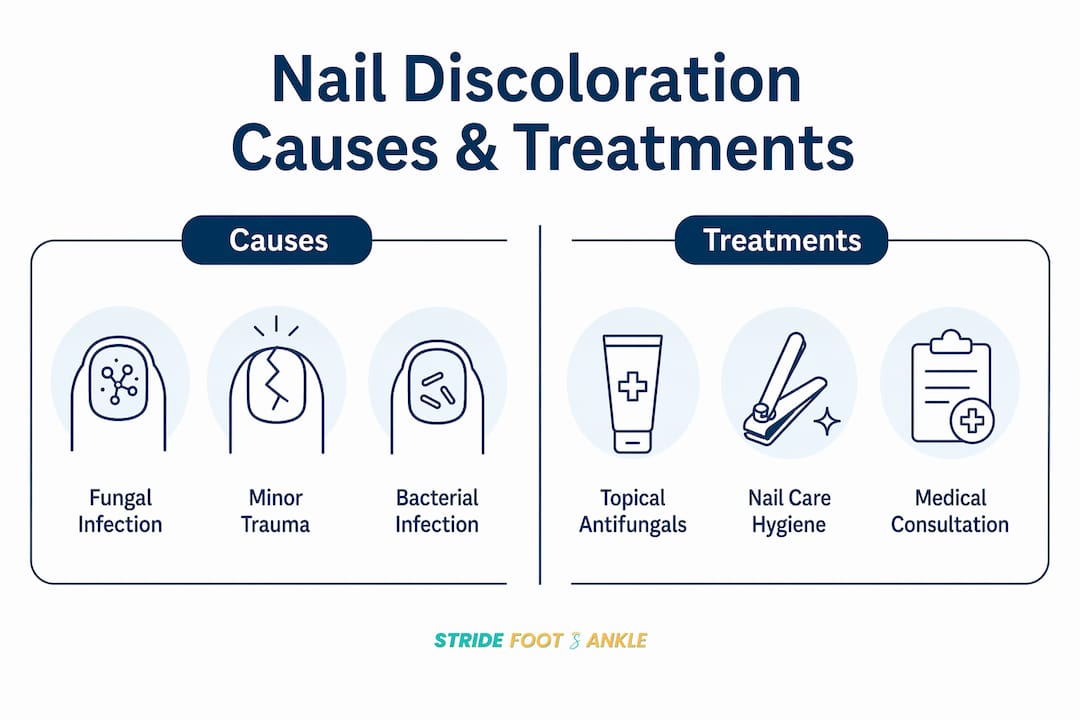
One nail versus multiple nails is another critical distinction. A single discolored nail after an injury or with a dark streak is more likely to represent localized trauma or a growth abnormality. Multiple nails changing color simultaneously point more strongly toward a systemic cause or widespread fungal infection.
Nail changes may appear several months after the triggering illness, which means a nail color change you notice today could reflect a health event from months ago. This lag makes it worth thinking back over recent illnesses, medications, or stressors when trying to identify the cause.
Associated symptoms sharpen the diagnosis considerably. Pain, swelling, redness, or pus around the nail fold suggests paronychia, an infection of the surrounding skin. Nail thickening combined with crumbling and odor strongly suggests fungal infection. Discoloration without any other symptoms and limited to the nail surface is more likely cosmetic.
Pro Tip: Take a well-lit photograph of the discolored nail when you first notice the change. Tracking the progression over two to four weeks gives a clinician far more useful information than a single snapshot and helps determine whether the change is growing out or worsening.
What are the most effective nail discoloration treatments?
Nail discoloration treatment depends entirely on the underlying cause. Treating a fungal infection with the same approach used for a bacterial infection will not work. Matching the treatment to the diagnosis is what produces results.
Treat fungal infections with antifungals. Topical antifungal agents like ciclopirox (Penlac) or efinaconazole (Jublia) are first-line options for mild to moderate onychomycosis. Severe or widespread fungal infections typically require oral antifungals such as terbinafine (Lamisil) or itraconazole (Sporanox), prescribed by a physician. Nail fungus is notoriously slow to resolve. Full clearance can take six to twelve months because the nail must grow out completely. Learn more about managing fungal toenails before starting treatment.
Control moisture for green nail syndrome. Green nail syndrome is treated with topical antimicrobials, moisture control, and sometimes oral antibiotics or nail avulsion for severe cases. The most commonly recommended topical agent is a 1% acetic acid solution applied directly to the nail. Keeping the nail dry between treatments is not optional. Moisture control is critical because aggressive antimicrobial treatment without drying the nail environment consistently leads to prolonged infection.
Remove the source of staining for cosmetic discoloration. If nail polish is causing yellow staining, stop using dark polishes without a base coat and allow the nails to breathe for two to four weeks. Gentle buffing with a fine-grit nail buffer can remove surface staining. Soaking nails in a diluted hydrogen peroxide solution (one part 3% hydrogen peroxide to three parts water) for a few minutes can lighten mild yellowing.
Practice consistent nail hygiene. Keep nails trimmed short and filed smooth to reduce areas where bacteria and fungi can accumulate. Dry your feet and hands thoroughly after bathing, paying attention to the spaces between toes. Wear moisture-wicking socks and breathable footwear, particularly in Las Vegas’s warm climate where feet sweat more throughout the year.
Use a base coat before nail polish. A clear base coat from any reputable nail care brand creates a physical barrier between pigmented polish and the nail plate. This single habit prevents the most common cosmetic cause of nail discoloration entirely.
Seek medical treatment for systemic causes. When nail color changes reflect an underlying condition like diabetes or thyroid disease, treating the nail directly produces limited results. Managing the systemic condition is the primary intervention, and nail appearance typically improves as overall health stabilizes.
Pro Tip: Avoid cutting nails too short or pushing back the cuticle aggressively. The cuticle seals the space between the nail plate and the surrounding skin. Disrupting it creates an entry point for both fungal and bacterial infections.
When should you see a doctor for nail discoloration?
See a healthcare professional for nail discoloration when the change is persistent, worsening, painful, or accompanied by other symptoms. Not every discolored nail requires a clinic visit, but certain signs make professional evaluation non-negotiable.
Persistent or worsening discoloration that spreads, involves multiple nails, or does not improve with basic self-care warrants medical attention. The same applies when pain, swelling, redness, or pus develops around the nail. These signs suggest an active infection that may require prescription treatment.
Specific red flags that require prompt evaluation include:
- A dark brown or black vertical streak on a single nail, especially if it is widening or the surrounding skin is also darkening
- Nail discoloration accompanied by unexplained weight loss, fatigue, or swelling elsewhere in the body
- Any nail change in a person with diabetes, peripheral vascular disease, or a compromised immune system
- Nail separation from the nail bed (onycholysis) that is spreading or painful
- Green or black discoloration that does not improve after two weeks of keeping the area dry and clean
- Nail changes affecting all nails simultaneously without an obvious cosmetic cause
People with diabetes face a higher risk from nail infections because reduced circulation and nerve sensitivity in the feet can allow infections to progress without the usual pain signals. A podiatrist is the appropriate specialist for toenail concerns, while a dermatologist handles fingernail issues. Both can perform nail cultures, dermoscopy, or nail biopsies to reach an accurate diagnosis.
Dr. Dana Stern, a board-certified dermatologist specializing in nail disorders, emphasizes that nail changes serve as windows into overall health and should not be dismissed as trivial cosmetic problems. This perspective is especially relevant for toenails, which patients often cover with polish or ignore until a problem becomes severe. A foot specialist brings the clinical training to distinguish between the many overlapping causes of nail color changes and recommend the right course of action.
Key takeaways
Nail discoloration is a reliable clinical signal. Matching the color pattern and associated symptoms to the correct cause determines whether self-care, topical treatment, or specialist evaluation is the right next step.
| Point | Details |
|---|---|
| Color pattern guides diagnosis | Yellow nails suggest fungal infection; green or black nails point to bacterial overgrowth; dark streaks require urgent evaluation. |
| Systemic diseases show in nails | Conditions like diabetes, liver disease, and thyroid disorders produce characteristic nail color changes that reflect internal health. |
| Moisture control is non-negotiable | For green nail syndrome, drying the nail environment is as important as any antimicrobial treatment. |
| Timing matters | Nail changes can appear months after the triggering illness, so recent health events are relevant even if they seem unrelated. |
| See a specialist for red flags | Persistent discoloration, pain, dark streaks, or changes in people with diabetes require professional evaluation without delay. |
What nails reveal that most people miss
I have spent years reviewing cases where patients came in frustrated after months of treating what they assumed was a cosmetic problem. They had tried every whitening treatment available, switched nail polish brands, and soaked their nails in every home remedy they could find. In most of those cases, the discoloration was not cosmetic at all. It was a fungal infection, a bacterial overgrowth, or in a few memorable cases, the first visible sign of a systemic condition that had not yet been diagnosed.
The pattern I see most often is this: people treat the nail and ignore the context. A yellow toenail gets painted over. A green nail gets dismissed as a bruise. A dark streak gets attributed to an old injury. The nail is trying to communicate something, and the response is to cover it up. That delay is where complications develop.
What I find genuinely underappreciated is the timing issue. Nail changes may reflect illness that occurred months earlier, which means the nail you are looking at today is a record of your health from the recent past. This is actually useful information if you know how to read it. A patient who had a serious illness, a major surgery, or a prolonged period of nutritional deficiency six months ago may now be seeing the evidence in their nails. That context changes the entire approach to treatment.
My honest advice is this: do not wait for a nail problem to become painful before you take it seriously. Pain is a late signal, especially in the feet. By the time a toenail infection hurts, it has usually been present for a long time. Monitor changes, photograph them, and bring them to a clinician’s attention early. The difference between a two-week course of topical treatment and a six-month course of oral medication often comes down to how quickly you acted.
— Ramil
Get expert nail care at Stridefootankle
If you are dealing with a nail color change that is not resolving, or you are unsure whether what you are seeing requires medical attention, Stridefootankle is here to help.

Dr. Nahad Wassel and the team at Stride Foot & Ankle in Las Vegas provide thorough evaluation and treatment for toenail discoloration, fungal infections, bacterial nail conditions, and related foot health concerns. Whether you need a nail culture, a prescription antifungal, or guidance on a concerning streak, the practice offers personalized, evidence-based care in a welcoming environment. Do not wait for a minor nail change to become a major problem. Visit the foot and ankle care page to request an appointment and get the answers you need.
FAQ
What does yellow nail discoloration usually mean?
Yellow nails most commonly indicate a fungal infection (onychomycosis) or staining from nail polish pigments. Less frequently, yellow nails signal psoriasis, diabetes, or yellow nail syndrome, which is associated with lymphedema or respiratory conditions.
Can nail discoloration go away on its own?
Surface staining from nail polish or minor trauma often resolves as the nail grows out, typically over several weeks. Discoloration caused by fungal or bacterial infections does not resolve without treatment and will worsen if left unaddressed.
How is green nail syndrome treated?
Green nail syndrome treatment centers on topical antimicrobials such as 1% acetic acid and strict moisture control to dry the nail environment. Severe cases may require oral antibiotics or nail avulsion performed by a clinician.
When is nail discoloration a sign of something serious?
A dark vertical streak on a single nail, discoloration affecting all nails simultaneously, or nail changes accompanied by pain, swelling, or systemic symptoms like fatigue all require prompt professional evaluation to rule out melanoma or systemic disease.
Should I see a podiatrist or dermatologist for nail discoloration?
A podiatrist is the appropriate specialist for toenail discoloration, while a dermatologist handles fingernail concerns. Both can perform nail cultures and dermoscopy to reach an accurate diagnosis and recommend the correct treatment.
Recommended
- Fungal Toenails: Treatments, Remedies, and Prevention – Stride Foot & Ankle – Dr. Nahad Wassel
- Ingrowing Toenails: Causes, Relief, and Treatment – Stride Foot & Ankle – Dr. Nahad Wassel
- Can a Nail Salon Fix an Ingrown Toenail? – Stride Foot & Ankle – Dr. Nahad Wassel
- Ingrowing Toenails Can Be Treated – Stride Foot & Ankle – Dr. Nahad Wassel
Recent Comments