

TL;DR:
- Many seniors in Las Vegas believe foot pain is just part of aging and often neglect treatment. Untreated foot conditions can cause falls, impair mobility, and lead to serious infections, especially in diabetics. Regular, integrated podiatric care, including in-home services, significantly reduces risks and helps seniors maintain independence and quality of life.
Many seniors in Las Vegas quietly assume that sore, aching feet are just part of getting older. They push through the discomfort, skip doctor visits, and unknowingly let small problems grow into serious ones. The truth is, untreated foot conditions can directly cause falls, limit independence, and trigger life-threatening complications in people with diabetes. Podiatry, the medical specialty focused on feet and ankles, does far more than trim nails or relieve a corn. For older adults, it is often the difference between walking confidently through daily life and losing mobility altogether.
Table of Contents
- Common foot problems faced by seniors
- How podiatry helps prevent falls and keeps seniors mobile
- Managing diabetes and preventing serious complications
- Access barriers and the rise of in-home podiatry options
- Why podiatry shouldn’t operate in isolation for senior care
- Local podiatry solutions for seniors in Las Vegas
- Frequently asked questions
Key Takeaways
| Point | Details |
|---|---|
| Podiatry prevents complications | Regular podiatric care helps seniors avoid serious issues like ulcers, infections, and mobility loss. |
| Fall reduction requires teamwork | Effective fall prevention for seniors combines podiatry with footwear and exercise strategies. |
| Mobile services increase access | In-home podiatry models allow seniors with transportation or mobility barriers to receive necessary care. |
| Diabetes outcomes improve | Podiatric follow-ups lower mortality and amputation risk for diabetic seniors with foot ulcers. |
Common foot problems faced by seniors
Your feet carry your entire body weight every single day of your life. By the time you reach your 60s or 70s, that adds up to tens of thousands of miles of wear. It is no surprise that foot and ankle conditions become increasingly common with age, but what many seniors do not realize is how quickly these conditions can escalate without proper foot and ankle care.
Several specific factors make older adults more vulnerable to foot problems. Circulation naturally slows as we age, which means less blood reaches the feet and healing takes longer. Skin becomes thinner, drier, and more prone to cracks and sores. Fat padding in the soles of the feet decreases, reducing the natural cushioning that protects against pressure and impact. Nerve sensitivity also declines, which means minor injuries or sores may go unnoticed until they become serious infections.
Here are the most common foot conditions affecting seniors in Las Vegas:
- Osteoarthritis and rheumatoid arthritis affecting the joints of the foot and ankle, causing stiffness, swelling, and pain that limits daily movement
- Diabetic neuropathy (nerve damage from diabetes), which reduces sensation in the feet and allows wounds to develop undetected
- Diabetic foot ulcers, open wounds that are slow to heal and at high risk for infection
- Thickened or ingrown toenails, which can become infected, especially when circulation is poor
- Bunions (a bony bump at the base of the big toe) and hammertoes (abnormal bending of a toe joint) that cause pain and make fitting shoes difficult
- Plantar fasciitis, inflammation of the thick band of tissue along the bottom of the foot, causing sharp heel pain especially in the morning
- Fungal nail infections (onychomycosis), which weaken nails and increase infection risk
- Calluses and corns, which when thick or improperly managed, can cause pressure ulcers beneath the skin
Arthritis in feet is particularly deceptive because it can be relatively painless in the early stages, even as joint damage progresses. Many seniors do not realize that what feels like simple stiffness in the morning is actually an inflammatory process wearing down protective cartilage.
“Access barriers matter for seniors, including the homebound; mobile podiatry models can bring specialty foot and ankle care directly to patients to reduce complications.” — Prodigy News
The bottom line: none of these conditions are simply cosmetic or trivial. Every one of them, if left untreated, can reduce your ability to walk, increase your risk of falling, or open the door to dangerous infections. A podiatrist identifies and manages these conditions before they spiral into bigger problems.
How podiatry helps prevent falls and keeps seniors mobile
Falls are the leading cause of injury among adults over 65. A single fall can cause a hip fracture, a head injury, or a loss of confidence that permanently reduces a senior’s willingness to stay active. What most people do not connect is that the condition of your feet plays a significant role in whether you fall.

When your feet hurt, you naturally change the way you walk. You take shorter steps, shift your weight unevenly, or grip the ground differently with your toes. These compensations disrupt your gait and balance, which increases your fall risk. When toenails are overgrown or footwear fits poorly because of bunions or swelling, stability is further compromised. Podiatric care addresses all of these factors directly and measurably.
Research confirms that podiatric interventions reduce fall risk, though with an important nuance. According to clinical research on fall prevention, podiatric interventions can reduce falls in older adults most effectively when podiatry assessment is part of a multi-component approach rather than as a single standalone intervention. This distinction matters a great deal.
Single-component vs. multi-component fall prevention strategies
| Approach | What it includes | Fall reduction effectiveness |
|---|---|---|
| Podiatry alone | Foot assessment, nail care, callus management | Limited evidence as sole intervention |
| Podiatry plus footwear | Custom orthotics, proper shoe fitting, insoles | Moderate improvement in balance and gait |
| Multi-component approach | Podiatry, footwear, orthotics, balance and strength exercises | Strongest evidence for fall reduction |
| Exercise alone | Balance training, lower limb strength programs | Effective but misses foot-specific factors |
The table makes one thing clear: combining podiatric care with exercise and proper footwear delivers the greatest results. A podiatrist does not just examine your feet in isolation. A skilled practitioner will assess how you walk, identify gait deviations, recommend appropriate orthotics (custom insoles designed to correct alignment), and coordinate with physical therapists or your primary care physician when needed.
Good foot care routines practiced consistently at home also form a critical part of fall prevention. Moisturizing cracked heels, inspecting feet daily for sores, and wearing supportive footwear indoors rather than bare feet all reduce the small risks that add up over time.
Statistic callout: Multi-component fall prevention programs that include podiatric care, footwear adjustments, and exercise components have demonstrated meaningful reductions in fall rates among community-dwelling older adults, with some studies reporting falls reduced by up to 36 percent in high-risk populations.
Pro Tip: When you first visit a podiatrist, ask specifically whether your care plan includes referrals to physical therapy, exercise recommendations, and footwear guidance. A plan that only addresses your feet in isolation is missing key pieces of the puzzle. True patient-centered care looks at your whole mobility picture.
Beyond falls, podiatry maintains quality of life in quieter, equally important ways. When foot pain is managed, you walk more. When you walk more, you maintain muscle strength, cardiovascular health, and mental well-being. Staying active is one of the single most powerful things an older adult can do to stay independent, and foot health is the foundation of that activity. Strategies for preventing foot injuries are not just about safety, they are about preserving the freedom to live on your own terms.
Managing diabetes and preventing serious complications
For seniors living with diabetes, podiatric care crosses from helpful to absolutely essential. Diabetes affects the body in two specific ways that devastate foot health: it damages nerves (neuropathy) and impairs blood flow (peripheral arterial disease). Together, these two factors create a dangerous situation where wounds form easily, go unnoticed because of reduced sensation, and then heal slowly or not at all because of poor circulation.
A small blister from a new shoe. A minor cut while trimming a toenail. A cracked heel from the dry Las Vegas desert air. Any of these ordinary events can become a diabetic foot ulcer (an open wound) within days if left unaddressed. Once an ulcer forms, the risk of serious infection rises sharply. In the worst cases, infection can spread to the bone, a condition called osteomyelitis, and amputation becomes necessary to stop the spread.
Clinical evidence published in peer-reviewed research links podiatric follow-up directly to better outcomes related to mortality and limb-sparing in patients with diabetic foot ulcer disease. In other words, regular visits to a podiatrist are associated with fewer amputations and longer survival in diabetic seniors with foot ulcers.
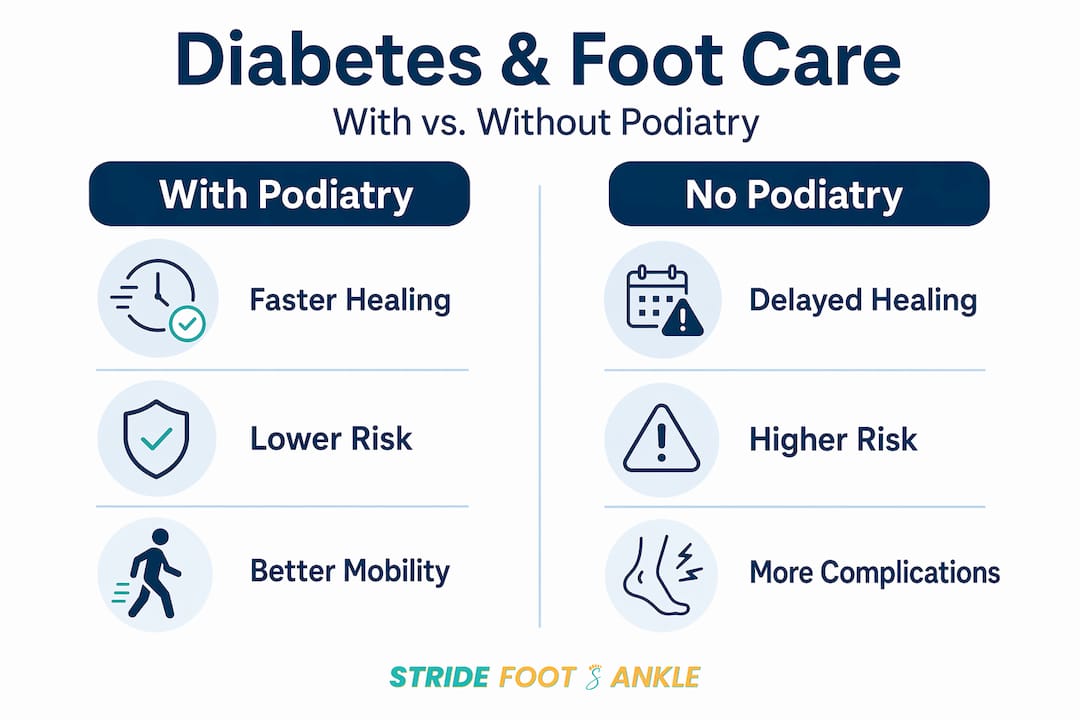
Outcomes with and without podiatric follow-up in diabetic patients
| Outcome measure | With regular podiatric follow-up | Without podiatric follow-up |
|---|---|---|
| Wound healing rate | Significantly improved | Slower, higher recurrence |
| Risk of infection requiring hospitalization | Reduced | Elevated |
| Risk of lower limb amputation | Lower | Higher |
| Overall mortality risk | Improved outcomes observed | Poorer prognosis |
| Quality of life score | Higher, more mobility retained | Lower, greater disability |
These are not abstract statistics. They represent real seniors who kept their legs and their lives because they had consistent, proactive foot care.
Here are practical ways podiatric care prevents diabetes-related complications:
- Routine wound inspection during every visit, catching problems before they are visible or painful to you
- Nail and callus management by a skilled clinician, eliminating the risk of self-inflicted wounds from at-home trimming
- Custom orthotics that redistribute pressure away from vulnerable areas of the foot, reducing ulcer formation
- Patient education on daily foot inspection techniques, proper footwear selection, and how to recognize warning signs early
- Wound care and debridement (professional removal of dead tissue) to promote healing in existing ulcers
- Referral coordination with vascular specialists or endocrinologists when circulation problems or blood sugar management require additional intervention
If you have diabetes, conservative foot care is not a luxury. It is a medical necessity. The goal is always to keep your feet healthy enough that you never reach the point of needing a wound care visit. Prevention is far less painful, far less costly, and far more effective than treatment after the fact.
Regular foot checks should happen at every primary care visit, but a dedicated podiatrist will go deeper, examining sensation with a monofilament test (a thin nylon wire used to assess nerve sensitivity), checking blood flow with a Doppler device, and mapping pressure points to identify areas at risk before an ulcer ever forms. This level of specialized attention is exactly what diabetes foot ulcer management requires to be truly effective.
Access barriers and the rise of in-home podiatry options
Here is a reality that does not get discussed enough: knowing that you need podiatric care is not the same as being able to get it. Many seniors in Las Vegas face genuine obstacles that prevent them from getting to a clinic, even when they understand the importance of foot health.
Transportation is one of the most common barriers. Without a car, getting across Las Vegas to a medical appointment requires navigating bus schedules, arranging rides with family members, or paying for ride-share services. For a senior with painful feet or limited mobility, that process can feel impossible. Physical limitations add another layer. Seniors who use walkers, wheelchairs, or who are recovering from surgery may simply not be able to manage the logistics of an in-person clinic visit. And for seniors who are fully homebound due to illness or advanced age, the clinic might as well not exist.
This is where mobile or in-home podiatry is changing lives. Mobile podiatry models bring specialty foot and ankle care directly to patients, eliminating the need to travel and reducing the gap between need and access. A podiatrist comes to your home with the equipment needed to perform nail care, wound assessment, orthotics fitting, and diabetic foot inspections in the comfort of your own living room.
If you or a family member needs in-home care, here is how to arrange it:
- Contact your podiatrist’s office and ask specifically whether mobile or in-home services are available in your area of Las Vegas.
- Speak with your primary care physician about a referral, which may be required for insurance coverage.
- Confirm insurance coverage by calling your Medicare or supplemental insurance provider and asking whether home visits by a podiatrist are a covered benefit.
- Prepare your home for the visit by having a comfortable, well-lit chair available and a list of your current medications and medical conditions ready to share.
- Schedule recurring visits based on your risk level. Diabetic patients often benefit from monthly or bimonthly in-home checks, while lower-risk seniors may do well with quarterly visits.
Pro Tip: When calling to schedule your first appointment, ask directly whether the practice offers any accessibility accommodations, including mobile services, ground-floor exam rooms, or extended appointment times. At Stride Foot & Ankle, mobile podiatry therapy options and cutting-edge in-office treatments are available to make care as accessible as possible for Las Vegas seniors.
The impact of closing the access gap is enormous. Seniors who receive regular podiatric care, whether in-clinic or at home, have fewer emergency room visits, fewer hospitalizations for foot infections, and better overall mobility scores. Staying connected to consistent foot care is not about convenience. It is about staying healthy, staying independent, and staying in your own home as long as possible.
Why podiatry shouldn’t operate in isolation for senior care
Here is something we feel strongly about, and it is not a position you will often hear from a podiatry practice: a podiatry appointment alone is not enough. Not for most seniors, and not for anyone dealing with complex, age-related health conditions.
We see this pattern regularly. A senior visits a podiatrist, gets their nails trimmed and a painful corn removed, feels better for a few weeks, and then the same problems return because nothing in their broader lifestyle or health management has changed. The visit was helpful, but it was not transformative. That is because podiatry, as powerful as it is, does not work in isolation.
Research on fall prevention makes this point clearly. Podiatry works best for fall reduction when it is paired with other elements like footwear changes, orthotics, and an exercise component. Podiatry alone may not show a meaningful fall-reduction effect. That finding should reshape how seniors think about their foot care.
What actually works is integrated care. Think of it as a team sport. The podiatrist manages the structural and medical issues in your feet. A physical therapist builds the leg strength and balance that keeps you stable. Your primary care physician monitors diabetes, circulation, and inflammation. And you, as the patient, follow through with daily home foot care, wear proper footwear, and stay physically active. When all of those pieces work together, the results are genuinely powerful.
The challenge is that care coordination is often the missing link. Physicians and specialists work in separate offices, use different electronic health records, and rarely call each other to discuss your case. As a patient, you may have to be your own advocate. When you visit a holistic care approach provider who already thinks in terms of integrated care, that advocacy becomes much easier.
For families supporting elderly parents or grandparents, our advice is this: do not let a podiatry appointment be a standalone event. Ask the podiatrist to communicate with the primary care physician. Ask about physical therapy referrals. Ask whether the exercise the senior is currently doing is appropriate for their foot condition. Push for the care team conversation to actually happen. The difference between podiatry as a routine appointment and podiatry as part of a coordinated plan is the difference between managing symptoms and genuinely improving health.
Local podiatry solutions for seniors in Las Vegas
Your feet have carried you through a lifetime of experiences, and they deserve skilled, compassionate care.

At Stride Foot & Ankle, Dr. Nahad Wassel provides expert podiatric care specifically designed for the needs of Las Vegas seniors. Whether you need general podiatry services for routine maintenance, specialized wound care, diabetic foot management, or conservative pain relief that avoids surgery when possible, the practice offers a full range of treatments tailored to your situation. Dr. Wassel’s training in both surgical and conservative approaches means you receive the right treatment for your specific condition, not a one-size-fits-all plan. Start with our complete foot health guide to understand your options, then call to schedule your consultation and take the first confident step toward better foot health.
Frequently asked questions
How often should seniors visit a podiatrist?
Most seniors benefit from seeing a podiatrist at least once every 3 to 6 months, particularly if they have diabetes, arthritis, circulation problems, or a history of recurring foot conditions. Higher-risk patients, especially those with active diabetic foot ulcers, may need monthly visits or more.
Can podiatry help prevent falls in older adults?
Yes, podiatric interventions reduce falls most effectively when combined with proper footwear, custom orthotics, and a structured exercise program in a comprehensive care plan rather than as a stand-alone treatment.
What if I am homebound or cannot travel to a clinic?
Mobile podiatry services bring professional care directly to your home, and many Las Vegas providers offer this option. Mobile podiatry models are specifically designed to reduce complications for homebound seniors by eliminating the transportation barrier to specialty care.
Does podiatry really impact diabetes outcomes?
Yes. Clinical evidence links podiatric follow-up to reduced mortality and lower amputation risk for seniors with diabetic foot ulcers, making regular podiatric visits one of the most critical preventive measures for older adults managing diabetes.
Recommended
- Why See a Podiatrist? Your Complete Foot Health Guide – Stride Foot & Ankle – Dr. Nahad Wassel
- How Patient-Centered Care Transforms Podiatry in Las Vegas – Stride Foot & Ankle – Dr. Nahad Wassel
- How Conservative Foot Care Relieves Pain and Prevents Surgery – Stride Foot & Ankle – Dr. Nahad Wassel
- General Foot & Ankle Care – Stride Foot & Ankle
Recent Comments