

TL;DR:
- Proper step-by-step foot care involves gathering supplies, cleaning wounds carefully, and using dressings to promote healing. Daily inspection, hygiene, and supportive footwear are essential strategies to prevent new injuries and manage conditions like plantar fasciitis. Early professional evaluation ensures safer recovery and prevents complications in Las Vegas’s demanding environment.
Foot pain has a way of stopping you cold, literally. Whether you’re navigating the hard casino floors on the Strip, logging miles on concrete sidewalks, or recovering from a blister that got out of hand, proper step by step foot care can mean the difference between a minor setback and a serious wound. Las Vegas is not a city that slows down, and neither should you. This guide walks you through everything from gathering supplies to managing plantar fasciitis (inflammation of the thick band of tissue running along your sole), so you can take care of your feet at home with confidence and know exactly when to call in a professional.
Table of Contents
- What you need: Essential tools and preparations for foot care
- Step-by-step instructions for cleaning and dressing minor foot wounds
- Daily foot care routine: Inspection, hygiene, and moisturizing practices
- Managing common foot conditions: Plantar fasciitis and load management strategies
- Troubleshooting and recognizing when to seek professional foot care
- Why effective foot care requires more than just treatment: Expert insights
- Find expert foot care and support in Las Vegas
- Frequently asked questions
Key Takeaways
| Point | Details |
|---|---|
| Prepare properly | Gather all necessary clean supplies and prepare your care area before starting foot care. |
| Gentle cleaning | Use sterile saline or lukewarm water instead of harsh antiseptics to clean foot wounds safely. |
| Daily inspection | Inspect and dry your feet daily to catch problems early and prevent infections. |
| Manage load | Balance activity with rest, stretching, and strengthening to improve foot pain and prevent recurrence. |
| Know limits | Recognize warning signs and seek professional care promptly to avoid serious complications. |
What you need: Essential tools and preparations for foot care
Before you treat anything, you need to set yourself up properly. Rushing into wound care without the right supplies is one of the most common mistakes people make, and it often turns a manageable situation into a complicated one. As wound care specialists confirm, gathering all supplies before starting reduces contamination risk and keeps the process efficient.
Here is everything you need in one place:
Essential foot care supplies
- Disposable gloves (nitrile or latex)
- Sterile saline solution for wound rinsing
- Mild, fragrance-free soap
- Sterile gauze pads in multiple sizes
- Cotton swabs for applying antiseptic
- Gentle antiseptic solution (betadine or chlorhexidine)
- Antibiotic ointment (such as bacitracin)
- Non-stick wound dressings
- Medical tape or self-adhesive bandage wrap
- Clean scissors for cutting dressings
- A plastic bag or sealed container for waste disposal
- A handheld mirror for hard-to-see areas
Workspace preparation matters just as much as your supply list. Wash your hands thoroughly with soap and water before touching anything. Wipe down your workspace with a disinfectant wipe and lay a clean towel or paper towels down as your surface. Work in good lighting so you can clearly see what you’re dealing with.
For detailed guidance on what to stock for ongoing care, the foot wound care essentials page from Stride Foot & Ankle offers practical recommendations tailored to local patients.
| Supply | Purpose | Where to find it |
|---|---|---|
| Sterile saline | Rinse wounds without irritation | Pharmacy, grocery store |
| Non-stick dressings | Protect wounds without sticking | Pharmacy |
| Nitrile gloves | Prevent contamination | Pharmacy, hardware store |
| Antibiotic ointment | Reduce infection risk | Pharmacy, grocery store |
| Handheld mirror | Inspect bottom of feet | Dollar store, pharmacy |
Pro Tip: Set everything out on your clean surface before you sit down to work. Once you start, your hands may be gloved or contaminated, and reaching for something you forgot can introduce bacteria to an open wound.
Step-by-step instructions for cleaning and dressing minor foot wounds
With your supplies ready, here is a detailed, step-by-step guide on how to safely clean and dress your foot wounds for optimal healing.
Wash your hands for at least 20 seconds using soap and warm water. Then put on your disposable gloves before touching the wound at all.
Rinse the wound with sterile saline or lukewarm water. Pour gently over the area or use a bulb syringe. This removes surface debris without damaging healthy new tissue. Critically, avoid harsh antiseptics like hydrogen peroxide or rubbing alcohol, which destroy the fragile cells your body needs for healing.
Clean the surrounding skin by dampening a gauze pad with mild soap and wiping away from the wound. Never wipe toward the wound opening, as this drags surface bacteria inward.
Apply a thin layer of antiseptic using a cotton swab. Dab lightly around the wound edges only. Do not flood the inside of the wound with antiseptic; a little goes a long way.
Remove excess fluid gently. If the wound is weeping, lightly blot with a dry sterile gauze pad. Never scrub or probe to remove debris. If debris is embedded, stop and seek professional care.
Pat the surrounding skin dry with a clean gauze pad. Leave the wound slightly moist, not soaking wet and not bone dry. A slightly moist wound environment actually heals faster than a completely dry one, a fact that surprises many people.
Apply a thin layer of antibiotic ointment directly to a non-stick dressing pad, then place it over the wound. Secure with medical tape or bandage wrap. The dressing should be snug but not tight enough to restrict circulation.
Elevate the foot whenever you are sitting or resting. Raising the foot above heart level reduces swelling and improves circulation to the wound site. If you need to walk, use supportive footwear that keeps pressure off the wound.
Important: A wound that is improving should look cleaner, feel less tender, and show new pink tissue at the edges within three to five days. If you are not seeing that progression, it is time to consult a professional.
Pro Tip: Change your dressing daily, or more often if it becomes wet, soiled, or loose. Each dressing change is your opportunity to inspect the wound for early signs of infection, catching problems before they escalate.
For a more detailed look at cleaning foot wounds and related skin conditions on the foot, additional resources are available at Stride Foot & Ankle.
Daily foot care routine: Inspection, hygiene, and moisturizing practices
Beyond wound care, maintaining a daily foot care routine is crucial to prevent new injuries and support healing. In Las Vegas, the dry desert heat pulls moisture from skin faster than most climates, making a consistent routine even more important here than in other parts of the country.
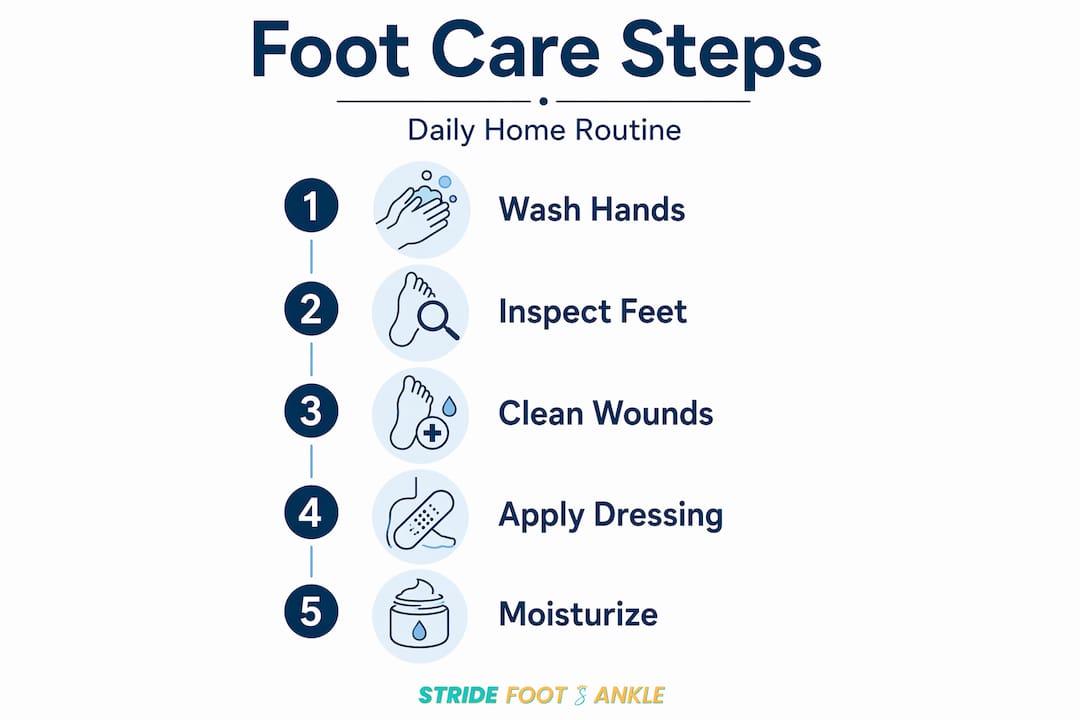
Your daily foot care steps, in order:
Wash your feet using lukewarm water between 90 and 95 degrees Fahrenheit. Hot water strips natural oils and increases the risk of burns, especially for anyone with reduced foot sensation. Use mild soap and wash the entire foot including under the toes.
Dry thoroughly, paying special attention to the spaces between your toes. Trapped moisture in those spaces creates the warm, damp environment that fungal infections need to thrive.
Inspect every surface of both feet. Use a handheld mirror or ask someone to help you check the soles, heels, and between toes. Daily foot inspection and proper hygiene prevent infection and detect problems early, particularly blisters, cuts, or areas of unusual redness, swelling, or warmth.
Apply moisturizer to dry areas including the tops, bottoms, and heels of your feet. Never apply lotion between your toes. Moisture trapped there does not evaporate and becomes a breeding ground for fungal organisms.
Trim your toenails straight across, not curved at the corners. Rounding the edges increases the risk of ingrown toenails, which are painful and can become infected. Use clean nail clippers and do not cut nails too short.
Check your shoes before putting them on. Shake them out and run your hand inside to feel for pebbles, debris, or worn insole material that could press against your foot. A tiny pebble in a shoe is a common cause of wounds that go unnoticed for hours.
Signs to watch for during daily inspection:
- New blisters, cuts, cracks, or raw areas
- Redness, warmth, or swelling in any area
- Color changes including dark spots or pale patches
- Odor that is different from normal
- Changes in toenail color or thickness
Pro Tip: Inspect your feet between 10 a.m. and 2 p.m. when your body temperature is most stable. Skin color is more accurate during this window, making subtle redness or warmth easier to identify.
| Daily task | Best time | Tools needed |
|---|---|---|
| Washing feet | Morning or evening | Lukewarm water, mild soap |
| Drying between toes | After washing | Clean towel |
| Full inspection | 10 a.m. to 2 p.m. | Handheld mirror, good lighting |
| Moisturizing | After washing and drying | Fragrance-free foot cream |
| Nail trimming | Weekly | Clean nail clippers |
| Shoe inspection | Before wearing | Your hand, visual check |
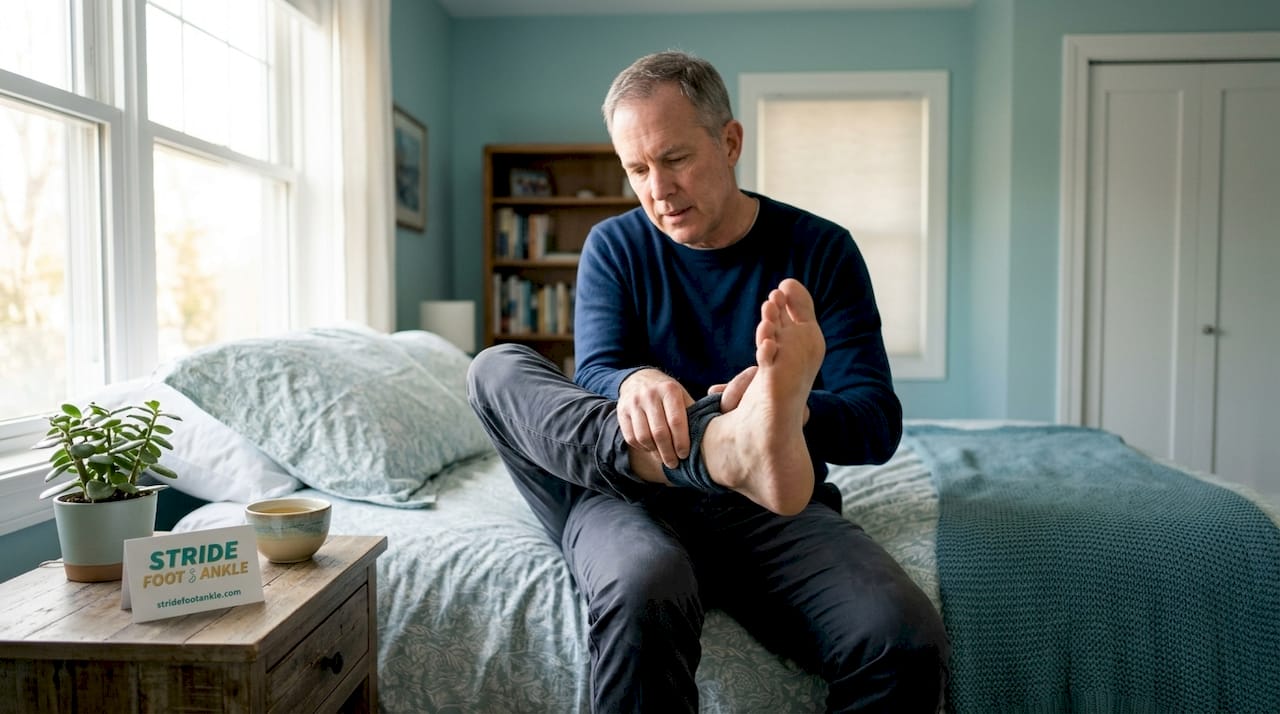
For more daily foot care tips suited to the Las Vegas climate, Stride Foot & Ankle offers practical guidance on keeping your feet healthy year-round.
Managing common foot conditions: Plantar fasciitis and load management strategies
When foot pain is caused by conditions like plantar fasciitis, management beyond wound care is necessary to recover fully and prevent recurrence. Plantar fasciitis (pronounced “plan-tar fash-ee-EYE-tiss”) is inflammation of the thick band of connective tissue that runs along the bottom of your foot from heel to toe. It is one of the most common reasons people visit a podiatrist.
Here is the part most people miss: most plantar fasciitis is caused by load management issues rather than just structural problems. That means the way you distribute activity across your day matters enormously.
Core management strategies:
- Reduce daily step count temporarily. If you are logging 15,000 steps a day, drop to 8,000 while the tissue recovers. You are not resting. You are recalibrating load.
- Switch to low-impact activities. Swimming, cycling, and water aerobics keep you active without the repetitive ground impact that aggravates inflamed tissue.
- Stretch the plantar fascia and calf muscles daily. Tight calves pull on the Achilles tendon, which pulls on the heel, which pulls on the fascia. Address the whole chain.
- Progress to strengthening exercises. Once pain begins to settle, eccentric calf raises (lowering your heel slowly below a step) build tissue resilience.
- Choose supportive footwear every time you get up. Going barefoot on hard tile floors at home, a very Las Vegas habit, is one of the leading reasons plantar fasciitis drags on for months.
Stretching vs. strengthening: When to prioritize which
| Approach | Best timing | Primary benefit | Example exercise |
|---|---|---|---|
| Stretching | Early in recovery, morning | Reduces immediate tension | Plantar fascia towel stretch |
| Strengthening | Mid to late recovery | Builds tissue capacity | Eccentric heel drops |
| Footwear support | Throughout recovery | Manages load constantly | Firm heel counter, arch support |
| Low-impact cardio | Throughout recovery | Maintains fitness without strain | Swimming, cycling |
- Towel stretch: Sit on the floor with your leg extended. Loop a towel around your foot and gently pull toes toward you. Hold 30 seconds. Repeat 3 times each morning before taking a step.
- Calf stretch against wall: Stand facing a wall, one foot back with heel flat. Lean forward. Hold 30 seconds per leg, twice daily.
- Eccentric heel drops: Stand on a step, heels off the edge. Slowly lower both heels below step level over three seconds. Rise back up. Start with 10 reps and build gradually.
Pro Tip: Never transition to new footwear all at once. If you switch from cushioned running shoes to a firmer orthotic style, wear the new shoes for only two hours the first day, then add an hour per day. Sudden changes in footwear are a frequent trigger for new flare-ups.
Explore physical therapy for foot pain and conservative foot care methods for a fuller picture of non-surgical recovery strategies.
Troubleshooting and recognizing when to seek professional foot care
Even with the best care, complications can arise. Understanding when to step beyond home care ensures your foot stays healthy and serious issues are avoided.
Most minor foot wounds follow a predictable path: reduced tenderness by day two or three, visible healing at the edges by day five, and full closure within two weeks for healthy adults. When that trajectory goes off course, it is a signal your body cannot manage the situation alone.
Warning signs that require professional attention:
- Spreading redness beyond the wound edges (red streaks indicate spreading infection)
- Increasing warmth or swelling around the wound
- Yellow, green, or foul-smelling discharge
- Wound tissue turning black, gray, or very dark (this indicates tissue death)
- Pain that is worsening rather than improving after 48 hours
- Fever above 100.4°F, chills, or feeling generally unwell
- Any wound that has not improved within three days of consistent care
The stakes are higher for anyone in Las Vegas with diabetes, peripheral artery disease (reduced blood flow to the limbs), or nerve damage (neuropathy). These conditions reduce your body’s ability to fight infection and heal tissue. Signs like worsening redness, swelling, pus, fever, or black tissue require immediate medical attention without waiting to see if things improve on their own.
Know this: Seeking professional care when home treatment is not working is not a failure. It is the correct clinical decision. The goal of home care is to manage minor issues and buy time, not to replace medical expertise.
Pro Tip: Before you need it, know where your nearest urgent care and foot specialist are located. When an infection is spreading, hours matter. Having that information ready means you act faster when it counts.
If you are unsure whether your situation qualifies as urgent, the guidance on when to see a podiatrist can help you make that decision with confidence.
Why effective foot care requires more than just treatment: Expert insights
Here is something that most foot care articles will not tell you: rest is overrated, and in many cases, it actively slows recovery.
The conventional advice when foot pain strikes is to stay off your feet. It sounds logical. But from a clinical standpoint, foot pain is largely a load management issue that requires progressive strengthening, not extended rest. When you stop loading tissue entirely, it loses capacity. It actually gets weaker, less tolerant of the forces it will eventually need to handle again. That is why people who rest their plantar fasciitis for six weeks and then return to normal activity often experience a worse flare within days.
The smarter approach is to find your current tolerance level and work just below it while gradually building back up. Walk less, not zero. Stretch daily. Strengthen progressively. Wear supportive shoes every moment your feet are on the ground, including at home.
Footwear deserves more credit than it gets in most foot care conversations. People treat shoes as an aesthetic choice rather than a functional tool. But for someone recovering from plantar fasciitis, a bunion (a bony bump at the base of the big toe), or a heel wound, the right shoe is essentially a therapeutic device. It distributes load, reduces pressure on vulnerable areas, and supports the natural mechanics of your gait. Dismissing footwear as cosmetic is one of the most common and costly mistakes we see in recovery.
The other mindset shift that makes a real difference is thinking of foot care as permanent rather than reactive. Las Vegas residents walk on unforgiving surfaces constantly, whether that is polished concrete, asphalt, or tile. Your feet absorb force all day. A daily inspection and hygiene routine, done consistently, catches problems when they are still small. Wounds that patients describe as “showing up overnight” almost always have a history of days or weeks of minor warning signs that went unnoticed because no one was looking.
The truth about foot care: It works best when it becomes a daily habit, not something you do only when something hurts. Consistent attention prevents the vast majority of serious complications.
Explore what conservative foot care looks like in practice for patients who want to recover without surgery whenever possible.
Find expert foot care and support in Las Vegas
Home care goes a long way when you know what you are doing. But some conditions need a trained eye, specialized equipment, and a treatment plan built around your specific anatomy and lifestyle.

At Stride Foot & Ankle, Dr. Nahad Wassel and the team offer professional foot and ankle care designed specifically for Las Vegas patients. From expert wound care in Las Vegas including advanced ultrasound wound healing therapy, to conservative management of plantar fasciitis, bunions, and nail conditions, every treatment plan is personalized to what your feet actually need. If you are ready to go beyond home management and get answers from a board-certified podiatrist, explore guided foot care routines and request an appointment at Stride Foot & Ankle today.
Pro Tip: The sooner you see a specialist, the more treatment options remain available. Conditions that could be managed conservatively in the early stages sometimes require more involved intervention after months of delay.
Frequently asked questions
How often should I inspect my feet to prevent complications?
Inspect your feet every single day. Daily inspection is recommended for early problem detection, and doing it between 10 a.m. and 2 p.m. gives you the most accurate read on skin color and temperature changes.
Can I use hydrogen peroxide to clean minor foot wounds?
No. Avoid hydrogen peroxide and rubbing alcohol entirely, as both damage healthy tissue and slow healing. Use sterile saline or lukewarm water to rinse wounds gently and effectively.
When should I see a doctor about a foot wound?
See a doctor immediately if you notice spreading redness, warmth, increased pain, foul-smelling discharge, fever, or if the wound is deep or involves tendons. A wound not improving within three days of consistent home care also warrants professional evaluation.
Is moisturizing between my toes safe?
No. Never apply moisturizer between your toes because the trapped moisture creates ideal conditions for fungal infections, which can break down skin and lead to open wounds.
How does load management aid foot pain recovery?
Load management keeps you active at a level your healing tissue can tolerate while gradually building capacity back up. Complete rest often hinders recovery by reducing tissue strength, making a controlled, progressive return to activity far more effective than prolonged inactivity.
Recommended
- Step-by-step foot care routines for pain relief – Stride Foot & Ankle – Dr. Nahad Wassel
- Why foot care matters: prevent pain, injuries, and complications – Stride Foot & Ankle – Dr. Nahad Wassel
- How to prepare for foot surgery: steps, recovery, and expert tips – Stride Foot & Ankle – Dr. Nahad Wassel
- Why See a Podiatrist? Your Complete Foot Health Guide – Stride Foot & Ankle – Dr. Nahad Wassel
Recent Comments