

TL;DR:
- Fungal toenails, caused mainly by dermatophyte fungi, produce thickened, discolored, and brittle nails that require prolonged antifungal treatment. Proper diagnosis, consistent therapy, and environmental controls are essential for effective clearance and prevention of recurrence. Consulting a podiatrist is advised when self-treatment fails, severe symptoms appear, or high-risk conditions like diabetes are involved.
Fungal toenails, medically termed onychomycosis, are a progressive nail infection caused by dermatophyte fungi that invade the nail plate and bed, producing thickening, discoloration, and brittleness. The infection develops slowly from the nail edge, often turning nails white or yellow before they become fragile and crumble. Many people dismiss early symptoms as cosmetic, but onychomycosis rarely clears on its own. Effective toenail fungus treatment requires consistent antifungal therapy over months, and without it, the infection spreads and becomes significantly harder to eradicate.
What are fungal toenails and what causes them?
Fungal toenails are nail infections caused primarily by dermatophyte fungi, with Trichophyton rubrum and Trichophyton mentagrophytes responsible for the majority of toenail cases. Molds and yeasts can also infect nails, though less commonly. The fungi enter through tiny cracks in the nail or surrounding skin, colonize the nail bed, and gradually destroy the nail structure from within.
Several risk factors make infection more likely:
- Warm, moist footwear environments. Fungi thrive in dark, damp conditions like the inside of closed shoes, especially when feet sweat heavily. Las Vegas heat accelerates this cycle.
- Communal barefoot exposure. Public pools, gym locker rooms, and shared showers are high-transmission zones. Sharing towels, socks, or nail tools with an infected person transfers the fungus directly.
- Compromised immune function. Diabetes, circulatory disorders, and immunosuppressive medications all reduce the body’s ability to fight off fungal colonization.
- Existing athlete’s foot. Tinea pedis (athlete’s foot) is caused by the same dermatophyte family and acts as a direct reservoir for nail infection if left untreated.
- Nail trauma. Repeated microtrauma from tight footwear creates entry points for fungi.
- Age. Nail growth slows with age, giving fungi more time to establish before the nail turns over.
Diagnosis begins with a visual exam. A podiatrist looks for the classic signs: thickened, discolored, brittle, or distorted nails with debris under the nail plate. When the presentation is ambiguous, a nail clipping or scraping is sent to a lab for microscopy or culture to confirm the specific fungal species. This matters because dermatophytes cause the majority of toenail infections, but yeast or mold infections may respond differently to treatment. Skipping lab confirmation risks treating the wrong organism for months without improvement.
One underappreciated complication is fungal biofilm formation. Biofilms help fungi evade antifungal therapies, creating a protective matrix around the organisms that reduces drug penetration. This is one reason why onychomycosis is notoriously stubborn even with correct treatment.
What are the main treatment options for fungal toenails?
The most effective approach to curing fungal nails combines the right antifungal agent, the correct delivery method, and strict treatment adherence over the full prescribed duration. No single treatment works for every case, and the severity of infection, the number of nails affected, and the patient’s overall health all influence the best choice.
Topical antifungal treatments
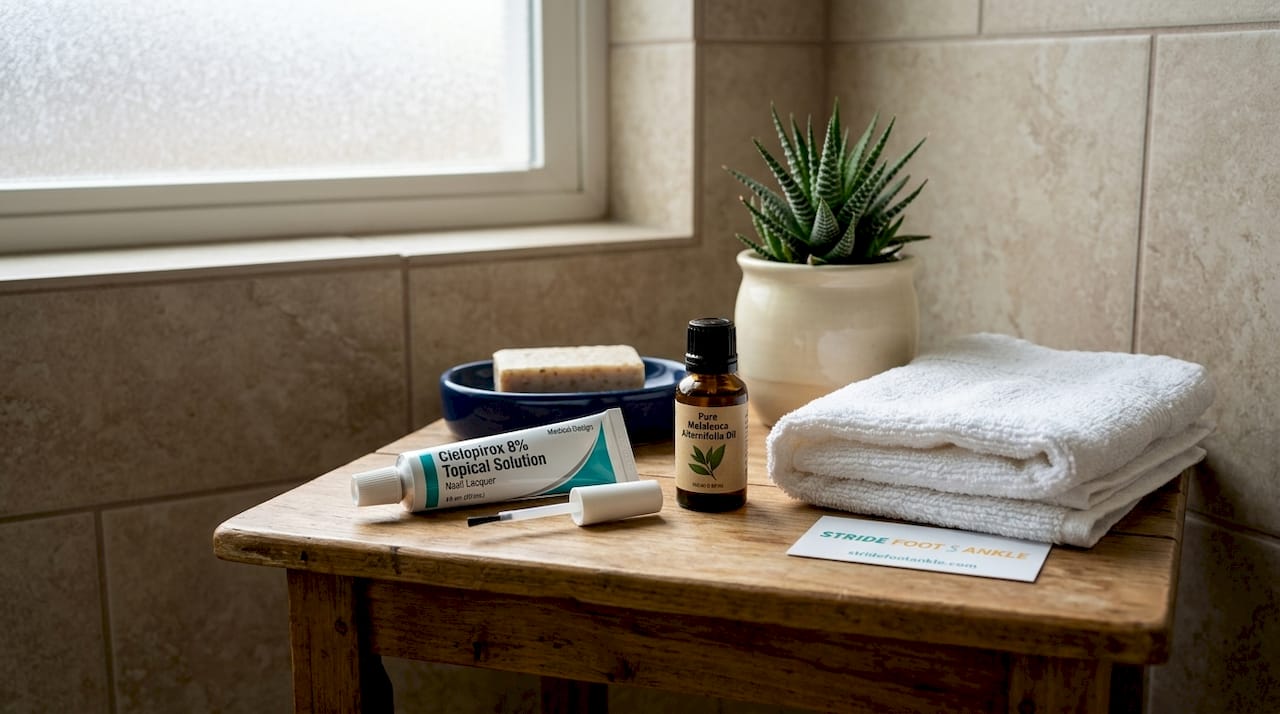
Topical antifungals are applied directly to the nail surface and surrounding skin. Common options include ciclopirox nail lacquer (Penlac) and efinaconazole solution (Jublia). These are best suited for mild to moderate infections that have not spread to the nail matrix (the growth center at the nail base). Topical treatments require months of regular use before visible improvement appears, and you should continue applying them until your provider confirms clearance. The main advantage is a low side effect profile. The limitation is penetration: the nail plate is a physical barrier, and topical agents struggle to reach deep infections.
Oral antifungal medications
Oral antifungals deliver the drug systemically, reaching the nail bed through the bloodstream. Terbinafine (Lamisil) and itraconazole (Sporanox) are the two most prescribed options. Terbinafine is typically taken daily for 6 weeks for fingernails and up to 12 weeks for toenails. Itraconazole is often prescribed in pulse dosing cycles. Oral antifungals may require up to 6 months of treatment, and possible side effects include headaches, nausea, and rash. Liver function monitoring is recommended for patients on prolonged courses or with pre-existing conditions.
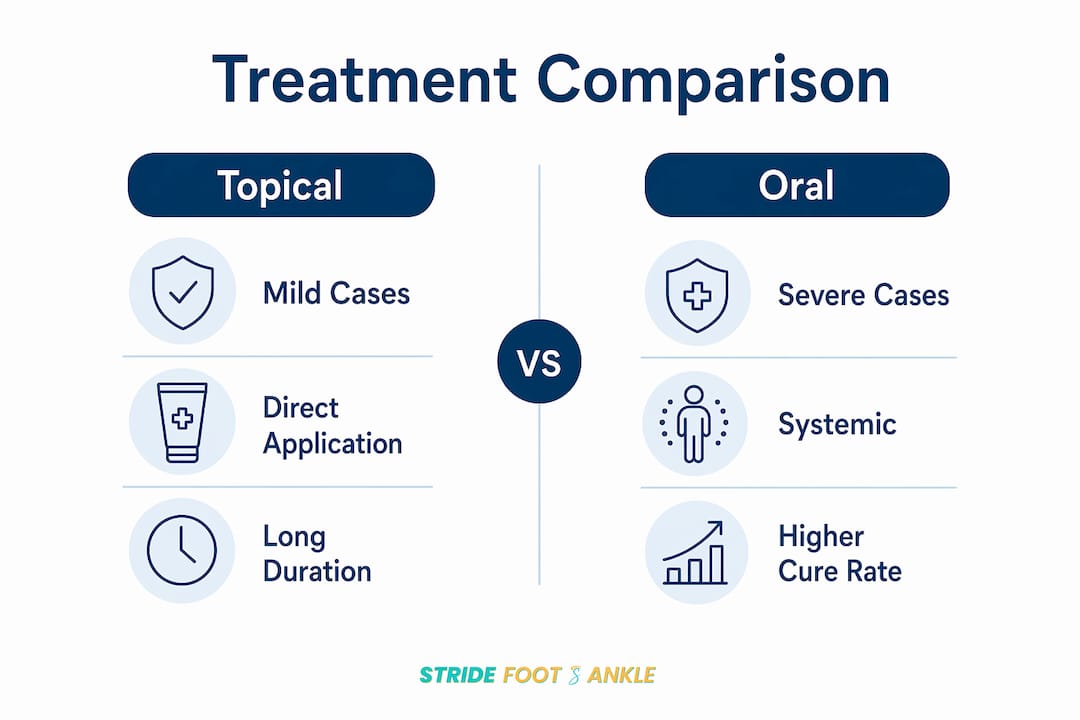
Comparing topical vs. oral treatments
| Factor | Topical antifungals | Oral antifungals |
|---|---|---|
| Best for | Mild to moderate infections | Moderate to severe infections |
| Application | Daily nail lacquer or solution | Daily or pulse oral tablet |
| Treatment duration | 6 to 12 months | 3 to 6 months |
| Side effect risk | Minimal (local irritation possible) | Moderate (nausea, rash, liver stress) |
| Nail penetration | Limited by nail plate thickness | Reaches nail bed via bloodstream |
| Cure rate | Lower for advanced cases | Higher overall cure rate |
Pro Tip: Never stop antifungal treatment the moment your nail looks better. Stopping treatment early is the single most common reason infections return. The nail may appear clear while fungal cells still survive in the nail bed. Always complete the full course your provider prescribes.
For severe infections or cases that fail both topical and oral therapy, a podiatrist may recommend combination treatment, using both a topical and an oral agent simultaneously. This approach addresses both the surface and the deeper nail bed, improving the odds of full clearance. Laser therapy is also available at some podiatric practices as an adjunct, though evidence for standalone laser treatment remains less established than for pharmaceutical options.
What home remedies and prevention steps actually work?
Home remedies for toenail fungus work best as supportive measures alongside prescribed treatment, not as replacements for antifungal medication. The most credible options have some evidence behind them, but none match the cure rates of prescription antifungals.
Here is a practical, step-by-step approach to home care and prevention of toenail fungus:
- Keep feet clean and completely dry. Wash feet daily with soap and water, then dry thoroughly, paying close attention to the spaces between toes. Moisture left between toes feeds fungal growth directly.
- Treat athlete’s foot immediately. Treating athlete’s foot promptly removes the primary fungal reservoir that reinfects toenails. Over-the-counter antifungal creams like clotrimazole (Lotrimin) or terbinafine cream (Lamisil AT) are effective for tinea pedis when used consistently.
- Wear moisture-wicking socks. Synthetic or wool-blend socks (brands like Darn Tough or Balega) pull moisture away from the skin far more effectively than cotton, which retains sweat.
- Rotate your footwear. Wearing the same shoes daily prevents them from drying out between uses. Alternate pairs and use antifungal shoe sprays or UV shoe sanitizers to reduce fungal load inside footwear.
- Wear flip-flops in communal areas. Public pools, gym showers, and locker rooms are high-risk zones. Flip-flops create a physical barrier between your feet and contaminated surfaces.
- Trim nails correctly. Cut toenails straight across, keep them short, and use clean, dedicated nail clippers. Do not share nail tools. Disinfect clippers with rubbing alcohol after each use.
- Replace old shoes. Worn footwear harbors fungal spores in the lining and insole. If you have had a toenail fungus infection, replacing shoes at the start of treatment reduces reinfection risk significantly.
Pro Tip: Tea tree oil (melaleuca oil) has demonstrated antifungal properties in laboratory studies, and some patients use it as a daily topical application on affected nails. It is not a substitute for prescription treatment, but it may support the antifungal environment when applied consistently to clean, dry nails.
Regarding general foot hygiene and care, the environment inside your shoes matters as much as what you apply to your nails. Antifungal powders like Zeasorb-AF applied inside shoes and socks reduce moisture and fungal load throughout the day. This is especially relevant in Las Vegas, where heat drives foot perspiration year-round, creating the warm, moist conditions fungi need to multiply.
When should you see a podiatrist for fungal toenails?
You should see a podiatrist when home treatment or over-the-counter antifungals have not produced visible improvement after two to three months, or when the infection has spread to multiple nails. Early professional evaluation also prevents misdiagnosis, since conditions like psoriasis, lichen planus, and nail trauma can mimic onychomycosis.
Specific situations that require prompt professional assessment include:
- Diabetes or peripheral vascular disease. Fungal nail infections in diabetic patients carry a higher risk of secondary bacterial infection and foot ulcers. The risk of foot ulcers in at-risk patients is significantly elevated when nail infections go untreated.
- Immunocompromised status. Patients on chemotherapy, long-term corticosteroids, or with HIV are at risk for aggressive fungal spread that requires systemic treatment under medical supervision.
- Severe nail distortion or pain. When the nail plate has thickened to the point of causing pain in footwear, or when the nail is partially detached, conservative treatment alone is unlikely to be sufficient.
- Signs of secondary bacterial infection. Redness, swelling, warmth, or discharge around the nail fold suggests bacterial involvement requiring separate treatment.
- Treatment failure after a full course. If you have completed a full course of oral terbinafine or itraconazole and the infection persists, a podiatrist can assess for resistant organisms or biofilm-related complications.
In severe cases, nail removal under local anesthesia may be the most effective path forward. This procedure removes the infected nail plate, allowing topical antifungals to reach the nail bed directly and giving a healthy nail the best chance to grow back. It is a straightforward in-office procedure and is far less daunting than it sounds. For a clearer picture of when to seek podiatric help, Stridefootankle provides detailed guidance on recognizing the signs that warrant professional evaluation.
Key takeaways
Fungal toenails require consistent, prolonged antifungal treatment combined with environmental controls and foot hygiene to achieve lasting clearance and prevent recurrence.
| Point | Details |
|---|---|
| Diagnosis matters first | Lab confirmation of the fungal species guides the most effective treatment choice. |
| Complete the full course | Stopping antifungal treatment early is the leading cause of infection recurrence. |
| Oral beats topical for severity | Oral terbinafine or itraconazole outperforms topical agents for moderate to severe infections. |
| Control the shoe environment | Rotating footwear and using antifungal powders reduces reinfection risk between treatment cycles. |
| See a podiatrist when in doubt | Diabetic patients, treatment failures, and severe nail distortion all require professional evaluation. |
Why persistence is the part nobody tells you about
From my experience working with patients dealing with onychomycosis, the biggest obstacle is not finding the right medication. It is convincing people to keep using it long after the nail looks normal. There is a deeply human tendency to stop treatment when the visible problem disappears, and with fungal nails, that instinct leads directly back to square one.
The second thing I have noticed is how often the shoe environment gets ignored. Patients complete a full course of terbinafine, clear the infection, and then step back into the same pair of worn sneakers they wore throughout the infection. The fungal spores living in that shoe lining reinfect the nail within weeks. Treating the nail without treating the shoe is like mopping the floor while the tap is still running.
I also want to address the myth that home remedies alone can cure an established fungal nail infection. Tea tree oil, vinegar soaks, and Vicks VapoRub have genuine antifungal properties, and I do not dismiss them. But they work at the surface. A nail plate that is already thickened and discolored has fungal organisms embedded deep in the nail bed, and no topical home remedy penetrates that far with enough concentration to eradicate the infection. Use them as support, not as the strategy.
Finally, do not let embarrassment delay care. Onychomycosis is one of the most common nail conditions seen in podiatric practice. There is no judgment, only a clear path toward healthier nails and more confident steps.
— Ramil
Get expert fungal toenail care at Stride Foot & Ankle
If you have been managing fungal toenails on your own without lasting results, professional evaluation makes a real difference. At Stridefootankle, Dr. Nahad Wassel provides accurate diagnosis and personalized treatment plans tailored to the severity of your infection and your overall health profile.

Whether you need prescription antifungal therapy, guidance on preventing recurrence, or assessment for a more advanced case, the team at Stridefootankle is ready to help. Explore the full range of foot and ankle care services available in Las Vegas and take the first step toward clear, healthy nails. Schedule your consultation today and get back on your feet with confidence.
FAQ
What are the first symptoms of fungal toenails?
The earliest symptoms of fungal toenails include a white or yellow discoloration at the nail tip or edge, slight thickening, and a dull rather than shiny nail surface. The infection starts at the nail edge and progresses inward if left untreated.
How long does toenail fungus treatment take?
Toenail fungus treatment typically takes 3 to 6 months with oral antifungals like terbinafine, and up to 12 months with topical treatments. Full nail clearance may take longer because the nail must grow out completely before the infection is considered resolved.
Can fungal toenails spread to other nails or people?
Yes. Fungal nail infections are contagious and can spread to adjacent nails or to other people through shared towels, nail tools, socks, or barefoot contact in communal areas like pools and gym showers.
What is the best antifungal for toenails?
Oral terbinafine (Lamisil) is considered the most effective single agent for toenail onychomycosis, with higher cure rates than topical options. Itraconazole (Sporanox) is a strong alternative, particularly for patients who cannot tolerate terbinafine.
When should I stop trying home remedies and see a doctor?
Stop relying on home remedies and see a podiatrist if the infection has not improved after two to three months of consistent home treatment, if it has spread to multiple nails, or if you have diabetes, a weakened immune system, or pain from nail thickening.
Recommended
- Ingrowing Toenails Can Be Treated – Stride Foot & Ankle – Dr. Nahad Wassel
- Understanding Foot Fungus and When to Seek Help – Stride Foot & Ankle – Dr. Nahad Wassel
- Can a Nail Salon Fix an Ingrown Toenail? – Stride Foot & Ankle – Dr. Nahad Wassel
- Treating Warts on the Feet – Stride Foot & Ankle – Dr. Nahad Wassel
Recent Comments