

TL;DR:
- Foot pain results from injuries or dysfunction affecting the bones, muscles, tendons, or ligaments in the foot. Recognizing symptoms like heel pain, flat feet, or nerve discomfort helps determine the underlying cause, guiding effective treatment. Urgent medical attention is necessary if there is inability to bear weight, deformity, rapid swelling, signs of infection, or vascular compromise to prevent serious complications.
Foot pain is physical discomfort resulting from irritation, injury, or dysfunction in the bones, muscles, tendons, or ligaments of the foot. Your feet absorb the full force of your body weight with every step, making them uniquely vulnerable to both acute injuries and chronic overuse conditions. Plantar fasciitis, tendonitis, flat feet, and arthritis are among the most frequent culprits, and each responds to a distinct treatment approach. Understanding what is causing your discomfort is the first step toward getting real, lasting relief and reclaiming your mobility.
What are the common causes and symptoms of foot pain?
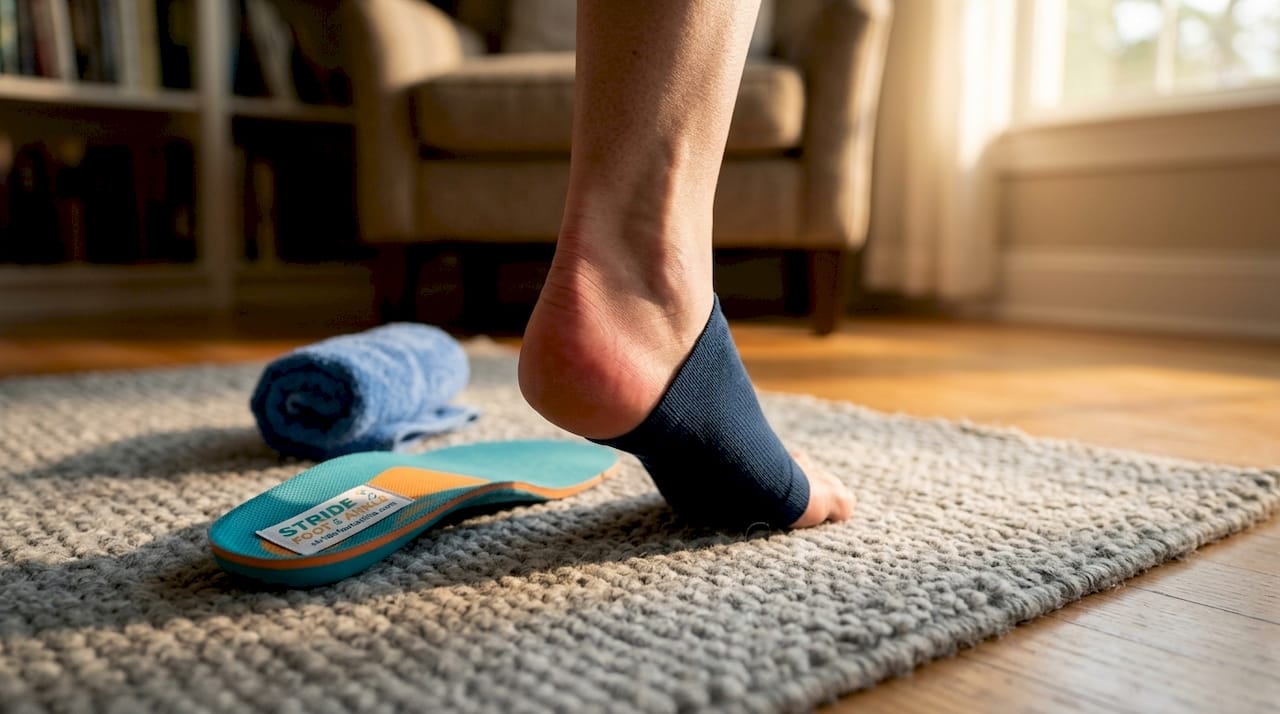
Foot pain originates from a wide range of structural, mechanical, and systemic conditions. Plantar fasciitis is the most common cause of heel pain, producing sharp, stabbing discomfort on your first steps in the morning that typically eases as you move. This pattern is a reliable diagnostic signal that distinguishes plantar fasciitis from most other causes of foot pain.
The causes of foot pain extend well beyond the heel. Recognizing the specific pattern of your symptoms helps you and your doctor narrow down the source quickly.
- Plantar fasciitis: Sharp heel pain on waking, caused by inflammation of the thick band of tissue running along the bottom of the foot. Pain often improves after a few minutes of walking but returns after prolonged standing.
- Tendonitis: Inflammation of the Achilles tendon or the posterior tibial tendon produces aching, stiffness, and swelling along the back or inner side of the ankle. The posterior tibial tendon is particularly important because its weakening leads directly to fallen arches.
- Flat feet (fallen arches): Flat feet cause pain that typically begins near the ankle and the inside of the foot, then radiates up the leg as the condition progresses. Dr. MaCalus V. Hogan notes that weakening of the posterior tibial tendon drives this process, and early management is critical to prevent progressive arthritis.
- Arthritis: Osteoarthritis and rheumatoid arthritis both affect the small joints of the foot, producing stiffness, swelling, and aching that worsens with activity or after periods of rest.
- Nerve-related pain: Conditions like Morton’s neuroma and peripheral neuropathy cause burning, tingling, or numbness, often concentrated in the ball of the foot or radiating into the toes. Diabetic neuropathy is a particularly common cause of chronic nerve pain in the feet.
- Poor footwear and overuse: Shoes without adequate arch support or cushioning accelerate mechanical stress on every structure in the foot. Sudden increases in activity volume, such as starting a new running program, are a leading cause of stress fractures and tendon injuries.
The symptoms of foot pain vary by location and underlying cause. Heel pain points toward plantar fasciitis or Achilles tendonitis. Ball-of-foot pain suggests metatarsalgia or Morton’s neuroma. Arch pain often reflects flat feet or posterior tibial tendon dysfunction. Diffuse swelling and joint stiffness across multiple areas raise concern for systemic conditions like rheumatoid arthritis or gout. Tracking when your pain is worst, where it is located, and what makes it better or worse gives any clinician the clearest possible picture.
When should foot pain be treated as a medical emergency?
Some foot pain symptoms require immediate emergency evaluation, not a scheduled appointment. Delaying care for these red flags can result in permanent damage, serious infection, or limb loss. If you experience any of the following, go to an emergency room or call for help right away.
- Inability to bear weight: If you cannot put any weight on your foot after an injury, a fracture or severe ligament rupture is likely. Walking on an undiagnosed fracture worsens displacement and delays healing significantly.
- Visible deformity: A foot or ankle that appears misaligned, angulated, or structurally abnormal after trauma signals a fracture or dislocation requiring urgent imaging and reduction.
- Severe, rapid swelling: Swelling that develops quickly after an injury, particularly with tightness and intense pain, can indicate compartment syndrome. This is a surgical emergency in which pressure inside the muscle compartment cuts off blood flow to tissue.
- Signs of infection: Redness spreading from a wound, warmth, fever, or pus discharge from any area of the foot demands immediate evaluation. In people with diabetes, even a small wound can progress to a deep tissue infection or osteomyelitis within days.
- Vascular compromise: A foot that becomes cold, pale, or bluish, especially after trauma or in someone with vascular disease, may have lost adequate blood supply. This is a limb-threatening emergency requiring vascular intervention within hours.
Certain foot pain symptoms require emergency care to prevent permanent damage or life-threatening complications. This is not a situation where waiting to see if things improve overnight is a reasonable strategy. Beyond true emergencies, persistent foot pain lasting more than 1 to 2 weeks, worsening symptoms, numbness, or pain that interferes with daily activities should prompt a visit to a podiatrist or physician for proper evaluation. Fractures, tendon tears, and nerve entrapments are routinely missed when people assume their pain is minor.
What medically approved treatments relieve foot pain?
Foot pain treatment follows a stepwise approach, starting with conservative self-care and escalating to specialist intervention when symptoms persist. A medically approved pathway includes rest, ice, supportive footwear, stretching, over-the-counter NSAIDs, orthotics, and physical therapy, with imaging or specialist referral reserved for cases that do not respond within a reasonable timeframe.
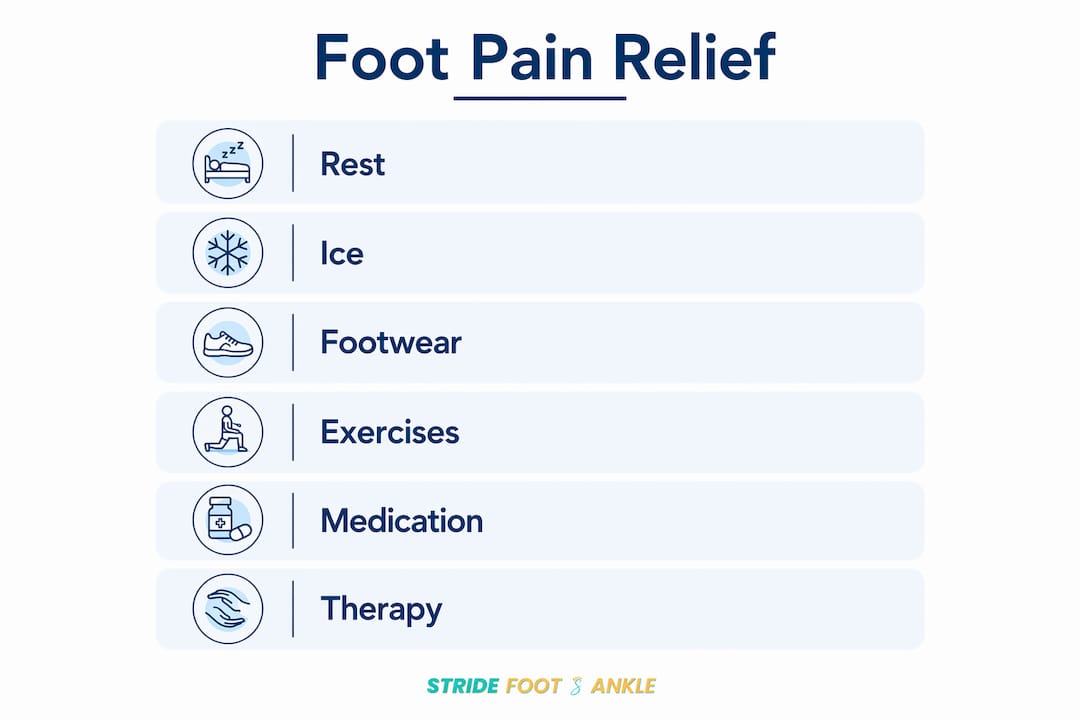
Rest and ice
Activity modification is the foundation of early foot pain management. Reducing or temporarily eliminating the activity that provokes your pain prevents further tissue damage and allows inflammation to settle. Apply ice wrapped in a cloth to the affected area for 15 to 20 minutes, three to four times daily, during the first 48 to 72 hours after an acute injury or flare-up. Never apply ice directly to skin, as this causes frostbite.
Supportive footwear and orthotics
Supportive footwear with good arch support, cushioning, a firm heel counter, and proper fit reduces mechanical stress across the entire foot. This is not optional advice for conditions like plantar fasciitis, flat feet, or overuse injuries. It is a primary treatment. Over-the-counter insoles from brands like Superfeet or Powerstep provide meaningful support for mild to moderate cases. Custom orthotics, prescribed and fitted by a podiatrist, are indicated when standard insoles fail to control symptoms or when the underlying foot structure requires precise correction.
Pro Tip: Replace your athletic shoes every 300 to 500 miles of use. The midsole cushioning compresses and loses its shock-absorbing capacity long before the outer sole shows visible wear.
Stretching and strengthening exercises
Foot pain relief exercises target the specific structures involved in your condition. For plantar fasciitis, the most effective exercises are the plantar fascia stretch (pulling your toes back toward your shin before getting out of bed) and the calf stretch against a wall. For posterior tibial tendon dysfunction and flat feet, single-leg heel raises build the tendon’s load capacity directly. Towel scrunches and marble pickups strengthen the intrinsic foot muscles that support the arch from below.
| Condition | Recommended exercise | Frequency |
|---|---|---|
| Plantar fasciitis | Plantar fascia stretch, calf stretch | 3 sets, 3 times daily |
| Flat feet / fallen arches | Single-leg heel raises | 3 sets of 15, daily |
| Achilles tendonitis | Eccentric heel drops on a step | 3 sets of 15, twice daily |
| General foot strengthening | Towel scrunches, toe spreads | Daily |
NSAIDs and when to use them
Over-the-counter NSAIDs like ibuprofen provide short-term relief by reducing inflammation and pain. Use them as directed on the label and limit use to the shortest effective duration. People with kidney disease, heart conditions, or a history of stomach ulcers should consult a physician before using NSAIDs. They manage symptoms but do not address the underlying mechanical cause of your pain, so they work best as a bridge while you implement the structural changes above.
Physical therapy and specialist care
Physical therapy improves foot mechanics, strengthens supporting muscles, and guides a safe return to activity. A licensed physical therapist can also apply taping techniques, such as low-Dye taping for plantar fasciitis, that provide immediate mechanical offloading. When conservative care fails after six to eight weeks, or when imaging reveals a stress fracture, tendon tear, or significant structural abnormality, referral to a podiatrist or orthopedic surgeon is the appropriate next step. Diagnostic tools like X-ray, MRI, and ultrasound identify the precise source of pain and guide targeted treatment.
How can foot pain be prevented and managed long-term?
Preventing foot pain from recurring requires consistent habits, not occasional interventions. The structural and mechanical factors that caused your pain in the first place do not disappear after one round of treatment. Long-term management means addressing those factors directly.
- Maintain a healthy weight. Every pound of body weight translates to roughly three to four pounds of force on the foot during walking. Reducing excess weight measurably decreases the load on the plantar fascia, metatarsals, and ankle joints.
- Increase activity gradually. The 10% rule in sports medicine states that you should not increase your weekly training volume by more than 10% from one week to the next. Violating this principle is one of the most common causes of stress fractures and overuse tendon injuries.
- Wear the right shoes for every activity. Running shoes, walking shoes, and cross-trainers are engineered for different movement patterns. Wearing a worn-out or inappropriate shoe for your activity type is a preventable cause of recurrent pain. Choosing proper footwear is one of the most impactful decisions you make for your foot health.
- Stretch daily. A consistent morning routine that includes calf stretches and plantar fascia stretches takes under five minutes and significantly reduces the risk of plantar fasciitis recurrence.
- Inspect your feet daily if you are at risk. People with diabetes, peripheral vascular disease, or peripheral neuropathy should examine the soles, heels, and between the toes every day. A small blister or cut that goes unnoticed can become a serious wound within days.
- Act early on recurring pain. Foot pain that returns repeatedly after activity is not something to push through. It is a signal that the underlying mechanics have not been fully corrected. Addressing it early with a podiatrist prevents minor issues from becoming surgical problems.
Pro Tip: Keep a dedicated pair of supportive shoes near your bed and put them on before your first steps in the morning. Walking barefoot on hard floors is a common trigger for plantar fasciitis flare-ups, especially first thing in the morning.
A structured foot care routine that combines the habits above gives you the best chance of staying pain-free over the long term. Consistency matters far more than any single intervention.
Key takeaways
Effective foot pain management requires identifying the specific cause, applying the right conservative treatments in sequence, and recognizing the warning signs that demand urgent care.
| Point | Details |
|---|---|
| Identify the cause first | Plantar fasciitis, flat feet, tendonitis, and arthritis each require a different treatment approach. |
| Use conservative care in sequence | Rest, ice, supportive footwear, stretching, and orthotics resolve most cases before specialist care is needed. |
| Know the emergency signs | Inability to bear weight, deformity, severe swelling, infection signs, or vascular changes require immediate evaluation. |
| Exercise targets the root cause | Condition-specific exercises like eccentric heel drops and plantar fascia stretches address the mechanical source of pain. |
| Prevent recurrence with daily habits | Proper footwear, gradual activity increases, and daily stretching are the most reliable long-term protection. |
What I have learned from watching patients ignore their feet
Most people who walk into a podiatry office with a serious foot problem did not develop it overnight. They developed it over months of dismissing pain as “normal soreness” or assuming it would resolve on its own. That pattern is the single most common mistake I see, and it consistently turns a two-week conservative treatment case into a six-month recovery.
The second mistake is treating footwear as a fashion or budget decision rather than a medical one. I have seen patients spend thousands on physical therapy for plantar fasciitis while continuing to wear flat, unsupportive shoes every day. The therapy cannot outwork the footwear. Supportive shoes are not optional once you have a structural foot condition. They are part of the treatment.
What actually works is a combination of early recognition, the right mechanical corrections, and patience. Plantar fasciitis, for example, is highly treatable, but it responds to weeks of consistent stretching and footwear changes, not a single intervention. Patients who commit to the full protocol, including daily stretching, appropriate shoes, and activity modification, get better. Patients who do one or two things inconsistently stay stuck.
The most encouraging thing I can tell you is that the vast majority of foot pain conditions respond to conservative care when it is applied correctly and consistently. Surgery is rarely the first answer. But ignoring the pain until it becomes unbearable is the fastest route to needing it. Listen to your body early, get an accurate diagnosis, and follow through on the treatment plan. That combination works.
— Ramil
Get expert foot pain care at Stride Foot & Ankle
If your foot pain has lasted more than two weeks, is getting worse, or is limiting your daily activity, it is time to see a specialist.

Stridefootankle offers personalized evaluation, diagnostic imaging, custom orthotics, and physical therapy coordination under the care of Dr. Nahad Wassel, a board-certified podiatric surgeon in Las Vegas. Every treatment plan is built around your specific diagnosis, not a generic protocol. Whether you are dealing with plantar fasciitis, flat feet, tendonitis, or a condition that has not yet been identified, the team at Stridefootankle is equipped to find the cause and treat it effectively. Visit the general foot and ankle care page to learn more about available services, or request an appointment today and start striding confidently again.
FAQ
What is the most common cause of foot pain?
Plantar fasciitis is the most common cause of foot pain, specifically heel pain, characterized by sharp discomfort on the first steps of the morning. It results from inflammation of the plantar fascia due to overuse, poor footwear, or structural foot issues.
How do I relieve foot pain at home?
Rest, ice applied for 15 to 20 minutes several times daily, supportive footwear, and targeted stretching exercises are the most effective home treatments for most types of foot pain. Over-the-counter NSAIDs like ibuprofen can reduce inflammation short-term when used as directed.
When should I see a doctor for foot pain?
See a doctor if foot pain persists beyond one to two weeks, worsens despite home care, includes numbness or tingling, or prevents normal daily activity. Emergency care is needed immediately for inability to bear weight, visible deformity, signs of infection, or a cold or pale foot.
Can flat feet cause pain throughout the leg?
Yes. Flat feet or fallen arches cause pain that starts near the ankle and the inside of the foot and can radiate up the leg as the posterior tibial tendon weakens. Early treatment with orthotics, supportive footwear, and strengthening exercises can prevent progression to arthritis.
How long does foot pain typically last?
Most acute foot pain from overuse or minor injury resolves within two to six weeks with consistent conservative care. Conditions like plantar fasciitis can take three to six months to fully resolve, particularly if footwear and activity modifications are not maintained throughout recovery.
Recommended
- Foot pain podiatry: Las Vegas diagnosis and treatment guide – Stride Foot & Ankle – Dr. Nahad Wassel
- Flat Foot: Causes, Symptoms, and Treatment Options – Stride Foot & Ankle – Dr. Nahad Wassel
- Why Do Feet Hurt? Causes, Symptoms, and Relief – Stride Foot & Ankle – Dr. Nahad Wassel
- Physical therapy for foot pain: recovery and relief – Stride Foot & Ankle – Dr. Nahad Wassel
Recent Comments