

TL;DR:
- Over a third of elderly diabetic patients have at-risk foot conditions that often go unnoticed, risking serious complications. Proper daily routines, timely recognition of symptoms, and regular professional exams are essential to prevent falls, infections, and progressive deformities. Access to specialized foot care in Las Vegas helps maintain mobility, independence, and long-term foot health for older adults.
More than 33% of elderly diabetic patients are living with at-risk foot conditions right now, many without realizing it. In a city like Las Vegas, where dry desert heat stresses the skin and an active lifestyle is encouraged well into your seventies and eighties, unnoticed foot problems can quietly escalate into serious complications. This guide walks you through the most common age-related foot conditions, practical daily routines, fall prevention strategies, and clear signals that it’s time to call a specialist. Whether you’re managing diabetes or simply noticing changes in your feet, the information here is designed to help you stay mobile, comfortable, and confident on your feet.
Table of Contents
- Common foot conditions among elderly in Las Vegas
- Daily and weekly foot care routines: evidence-based strategies
- Fall risks and mobility: how foot health affects independence
- When to seek specialist care: recognizing warning signs
- What most elderly foot care guides miss: real-world expertise from Las Vegas
- Take action: foot health resources and expert care in Las Vegas
- Frequently asked questions
Key Takeaways
| Point | Details |
|---|---|
| Annual foot exams | Yearly professional assessment catches problems early and prevents serious complications. |
| Safe daily routines | Washing, inspecting, and using protective footwear are key to avoiding injury and infection. |
| Preventing falls | Healthy feet and regular care substantially reduce fall risk and loss of independence. |
| Professional help | Contact a podiatrist promptly when pain, sores, or changes in sensation occur. |
| Proactive prevention | Early action is always easier and safer than waiting for symptoms to become severe. |
Common foot conditions among elderly in Las Vegas
Having established why foot care is vital, let’s look at which problems are most frequent for elderly residents in Las Vegas. Understanding what you’re dealing with is the first step toward managing it well.
The most frequent age-related foot conditions
Las Vegas presents some unique challenges for foot health. The dry climate pulls moisture from skin quickly, increasing the risk of cracking and calluses. Older adults also experience natural changes in fat padding under the feet, reduced circulation, and slower nerve response, all of which leave feet more vulnerable to injury and infection.
Here are the most common conditions you or a loved one may be facing:
- Diabetic foot disease: Elevated blood sugar damages blood vessels and nerves over time, reducing your ability to feel injuries. At-risk foot conditions affect roughly 33.5% of elderly diabetic patients, making this one of the most serious and widespread concerns in older adults.
- Peripheral neuropathy: This refers to nerve damage, most often caused by diabetes, that reduces sensation in the feet and lower legs. You may feel tingling, burning, or nothing at all in areas that are actually injured.
- Fungal infections: Toenail fungus (onychomycosis) and athlete’s foot thrive in warm, moist environments. Shared spaces in Las Vegas, like pools and gyms, raise exposure risk.
- Structural deformities: Bunions (a bony bump at the base of the big toe), hammertoes (toes that bend abnormally at the joint), and flat feet all become more common and more symptomatic with age.
- Plantar fasciitis: This is inflammation of the thick band of tissue running along the bottom of the foot. It causes sharp heel pain, especially during the first steps in the morning.
- Peripheral artery disease (PAD): Reduced blood flow to the legs and feet, related to arterial narrowing, can cause cramping, slow-healing sores, and cold feet.
You can find detailed general foot care tips that address many of these conditions and help you understand your options from the start.
Symptoms to watch for
It’s easy to dismiss foot discomfort as a normal part of aging. But certain signs deserve attention right away.
| Symptom | What it may indicate | Urgency level |
|---|---|---|
| Persistent burning or numbness | Peripheral neuropathy | High |
| Open sores or wounds that don’t heal | Diabetic foot ulcer or PAD | Immediate |
| Redness, warmth, or swelling | Infection or inflammation | High |
| Thickened, discolored toenails | Fungal infection | Moderate |
| Bony bumps or crooked toes | Bunion or hammertoe | Moderate |
| Sharp heel pain in the morning | Plantar fasciitis | Moderate |
| Cramping in legs while walking | Peripheral artery disease | High |
Any sore that doesn’t begin healing within a few days is a serious warning sign, especially if you have diabetes. Following structured pain relief routines can help manage some of these symptoms while you seek further evaluation.
Why these conditions matter so much
The consequences of untreated foot problems in older adults go far beyond discomfort. Diabetic foot ulcers increase fall risk in the elderly by approximately 60%, a staggering figure that highlights just how deeply foot health connects to overall safety and independence. Falls are one of the leading causes of injury-related hospitalization in adults over 65. A painful foot condition can also change how you walk, placing stress on knees, hips, and the lower back.
Knowing how to identify and treat issues early makes an enormous difference. Start with resources on treating common foot problems to get familiar with what professional care looks like.
Daily and weekly foot care routines: evidence-based strategies
Understanding these common problems, we turn to practical routines for self-care that help prevent them. Consistency is what makes these habits work. A few minutes each day can prevent weeks or months of pain.
Your daily foot care checklist
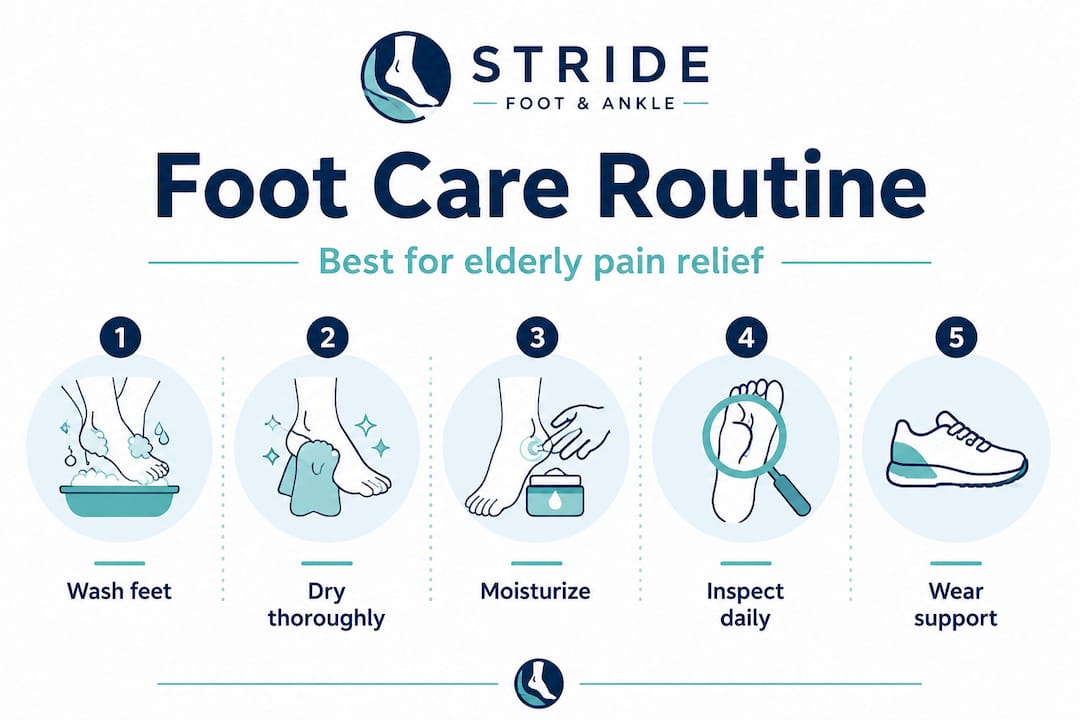
Follow these steps every single day, especially if you have diabetes, reduced sensation, or a history of foot problems.
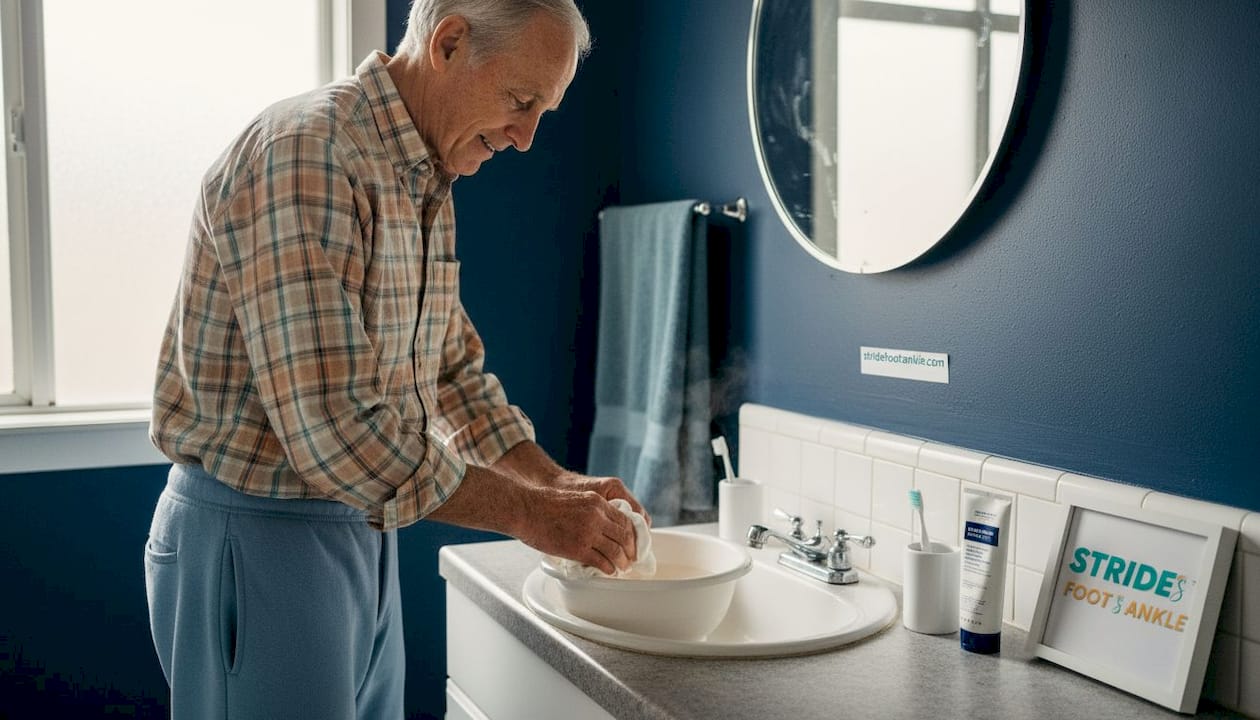
- Wash your feet with warm water. Use water between 90 and 95°F, which is comfortably warm but not hot. Safe water temperature guidance from the National Institute of Diabetes and Digestive and Kidney Diseases (NIDDK) specifies this range to avoid accidental burns, which can go unnoticed in people with neuropathy. Do not soak your feet, even though it may feel relaxing. Soaking softens skin too much and raises infection risk.
- Dry your feet completely. Pay special attention to the spaces between your toes. Moisture left there encourages fungal growth. Pat gently rather than rubbing.
- Apply a moisturizing lotion. Use a gentle, unscented lotion on the tops and bottoms of your feet to prevent cracking. Avoid applying it between the toes.
- Inspect your feet carefully. Look at the soles, heels, between the toes, and around toenails for any cuts, blisters, redness, swelling, or skin changes.
Pro Tip: If your vision is limited or bending is difficult, use a handheld mirror placed on the floor to see the bottom of your feet. A family member or caregiver can also assist with this step.
- Never walk barefoot. Even indoors, always wear clean, well-fitting socks and supportive shoes or slippers. Hard floors, sharp objects, and even carpets can cause injuries you may not feel immediately.
Weekly foot care habits
Beyond your daily routine, set aside time each week for these additional steps.
- Trim toenails carefully. Cut nails straight across, not in a curved shape, and file any sharp edges with an emery board. This prevents ingrown toenails, which can lead to painful infections. If your nails are thick or curved, ask a podiatrist to trim them safely.
- Check your footwear. Run your hand inside your shoes before putting them on. Look for worn-down soles, seams that may rub, or any foreign objects. Shoes that don’t fit properly are one of the most preventable causes of foot injuries.
- Review moisturizing needs. Las Vegas’s dry climate means your heels and the balls of your feet may need extra attention. Deep cracks in the heels (called heel fissures) can become painful and infected if left untreated.
Here’s a quick comparison of safe versus risky foot care practices:
| Practice | Safe approach | What to avoid |
|---|---|---|
| Washing | Warm water (90–95°F), brief wash | Hot water, prolonged soaking |
| Nail trimming | Straight across, smooth edges | Curved cuts, cutting too short |
| Moisturizing | Tops and bottoms of feet daily | Applying lotion between toes |
| Walking at home | Supportive shoes or slippers always | Going barefoot, including at night |
| Callus care | Professional removal by podiatrist | Razor blades, over-the-counter acids |
Structured clinical assessment and risk stratification should also be part of your care plan. This means having a podiatrist formally categorize your level of risk so your care plan matches your actual needs.
Your step-by-step routines can be adapted based on your specific conditions, and conservative pain relief approaches can often manage discomfort effectively without surgery.
Fall risks and mobility: how foot health affects independence
With routines explained, let’s explore why foot care is central to independence and safety. Many older adults underestimate how much their feet influence their ability to move safely and live independently.
The direct link between foot problems and falls
Here’s the reality: your feet are your foundation. When that foundation is compromised, the entire structure above it becomes unstable. Elderly individuals with foot ulcers face about 60% greater fall risk compared to those without these complications. This isn’t just about pain. It’s about how the body compensates.
When your feet hurt or feel numb, your gait (the way you walk) changes automatically. You may shorten your stride, shift weight unevenly, or hesitate on uneven surfaces. Each of these changes increases the chance of a stumble or fall. Falls are not a minor inconvenience. A hip fracture in an adult over 65 carries serious risks, including long hospital stays, loss of mobility, and, in some cases, permanent disability.
Foot issues linked to increased fall risk include:
- Peripheral neuropathy: Reduced sensation means you can’t feel where your foot is placed accurately, which disrupts balance.
- Painful bunions and hammertoes: These structural problems alter weight distribution when walking.
- Foot ulcers and open wounds: These change how you bear weight, often unconsciously.
- Ill-fitting footwear: Shoes that are too loose, too tight, or worn down are a well-known fall hazard.
- Weak ankle muscles: Common in older adults, this reduces stability on uneven ground.
Pro Tip: Early detection of numbness, skin breakdown, or new sores is one of the most powerful tools you have. Catching these issues before they develop into full injuries protects both your feet and your overall safety. Review resources on preventing injuries to understand the full picture of proactive foot safety.
Simple strategies to protect your mobility
Maintaining your independence is achievable with the right steps. These strategies are supported by evidence and practical experience.
- Invest in proper footwear. Shoes should have a wide toe box, firm arch support, non-slip soles, and a low heel. Avoid flip-flops, sandals without straps, and worn-out sneakers. Consider custom orthotics (inserts prescribed by a podiatrist) if you have flat feet or structural issues.
- Add balance and strengthening exercises. Simple exercises like toe raises, ankle circles, and seated foot stretches can significantly improve muscle strength and coordination. Ask your doctor which exercises are safe for your current condition.
- Schedule regular podiatry exams. Even when your feet feel fine, professional assessments catch problems you cannot see or feel on your own. Understanding why seeing a podiatrist matters can motivate you to make that appointment before a problem becomes serious.
- Improve your home environment. Remove loose rugs, improve lighting in hallways and bathrooms, and install grab bars near the shower and toilet. Foot health and home safety work together.
When to seek specialist care: recognizing warning signs
For some foot symptoms and conditions, home care isn’t enough. Here’s how to recognize when it’s time to call a specialist.
Warning signs that need professional attention
You should contact a podiatrist or your primary care doctor promptly if you notice any of the following:
- A sore, blister, or cut that doesn’t show signs of healing within a few days
- Persistent pain in your heel, arch, or ball of the foot
- Sudden swelling in one or both feet, especially if unexplained
- Skin that is deeply red, warm to the touch, or streaked (which may indicate infection spreading)
- A change in the color of your foot or toes toward pale, bluish, or dark, which can signal poor circulation
- Any new area of numbness, tingling, or complete loss of feeling
- Toenails that are thickened, discolored, or pulling away from the nail bed
These are not symptoms to monitor and wait out. Missing early injuries in diabetes can convert what seems like a minor problem into a serious ulcer or infection. The window for effective early intervention is real, and it closes faster than most people expect.
“When self-management appears unsafe or warning signs arise, referral to podiatry or specialized monitoring is essential. The risk of delayed care far outweighs the inconvenience of an appointment.” Adapted from clinical guidelines on diabetic foot care.
How a podiatrist evaluates and treats your feet
Riskier patients benefit most from podiatry referral and structured monitoring. A podiatrist will conduct a thorough assessment that includes checking pulses in the feet and ankles, testing for sensation using a simple filament tool, examining skin integrity, assessing deformities, and reviewing your footwear and walking pattern.
From there, treatment may include custom orthotics, wound care, medication for fungal infections, or, when necessary, surgical correction of deformities. The goal is always to use the least invasive approach that resolves the problem effectively.
Learning why foot fungus requires professional help is one practical example of understanding the difference between manageable self-care and conditions that need clinical treatment. For those ready to find the right provider, guidance on choosing a specialist in Las Vegas makes that process straightforward and less overwhelming.
What most elderly foot care guides miss: real-world expertise from Las Vegas
With the guide’s evidence-based advice in mind, here’s what years of local clinical experience reveals about effective elderly foot care.
Most foot care articles give you the basics: wash your feet, moisturize, wear good shoes. That advice is correct. But it leaves out something critical: the danger of a foot that feels completely fine but isn’t.
Neuropathy, the nerve damage common in diabetes, can quietly remove your ability to sense pain. That means a cut from a pebble inside your shoe, a blister from poor-fitting footwear, or a pressure sore from sitting too long may go entirely unnoticed for days. By the time you do notice something is wrong, what started as a minor skin break may have become an infected wound requiring intensive care.
Practical elderly foot care strategies cluster into three areas: mechanical unloading (protecting feet from pressure and friction), skin and nail hygiene with thorough inspection, and risk-based clinical monitoring. Most people do some of the first two. Almost nobody does the third consistently until something goes wrong.
Here is the uncomfortable truth: the absence of pain is not evidence that your feet are healthy. Diabetes-related neuropathy can reduce pain sensation dramatically, which means routine exams are essential even when you have zero symptoms. Scheduled exams should not be skipped because your feet feel fine. That feeling of wellness may actually be a warning sign in disguise.
We’ve also seen that patients who adopt a reactive approach, visiting only when something hurts, almost always end up dealing with more complex and costly problems. Prevention is not just a health concept. It is genuinely less painful, less expensive, and far less disruptive to your daily life than late intervention. Exploring a conservative foot care approach before problems escalate is one of the most practical decisions you can make for your long-term mobility.
Pro Tip: Don’t wait for pain before acting. Any visible skin breakdown, unexpected nail changes, or unexplained swelling is your cue to get it evaluated. Acting at the first sign of a problem protects everything that comes after.
“Real-world experience consistently shows that prevention is always less costly and less painful than treating complications that could have been caught and stopped early.”
The lesson for Las Vegas residents specifically is this: the desert climate, active lifestyle, and prevalence of diabetes in older populations here create a combination that makes foot health a top priority. Sweat and dry air don’t just affect your skin. They affect your shoes, your socks, and the microenvironment around your feet daily. Be proactive, be consistent, and treat each annual exam as non-negotiable, not optional.
Take action: foot health resources and expert care in Las Vegas
You now have a solid foundation of knowledge, from recognizing dangerous symptoms to building daily care routines. Putting that knowledge into practice is the most important step you can take for your long-term comfort and independence.

At Stride Foot & Ankle, Dr. Nahad Wassel and his team are here to help Las Vegas residents at every stage of their foot health journey. Whether you need pain relief services for chronic heel or arch discomfort, a comprehensive assessment through full-service podiatric care, or personalized guidance through injury prevention options, our practice is designed around your needs. Scheduling an appointment is straightforward, and we make sure every visit includes clear communication, personalized recommendations, and a care plan that fits your lifestyle. Don’t wait for pain to take action. Reach out today and start striding confidently toward better foot health.
Frequently asked questions
What temperature is safe for washing elderly feet?
Use warm water between 90–95°F, not hot, and never soak feet, especially if you have diabetes, to avoid burns you may not feel.
How often should elderly diabetic patients get their feet checked?
A thorough annual foot exam is the minimum standard, covering sensation, pulses, skin integrity, and structural deformities; higher-risk individuals may need more frequent visits as outlined in diabetic foot care guidelines.
What signs indicate the need for immediate podiatrist referral?
Persistent pain, open sores, abnormal swelling, severe redness, or any change in sensation are all signals that specialist evaluation is needed without delay.
Do foot ulcers increase fall risk in elderly people?
Yes, elderly adults with foot ulcers related to diabetes face approximately 60% greater fall risk compared to those without this complication.
Is it safe for elderly to walk barefoot indoors?
No. Walking barefoot is unsafe for older adults, particularly those with diabetes or reduced sensation. Always wear protective shoes and socks, even at home.
Recommended
- Step-by-step foot care routines for pain relief – Stride Foot & Ankle – Dr. Nahad Wassel
- Physical therapy for foot pain: recovery and relief – Stride Foot & Ankle – Dr. Nahad Wassel
- General Foot & Ankle Care – Stride Foot & Ankle
- How Conservative Foot Care Relieves Pain and Prevents Surgery – Stride Foot & Ankle – Dr. Nahad Wassel
Recent Comments