

TL;DR:
- Foot pain is often misdiagnosed because patients assume their symptoms are easily identifiable, leading to ineffective treatments. A skilled podiatrist in Las Vegas uses a detailed diagnostic approach to differentiate mechanical, neurologic, infectious, and oncologic causes, tailoring treatment accordingly. Conservative therapies, especially strengthening exercises, are highly effective for conditions like plantar fasciitis, but persistent cases may require minimally invasive options such as ESWT or PRP injections.
Foot pain is one of the most mismanaged complaints in outpatient medicine, and the reason is simple: most people assume they know the cause before they ever see a doctor. If your heel hurts, it must be plantar fasciitis. If your toes ache, blame your shoes. But foot pain podiatry is far more nuanced than that. A skilled podiatrist in Las Vegas must sort through mechanical, neurologic, arthritic, infectious, and even oncologic causes before recommending a single treatment. This guide walks you through how that diagnostic process works, what evidence-based treatment looks like at every stage, and how to get the most out of your podiatry consultation for pain.
Table of Contents
- What causes foot pain? Decoding the Las Vegas podiatry approach
- Plantar fasciitis and common foot pain: Guideline-backed conservative care
- When conservative care isn’t enough: Minimally invasive and adjunct therapies
- Personalized podiatry: Tailoring treatment to your needs in Las Vegas
- What most Las Vegas patients miss: The real benefit of expert podiatry
- Connect with Las Vegas podiatry experts for lasting pain relief
- Frequently asked questions
Key Takeaways
| Point | Details |
|---|---|
| Know the root cause | Foot pain often stems from multiple sources—mechanical, nerve, arthritis, or trauma—so accurate diagnosis is key. |
| Start with conservative care | Guideline-based stretching and strengthening are the first-line remedies for most foot pain cases. |
| Explore advanced therapies | Minimally invasive and injection-based treatments provide options if conservative methods fail. |
| Personalize your plan | Effective podiatry adapts care to your pain duration, goals, and preferences. |
| Ask for diagnostic reasoning | Request explanations on diagnosis and treatment logic for lasting relief—not just quick fixes. |
What causes foot pain? Decoding the Las Vegas podiatry approach
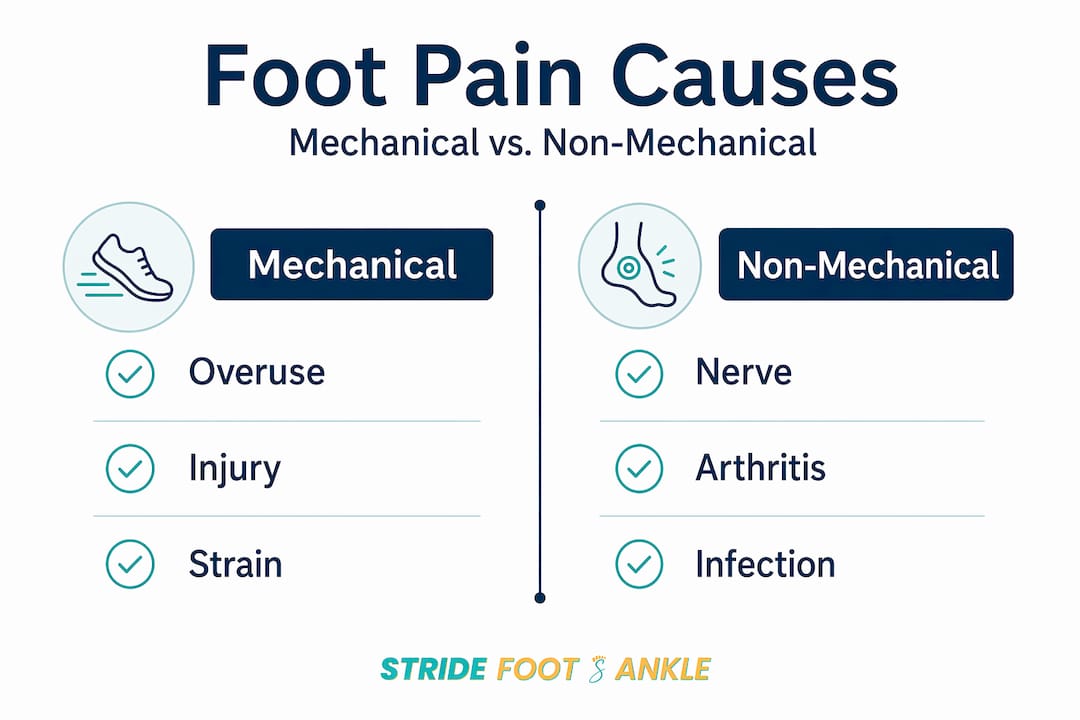
Foot pain podiatry starts with one foundational question: is this pain mechanical, or is something else driving it? The answer changes everything about your treatment path.
Podiatrists use a location-first framework. Where exactly does it hurt, when does it hurt, and what makes it better or worse? These three questions narrow the field quickly. Heel pain that’s worst in the morning and improves with walking points toward plantar fasciitis. Heel pain that worsens with activity and never fully resolves suggests Achilles tendinopathy. Pain that’s constant, unrelated to movement, and accompanied by swelling or fever raises red flags for infection or, in rare cases, a bone tumor.
According to AAFP clinical guidance, heel pain evaluation should consider mechanical causes such as Achilles tendinopathy and also neurologic, arthritic, oncologic, infectious, and traumatic etiologies. That’s a wide diagnostic net, and it’s exactly why self-diagnosing from a quick internet search so often leads patients down the wrong treatment path.
The mechanical vs. non-mechanical split
Here’s a breakdown of the most common causes Las Vegas podiatrists encounter:
Mechanical causes (movement-related):
- Plantar fasciitis (inflammation of the thick band running along the bottom of the foot)
- Achilles tendinopathy (overuse injury to the tendon connecting calf to heel)
- Stress fractures (tiny bone cracks from repetitive impact)
- Metatarsalgia (pain in the ball of the foot from pressure distribution problems)
- Posterior tibial tendon dysfunction (a leading cause of adult flat foot)
Non-mechanical causes (not primarily movement-driven):
- Peripheral neuropathy (nerve damage, often from diabetes)
- Gout and inflammatory arthritis
- Plantar fascioma (a benign fibrous growth in the plantar fascia)
- Infection, including osteomyelitis (bone infection)
- Rare: primary bone tumors or metastatic disease
| Cause type | Pain pattern | Key diagnostic clue |
|---|---|---|
| Mechanical | Worse with activity, improves with rest | Reproduces with specific movement tests |
| Neurologic | Burning, tingling, or numbness | Positive Tinel’s sign or nerve conduction study |
| Arthritic | Morning stiffness, joint swelling | Elevated inflammatory markers on blood work |
| Infectious | Constant, not movement-dependent | Warmth, redness, fever, elevated white blood cell count |
| Traumatic | Sudden onset after injury | Imaging shows fracture or soft tissue tear |
Las Vegas podiatrists who specialize in general foot and ankle care are trained to move through this diagnostic framework efficiently, so you leave your first appointment with a clear working diagnosis, not just a prescription for ibuprofen.
“The difference between a good podiatric evaluation and a rushed one is whether your provider explains why they believe your pain has a specific cause, not just what they think it is.”
Pro Tip: At your first visit, ask your podiatrist directly: “What category of cause do you think this is, and what’s your reasoning?” A strong clinician will answer that question clearly and without hesitation.
Patient-centered podiatry in Las Vegas means your provider walks you through their thinking, not just their conclusions. If you want to build a solid foundation for your own foot care at home between visits, step-by-step foot care routines can support your recovery alongside professional treatment.
Plantar fasciitis and common foot pain: Guideline-backed conservative care
Once you have a working diagnosis, the next question is: where do you start with treatment? For the majority of mechanical foot pain conditions, including plantar fasciitis, the answer is conservative care. And the evidence here is more specific than most patients realize.
AAFP practice guidelines confirm that plantar fasciitis is commonly treated with stretching of the gastrocnemius (the large calf muscle) and soleus (the deeper calf muscle), along with the plantar fascia itself. Critically, the guidelines note that adding strengthening exercises improves pain and function more than stretching alone. That’s a finding most patients never hear about, because many providers still hand out a single stretching sheet and send patients home.
The stepwise conservative care pathway
A well-structured conservative plan typically follows this progression:
- Gastrocnemius and soleus stretching — performed multiple times daily, especially before your first steps in the morning
- Plantar fascia-specific stretching — pulling the toes back toward the shin while seated, holding for 10 seconds, repeated 10 times
- Intrinsic foot muscle strengthening — towel scrunches, marble pickups, and short-foot exercises that activate the small muscles supporting your arch
- Toe flexor and ankle strengthening — calf raises, single-leg balance work, and resistance band exercises that build the load-bearing capacity of the entire kinetic chain
- Activity modification — reducing high-impact activities temporarily while maintaining cardiovascular fitness through low-impact alternatives like swimming or cycling
- Orthotic support — prefabricated or custom orthotics (shoe inserts) that redistribute pressure away from inflamed tissue
Stretching only vs. stretching plus strengthening
| Approach | Pain improvement | Function improvement | Evidence strength |
|---|---|---|---|
| Stretching only | Moderate | Moderate | Established |
| Stretching + strengthening | Greater | Notably greater | Strong (2025 guidelines) |
| Orthotics alone | Mild to moderate | Mild | Moderate |
| Combined (all three) | Best overall | Best overall | Strongest |
The takeaway is clear. Strengthening is not optional. It’s what separates patients who get lasting relief from those who cycle through the same symptoms every few months.
Pro Tip: If your provider only recommends stretching, ask specifically about progressive strengthening exercises targeting toe flexors and ankle stabilizers. This single addition can change your outcome significantly.
For tendon-related pain that doesn’t respond to basic stretching, nonsurgical tendon care options offer additional pathways before surgery ever enters the conversation.
When conservative care isn’t enough: Minimally invasive and adjunct therapies
Conservative care resolves plantar fasciitis and similar conditions in the majority of patients. But “majority” isn’t “everyone.” When 12 weeks of consistent stretching, strengthening, and activity modification haven’t moved the needle, Las Vegas podiatrists turn to a growing toolkit of minimally invasive and injection-based therapies.
A 2026 network meta-analysis in Scientific Reports evaluated multiple minimally invasive options for chronic plantar fasciitis, including extracorporeal shockwave therapy (ESWT) and several injection-based treatments. The analysis found meaningful differences in outcomes depending on the time window measured, which is a critical nuance most patients don’t know to ask about.
The main advanced therapy options
- ESWT (extracorporeal shockwave therapy): A non-invasive treatment that delivers acoustic waves to the affected tissue, stimulating healing. It performs particularly well for long-term pain and function outcomes.
- PRP (platelet-rich plasma) injections: Your own blood is drawn, spun in a centrifuge to concentrate growth factors, and injected into the painful area. PRP shows strong results for mid- to long-term improvement.
- Prolotherapy: Injections of a mild irritant solution (typically dextrose) that trigger a localized healing response. Evidence is growing but less robust than ESWT or PRP.
- Botulinum toxin injections: Botox injected into the calf or plantar fascia to reduce muscle tension and pain signaling. Useful for specific presentations, particularly when muscle overactivity is contributing.
- Corticosteroid injections: Fast-acting anti-inflammatory relief, but evidence suggests limited long-term benefit and potential for plantar fascia rupture with repeated use.
| Therapy | Short-term relief | Long-term improvement | Invasiveness |
|---|---|---|---|
| Corticosteroid injection | High | Low to moderate | Low |
| PRP injection | Moderate | High | Low to moderate |
| ESWT | Moderate | High | Non-invasive |
| Prolotherapy | Moderate | Moderate | Low |
| Botulinum toxin | Moderate | Moderate | Low |
Key stat: The 2026 meta-analysis found that ESWT and PRP consistently outperformed corticosteroids for long-term outcomes, despite corticosteroids providing faster initial relief. This is a trade-off worth discussing explicitly with your podiatrist.
For patients whose pain has a significant functional component, combining advanced injections with physical therapy for foot pain produces better outcomes than either approach alone. And when all non-surgical options have been exhausted, minimally invasive foot surgery offers a path forward with shorter recovery times than traditional open procedures.
Personalized podiatry: Tailoring treatment to your needs in Las Vegas
Here’s something the research makes clear that most patients never hear: there is no single “best” treatment for foot pain. The right choice depends on how long you’ve had symptoms, what your daily activity demands look like, what you’ve already tried, and what your personal goals are.

The 2026 network meta-analysis specifically notes that even within plantar fasciitis, comparative results vary by outcome window and by intervention choice. Treatment selection should be tailored to symptom duration and goals rather than defaulting to one modality. In plain terms: a treatment that works best at 6 weeks may not be the same one that delivers the best result at 6 months.
What personalized podiatry looks like in practice
A Las Vegas podiatrist who practices truly personalized care will consider:
- Symptom duration: Acute pain (under 6 weeks) responds well to conservative care. Chronic pain (over 3 months) may need advanced therapies from the start.
- Pain location and pattern: Morning pain that improves suggests plantar fasciitis. Constant, activity-independent pain needs a different workup entirely.
- Patient activity level: A marathon runner and a retiree with the same diagnosis may need completely different treatment timelines and exercise modifications.
- Prior treatment history: If you’ve already done 8 weeks of stretching with no improvement, your podiatrist shouldn’t restart the same protocol. They should escalate.
- Patient preferences: Some patients want to avoid injections entirely. Others want the fastest path back to activity. Both are valid, and a good podiatrist builds the plan around your input.
“If you want to maximize your chances of an accurate diagnosis and effective treatment, ask your clinic to explain their reasoning for both the suspected cause and the proposed plan. Providers who welcome that question are the ones worth trusting.”
Pro Tip: Before your appointment, write down your pain pattern (when it started, what makes it worse, what you’ve tried), a list of your daily activities, and two or three specific questions about your diagnosis and treatment options. Patients who arrive prepared get more out of every visit.
Understanding your unique situation also means recognizing when something like a foot fungus concern or a skin condition is complicating your foot health alongside structural pain. Las Vegas podiatrists treat the whole foot, not just the headline diagnosis.
What most Las Vegas patients miss: The real benefit of expert podiatry
Here’s an opinion grounded in years of observing how patients experience foot care: the biggest gap between patients who get better and patients who don’t isn’t the treatment they receive. It’s whether they understand what’s causing their pain and why their treatment plan makes sense for their specific situation.
Most patients walk out of a podiatry appointment with a prescription, a handout, and a follow-up date. They do the exercises. They take the medication. And when it doesn’t work, they assume the treatment failed. What actually failed was the communication. They never knew why that treatment was chosen, so they had no way to evaluate whether it was working as expected or whether something needed to change.
Any podiatrist can prescribe calf stretches or order a corticosteroid injection. Very few take the time to say: “Your pain is mechanical, specifically Achilles tendinopathy at its insertion point, and I’m starting with eccentric strengthening because the evidence for that specific presentation is stronger than stretching alone. If you’re not 30% better in 6 weeks, we’ll reassess.” That level of explanation changes how a patient engages with their own recovery.
“Lasting pain relief starts with understanding, not just treatment.”
The patients who get the best long-term results from comprehensive podiatry care are the ones who ask questions, push for explanations, and treat their podiatrist as a partner rather than an authority handing down orders. That’s not just good advice for foot pain. It’s the foundation of every successful patient-provider relationship.
The uncomfortable truth is that a five-minute appointment with a provider who hands you a generic protocol is not the same as a thorough evaluation with a podiatrist who explains their diagnostic reasoning. In Las Vegas, where many patients are on their feet for long shifts in hospitality, retail, and entertainment, that distinction matters enormously. Your feet carry the weight of your entire day. They deserve a provider who takes that seriously.
Connect with Las Vegas podiatry experts for lasting pain relief
If this guide has made one thing clear, it’s that foot pain deserves more than a generic response. Whether your pain is new or has been limiting you for months, the right next step is a thorough evaluation with a podiatrist who explains their thinking and builds a plan around your specific situation.
At Stride Foot & Ankle, Dr. Nahad Wassel brings board-certified expertise in both conservative foot care and advanced surgical options to every patient encounter. Whether you need a structured conservative program, an injection-based therapy, or are exploring whether surgery is right for you, the team walks you through every option with clear reasoning. Stride is also the only podiatry practice in Las Vegas offering ultrasound wound healing therapy, giving patients access to a treatment option unavailable anywhere else in the area. If surgery becomes part of your path, you can learn exactly what to expect and how to prepare before your first procedure. Request your appointment online today and start striding confidently again.
Frequently asked questions
What should I ask my podiatrist about foot pain diagnosis?
Ask your podiatrist to explain whether your pain is mechanical, nerve-related, arthritis-related, or another cause, and why their recommended plan fits that diagnosis. AAFP guidance emphasizes that diagnostic reasoning by pain location and etiology is central to accurate heel and foot pain evaluation.
How long should I try conservative treatments before considering advanced therapies?
Conservative care is typically recommended for at least 6 to 12 weeks, but if pain persists or function doesn’t improve, your podiatrist may suggest adjunct therapies or minimally invasive options. AAFP plantar fasciitis guidelines support a stepwise approach that escalates when stretching, strengthening, and adjunct interventions haven’t resolved symptoms.
Are injection therapies like PRP or ESWT safe for foot pain?
Yes, PRP and ESWT are generally safe when performed by trained podiatrists, and a 2026 network meta-analysis confirmed both their safety profiles and their varying short- and long-term efficacy compared to other injection-based therapies.
Can foot pain be caused by problems other than plantar fasciitis?
Absolutely. Foot pain can result from mechanical, neurologic, arthritic, infectious, or traumatic causes, which is why accurate diagnosis matters so much before starting any treatment. AAFP heel pain evaluation criteria specifically include oncologic and infectious etiologies alongside the more common mechanical causes.
How does a Las Vegas podiatrist personalize my treatment?
Las Vegas podiatrists tailor treatment to your pain pattern, symptom duration, activity level, and personal goals rather than applying a single standard protocol. The 2026 meta-analysis in Scientific Reports supports this approach, showing that outcome differences between therapies vary significantly depending on the time window and individual presentation.
Recommended
- Why See a Podiatrist? Your Complete Foot Health Guide – Stride Foot & Ankle – Dr. Nahad Wassel
- Best Podiatrist Las Vegas: How to Choose the Right Foot and Ankle Specialist – Stride Foot & Ankle – Dr. Nahad Wassel
- Blog – Stride Foot & Ankle – Dr. Nahad Wassel
- How Patient-Centered Care Transforms Podiatry in Las Vegas – Stride Foot & Ankle – Dr. Nahad Wassel
Recent Comments