

TL;DR:
- Corns and calluses are thickened skin formations caused by repeated friction or pressure, with corns being painful and having a central core. Proper management involves addressing the pressure source through footwear changes, orthotics, and gentle skin care, while avoiding self-cutting or harsh chemicals. Long-term relief depends on correcting underlying causes, with professional care recommended for persistent or recurring cases.
Corns and calluses are defined as localized areas of thickened skin that form in response to repeated friction or pressure, most commonly on the feet. Your skin builds up this extra layer as a protective mechanism, but the result can be painful, tender, and frustrating to manage. Tools like pumice stones, moisturizing creams, and properly fitted footwear are the foundation of most treatment plans. Understanding the difference between the two conditions is the first step toward getting real, lasting relief.
What is the difference between corns and calluses?
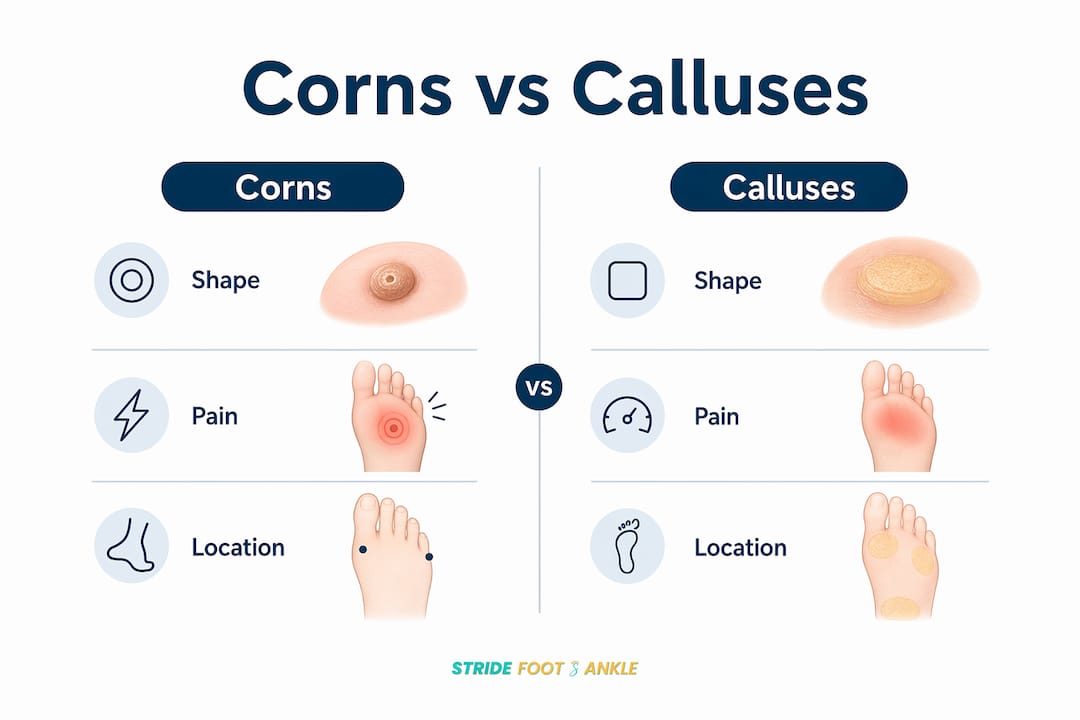
Corns and calluses are both thickened skin formations, but they differ in structure, location, and pain level. Knowing which one you have shapes every decision you make about treatment.
Calluses are diffused and flat with no central core, while corns have a distinct hard center that can press on underlying nerves and cause sharp pain. Calluses typically develop on the soles of the feet, the heels, or the balls of the feet, where broad surface pressure is applied. Corns, by contrast, tend to form on the tops or sides of toes, where a more concentrated point of friction occurs. Calluses are usually painless unless they become very thick, while corns are often tender to the touch.
Podiatrists recognize five types of corns, each with distinct characteristics:
- Hard corns (heloma durum): The most common type, forming on the tops of toes or outer edges of the little toe. They have a dense, dry core.
- Soft corns (heloma molle): Found between the toes where moisture keeps them soft and rubbery. They are often white or gray in color.
- Seed corns (heloma miliare): Tiny, painless clusters that appear on the sole of the foot, often in dry skin areas.
- Vascular corns: Contain blood vessels and nerves, making them particularly painful and prone to bleeding when trimmed.
- Fibrous corns: Long-standing corns that have become deeply attached to underlying tissue, making them harder to treat conservatively.
Pro Tip: If you press directly on a thickened area and feel a sharp, focused pain, you are likely dealing with a corn. If the discomfort is more of a dull ache across a broader area, a callus is the more probable cause.
| Feature | Corn | Callus |
|---|---|---|
| Shape | Small, round with hard center | Larger, flat, diffuse |
| Pain level | Often painful, especially with pressure | Usually painless or mildly uncomfortable |
| Location | Tops and sides of toes | Soles, heels, balls of feet |
| Core | Yes, distinct central core | No core |
| Skin texture | Hard or soft depending on type | Thick, rough, yellowish |
What causes corns and calluses to develop?
Corns and calluses develop when skin is exposed to repeated friction or pressure over time. The body responds by producing extra layers of keratin, the protein that makes up the outer skin, as a form of self-protection. This is not a disease process. It is a mechanical response, and understanding the triggers helps you address the root cause rather than just the symptom.
The most common contributing factors include:
- Ill-fitting footwear: Shoes that are too tight, too narrow, or have high heels concentrate pressure on specific points of the foot. This is the single most correctable risk factor for most people.
- Toe deformities: Conditions like hammertoes, bunions, or claw toes create bony prominences that rub against shoe material constantly. Corns commonly form on tops or sides of toes where these deformities make contact with footwear.
- Going barefoot or wearing shoes without socks: Both increase friction directly on the skin surface, accelerating callus formation on the soles and heels.
- High-impact activities: Running, hiking, and sports that involve repetitive foot strike patterns generate sustained pressure on specific areas, particularly the ball of the foot and the heel.
- Occupational demands: Jobs that require prolonged standing on hard surfaces, such as healthcare work, retail, or construction, are strongly associated with callus development.
- Bony foot structure: Some people have naturally prominent metatarsal heads or high arches that create uneven weight distribution, making certain areas of the foot more vulnerable.
People with diabetes or poor circulation face a significantly higher risk of complications from corns and calluses. Over-the-counter corn removal treatments can damage skin and increase the risk of wounds and infection in these patients, making professional podiatric care the only safe option. A corn that is merely uncomfortable for a healthy adult can become a serious wound for someone with diabetic neuropathy, where reduced sensation masks the warning signs of tissue damage. For anyone managing diabetes foot health, regular professional foot checks are not optional. They are a clinical necessity.
How to treat corns and calluses at home and when to see a doctor
Treating corns and calluses effectively starts with consistent, gentle self-care at home. Most cases respond well to conservative measures, provided you address the source of pressure alongside the skin buildup itself.
Follow these steps for safe, effective home management:
- Soak the affected area. Soak your foot in warm water for 10 to 15 minutes to soften the thickened skin. This makes mechanical reduction much safer and more effective.
- Use a pumice stone or foot file. Gently file with a pumice stone during or after bathing to reduce thickness gradually. Use circular or sideways motions and never file aggressively in a single session.
- Apply a moisturizer. Simple moisturizers or petroleum jelly soften corns and calluses and support gradual resolution. Apply after bathing when skin is still slightly damp to lock in hydration. Products like Eucerin, CeraVe, or plain petroleum jelly all work well.
- Use non-medicated padding. Donut-shaped foam pads or moleskin patches protect the corn from further friction without introducing chemicals that could damage surrounding skin.
- Adjust your footwear. Switch to shoes with a wider toe box, lower heel, and adequate cushioning. This single step prevents new formation and allows existing ones to heal.
- Repeat consistently. Skin thickening does not resolve overnight. A daily routine of moisturizing and weekly gentle filing produces results over two to four weeks.
Never cut, shave, or dig into a corn or callus yourself. Shaving or cutting corns and calluses creates an open wound that is vulnerable to bacterial infection, particularly in home environments that are not sterile. This is one of the most common mistakes patients make, and it frequently turns a minor foot discomfort into a more serious problem requiring antibiotics or wound care.
Medicated corn pads containing salicylic acid are widely available, but they carry real risks. The acid does not distinguish between thickened skin and healthy surrounding tissue, so improper use can cause chemical burns or ulceration. People with diabetes, peripheral arterial disease, or any form of reduced foot sensation should avoid these products entirely and consult a podiatrist instead.
Pro Tip: If a corn or callus returns within weeks of treatment, the underlying pressure source has not been resolved. Recurrence is the clearest signal that footwear, foot mechanics, or both need professional evaluation.
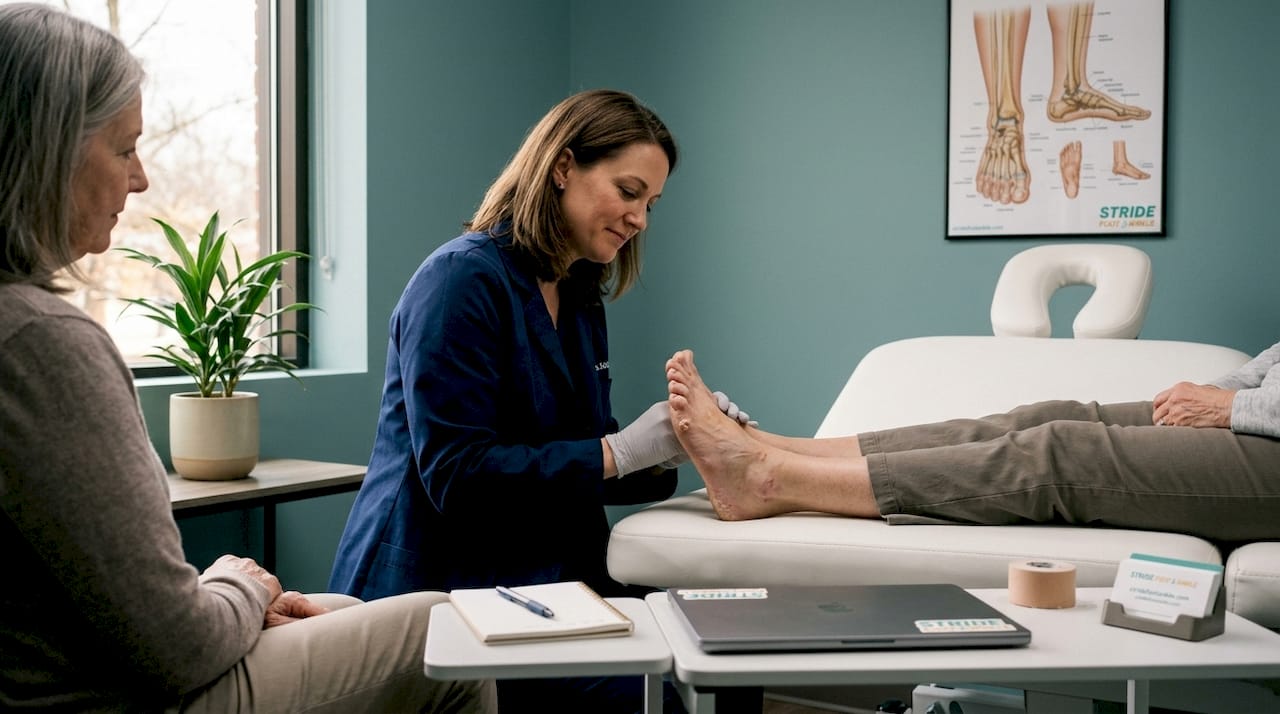
Seek professional care promptly if you notice any of the following: redness or warmth around the corn, swelling, bleeding under the skin, discharge or pus, or increasing pain that limits your ability to walk. Medical consultation is needed when these signs appear, as they indicate possible infection or tissue breakdown. A podiatrist can perform enucleation, which is the clinical term for safe corn core removal using a sterile scalpel, along with padding, custom insoles, and footwear advice to reduce pressure and prevent recurrence. Surgical options exist for complicated or persistent cases, but conservative measures are always the preferred first approach.
How to prevent corns and calluses from coming back
Prevention is where most people underinvest their attention. Removing a corn or callus without changing the conditions that caused it guarantees recurrence. Corns often return unless the source of pressure is addressed, and this is the single most important principle in long-term foot skin management.
A practical prevention plan covers four areas:
- Footwear selection: Choose shoes with a wide toe box, adequate arch support, and cushioned soles. Avoid pointed-toe shoes and heels above two inches for daily wear. Have your feet measured professionally, since foot size and shape change with age, weight, and activity level.
- Padding and orthotics: Gel toe sleeves, metatarsal pads, and heel cups redistribute pressure away from vulnerable areas. For people with structural foot issues, custom orthotics aligned to individual foot biomechanics provide lasting pressure relief that over-the-counter insoles cannot match.
- Daily skin care: Moisturize your feet every evening, paying particular attention to the heels and balls of the feet. Keep toenails trimmed straight across to prevent altered toe pressure patterns. Wear moisture-wicking socks that reduce friction during activity.
- Regular monitoring: Inspect your feet daily, especially if you have diabetes or circulation concerns. Daily skin monitoring enables early detection of bleeding under the skin, redness, swelling, or pus before these signs escalate into serious complications.
For people with persistent or recurring foot skin conditions, a podiatry assessment is the most efficient path to lasting relief. A podiatrist evaluates your gait, foot structure, and footwear to identify the exact mechanical cause of your problem. This is particularly relevant for Las Vegas residents who spend long hours in hard-soled shoes on concrete surfaces, a combination that accelerates callus formation significantly. A daily foot care routine tailored to your specific foot type and lifestyle is far more effective than generic advice.
Lifestyle modifications also matter. If high-impact sports are contributing to callus buildup, rotating between activity types and using sport-specific footwear with appropriate cushioning reduces cumulative pressure. If your occupation requires prolonged standing, anti-fatigue mats and scheduled breaks for foot elevation make a measurable difference in skin health over time.
Key takeaways
Treating corns and calluses effectively requires removing the source of pressure or friction, not just reducing the skin buildup itself.
| Point | Details |
|---|---|
| Corns vs. calluses | Corns have a painful central core; calluses are flat, diffuse, and usually painless. |
| Root cause | Repeated friction or pressure from ill-fitting shoes, toe deformities, or activity patterns drives formation. |
| Safe home care | Soak, file gently with a pumice stone, moisturize daily, and use non-medicated padding. |
| When to see a doctor | Redness, swelling, pus, or bleeding signals infection and requires prompt professional evaluation. |
| Long-term prevention | Custom orthotics, proper footwear, and daily monitoring prevent recurrence more reliably than treatment alone. |
Why I think most people treat corns and calluses backwards
After working with patients dealing with persistent foot discomfort, the pattern I see most often is this: someone treats the visible skin problem, gets temporary relief, and then wonders why it comes back within a month. The answer is almost always that the underlying mechanical cause was never addressed.
The most common example is a patient who diligently files a callus every week but continues wearing the same narrow dress shoes to work five days a week. The skin will rebuild faster than it is removed. Another frequent scenario involves patients who use salicylic acid pads on corns between their toes, not realizing that soft corns in that location are driven by toe-to-toe pressure, a problem that padding alone cannot fix without also addressing toe alignment or spacing.
What actually works is treating the foot as a mechanical system. Skin changes are outputs. Pressure and friction are inputs. Change the inputs and the outputs change. This is why conservative foot care that includes footwear modification, orthotic support, and gait assessment produces results that self-treatment alone rarely achieves.
The other thing I want patients to understand is that daily foot inspection is not just for people with diabetes. Anyone with recurring corns or calluses benefits from knowing what their feet look like on a normal day, so they can recognize early changes before they become painful. Five minutes each evening is enough. It is one of the highest-return habits in foot health, and almost nobody does it consistently until something goes wrong.
— Ramil
Get expert corn and callus care at Stride Foot & Ankle
If home care has not resolved your discomfort, or if your corns and calluses keep returning, professional evaluation makes a real difference.

At Stridefootankle, Dr. Nahad Wassel provides personalized diagnosis and treatment for foot skin conditions, including safe corn removal, custom orthotic fitting, and footwear guidance tailored to your foot structure and lifestyle. The practice serves Las Vegas patients with both conservative and surgical options, always prioritizing the least invasive path to lasting relief. Whether you need a one-time procedure or an ongoing foot and ankle care plan, the team at Stridefootankle is ready to help you get back on your feet comfortably. Schedule your appointment today.
FAQ
What is the main difference between a corn and a callus?
A corn has a hard central core and is typically painful when pressed, while a callus is a flat, diffuse area of thickened skin with no core and is usually painless. Corns form on the tops and sides of toes; calluses develop on the soles and heels.
Can I remove a corn or callus at home safely?
You can safely reduce thickness at home by soaking the foot, gently filing with a pumice stone, and applying moisturizer regularly. Never cut or shave a corn or callus, as this creates an open wound and increases infection risk.
When should I see a podiatrist for a corn or callus?
See a podiatrist if you notice redness, swelling, bleeding, or pus around the affected area, or if the corn or callus keeps returning despite home treatment. People with diabetes or circulation problems should consult a podiatrist before attempting any self-treatment.
Why do corns and calluses keep coming back?
Recurrence happens because the underlying source of pressure or friction has not been resolved. Effective long-term management requires addressing footwear fit, foot mechanics, and potentially using orthotics or padding to offload the problem area.
Are over-the-counter corn removal products safe to use?
Over-the-counter products containing salicylic acid can damage healthy surrounding skin and are not recommended for people with diabetes or poor circulation. Non-medicated pads and gentle mechanical filing are safer options for most people.
Recommended
- Ingrowing Toenails: Causes, Relief, and Treatment – Stride Foot & Ankle – Dr. Nahad Wassel
- Fungal Toenails: Treatments, Remedies, and Prevention – Stride Foot & Ankle – Dr. Nahad Wassel
- How to prevent foot injuries: expert strategies for healthy feet – Stride Foot & Ankle – Dr. Nahad Wassel
- Foot Pain: Causes, Symptoms, and Treatment Options – Stride Foot & Ankle – Dr. Nahad Wassel
Recent Comments