

TL;DR:
- Daily foot inspection and proper footwear are vital for preventing diabetic foot ulcers and related complications.
- Consistent self-care combined with professional monitoring helps early detection and reduces the risk of severe wounds or amputations.
Foot ulcers are serious, often preventable wounds that can lead to infection, hospitalization, or even amputation if left unaddressed. If you have diabetes or poor circulation, knowing how to prevent foot ulcers is one of the most important things you can do for your long-term health and mobility. 68% of diabetic foot ulcers start from minor, unnoticed injuries like small cuts or blisters that were never caught in time. This guide covers the daily habits, footwear choices, and health management strategies that give you real, practical control over your foot health.
Table of Contents
- Key takeaways
- How to prevent foot ulcers with daily inspection and hygiene
- Choosing the right footwear to protect your feet
- Managing health conditions that affect foot ulcer risk
- What to do when you spot a problem early
- My perspective on what actually changes outcomes
- How Stridefootankle can support your foot health
- FAQ
Key takeaways
| Point | Details |
|---|---|
| Inspect your feet daily | Check every surface of both feet each day to catch blisters, redness, or sores before they worsen. |
| Wear proper footwear always | Wearing well-fitted shoes indoors and outdoors drastically reduces your risk of pressure injuries and wounds. |
| Control your blood sugar | Keeping glucose levels in target range slows nerve damage and protects circulation in your feet. |
| Never self-treat corns or calluses | Home removal of foot growths can cause wounds and infection. Always see a podiatrist. |
| See a specialist regularly | Your visit frequency should match your risk level, from annual checkups to monthly or weekly exams. |
How to prevent foot ulcers with daily inspection and hygiene
The single most reliable foot ulcer prevention strategy is something you can do in under five minutes every day. Knowing what to look for, and when and how to look, turns a simple habit into a powerful defense against wounds that could otherwise go unnoticed for days.
How to inspect your feet step by step
- Choose the right time. Daily foot inspection is best performed between 10 a.m. and 2 p.m. when your body temperature is most stable. This timing also supports early hot spot detection, which can signal inflammation before an ulcer even forms.
- Sit in good lighting. Use natural light or a bright lamp. Sit on a stable chair where you can comfortably lift each foot.
- Use a mirror or ask for help. A long-handled mirror lets you see the bottom of your foot, the heel, and between your toes. If your vision or flexibility makes this difficult, ask a trusted family member or caregiver to help.
- Check every surface. Look at the tops, bottoms, sides, and between each toe. You are looking for redness, swelling, blisters, cuts, skin breaks, unusual warmth, or any color changes.
- Note any changes immediately. If something looks different from yesterday, do not wait to see if it gets better on its own. That is the mistake that turns small problems into serious ones.
Safe foot washing practices
Wash your feet daily with mild soap and lukewarm water at 90 to 95°F. Never guess the temperature with your foot if you have nerve damage. Test the water with your elbow or a thermometer instead.
Dry your feet completely after washing, paying close attention to the spaces between your toes. Trapped moisture in those areas creates the perfect environment for fungal infections. Apply a plain, unscented moisturizer to the tops and bottoms of your feet to prevent dry, cracked skin. However, avoid applying lotion between your toes since this traps moisture and raises your fungal infection risk.
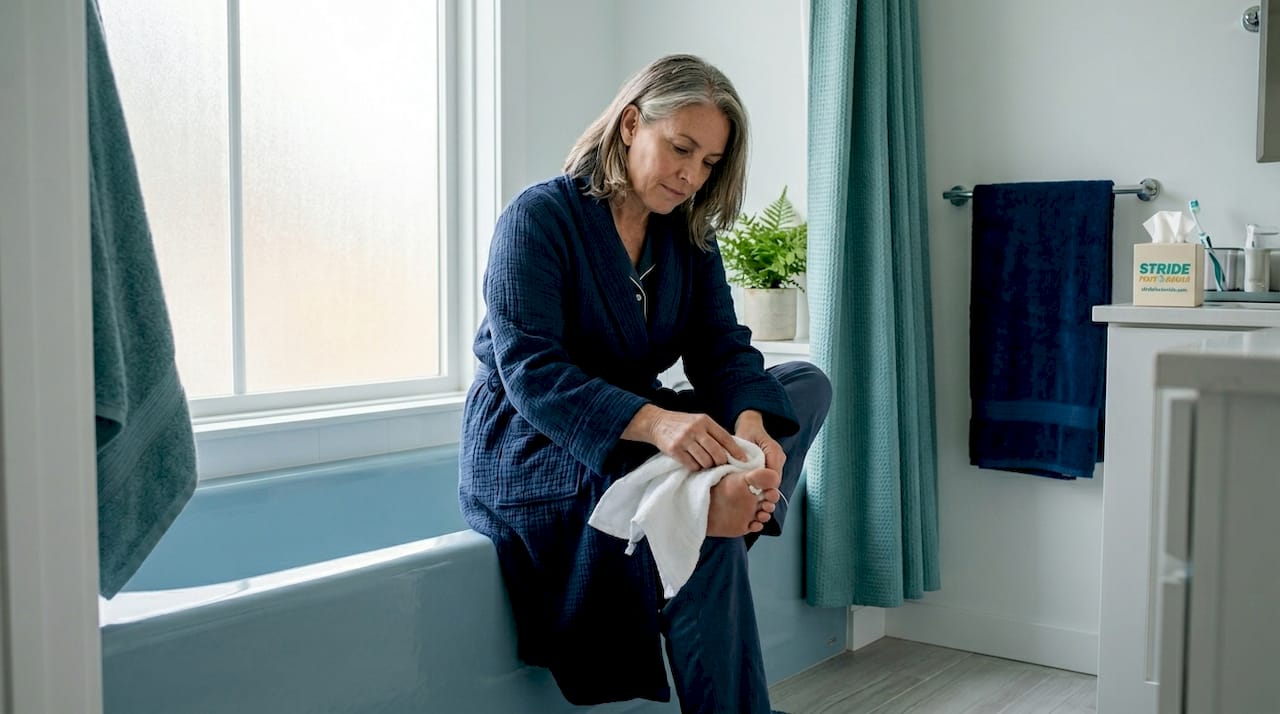
One common mistake patients make is soaking their feet, thinking it will soften calluses or soothe sore spots. Soaking actually softens skin too much, which can lead to cracks and new entry points for bacteria. Wash and rinse, then get out.
Pro Tip: If bending to reach your feet is difficult, a long-handled bath sponge and a handheld mirror with a suction cup base make daily hygiene and inspection much easier to maintain on your own.
Choosing the right footwear to protect your feet
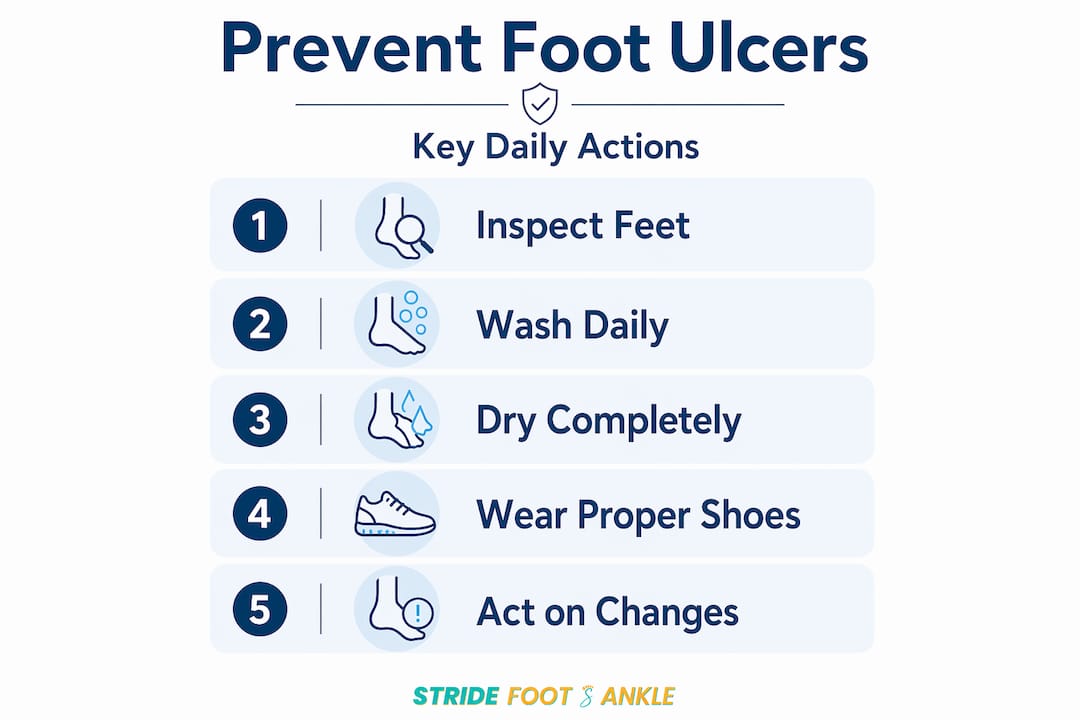
Poor shoe fit is not a minor inconvenience for people at risk of foot ulcers. Shoes cause 87% of forefoot ulcers in neuropathic diabetic patients. That number should change how seriously you think about what you put on your feet every single day.
Here is what to look for when choosing shoes and socks to protect your foot health:
- Toe space. Your shoes should allow at least 0.5 inches of space between your longest toe and the end of the shoe. Toes need room to spread sideways by approximately 15mm without compression.
- Wide toe box. Avoid pointed or narrow toe boxes. They create sustained pressure on the sides of your toes, which can go unnoticed if you have reduced sensation.
- Firm heel support. The heel counter, the structured back portion of the shoe, should hold your heel firmly without gripping or rubbing.
- Seamless interior. Stitching and seams inside shoes can rub against sensitive skin and create sores. Look for smooth linings or shoes specifically designed for diabetic foot protection.
- No flip-flops or open-toed sandals for daily wear. These leave your feet exposed to impact, heat from hot pavement (especially relevant in Las Vegas), and debris that can cause cuts you may not feel.
Never walk barefoot
Walking barefoot indoors increases foot ulcer risk by 11.3 times for people with diabetes compared to wearing shoes. That number applies inside your home, not just outside. A small piece of debris on your kitchen floor, or even pressing your feet into a hard tile surface repeatedly, can cause trauma you do not feel until it has already caused damage.
Keep a dedicated pair of clean, well-fitted shoes or padded slippers that you put on before you even stand up in the morning.
Therapeutic and custom footwear
If you have a history of foot ulcers, significant nerve damage, or foot deformities, off-the-shelf shoes may not provide enough protection. Therapeutic and custom footwear reduces pressure on vulnerable foot areas and is often covered by Medicare and other insurers for qualifying patients. A podiatrist can evaluate your pressure points and refer you for custom molded shoes or orthotics that distribute weight more evenly.
For socks, choose moisture-wicking, seamless options with no tight elastic bands at the top. Socks that restrict circulation at the ankle are counterproductive for anyone already dealing with poor blood flow.
Pro Tip: Before putting on your shoes each morning, reach inside and run your hand along the entire interior. Feel for pebbles, folded insoles, or any rough spots. A small object you cannot feel with your foot can cause a wound within a single day of walking.
Managing health conditions that affect foot ulcer risk
The health decisions you make every day, from what you eat to whether you exercise and smoke, directly affect the condition of the blood vessels and nerves in your feet. These are the underlying factors that determine whether a small scratch stays small or becomes a wound that refuses to heal.
Keeping your blood glucose, blood pressure, and cholesterol close to recommended targets is the foundation of diabetic foot ulcer prevention. High blood sugar damages small blood vessels and peripheral nerves over time, reducing sensation and slowing healing. Every time your blood sugar is out of range for an extended period, that damage accumulates.
The lifestyle and medical habits that protect your feet include:
- Blood glucose control. Work with your care team to stay within your target range consistently. This is not just about your A1C number. Daily fluctuations matter too.
- Quitting smoking. Smoking narrows blood vessels and reduces circulation to the extremities. Poor circulation means oxygen and nutrients reach your feet more slowly, which slows healing and makes infection more likely.
- Regular, low-impact physical activity. Walking, cycling, and swimming promote blood flow to your feet without creating high-impact trauma. Avoid walking barefoot during exercise and always check your feet immediately after any physical activity.
- Weight management. Carrying excess body weight increases pressure on the soles of your feet with every step. This sustained pressure is a key driver of calluses, blisters, and eventually ulcers, particularly on the ball of the foot and heel.
- Regular podiatric check-ups. Annual comprehensive foot exams are recommended for all people with diabetes. If you have neuropathy, a prior foot ulcer, or foot deformities, you should be seen every three to six months. High-risk patients may need monthly or even weekly professional monitoring.
A comprehensive foot exam is not just a visual check. It includes sensory testing with a 10g monofilament along with vibration testing, pinprick sensation, or reflex checks to identify loss of protective sensation before you experience any obvious symptoms. This kind of exam cannot be replicated at home, which is why professional visits are non-negotiable at any risk level.
What to do when you spot a problem early
Catching something early only helps if you respond correctly. Many patients either panic and overtreat, or dismiss what they find and wait too long. Neither approach works. Here is how to handle minor findings and when to get professional help fast.
Safe steps for minor wounds
If you find a small cut, blister, or scrape, clean it gently with mild soap and water. Cover it with a clean, dry bandage and check it again the following day. Do not apply hydrogen peroxide, iodine, or any harsh antiseptic directly to a wound on a diabetic foot. These substances damage fragile tissue and actually slow healing.
What to avoid at home
| Common home treatment | Why it is dangerous |
|---|---|
| Soaking a wound in salt water | Softens skin too much, increasing risk of skin breakdown |
| Cutting or filing corns and calluses yourself | Improper home removal can create open wounds and invite infection |
| Applying antibiotic ointment without professional advice | Masks symptoms without addressing the underlying cause |
| Using sharp tools to trim nails or skin | Can cause cuts that escalate quickly due to reduced sensation |
Corns and calluses feel harmless, but they signal areas of abnormal pressure on your foot. Cutting them at home is one of the most common ways patients inadvertently create the very wounds they are trying to prevent. A podiatrist can safely remove them and address the underlying cause.
Warning signs that need urgent care
Do not attempt to manage any of the following at home:
Seek care immediately if you notice: an open sore that does not close within 24 to 48 hours, increasing redness or warmth spreading away from a wound, swelling in one foot or ankle, a wound with any discharge, an unusual odor from your foot, or fever alongside a foot wound. These are signs of possible infection that require prompt medical attention.
Temperature monitoring tools, including infrared thermometers and smart temperature monitoring mats, can detect early inflammation before a visible wound appears. These tools are not yet affordable for everyone, but a basic infrared thermometer costs far less than an emergency visit and can catch temperature differences between your two feet that signal trouble.
For guidance on preventing foot injuries before they become serious wounds, building your knowledge base early makes a real difference.
My perspective on what actually changes outcomes
I’ve worked with and around patients managing diabetic foot risk for years, and one thing stands out consistently. The patients who do best are not the ones with the most advanced tools or the most detailed care plans. They are the ones who show up for themselves every single day, even when nothing seems wrong.
What I’ve seen repeatedly is that small injuries get dismissed because they do not hurt. When nerve damage removes the warning signal of pain, many people unconsciously stop treating their feet as things that need attention. That shift in mindset is where the real danger lives. A blister that you would notice in seconds with full sensation can be invisible to someone with neuropathy until it has become an infected ulcer.
The biggest barrier I’ve observed is not motivation. It is consistency in the face of nothing happening. Checking your feet every day when everything looks fine feels like a waste of time, right up until the day it isn’t. Building the habit into a fixed part of your morning routine, right after washing your face or brushing your teeth, removes the decision-making from the equation.
I also hear from patients that vision problems and physical limitations make self-inspection feel impossible. That is a real barrier, not an excuse. But the solution is not to skip inspection. The solution is a mirror, a helper, or a telehealth visit with a provider who can guide you through it. You can also find practical home care routines that are specifically designed for patients with these limitations.
My honest take is this: the daily ritual is more powerful than any device or medication when it comes to catching problems early. Pair it with regular professional care, and you give yourself the best possible defense.
— Ramil
How Stridefootankle can support your foot health
If you are living with diabetes or circulation challenges in the Las Vegas area, having a trusted podiatric partner changes what is possible for your long-term foot health. Self-care routines are the foundation, but professional evaluation fills the gaps that daily home checks cannot.

At Stridefootankle, Dr. Nahad Wassel provides personalized diabetic foot care services that go well beyond a basic checkup. Comprehensive exams include monofilament sensory testing, circulation assessment, nail care, and evaluation for custom orthotics or therapeutic footwear. For patients with existing wounds or sores, Stridefootankle also offers advanced wound care treatments designed to stop minor injuries from becoming serious complications. Whether you need routine monitoring, conservative treatment for calluses and nail issues, or guidance on protective footwear, the practice is built to help you stay on your feet and moving forward. Request your appointment today and take the first step toward consistent, expert-supported foot protection.
FAQ
What are the first signs of a foot ulcer?
Early signs of a foot ulcer include persistent redness, localized warmth, a blister that won’t heal, a small open sore, or skin that appears darkened or dried in one spot. Noticing these changes during daily inspection gives you the best opportunity for early treatment.
How often should people with diabetes inspect their feet?
People with diabetes should inspect their feet every single day. Regular professional foot exams are also recommended annually for low-risk patients, and every three to six months for those with neuropathy, prior ulcers, or foot deformities.
Can the right shoes really prevent foot ulcers?
Yes. Shoes cause the majority of forefoot ulcers in people with diabetic neuropathy. Well-fitting shoes with adequate toe room, smooth interiors, and firm heel support significantly reduce pressure injuries and the wounds they cause.
Is it safe to treat a foot wound at home if you have diabetes?
Minor wounds can be cleaned and covered at home, but any wound that does not close within 24 to 48 hours, shows spreading redness, or produces discharge requires professional evaluation. Consult a podiatrist promptly rather than waiting to see if it resolves.
What lifestyle changes help prevent foot ulcers?
Controlling blood sugar, quitting smoking, staying physically active with low-impact exercise, and maintaining a healthy weight all reduce your foot ulcer risk by protecting circulation and nerve function. These changes work best alongside regular professional foot care.
Recommended
- How to prevent foot injuries: expert strategies for healthy feet – Stride Foot & Ankle – Dr. Nahad Wassel
- Foot home care: Essential guide for Las Vegas patients – Stride Foot & Ankle – Dr. Nahad Wassel
- Why foot care matters: prevent pain, injuries, and complications – Stride Foot & Ankle – Dr. Nahad Wassel
- Essential foot care for elderly: strategies for pain relief – Stride Foot & Ankle – Dr. Nahad Wassel
Recent Comments