

TL;DR:
- Foot numbness often results from nerve damage caused by conditions like diabetes, nerve compression, or vitamin deficiencies. Emergency treatment is necessary if numbness suddenly affects one side or occurs with loss of bladder control. Proper diagnosis includes medical history, physical exams, lab tests, and imaging to identify the cause and guide treatment.
Numbness is defined as the partial or complete loss of sensation in a body part due to disrupted nerve signal transmission between the affected tissue and the brain. In the feet, this disruption most often involves peripheral nerves and is clinically described as peripheral neuropathy or, when accompanied by abnormal sensations like burning or tingling, as paresthesia. Idiopathic causes account for approximately 33% of all peripheral neuropathy cases, meaning one in three patients never receives a definitive explanation. That complexity makes accurate diagnosis and early care more important, not less.
What causes numbness in the feet?
Foot numbness is caused by anything that interferes with nerve function, ranging from brief positional pressure to serious systemic disease. The key clinical distinction is duration. Temporary numbness from compression or posture resolves quickly, while persistent numbness often signals neuropathy or an underlying medical condition that requires evaluation.

Common causes
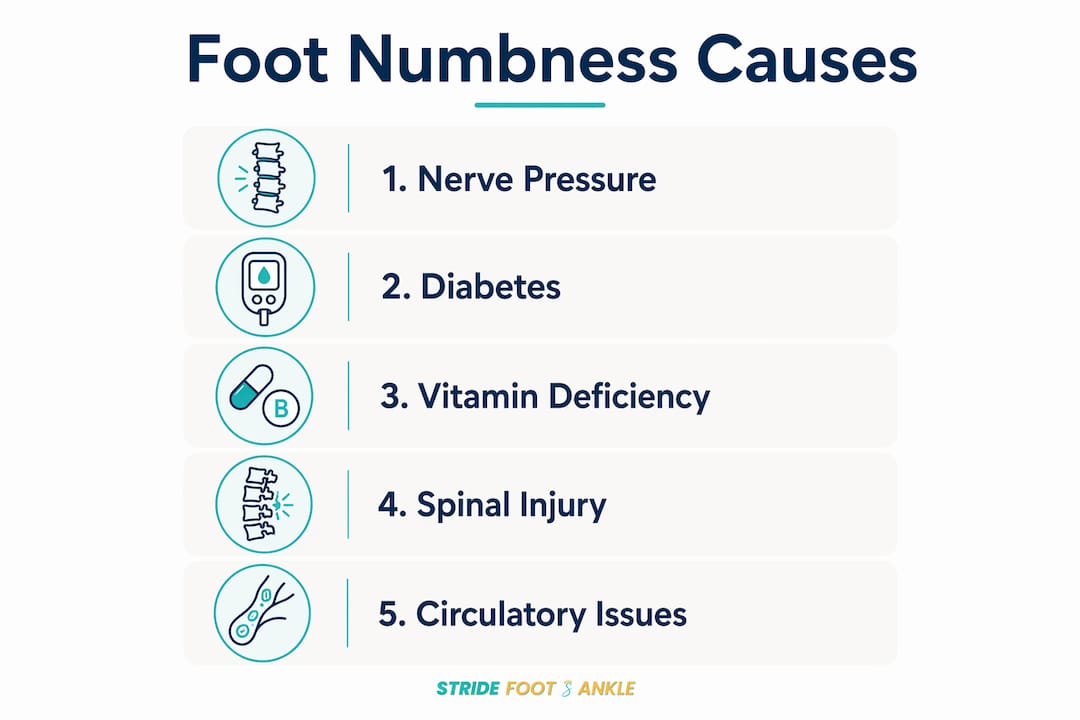
The most frequent causes of foot numbness include:
- Nerve compression. Tarsal tunnel syndrome compresses the tibial nerve along the inner ankle, producing numbness across the sole and toes. Herniated discs in the lumbar spine can compress nerve roots supplying the foot.
- Diabetes. Diabetic peripheral neuropathy is one of the leading causes of chronic foot numbness worldwide. High blood glucose damages small nerve fibers over time, typically starting in the toes and spreading upward.
- Vitamin B12 deficiency. B12 is required for myelin, the protective sheath around nerve fibers. Without adequate B12, nerves lose their ability to transmit signals reliably.
- Circulation problems. Peripheral artery disease reduces blood flow to the feet, depriving nerves of oxygen and nutrients. Raynaud’s phenomenon causes episodic numbness triggered by cold or stress.
- Alcohol-related neuropathy. Chronic alcohol use damages peripheral nerves directly and depletes B vitamins, compounding the effect.
- Hypothyroidism. An underactive thyroid slows metabolism and can cause fluid retention that compresses nerves, producing numbness and tingling.
Serious causes requiring urgent attention
Some causes of foot numbness are medical emergencies. Sudden onset numbness on one side, accompanied by slurred speech, facial drooping, or arm weakness, requires immediate emergency care to rule out stroke or transient ischemic attack (TIA). These symptoms can appear and disappear within minutes, but they always warrant a 911 call.
Saddle anesthesia combined with bowel or bladder loss is a hallmark of cauda equina syndrome, a spinal emergency that causes permanent paralysis if not surgically decompressed within hours. Do not wait for a scheduled appointment if these symptoms appear.
Pro Tip: If your foot numbness appears suddenly, affects one side of your body, or comes with any loss of bladder or bowel control, call 911 immediately. These are red flag symptoms that require emergency evaluation, not a wait-and-see approach.
How do healthcare providers diagnose numbness?
Diagnosing the cause of foot numbness follows a structured clinical process. Providers start with a detailed patient history, then move through physical examination and targeted testing. The goal is to determine whether the problem originates in the peripheral nervous system or the central nervous system, since the two require very different treatments.
Here is how a typical evaluation unfolds:
Patient history and symptom mapping. Your provider will ask when the numbness started, whether it is constant or intermittent, and what makes it better or worse. They will map the pattern of sensory loss. A stocking-glove distribution (numbness spreading evenly up from the foot like a sock) points toward systemic neuropathy. A dermatomal pattern (numbness following a specific nerve root territory) suggests spinal nerve compression. Differentiating these two patterns is one of the first and most important steps in narrowing the diagnosis.
Neurological physical examination. The provider tests light touch, pinprick sensation, vibration (using a tuning fork), and proprioception (your sense of where your foot is in space). They also check muscle strength and deep tendon reflexes. Absent ankle reflexes, for example, are a classic early sign of peripheral neuropathy.
Laboratory tests. Physicians order targeted lab panels including fasting glucose, vitamin B12, thyroid-stimulating hormone (TSH), and a basic metabolic panel (BMP). These tests catch the most common reversible causes of neuropathy quickly and inexpensively.
Electrodiagnostic studies. Electromyography (EMG) and nerve conduction velocity (NCV) studies measure how fast and how well electrical signals travel through your nerves. These tests confirm neuropathy, identify which nerves are affected, and distinguish axonal damage from demyelination, which guides treatment choices.
Imaging. MRI or CT scans are ordered when spinal compression, a tumor, or a structural lesion is suspected. Imaging is not the first step for most patients, but it becomes critical when red flag symptoms are present or when electrodiagnostic findings point to a central cause.
Pro Tip: Before your appointment, write down every medication and supplement you take, including over-the-counter products. Some medications contribute to neuropathic symptoms, and your provider needs the full picture to make an accurate diagnosis. Also note when your numbness started and any patterns you have noticed.
What treatment options are available for foot numbness?
Treatment for foot numbness depends entirely on its cause. There is no single fix. The most effective approach targets the underlying condition while managing symptoms that affect your daily function. Understanding your nerve damage symptoms and causes is the foundation of any effective treatment plan.
Treating the underlying cause
- Diabetes management. Tight blood glucose control slows the progression of diabetic neuropathy and, in early stages, can partially reverse nerve damage. This involves medication adjustments, dietary changes, and regular monitoring.
- Vitamin supplementation. B12 deficiency neuropathy responds well to supplementation, especially when caught early. Injections are more reliable than oral supplements in patients with absorption problems.
- Thyroid treatment. Correcting hypothyroidism with levothyroxine often resolves associated numbness within weeks to months.
- Addressing compression. Tarsal tunnel syndrome and lumbar nerve root compression may respond to rest, anti-inflammatory medications, corticosteroid injections, or custom orthotics that reduce pressure on the affected nerve.
Medications for symptom relief
When the underlying cause cannot be fully corrected, medications help manage nerve pain and discomfort. Gabapentin and pregabalin reduce nerve signal misfiring. Duloxetine, an antidepressant, is FDA-approved for diabetic peripheral neuropathy. Topical treatments like lidocaine patches or capsaicin cream provide localized relief without systemic side effects.
Physical therapy and orthotics
Physical therapy rebuilds strength, improves balance, and teaches compensatory movement strategies when proprioception is impaired. Custom orthotics redistribute pressure across the foot, protecting areas that cannot feel injury. Ankle-foot orthoses (AFOs) support the ankle when muscle weakness accompanies the sensory loss.
Surgical options
Surgery is considered when conservative care fails and a structural cause is confirmed. Tarsal tunnel release decompresses the tibial nerve. Lumbar decompression addresses spinal nerve root compression. Conservative foot care is always the preferred first step, and surgery is reserved for cases where nerve damage is progressing despite other treatments.
Managing idiopathic cases
When no cause is found, the focus shifts to symptom management and preventing complications. This includes pain medications, physical therapy, and close monitoring for progression. Emerging integrative approaches, including transcutaneous electrical nerve stimulation (TENS) and low-level laser therapy, show promise in symptom reduction for some patients, though evidence continues to develop.
How to manage and prevent complications from persistent foot numbness
Persistent foot numbness creates a specific and serious risk: you cannot feel injuries as they happen. Chronic polyneuropathies typically start in the feet and progress upward, causing loss of vibration and position sense that makes standing and walking unsteady. Without active management, this leads to falls, unnoticed wounds, infections, and in severe cases, amputation.
Daily foot care habits that protect you
- Inspect your feet every day. Daily foot monitoring detects skin breaks, blisters, and pressure sores before they become infected wounds. Use a mirror to check the sole and between the toes. Do this at the same time each day so it becomes automatic.
- Choose footwear carefully. Wear shoes with a wide toe box, cushioned soles, and no internal seams that can cause friction. Avoid walking barefoot, even indoors. Shoes protect feet that cannot feel danger.
- Maintain skin moisture. Dry skin cracks and creates entry points for infection. Apply a fragrance-free moisturizer to the tops and soles of your feet daily, but avoid the area between the toes where excess moisture promotes fungal growth.
- Check water temperature before bathing. Numb feet cannot detect scalding water. Use your elbow or a thermometer to test bath temperature before stepping in.
- Practice balance training. Loss of position sense from neuropathy increases fall risk significantly. Single-leg standing exercises, heel-to-toe walking, and tai chi all improve balance and reduce fall frequency.
The table below summarizes the key risks of unmanaged foot numbness and the corresponding protective actions.
| Risk | Protective action |
|---|---|
| Unnoticed wounds and ulcers | Daily visual foot inspection with a mirror |
| Burns from heat exposure | Test water temperature with elbow before bathing |
| Falls from balance loss | Balance training exercises three times per week |
| Pressure sores from footwear | Wear properly fitted, cushioned shoes at all times |
| Skin breakdown and infection | Moisturize daily; keep between-toes area dry |
Connecting with a podiatrist who specializes in foot care and injury prevention gives you a structured plan tailored to your specific level of sensory loss. Self-care matters, but professional monitoring catches what daily inspection misses.
Key takeaways
Foot numbness caused by peripheral neuropathy requires early diagnosis, targeted treatment of the underlying cause, and consistent daily foot care to prevent serious complications including wounds, falls, and infection.
| Point | Details |
|---|---|
| Numbness signals nerve disruption | Persistent foot numbness indicates peripheral neuropathy or systemic disease, not just a temporary circulation issue. |
| One-third of cases are idiopathic | No definitive cause is found in approximately 33% of neuropathy patients, making symptom management and monitoring critical. |
| Red flag symptoms need emergency care | Sudden one-sided numbness, saddle anesthesia, or bladder loss requires a 911 call, not a scheduled appointment. |
| Diagnosis follows a structured path | Providers use symptom mapping, neurological exams, lab panels, and EMG/NCV studies to pinpoint the cause accurately. |
| Daily foot inspection prevents complications | Patients with sensory loss must check their feet every day to catch wounds before they become infected or life-altering. |
Why integrated care changes outcomes for foot numbness
Foot numbness is one of those conditions that looks simple on the surface and turns out to be anything but. I have seen patients who spent years attributing their foot tingling to “bad circulation” or “sitting wrong,” only to discover they had progressed diabetic neuropathy or a compressive lesion that had been silently worsening. The delay cost them function they will never fully recover.
The single biggest mistake I observe is treating numbness as a single-specialty problem. A patient sees their primary care doctor, gets a B12 check, and if that comes back normal, the investigation stops. But accurate diagnosis often requires a neurologist to interpret electrodiagnostic studies, a podiatrist to assess foot mechanics and prevent injury, and sometimes an endocrinologist or vascular specialist depending on the underlying cause. Multidisciplinary care reduces long-term disability and economic costs in a way that single-provider management simply cannot match.
The other pattern I find consistently underappreciated is the fall risk. Patients focus on the sensation loss and overlook the proprioception deficit that comes with it. They do not realize their nervous system is no longer telling them where their foot is in space. That gap between perception and reality is exactly how a patient fractures an ankle stepping off a curb they misjudged. Balance training is not optional for anyone with established neuropathy. It is as important as any medication.
My advice to anyone reading this: do not wait for the numbness to get worse before seeking care. Early intervention, even in idiopathic cases, gives you the best chance of slowing progression and protecting your quality of life. Proactive monitoring and patient education prevent secondary complications like ulcers and contractures that are far harder to treat than the original nerve problem.
— Ramil
Foot numbness care at Stridefootankle
Foot numbness that lingers deserves a thorough evaluation, not a wait-and-see approach. Stridefootankle, led by Dr. Nahad Wassel in Las Vegas, provides specialized assessment and management for patients dealing with nerve-related foot conditions. Dr. Wassel coordinates care across conservative and surgical options, building personalized treatment plans that address both the cause and the daily risks that come with sensory loss.

Whether your numbness stems from nerve compression, diabetic neuropathy, or an as-yet-undiagnosed condition, the team at Stridefootankle offers the diagnostic depth and foot care expertise to help you move forward with confidence. Schedule your evaluation through the general foot and ankle care page and take the first step toward understanding what your feet are telling you.
FAQ
What is the most common cause of foot numbness?
Diabetic peripheral neuropathy and nerve compression conditions like tarsal tunnel syndrome are among the most common causes of persistent foot numbness. Temporary numbness from sustained pressure or posture is also frequent and resolves on its own.
When should I go to the emergency room for numbness?
Go to the emergency room immediately if numbness appears suddenly on one side of your body, accompanies slurred speech or facial drooping, or occurs with loss of bladder or bowel control. These symptoms may indicate stroke, TIA, or cauda equina syndrome.
Can foot numbness be reversed?
Reversal depends on the cause and how early treatment begins. Numbness from B12 deficiency or hypothyroidism often improves significantly with treatment. Diabetic neuropathy can stabilize and partially improve with tight glucose control, but advanced nerve damage is rarely fully reversible.
What tests diagnose the cause of foot numbness?
Providers typically order fasting glucose, vitamin B12, and TSH blood tests as a first step. Electromyography and nerve conduction studies confirm neuropathy and identify which nerves are affected. MRI or CT imaging is added when spinal compression or a structural lesion is suspected.
How do I protect my feet if they are numb?
Inspect your feet visually every day, wear properly fitted cushioned shoes at all times, test water temperature before bathing, and practice balance exercises regularly. Connecting with a podiatrist for home foot care guidance gives you a structured routine tailored to your level of sensory loss.
Recommended
- Nerve Damage: Symptoms, Causes, and Treatment Options – Stride Foot & Ankle – Dr. Nahad Wassel
- Foot Pain: Causes, Symptoms, and Treatment Options – Stride Foot & Ankle – Dr. Nahad Wassel
- Flat Foot: Causes, Symptoms, and Treatment Options – Stride Foot & Ankle – Dr. Nahad Wassel
- Foot pain podiatry: Las Vegas diagnosis and treatment guide – Stride Foot & Ankle – Dr. Nahad Wassel
Recent Comments