

TL;DR:
- Tendonitis involves inflammation or degeneration of tendons, causing pain and limiting movement near joints. Early recognition and proper treatment, such as eccentric exercises and activity modification, are vital for effective recovery. Mismanagement, like relying solely on rest or injections, can lead to prolonged pain or tendon rupture, emphasizing the importance of tailored, progressive care.
Tendonitis is defined as inflammation or degeneration of a tendon, the fibrous tissue connecting muscle to bone, causing pain near joints and limiting movement. The Achilles tendon, rotator cuff, patellar tendon, and elbow tendons are the most commonly affected sites. Mild cases typically heal within 2–3 weeks, while chronic tendinosis can require several months of structured rehabilitation. Early recognition and the right treatment approach make the difference between a quick recovery and a prolonged setback.
What are the symptoms of tendonitis?
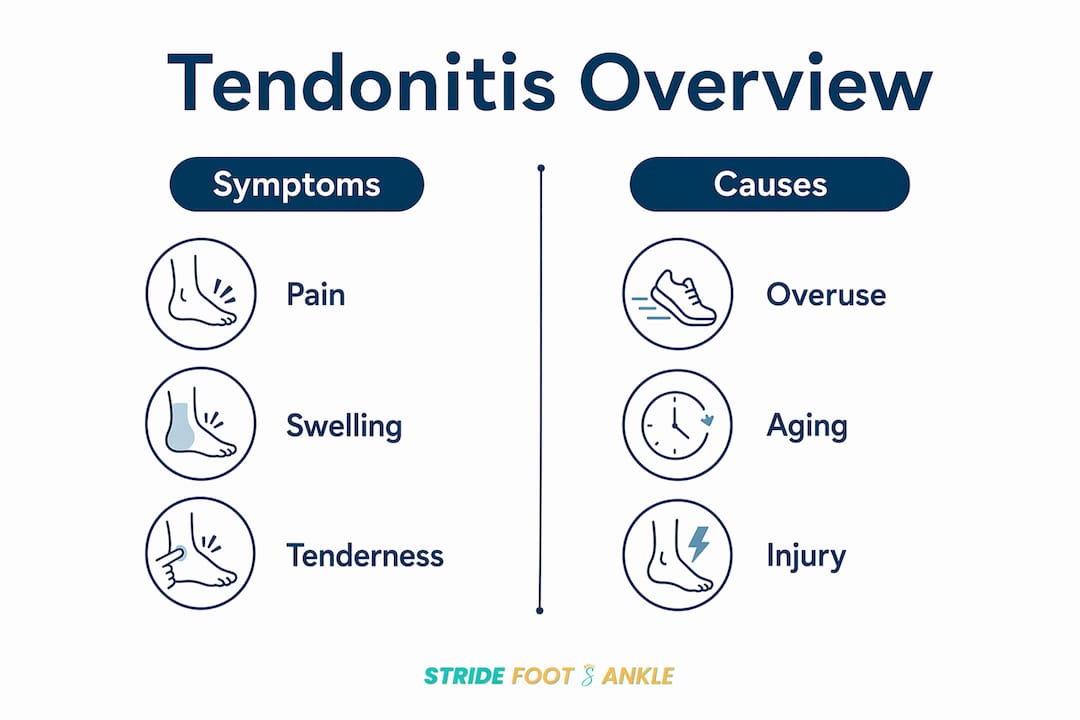
Tendonitis produces localized pain near a joint that worsens with movement and eases with rest. Swelling, tenderness to the touch, and morning stiffness around the affected tendon are the hallmark signs. Understanding these symptoms early helps you avoid the overuse patterns that turn a mild flare into a chronic problem.
Pain characteristics and location
The pain from tendon inflammation is typically described as a dull ache that sharpens during or after activity. It concentrates at a specific point, such as the back of the heel in Achilles tendinopathy, the outer elbow in lateral epicondylitis (tennis elbow), or the front of the knee in patellar tendinopathy. Pain that spreads diffusely across a joint is less likely to be tendon-related and warrants a broader evaluation.
Acute tendon pain often appears after a sudden increase in training load or an awkward movement. Chronic pain builds gradually over weeks and may feel like a persistent stiffness that never fully resolves. Tracking when your pain peaks, whether during warmup, mid-activity, or the following morning, gives your provider useful diagnostic information.
Swelling, stiffness, and tenderness
Visible swelling along the tendon sheath is common in acute cases. Chronic cases may show thickening of the tendon itself rather than fluid-based swelling. Pressing directly on the tendon typically reproduces the pain, which helps distinguish tendon problems from joint or bone issues.
How is tendonitis diagnosed?
Diagnosis starts with a physical exam and a detailed history of your activity patterns, recent changes in training, and prior injuries. Your provider will assess range of motion, strength, and the exact location of tenderness. Imaging is used selectively. Ultrasound is the preferred first-line tool because it shows tendon structure in real time and is cost-effective. MRI provides more detail for complex cases or when a tendon rupture or infection is suspected. X-rays do not show soft tissue but can rule out bone spurs or calcification.
Pro Tip: A sudden “pop” sensation followed by severe pain, or joint pain combined with a fever above 100°F, signals a possible tendon rupture or infection. Seek immediate medical evaluation rather than waiting to see if symptoms improve.
- Dull, localized ache that worsens with activity
- Tenderness directly over the tendon
- Swelling or visible thickening along the tendon
- Morning stiffness that loosens with gentle movement
- Reduced strength or range of motion near the affected joint
What causes tendonitis and how do acute and chronic forms differ?
Tendonitis is primarily caused by repetitive mechanical stress that exceeds the tendon’s capacity to repair itself. Sudden overload, poor technique, inadequate recovery time, and systemic conditions like diabetes all contribute. Critically, many cases labeled as tendonitis are actually tendinosis, a degenerative process with minimal inflammation. That distinction changes how you treat it.

Repetitive strain and overuse
Overuse is the single most common cause. Runners who increase weekly mileage too quickly develop Achilles tendinopathy. Tennis players who hit thousands of backhands without adequate rest develop lateral epicondylitis. The tendon accumulates micro-damage faster than it can remodel, leading to pain and structural change.
Sudden injury, such as a forceful jump or a rapid change of direction, can trigger acute tendon inflammation. This differs from the gradual onset of overuse injuries, though both can progress to chronic tendinosis if not managed correctly.
Systemic conditions and aging
Age reduces tendon elasticity and slows collagen turnover, making tendons more susceptible to injury after age 40. Metabolic disorders like diabetes impair tendon healing by disrupting collagen synthesis and blood supply to the tendon. Patients with diabetes require slower exercise progression and active glycemic management alongside their rehab program. Fluoroquinolone antibiotics, such as ciprofloxacin, are also associated with increased tendon rupture risk and should be flagged in your medical history.
Acute vs. chronic tendonitis: key differences
| Feature | Acute Tendonitis | Chronic Tendinosis |
|---|---|---|
| Onset | Sudden, often after overload or injury | Gradual, develops over weeks to months |
| Primary process | Inflammation | Collagen degeneration, minimal inflammation |
| Pain pattern | Sharp, activity-related | Persistent dull ache, stiffness |
| Response to NSAIDs | Often helpful short-term | Limited benefit |
| Best treatment | Rest, ice, short-term NSAIDs | Eccentric loading, progressive rehab |
| Recovery timeline | 2–3 weeks for mild cases | Several months of structured rehab |
The table above shows why treatment must match the stage of the condition. Applying anti-inflammatory strategies to a degenerative tendon produces limited relief because chronic tendinosis features minimal inflammation. Mechanical loading exercises are the primary driver of tissue repair in chronic cases.
- Acute cases benefit from relative rest and short-term anti-inflammatory care
- Chronic cases require progressive mechanical loading to stimulate collagen remodeling
- Systemic health factors, especially metabolic control, directly affect recovery speed
- Misidentifying the stage leads to prolonged pain and delayed recovery
What are the evidence-based treatment options for tendonitis?
Tendonitis treatment options range from self-managed rest and ice to physical therapy, injections, and surgery in rare cases. The right approach depends on whether the condition is acute or chronic, the tendon involved, and your overall health. Most people recover fully without surgery when they follow a structured, progressive plan.
Rest, activity modification, and nsaids
Relative rest, meaning reducing the activity that provokes pain without stopping all movement, is the first step. Complete immobilization weakens the tendon further and slows recovery. NSAIDs like ibuprofen should be used for only 7–10 days to manage pain and allow you to move more comfortably. Long-term NSAID use does not address the underlying tendon degeneration and carries gastrointestinal and cardiovascular risks.
For non-invasive pain relief options that complement medical care, combining activity modification with targeted manual therapy can reduce pain load during the early recovery phase.
Physical therapy and eccentric exercises
Physical therapy is the most effective long-term treatment for tendon pain. Eccentric exercise programs are the gold standard for chronic Achilles and patellar tendinopathy, requiring 6–12 weeks of consistent loading before reassessment. Eccentric loading, where the muscle lengthens under tension, stimulates collagen production and tendon remodeling in a way that concentric exercise alone does not.
A typical Achilles eccentric program involves standing on the edge of a step, rising on both feet, then lowering slowly on the affected foot only. Performed twice daily for 12 weeks, this protocol produces clinically significant pain reduction and functional improvement in the majority of patients.
Pro Tip: Transitioning from passive rest to active rehab is the most critical and most skipped step. Start loading the tendon gently within the first week, even if some discomfort is present. Waiting until pain is completely gone before exercising delays recovery and weakens the tendon further.
Corticosteroid injections and emerging therapies
A corticosteroid injection for tendonitis delivers short-term pain relief, typically lasting 4–8 weeks, but carries real risks. Steroid injections may impair long-term tissue healing and increase tendon rupture risk. Mayo Clinic guidelines advise against their use when symptoms have persisted for more than three months. Repeated injections compound these risks and are generally not recommended.
Platelet-rich plasma (PRP) therapy involves injecting a concentration of the patient’s own growth factors into the tendon to stimulate repair. Evidence for PRP is growing, particularly for chronic Achilles and lateral elbow tendinopathy, though results vary. Dry needling, which uses fine needles to disrupt degenerative tissue and trigger a healing response, is another option gaining clinical support.
Surgery is reserved for cases that fail 6–12 months of conservative care. Procedures typically involve removing degenerative tissue and stimulating fresh tendon growth. Recovery after surgery is measured in months, not weeks.
Do’s and Don’ts During Tendonitis Treatment:
- Do perform prescribed eccentric exercises consistently, even when they cause mild discomfort
- Do use ice after activity during acute flare-ups to manage swelling
- Do communicate with your provider about pain levels during rehab progression
- Don’t push through sharp or worsening pain during exercise
- Don’t rely on NSAIDs beyond 10 days without medical guidance
- Don’t return to full activity the moment pain disappears
How can you manage tendonitis for lasting recovery?
Long-term recovery from tendon pain requires consistent load management, lifestyle adjustments, and knowing when to escalate care. The goal is not just pain relief but restoring the tendon’s structural integrity so it can handle the demands you place on it. Early intervention and adherence to structured rehab significantly improve long-term outcomes.
Load management and structured rehabilitation
Load management means controlling the volume, intensity, and frequency of activities that stress the tendon. A structured rehab program progresses through three phases: isometric exercises for pain control, isotonic loading for strength, and sport-specific or activity-specific loading for return to full function. Skipping phases or progressing too quickly is the most common reason for setbacks.
Personalized care plans that account for systemic health produce better outcomes, especially in patients with diabetes or other metabolic conditions. For these patients, glycemic control is not optional. Elevated blood glucose directly impairs collagen synthesis, slowing the tendon’s ability to remodel under therapeutic loading.
Ice, heat, and symptom management
Ice reduces inflammation during acute flare-ups, while heat improves blood flow and reduces stiffness in chronic cases. Apply ice for 15–20 minutes after activity when the tendon feels hot or swollen. Use a moist heat pack for 10–15 minutes before exercise when the primary complaint is morning stiffness or tightness. Using the wrong modality at the wrong time can worsen symptoms, so matching the treatment to the phase of your condition matters.
Ergonomic changes reduce cumulative tendon stress. Adjusting your workstation height, changing your running shoes, modifying your grip technique in racket sports, or switching to lower-impact cross-training during recovery all reduce the load on the affected tendon without stopping activity entirely.
Pro Tip: Track your pain on a 0–10 scale before and after each exercise session. If your pain rises more than 2 points during exercise or does not return to baseline within 24 hours, reduce the load. This simple rule prevents most training-related setbacks.
Recovery timelines by case type
| Case Type | Expected Recovery Timeline | Key Milestone |
|---|---|---|
| Mild acute tendonitis | 2–3 weeks | Pain-free with daily activities |
| Moderate acute tendonitis | 4–8 weeks | Return to modified sport or work |
| Chronic tendinosis | 3–6 months | Consistent pain reduction with loading |
| Post-injection rehab | 6–12 weeks post-injection | Gradual return to full loading |
| Post-surgical rehab | 4–6 months | Full strength and functional return |
The table above reflects general clinical expectations. Individual timelines vary based on tendon location, severity, age, and systemic health. Consulting a foot and ankle specialist, particularly for Achilles or posterior tibial tendon involvement, gives you a more accurate prognosis and a plan built around your specific situation.
Key takeaways
Effective tendonitis management requires matching treatment to the stage of the condition, committing to progressive loading exercises, and addressing systemic factors that slow tendon repair.
| Point | Details |
|---|---|
| Acute vs. chronic distinction | Acute tendonitis involves inflammation; chronic tendinosis is degenerative and requires mechanical loading, not anti-inflammatories. |
| NSAIDs have a time limit | Use ibuprofen or similar medications for no more than 7–10 days; long-term use does not heal tendons. |
| Eccentric exercise is the standard | A 6–12 week eccentric loading program is the most evidence-backed treatment for chronic tendon pain. |
| Steroid injections carry risk | Corticosteroid injections offer short-term relief but may impair healing and raise rupture risk with repeated use. |
| Systemic health affects recovery | Patients with diabetes need glycemic control and slower exercise progression for effective tendon rehabilitation. |
What i’ve learned after seeing tendonitis mismanaged
The most consistent mistake I see is patients treating tendon pain the same way they treat a muscle strain: rest until it stops hurting, then go back to full activity. That approach works for muscle soreness. It fails for tendons. Tendons heal through controlled stress, not through avoidance.
The second mistake is over-relying on injections. A corticosteroid injection can quiet the pain enough that patients feel ready to return to sport within two weeks. But the tendon has not healed. The structural problem is still there. The injection masked the signal that was protecting the tendon from further damage. I have seen patients rupture a tendon they had injected three times because no one told them the injection was buying time, not fixing the problem.
What actually works is less exciting: consistent eccentric loading, patience measured in months rather than weeks, and honest communication with your provider about what you are feeling during rehab. Patients who confuse pain cessation with healing and return to full activity too soon account for the majority of chronic tendon cases I encounter.
If your symptoms have persisted beyond six weeks despite rest and basic self-care, you need a structured program, not more waiting. And if you have diabetes or another metabolic condition, your tendon recovery plan must account for that. Generic protocols will not get you there. Seek care from a provider who will tailor the approach to your full clinical picture.
— Ramil
Get expert tendonitis care at Stridefootankle
If tendon pain in your foot or ankle is limiting your daily life, Stridefootankle is here to help you recover with confidence. Dr. Nahad Wassel specializes in conservative and surgical podiatric care in Las Vegas, offering personalized treatment plans that address both the tendon injury and any underlying factors slowing your recovery.
From nonsurgical tendon treatments to comprehensive foot and ankle care, Stridefootankle provides the clinical expertise and patient-centered approach you need to get back on your feet. Do not wait for a minor tendon problem to become a chronic one. Request your appointment today and take the first step toward lasting relief.
FAQ
What is the difference between tendonitis and tendinosis?
Tendonitis refers to acute tendon inflammation, while tendinosis describes chronic tendon degeneration with minimal inflammation. This distinction matters because anti-inflammatory treatments work for tendonitis but have limited effect on tendinosis, which requires mechanical loading exercises.
How long does tendonitis take to heal?
Mild tendonitis typically resolves within 2–3 weeks with rest and activity modification. Chronic cases, or tendinosis, often require 3–6 months of structured physical therapy before full recovery.
Are steroid injections safe for tendon pain?
Corticosteroid injections provide short-term pain relief but may impair long-term tendon healing and increase rupture risk. Mayo Clinic advises against their use when symptoms have lasted more than three months, and repeated injections are generally not recommended.
What exercises help tendonitis recovery?
Eccentric exercises, where the muscle lengthens under load, are the gold standard for chronic tendon pain. A consistent 6–12 week eccentric loading program is the most evidence-backed approach for conditions like Achilles and patellar tendinopathy.
When should i see a doctor for tendon pain?
See a doctor immediately if you experience a sudden pop followed by severe pain, visible deformity, or joint pain with a fever above 100°F. These signs may indicate a tendon rupture or infection, both of which require prompt medical evaluation.
Recommended
- Nonsurgical Options for Tendon and Ligament Injuries – Stride Foot & Ankle – Dr. Nahad Wassel
- Foot Pain: Causes, Symptoms, and Treatment Options – Stride Foot & Ankle – Dr. Nahad Wassel
- Ingrowing Toenails: Causes, Relief, and Treatment – Stride Foot & Ankle – Dr. Nahad Wassel
- Flat Foot: Causes, Symptoms, and Treatment Options – Stride Foot & Ankle – Dr. Nahad Wassel
Recent Comments