

TL;DR:
- Limping, often caused by pain or structural issues, typically involves an antalgic gait aimed at reducing discomfort. Accurate diagnosis through clinical evaluation and imaging guides effective treatment, ranging from conservative management to surgery if necessary. Early intervention is essential, especially in children and for vascular causes, to prevent long-term damage and restore normal mobility.
Limping is defined as an abnormal walking pattern caused by pain, weakness, or structural dysfunction in the lower limbs. Clinicians call this altered gait an antalgic gait when pain drives it, though neurological and mechanical causes produce distinct patterns too. Whether you twisted an ankle, live with osteoarthritis, or noticed your child suddenly favoring one leg, understanding why the gait changes is the first step toward fixing it. This guide covers the full picture: causes by age group, how doctors diagnose the root problem, evidence-based treatment options, and when to seek urgent care.
What are the most common causes of limping?
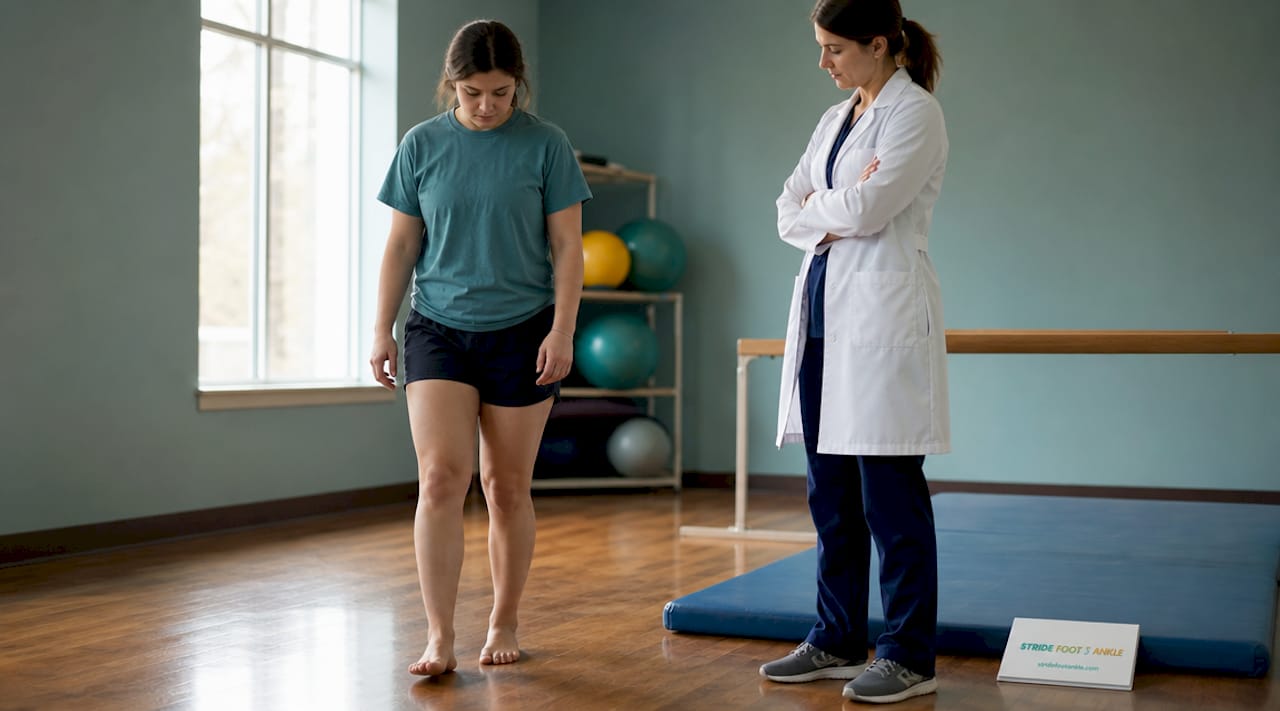
Limping is most often pain-driven, meaning the body shifts weight away from a painful limb to reduce discomfort. That protective pattern is called antalgic gait. Beyond pain, neurological deficits and structural abnormalities produce their own recognizable gait changes. Knowing which category applies to you helps narrow down the cause and the right treatment path.
Pain-driven causes in adults
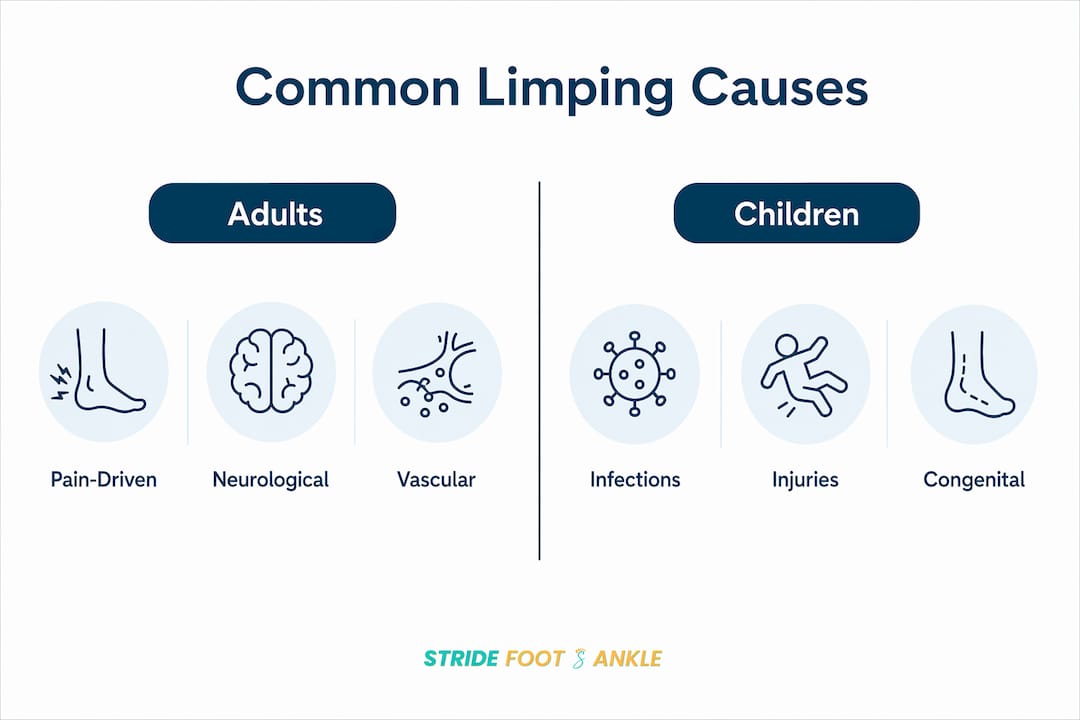
Swelling, stiffness, weakness, and limited range of motion typically accompany pain-driven limping, pointing toward conditions like osteoarthritis, ankle sprains, or plantar fasciitis. These symptoms are the body’s way of flagging tissue damage or inflammation. Osteoarthritis of the hip or knee is one of the most common adult culprits, gradually eroding cartilage until every step produces discomfort. Acute sprains and strains from sports or missteps are the other frequent offenders, producing sudden-onset limping that usually resolves with proper care.
Neurological and vascular causes
Lumbar radiculopathy, which is nerve compression in the lower spine, produces a limp that often comes with radiating pain, numbness, or tingling down one leg. This is distinct from a pure pain-avoidance limp because the leg may feel weak or uncoordinated rather than simply sore. On the vascular side, peripheral artery disease causes intermittent claudication, a cramping calf pain triggered by walking and relieved by rest. That pattern is a red flag for narrowed arteries depriving leg muscles of oxygen, and it requires cardiovascular evaluation, not just foot care.
Common causes at a glance
- Osteoarthritis of the hip, knee, or ankle: gradual cartilage loss producing chronic pain-driven gait changes
- Ankle sprains and strains: ligament or muscle injuries causing acute limping after injury
- Plantar fasciitis: heel pain that worsens with the first steps of the day
- Lumbar radiculopathy: nerve root compression producing leg weakness or altered sensation
- Peripheral artery disease: walking-triggered calf pain relieved by rest
- Stress fractures: repetitive-load bone injuries common in runners and military recruits
- Bursitis or tendinitis: inflammation around joints or tendons from overuse
- Irritable hip (transient synovitis): the most common cause of limping in children without a clear injury history
How do healthcare providers diagnose the cause of limping?
Diagnosis starts with a detailed history and physical exam, then moves to imaging or specialized tests when the cause is not immediately clear. The goal is to distinguish pain-avoidance gait from neurological gait dysfunction, because those two categories lead to very different treatment paths. Clinicians use history and neurological examination to separate these patterns before ordering any tests.
The standard diagnostic sequence looks like this:
History taking: Your provider asks about pain location, onset, duration, any recent injury, fever, and whether the limp is constant or intermittent. A limp that worsens with activity and eases with rest points toward a mechanical or vascular cause. One that is worse in the morning and improves with movement suggests inflammatory arthritis.
Physical examination: The provider watches you walk, assesses joint range of motion, tests muscle strength, and checks reflexes and sensation. Observing the gait pattern directly often reveals whether the problem is in the foot, ankle, knee, hip, or spine.
Imaging: X-rays identify fractures, joint space narrowing from arthritis, and bone deformities. MRI provides detail on soft tissue injuries including ligament tears, tendon damage, and disc herniation causing nerve compression. Radiography and ultrasonography are standard first steps in complex joint presentations.
Electromyography (EMG): When nerve involvement is suspected, EMG measures electrical activity in muscles and nerve conduction speed. This test confirms lumbar radiculopathy or peripheral neuropathy as the driver of gait changes.
Joint aspiration: If infection or inflammatory disease is suspected, a needle draws fluid from the joint for laboratory analysis. This step is critical in children presenting with fever and a limp, where septic arthritis is a medical emergency requiring immediate treatment.
Blood tests: Markers like C-reactive protein (CRP), erythrocyte sedimentation rate (ESR), and uric acid levels help identify infection, inflammatory arthritis, or gout as underlying causes.
Pro Tip: If your limp appeared suddenly without a clear injury, or if it comes with fever, severe swelling, or inability to bear any weight, go to an emergency department rather than waiting for a scheduled appointment. These combinations can signal septic arthritis or a fracture requiring same-day treatment.
What treatment and management options are available for limping?
Treating the underlying cause consistently produces better outcomes than simply trying to walk normally while ignoring pain or weakness. Forcing a normal gait pattern without addressing the root problem often reinforces compensatory movements that stress other joints and create secondary injuries. Treatment is therefore organized around the diagnosis first, then the gait correction.
Non-surgical first-line treatments
- Rest and activity modification: Reducing load on the affected limb during the acute phase prevents further tissue damage. This does not mean complete immobility; gentle movement maintains circulation and prevents stiffness.
- NSAIDs (nonsteroidal anti-inflammatory drugs): Ibuprofen and naproxen reduce pain and inflammation in osteoarthritis, sprains, and tendinitis. NSAIDs and physical therapy are the standard first-line approach for osteoarthritis-driven limping.
- Physical therapy and gait retraining: Gait retraining using targeted exercises for strength, balance, and walking mechanics is more effective than simply encouraging more activity. A physical therapist evaluates your specific compensation patterns and builds a program to correct them without reinforcing poor movement habits.
- Corticosteroid injections: For persistent joint inflammation from osteoarthritis or bursitis, a corticosteroid injection directly into the joint can provide weeks to months of pain relief, making physical therapy more productive.
- Weight management: Every pound of body weight adds roughly four pounds of force across the knee joint during walking. Reducing body weight meaningfully decreases joint load and can reduce or eliminate pain-driven limping in overweight patients with lower-limb arthritis.
- Assistive devices: A cane used in the hand opposite the painful limb reduces joint load by shifting weight. Canes are not a sign of defeat; they are a tool that protects the joint while healing progresses.
Surgical options
Surgery becomes appropriate when conservative care fails after an adequate trial, typically three to six months for chronic conditions. Joint replacement surgery for end-stage hip or knee osteoarthritis restores near-normal gait in the majority of patients. Nerve decompression surgery addresses lumbar radiculopathy when disc herniation or spinal stenosis does not respond to physical therapy and injections. For tendon and ligament injuries, surgical repair is reserved for complete tears or cases where conservative management has not restored function.
Treatment comparison by cause
| Cause | First-line treatment | When to escalate |
|---|---|---|
| Osteoarthritis | NSAIDs, physical therapy, weight loss | Corticosteroid injection, then joint replacement |
| Ankle sprain | RICE protocol, physical therapy | Surgery for complete ligament tears |
| Lumbar radiculopathy | Physical therapy, NSAIDs, epidural injection | Nerve decompression surgery |
| Peripheral artery disease | Structured walking program, medication | Angioplasty or bypass surgery |
| Plantar fasciitis | Stretching, orthotics, NSAIDs | Corticosteroid injection, then surgical release |
Pro Tip: Ask your physical therapist specifically about gait retraining, not just strengthening exercises. Strengthening alone does not always correct the compensatory walking pattern that developed to protect a painful limb. Gait analysis and targeted mechanics work are what actually restore normal stride.
How can limping be prevented or minimized through lifestyle and home care?
Prevention focuses on reducing the conditions that cause pain-driven gait changes in the first place. Most adults who develop chronic limping from osteoarthritis or overuse injuries have identifiable risk factors that respond to lifestyle changes. Acting on these factors early is far more effective than managing an established gait problem.
- Maintain a healthy body weight: Excess weight accelerates cartilage breakdown in weight-bearing joints. Even a modest weight reduction of 10 to 15 pounds reduces knee joint stress significantly during daily walking.
- Choose low-impact exercise: Swimming, cycling, and elliptical training build cardiovascular fitness and lower-limb strength without the repetitive impact of running on hard surfaces. These activities preserve joint health over decades.
- Wear supportive footwear: Shoes with adequate arch support, cushioning, and a stable heel counter reduce ground reaction forces transmitted to the ankle, knee, and hip. Worn-out shoes are a surprisingly common trigger for new-onset foot and ankle pain. For elderly foot care, proper footwear is one of the highest-impact interventions available.
- Address minor injuries promptly: A mild ankle sprain that is ignored and walked through often develops into chronic instability. Early treatment with rest, ice, compression, and elevation followed by rehabilitation prevents the compensation patterns that become a persistent limp.
- Strengthen hip and core muscles: Weakness in the hip abductors and core forces the body to shift the trunk over the stance leg during walking, a pattern called Trendelenburg gait. Targeted strengthening of the gluteus medius and core stabilizers corrects this before it becomes habitual.
- Avoid sudden training increases: Stress fractures and overuse tendinitis follow predictable patterns of too much activity too fast. Increasing running mileage or workout intensity by no more than 10% per week is a widely used guideline that reduces overuse injury risk.
How does limping in children differ and when to seek medical care?
Limping in children is a distinct clinical situation from adult limping, and it demands a different level of urgency. Children limping without an obvious injury should be assessed by a healthcare professional to rule out serious conditions. The range of causes in children includes transient synovitis (irritable hip), minor injuries, bone infections (osteomyelitis), and septic arthritis, each requiring a different response. Parents should not assume a child’s limp will resolve on its own without at least a brief medical evaluation.
The following sequence helps parents respond appropriately:
Check for an obvious injury first: If your child fell, twisted a limb, or had a clear accident, a minor sprain or bruise is the likely cause. Apply ice and rest, and monitor for 24 to 48 hours.
Look for fever or inability to bear weight: Fever combined with limping and inability to put weight on the leg requires urgent hospital evaluation. This combination can indicate septic arthritis, a joint infection that causes permanent damage if not treated within hours.
Assess the 48-hour rule: If there is no obvious injury and the limp does not improve within 48 hours, take the child to a healthcare provider. Irritable hip, the most common non-injury cause in children, typically resolves with rest, but it needs a diagnosis to rule out more serious conditions.
Follow the 7-day reassessment: Limping not normalized within 7 days warrants reassessment even if the child seemed to be improving. Some causes, including Legg-Calvé-Perthes disease (a hip condition affecting blood supply to the femoral head), develop gradually and can be missed on initial evaluation.
Watch for night pain: Pain that wakes a child from sleep is a red flag for bone tumors or osteomyelitis and requires prompt imaging. This symptom is not typical of simple sprains or irritable hip.
For parents concerned about gait abnormalities beyond limping, toe walking in children and pediatric foot pain are related topics worth reviewing to understand the full picture of childhood gait development.
Key takeaways
Effective management of limping requires identifying the root cause first, because treating the symptom alone without addressing pain, weakness, or structural dysfunction leads to compensatory patterns that create new problems over time.
| Point | Details |
|---|---|
| Antalgic gait is pain-driven | Most adult limping is the body protecting a painful limb, not a structural defect. |
| Diagnosis guides treatment | Distinguishing pain-avoidance from neurological causes determines whether you need physical therapy, imaging, or specialist referral. |
| Conservative care comes first | NSAIDs, physical therapy, and weight management resolve most limping before surgery is needed. |
| Children need faster evaluation | A child limping without injury who does not improve in 48 hours needs medical assessment to exclude infection or serious hip conditions. |
| Gait retraining beats activity alone | Targeted mechanics work corrects compensatory patterns that simple exercise programs miss. |
Why precise diagnosis matters more than most people realize
From my experience reviewing gait cases, the single most common mistake people make is treating the limp rather than the cause. Someone develops knee pain from a hip weakness problem, gets knee-focused treatment, and wonders why they are still limping six months later. The knee was never the primary issue.
The second pattern I see repeatedly is patients who push through a limp because they assume walking on it will strengthen the area. That logic works for mild muscle soreness. It does not work for a partial ligament tear, a stress fracture, or nerve compression. Walking through those conditions reinforces the compensatory gait, loads the wrong structures, and delays healing by weeks or months.
What actually produces good outcomes is a thorough initial assessment that separates the pain source from the compensation pattern. A provider who watches you walk, tests your hip strength, checks your spine, and asks about your activity history before ordering an X-ray is doing the right thing. One who jumps straight to imaging without that clinical context often misses the functional picture entirely.
The vascular cause of limping is the one I think gets underdiagnosed most often. Peripheral artery disease presents as leg pain with walking that clears with rest, and many patients assume it is a muscle cramp or arthritis. It is actually a cardiovascular warning sign. If your leg pain follows that walking-rest-walking pattern and you are over 50 or have a history of smoking, ask your doctor specifically about vascular testing.
Finally, parents should trust their instincts on pediatric limping. A child who is genuinely reluctant to walk, who cries when the hip is moved, or who has any fever alongside a limp needs same-day evaluation. The window for treating septic arthritis without permanent joint damage is narrow. Early assessment costs very little. Delayed assessment can cost a child years of mobility.
— Ramil
Get expert care for limping at Stridefootankle
If you are dealing with a limp that has lasted more than a few days, or if you are unsure what is causing your gait to change, a professional evaluation is the fastest path to real answers.
At Stridefootankle, Dr. Nahad Wassel provides comprehensive foot and ankle care for patients across Las Vegas, from precise diagnosis using advanced imaging to personalized treatment plans that prioritize conservative options before surgery. Whether your limp stems from a sprain, arthritis, nerve involvement, or a structural issue, the practice offers the full range of tools to restore your mobility and comfort. You do not have to keep guessing about what is wrong. Schedule an evaluation and start striding confidently again.
FAQ
What is the medical term for limping?
The medical term for limping caused by pain is antalgic gait. It describes the altered walking pattern the body adopts to reduce weight-bearing on a painful limb.
How long should a limp last before seeing a doctor?
Any limp lasting more than a few days without a clear, improving minor injury warrants a medical evaluation. In children, the threshold is 48 hours without improvement, or immediately if fever or inability to bear weight is present.
Can limping cause long-term damage if left untreated?
Yes. Persistent limping shifts load to unaffected joints, which can cause secondary pain in the opposite knee, hip, or lower back over time. Addressing the root cause early prevents these compensatory injuries.
What exercises help with limping rehabilitation?
Gait retraining exercises targeting hip abductor strength, single-leg balance, and walking mechanics are the most effective rehabilitation approach. A physical therapist should design the program based on your specific gait pattern and underlying cause.
Is limping in dogs treated the same way as in humans?
The diagnostic principles overlap: clinicians distinguish pain-avoidance from neurological causes using history and physical examination in both species. Treatment differs significantly, however, and a veterinarian should always evaluate a limping dog rather than applying human care protocols.
Recommended
- Flat Foot: Causes, Symptoms, and Treatment Options – Stride Foot & Ankle – Dr. Nahad Wassel
- Foot Pain: Causes, Symptoms, and Treatment Options – Stride Foot & Ankle – Dr. Nahad Wassel
- Toe walking in children: Causes, treatments, and when to seek help – Stride Foot & Ankle – Dr. Nahad Wassel
- Ankle Sprain: Causes, Treatment, and Recovery Guide – Stride Foot & Ankle – Dr. Nahad Wassel
Recent Comments