

TL;DR:
- Scheduling a podiatrist appointment promptly is crucial when experiencing persistent foot pain, injury, or systemic health concerns like diabetes.
- Preparation, including gathering insurance, medical history, and symptom details, streamlines the booking process and enhances appointment quality.
- Using direct phone calls for urgent cases ensures faster care, while online portals suit routine scheduling, with clear communication improving outcomes.
Foot pain rarely announces itself at a convenient time. Whether you’re dealing with a sharp ache under your heel each morning, a nagging injury that won’t heal, or a chronic condition like diabetes that demands regular foot monitoring, knowing how to schedule a podiatrist appointment is the first and most practical step you can take. This guide walks you through everything: when to book, what to gather beforehand, how to actually make the appointment, and how to show up prepared so your visit counts.
Table of Contents
- Key takeaways
- How to schedule a podiatrist appointment: knowing when it’s time
- What to gather before you schedule
- Step-by-step methods to book your visit
- Common scheduling mistakes to avoid
- What to expect after booking and how to prepare
- My honest take on why people wait too long
- Ready to book your appointment at Stride Foot & Ankle?
- FAQ
Key takeaways
| Point | Details |
|---|---|
| Know when to book | Persistent pain, injury, or systemic conditions like diabetes are clear signals to schedule without delay. |
| Prepare before you call | Gather your insurance details, symptom history, and medical records before contacting the office. |
| Match method to urgency | Call the office directly for same-day needs; use online portals for routine or future scheduling. |
| Avoid common pitfalls | Waiting too long, skipping confirmation, and missing referral requirements are the most frequent scheduling errors. |
| Prepare for the visit itself | Organize records, write down your questions, and wear easy-to-remove footwear on appointment day. |
How to schedule a podiatrist appointment: knowing when it’s time
The right time to schedule is often sooner than most people think. If you are experiencing foot or ankle pain that persists for more than a few days, noticeable swelling, difficulty walking, or any skin changes on your feet, those symptoms warrant a professional evaluation rather than a wait-and-see approach.
Signs that call for a routine appointment
Routine appointments are appropriate when symptoms are present but not acutely limiting your daily life. Common situations include:
- Persistent heel pain or arch discomfort, often signs of plantar fasciitis (inflammation of the tissue connecting your heel bone to your toes)
- Bunions, which are bony bumps that form at the base of the big toe
- Nail problems such as recurring ingrown toenails or thickened, discolored nails
- Calluses or corns that keep returning despite home care
- Concerns about gait, foot posture, or recurring sports-related strains
Early assessment of gait, biomechanics, and sports-related injuries is one of the best ways to prevent long-term foot problems. Podiatry is most effective when it is treated as a preventive tool, not just something you reach for after the situation becomes serious.
Signs that call for an urgent appointment
Some situations need faster attention. Book a same-day or next-available appointment if you notice:
- A foot or ankle injury with significant swelling, bruising, or inability to bear weight
- Open sores or wounds that are not healing, particularly if you have diabetes
- Sudden numbness, tingling, or loss of sensation in your feet
- Signs of infection such as warmth, redness, and discharge
Cracked skin and persistent foot pain can be early signs of diabetes or circulation problems that require professional care, not self-diagnosis. If you have a known systemic condition, a podiatrist should be a regular part of your care team.
Pro Tip: If you are a diabetic patient, the American Diabetes Association recommends annual podiatry visits at minimum, even without symptoms. Your feet are at higher risk for complications that can develop quietly and progress quickly.
For a deeper look at the full range of conditions a podiatrist can address, Stridefootankle’s guide on seeing a podiatrist is a solid starting point.
What to gather before you schedule
Preparation makes the booking process faster and your appointment more productive. Before you pick up the phone or open an online scheduling portal, pull together the following information.

Your insurance and referral details
Insurance is the piece most people forget until they’re already on hold. Confirm these specifics before you call:
- Your insurance card (front and back)
- Whether your plan requires a referral from a primary care physician before seeing a specialist
- Your plan’s copay amount for specialist visits
- Whether the podiatrist’s office is in-network with your insurance provider
Missing referral requirements is one of the most common reasons appointments get delayed or bills arrive unexpectedly. A quick call to your insurer takes five minutes and can prevent real headaches later.
Your medical and symptom history
Preparing a list of symptoms and relevant medical history before scheduling noticeably speeds up the booking process and the appointment itself. Write down:
- When symptoms started and how they have changed over time
- Activities or times of day that make symptoms better or worse
- Any previous treatments, procedures, or imaging (X-rays, MRIs) related to your foot or ankle
- Medications you currently take, including over-the-counter supplements
- Any relevant health conditions such as diabetes, arthritis, or peripheral vascular disease
Here is a practical reference table to organize what you need:
| Information type | What to include | Why it matters |
|---|---|---|
| Insurance details | Card, plan type, referral status | Confirms coverage and avoids billing surprises |
| Symptom summary | Onset, duration, triggers | Helps staff route you to the right appointment type |
| Medical history | Prior diagnoses, surgeries, imaging | Prevents duplicate testing and improves diagnosis |
| Medication list | Prescriptions and supplements | Identifies interactions or relevant risk factors |
| Referring physician | Name and contact info if applicable | Required for some insurance plans before specialist visits |
Scheduling preferences
Think about what times actually work for you before you call. Mornings, evenings, weekends? Do you need a location close to work or home? Having your preferred times and a backup ready keeps the conversation efficient and helps you land a time you will actually keep.
Step-by-step methods to book your visit
Once you have your information ready, booking a podiatry appointment is straightforward. The method that works best depends mostly on how urgently you need care.
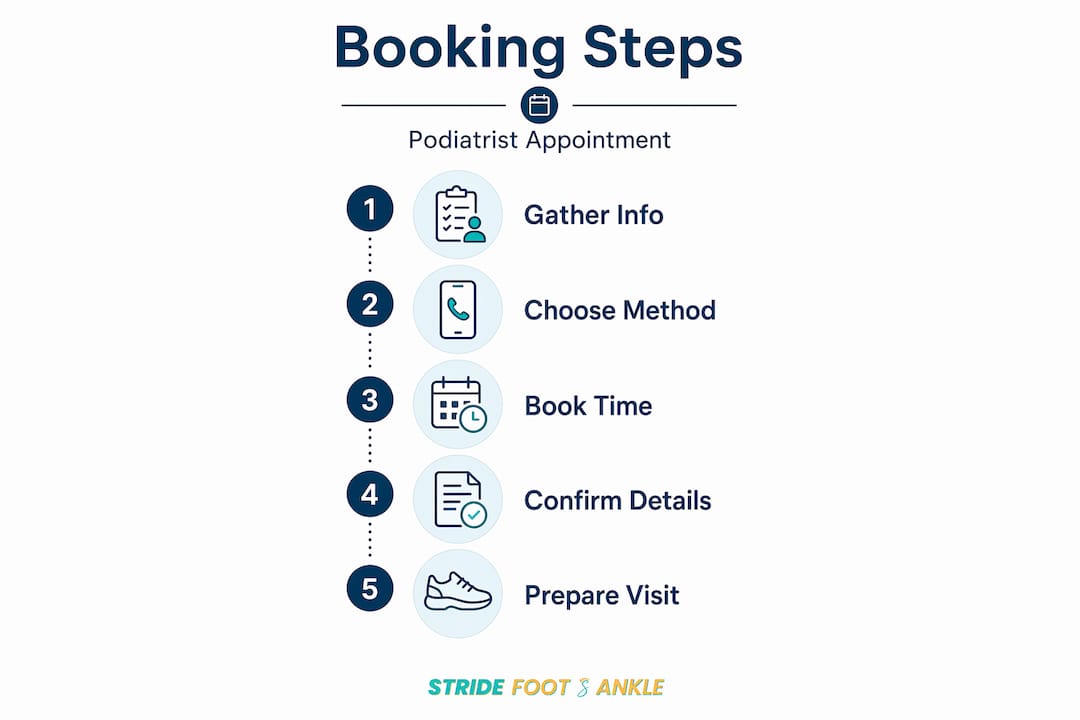
Option 1: Call the office directly
Calling is the most direct method and is strongly recommended for urgent situations. Calling the podiatry office is the fastest and most reliable way to book a same-day appointment. It also gives you the chance to describe your situation in real time so staff can match you to the right appointment type and provider.
Follow these steps when you call:
- State your name and whether you are a new or returning patient.
- Briefly describe your primary concern (for example, “I have severe heel pain that started after a run three days ago and I can barely walk”).
- Ask directly about same-day or next-available openings if your situation is urgent.
- Confirm your insurance and referral status with the receptionist.
- Ask whether any patient intake forms can be completed before arrival, either mailed to you or available online.
- Write down the appointment date, time, provider name, and office address before you hang up.
Option 2: Use an online scheduling portal
Many podiatry practices now offer online booking through their website or a patient portal. Online scheduling is convenient for routine or future appointments when timing is flexible. You can browse available slots without waiting on hold, complete demographic and insurance information at your own pace, and receive an automatic confirmation by email or text.
The limitation is real-time flexibility. Online portals typically do not show same-day openings, and you cannot describe nuanced symptoms the way you can in a live phone conversation. For urgent concerns, always call.
Comparison: phone vs. online scheduling
| Factor | Phone scheduling | Online scheduling |
|---|---|---|
| Best for | Urgent or complex situations | Routine or future bookings |
| Speed | Immediate confirmation | Confirmation by email/text |
| Symptom communication | Full verbal description possible | Limited to intake form fields |
| Same-day availability | Yes, ask directly | Rarely available through portal |
| After-hours booking | No | Yes, 24/7 access |
| Insurance verification | Done in real time | May require follow-up call |
Pro Tip: When booking online, add a note in the “comments” or “additional information” field to describe your symptoms briefly. This helps the clinical team prepare for your visit and may shorten your wait time on the day of your appointment.
What to say to get the most from your booking call
Many patients undersell their symptoms on the phone and end up with a shorter appointment slot than they need. Be specific. Instead of saying “my foot hurts,” say “I have sharp pain in my left heel every morning when I take my first steps, and it has been getting worse over two weeks.” That description immediately tells the scheduler which provider and appointment length fits best.
If you are managing a condition like diabetes and need a diabetic foot care visit, say so clearly. Diabetic foot appointments typically include vascular and neurological assessments, skin inspection, and patient education, and the office needs to schedule appropriately.
Common scheduling mistakes to avoid
Most scheduling problems are avoidable. These are the ones that come up most often, and how to get around them.
- Waiting too long. The most consequential mistake is delaying care when symptoms are already present. Common scheduling errors include delays in seeking care that allow minor issues to become major ones. A three-week-old stress fracture that could have been treated with rest and orthotics can become a surgical issue if ignored.
- Not confirming the appointment. Always confirm 24 to 48 hours before your visit. Offices sometimes have cancellations or schedule changes, and a quick confirmation call or text protects your spot.
- Calling without your information ready. If you call without your insurance card, symptom timeline, or referring physician details, you may need to call back. That delay adds up, especially when you are in pain.
- Skipping the referral step. If your insurance plan requires a primary care referral for specialist visits and you skip this, your appointment may not be covered. Check before you book.
- Canceling without notice. Life happens, but canceling less than 24 hours in advance takes a slot away from someone who needs it. Most practices have a cancellation policy. Follow it, and if you need to reschedule, do so proactively.
“The patients who get the most out of their podiatry visits are the ones who show up having already thought about what they want to address. Preparation is not just about logistics. It is about making your time with the provider count.” This framing applies equally to the scheduling process itself.
For guidance on choosing the right specialist in Las Vegas before you even make the call, Stridefootankle’s article on finding the right podiatrist covers what credentials and experience actually matter.
What to expect after booking and how to prepare
Scheduling the appointment is step one. Getting ready for it is where most of the value gets unlocked.
After you book
Once your appointment is confirmed, expect the following:
- A confirmation email or text with the date, time, provider name, and office location
- A link to patient intake forms or a request to arrive early to complete paperwork
- Possible requests for medical records from your primary care physician or previous specialists
Complete intake forms as soon as you receive them. Filling them out in advance means less time in the waiting room and more time with your provider during the actual visit.
How to organize before your appointment
Patients who come prepared with medical records and a clear list of questions report better appointment outcomes and higher satisfaction. Here is a practical pre-visit checklist:
- Collect any prior imaging (X-rays, MRI scans) related to your foot or ankle concern
- Write down three to five questions you want answered before you leave
- Note your symptom timeline clearly so you can describe it without having to reconstruct it on the spot
- Bring a list of your current medications
- Wear or bring shoes you commonly use for daily activities or exercise. Your podiatrist may want to examine them for wear patterns that reveal gait issues.
- Wear loose, easy-to-remove socks and footwear so the exam can be conducted without awkward maneuvering
Pro Tip: Take a short video on your phone of your gait or any visible foot issue (swelling, skin changes, nail discoloration) before your appointment. Visual documentation, especially at the time symptoms are at their worst, gives your podiatrist information that a snapshot in the exam room cannot always provide.
Plan your visit logistics
Know how long the drive takes, where to park, and whether you will need help walking if your pain is significant. If you have diabetes or a healing wound, plan for a slightly longer visit. Diabetic foot care visits include history review, vascular and neurological assessments, skin inspection, and patient education, which can take more time than a standard new-patient exam.
My honest take on why people wait too long
In my experience writing about foot health and talking with patients and clinicians over the years, the single most consistent pattern I have seen is delay. People wait. They tolerate a limp for weeks. They tell themselves it will resolve on its own. And then they arrive at a podiatry office with a problem that is now twice as complicated to treat.
I think part of the reason is that foot problems do not feel dramatic enough to act on. A sore heel is not a heart attack. People rationalize it. But here is what I have found: the patients who schedule early, who call when symptoms first appear rather than after three months of hoping it improves, are the ones who have faster recoveries and fewer follow-up visits.
I have also noticed that the scheduling anxiety itself is a real barrier for some people. Worrying about insurance, not knowing what to say, feeling like the pain is not “bad enough” to justify a specialist visit. None of those hesitations serve your health. The guidance in this article exists to remove every one of those friction points.
Preventive podiatry visits, especially for anyone over 50, managing diabetes, or physically active, are not a luxury. They are genuinely cost-effective when you consider the alternative. The benefits of early foot care versus waiting until things get serious are not subtle. They are significant. Get in front of the problem while treatment options are still straightforward.
— Ramil
Ready to book your appointment at Stride Foot & Ankle?
At Stridefootankle, scheduling a visit with Dr. Nahad Wassel is designed to be as simple as possible. Whether you are dealing with acute foot pain, managing a chronic condition, or looking for Las Vegas foot pain diagnosis and treatment, the practice offers both phone and online appointment options to match your preference and urgency.

Dr. Wassel’s patient-centered approach means you will not be rushed through your visit. From your first call to your follow-up care, the focus is on understanding your situation and giving you clear, personalized guidance. Stridefootankle provides general foot and ankle care for a full spectrum of conditions, from plantar fasciitis and bunions to diabetic foot management and surgical consultations. If you are ready to stop tolerating foot pain and start getting answers, reach out to Stridefootankle to schedule your appointment today.
FAQ
How do I schedule a podiatrist appointment quickly?
Call the podiatry office directly and ask for the next available or same-day slot. Calling is the fastest method for urgent needs, as same-day availability is typically handled over the phone rather than through online portals.
What should I bring to my first podiatry appointment?
Bring your insurance card, a list of current medications, any prior foot-related imaging, and a written summary of your symptoms. Prepared patients consistently report better outcomes and more productive visits.
Do I need a referral to see a podiatrist?
It depends on your insurance plan. Some plans, particularly HMOs, require a referral from your primary care physician before covering a specialist visit. Check with your insurer before booking to avoid unexpected costs.
When should foot pain prompt an urgent podiatrist visit?
Seek urgent care for foot injuries with significant swelling, wounds that are not healing, signs of infection, or sudden numbness. Patients with diabetes should treat any foot wound or skin change as urgent, since complications can develop rapidly without obvious pain signals.
Can I schedule a podiatry appointment online?
Yes. Many podiatry practices, including Stridefootankle, offer online scheduling through their website. Online booking works well for routine appointments, but calling is recommended if your concern is urgent or requires a detailed description of symptoms.
Recent Comments