

Daily washing, thorough drying, careful inspection, appropriate moisturizing, well-fitting shoes, and periodic podiatric checkups prevent most foot problems. The CDC, IWGDF, and Stride Foot & Ankle all emphasize that consistent daily habits, combined with professional oversight, stop minor issues from becoming serious conditions.
Start these today:
- Inspect your feet every evening, top and bottom, including between the toes
- Wash with warm (not hot) water and mild soap; limit soaks to 3–5 minutes
- Dry thoroughly, especially between the toes, to prevent maceration and fungal growth
- Trim toenails straight across with clean clippers; never round the corners
- Wear moisture-wicking socks and properly fitted shoes every time you leave the house
- Never walk barefoot in public spaces such as pools, locker rooms, or hotel floors
- Contact a podiatrist promptly for any new sore, blister, or wound that does not begin healing quickly
Table of Contents
- How should you choose and care for your shoes?
- When should you see a podiatrist?
- What do people with diabetes need to know about foot care?
- Which home tools and products are actually safe?
- How do you prevent the most common foot conditions?
- Where do these recommendations come from?
- Key Takeaways
- The part most people get wrong about foot care
- Stride Foot & Ankle offers expert preventive care in Las Vegas
- Useful sources
- FAQ
How should you choose and care for your shoes?
Footwear is one of the most effective preventive tools available, and poor fit is a leading cause of blisters, calluses, bunions, and ulcers. IWGDF guidelines specify that the shoe’s internal length should be 1–2 cm longer than your longest toe, and the internal width should match the width of your foot at the metatarsal-phalangeal joints.
Practical fitting rules:
- Shop for shoes later in the afternoon, when feet are at their largest
- Stand in both shoes and check for at least a thumb’s width of space at the toe
- The toe box must be tall enough that toes do not press against the top
- Walk a few steps and check for any hotspot or pinching along the sides
Shoe care habits that prevent problems:
- Rotate between at least two pairs so each pair dries for 24 hours between wears
- Remove insoles after each use to air them out
- Replace shoes when cushioning compresses or the sole shows uneven wear
- Avoid thin-soled slippers as everyday footwear, especially for older adults or anyone with diabetes
What to avoid:
- Tight toe boxes or pointed-toe styles
- Worn-out athletic shoes used past their mileage
- Walking barefoot on hard or rough surfaces at home
Pro Tip: After buying new shoes, do the sock test: wear them with your usual socks for 30 minutes indoors and check for any red marks on your feet before committing to outdoor use.
When should you see a podiatrist?
See a podiatrist immediately for any of these: a new non-healing sore, spreading redness or warmth, new numbness or tingling, wound drainage, or severe pain that prevents normal weight-bearing. For people with diabetes, the CDC recommends contacting your provider the same day you notice a new sore, blister, or cut.
| Risk group | Recommended exam frequency |
|---|---|
| Healthy adults, no risk factors | Annually |
| Diabetes, no neuropathy | Annually |
| Diabetes with neuropathy or deformity | Every 3–6 months, depending on risk level |
| Prior foot ulcer history | Every 1–3 months as advised by healthcare provider |
| Peripheral vascular disease | At least annually, or more often as advised by healthcare provider |
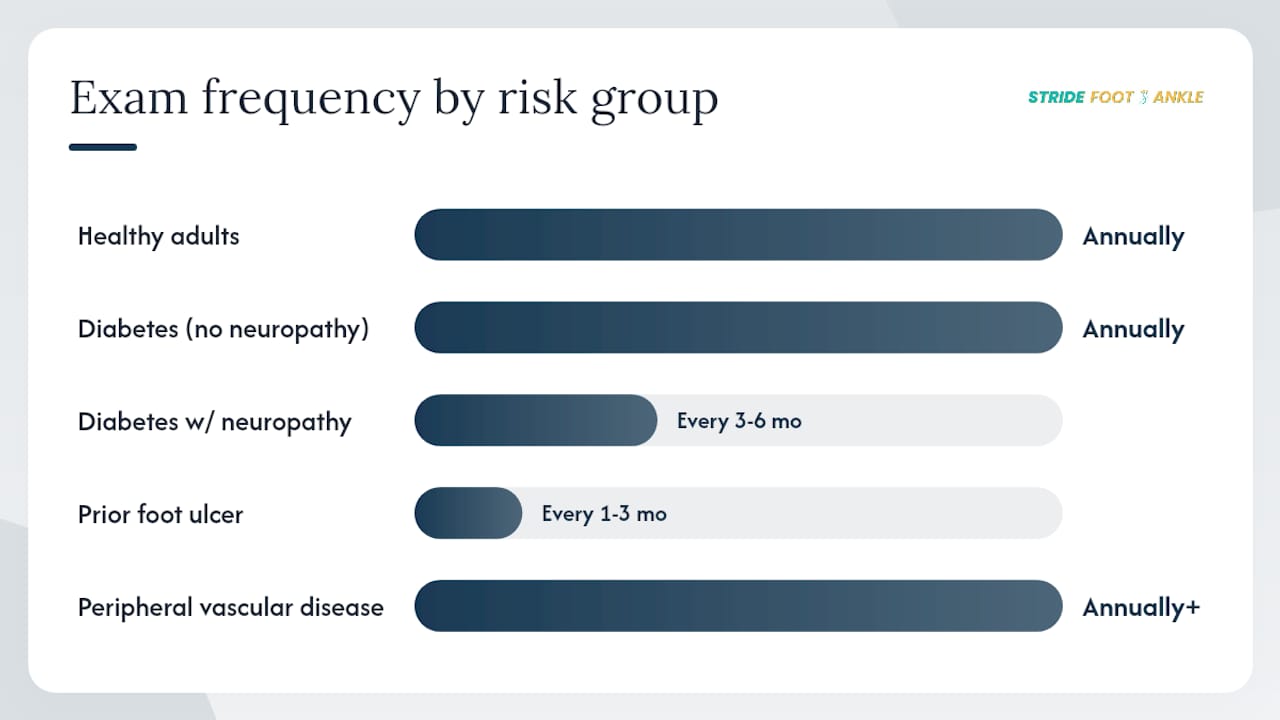
Sources: CDC; IWGDF Guidelines 2023
When a red flag appears: stop bearing weight on the affected foot, gently clean and loosely cover the area, and seek care that day. Do not attempt to drain blisters or cut away tissue at home.
Podiatrists perform gait assessments, monofilament sensory testing, vascular checks, and imaging, and they can prescribe custom orthotics or therapeutic footwear. These diagnostic steps catch structural problems long before they require surgery. Learn more about why regular foot exams matter for your long-term health.
What do people with diabetes need to know about foot care?
For people with diabetes, daily self-inspection combined with structured education and regular podiatric surveillance is non-negotiable. Nerve damage reduces sensation, so injuries go unnoticed; reduced circulation slows healing. The American Diabetes Association and IWGDF both recommend demonstrated self-care skills, not just verbal instruction.
IWGDF risk-based follow-up schedule:
| IWGDF risk category | Description | Follow-up frequency |
|---|---|---|
| Very low | No neuropathy, no PVD | Annually |
| Low (1) | Neuropathy or PVD, no deformity | Every 6–12 months |
| Moderate (2) | Neuropathy + PVD or deformity | Every 3–6 months |
| High (3) | Prior ulcer or amputation | Every 1–3 months |
Source: IWGDF Guidelines 2023
Key rules for diabetes-related foot care:
- Never walk barefoot, even indoors
- Apply emollients to heels and soles only; keep them away from between the toes
- Trim nails straight across; if vision or reach is limited, have a podiatrist trim them every 8–12 weeks
- Wear therapeutic footwear if you have deformity or a history of ulcers; Medicare covers a diabetic shoe benefit for qualifying patients — see Medicare diabetic shoe coverage for eligibility details
- For moderate or high-risk patients, daily skin temperature monitoring can detect early inflammation before a visible wound develops; an asymmetrical temperature rise of more than 4°F between the same site on both feet warrants reduced activity and same-day contact with your provider
Patients at risk of ulcers will find detailed prevention guidance at Stridefootankle’s ulcer prevention guide.
Which home tools and products are actually safe?
Safe home foot care uses clean nail clippers, a pumice stone on wet skin, and urea-based creams for dry heels. Razors, chemical corn removers, and cutting calluses with any blade are not safe at home and cause more harm than they prevent, particularly for anyone with diabetes or neuropathy.
Do:
- Use clean, sharp nail clippers; trim after bathing when nails are softer
- Apply a urea 10–40% cream to very dry or cracked heels; use pumice weekly on wet skin to reduce callus buildup gently
- Dust feet with nonmedicated foot powder if you sweat heavily
- Wear moisture-wicking socks and change them daily
Don’t:
- Use razor blades, graters, or chemical corn-removal pads
- Cut into the sides of nails or round the corners
- Apply lotion between the toes
- Ignore a callus that becomes painful or develops a dark spot underneath
Pro Tip: If a callus or corn does not reduce after two weeks of consistent pumice use and proper footwear, stop home treatment and see a podiatrist. Persistent calluses often signal an underlying pressure or alignment issue that no cream will fix.
For salon pedicures, use only state-licensed salons that sterilize instruments between clients. Avoid fish pedicures entirely; the FDA has flagged them as a potential infection risk. Banner Health notes that people with neuropathy or diabetes should have professional nail care rather than attempting it at home.
How do you prevent the most common foot conditions?
Ingrown toenails
Trim straight across and never shorter than the edge of the toe. Tight shoes that compress the nail are the most common cause. See a podiatrist if the nail edge is already embedded, the skin is red and warm, or drainage appears.
Fungal nail and athlete’s foot infections
Dry between the toes after every wash, rotate shoes to allow full drying, and wear sandals in shared wet areas. Over-the-counter antifungal powders or sprays help when used consistently. If discoloration, thickening, or crumbling of the nail persists beyond four weeks of treatment, a podiatrist can confirm the diagnosis and prescribe a more effective option.
Calluses and corns
Calluses form where pressure is chronic. Addressing the shoe fit usually reduces recurrence faster than any topical product. A pumice stone on wet skin once a week keeps buildup manageable. See a podiatrist if a callus becomes painful, bleeds, or develops a dark center.
Plantar fasciitis
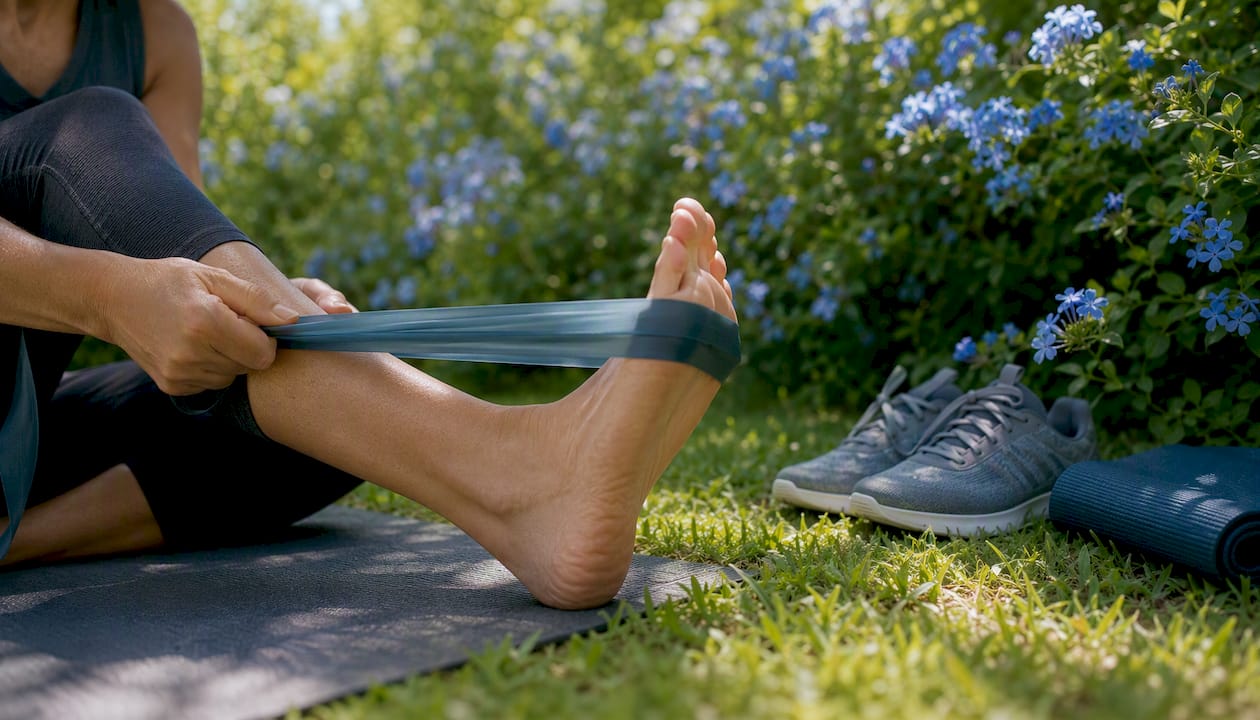
Supportive footwear with adequate arch support and a cushioned heel, combined with daily calf and plantar fascia stretches, prevents most recurrences. Avoid going barefoot first thing in the morning. If heel pain persists beyond two weeks of rest, stretching, and supportive shoes, imaging may be needed to rule out a stress fracture or structural issue.
Blisters
Moisture-wicking socks, properly fitted shoes, and a thin layer of petroleum jelly on high-friction areas prevent most blisters. Never pop a blister intentionally; if it breaks on its own, clean it, cover it with a sterile bandage, and monitor for signs of infection.
Where do these recommendations come from?
These guidelines reflect CDC clinical guidance, IWGDF 2023 prevention guidelines, and leading podiatric practice standards. The core sources are:
- CDC — diabetes foot health and exam frequency recommendations
- American Diabetes Association — daily self-care steps for people with diabetes
- Banner Health — safe home care practices and when to seek professional help
This article is educational and does not substitute for personalized medical advice. Individual risk factors vary; consult a podiatrist for guidance tailored to your specific situation.
Key Takeaways
Daily inspection, proper washing and drying, well-fitting shoes, and risk-appropriate podiatric follow-up are the core preventive foot care habits that prevent most serious foot conditions.
| Point | Details |
|---|---|
| Daily inspect and dry | Check every surface of both feet daily; dry thoroughly between toes to prevent fungal infection. |
| Footwear fit matters | Shoe internal length should be 1–2 cm longer than your longest toe; replace worn-out cushioning promptly. |
| Diabetes requires structured care | Follow IWGDF risk-based schedules: annually for very low risk, every 3–6 months for moderate risk, every 1–3 months for prior ulcer or high risk. |
| Know your red flags | Seek same-day care for non-healing sores, spreading redness, new numbness, or drainage. |
| Stridefootankle for in-person care | Stride Foot & Ankle in Las Vegas provides preventive exams, diabetic foot care, and therapeutic footwear assessment. |
The part most people get wrong about foot care
Most people treat their feet reactively. Pain appears, they rest for a few days, it fades, and they move on. The problem is that the conditions most likely to cause serious harm, such as diabetic ulcers, fungal nail infections, and plantar fasciitis, all develop silently over weeks or months before they hurt.
What I see clinically is that patients who do well long-term are not the ones with the most complicated treatment plans. They are the ones who spend five minutes a day looking at their feet and who show up before a small crack becomes an infected wound. The IWGDF’s emphasis on demonstrated self-care skills reflects exactly this: knowing the steps is not enough. You have to actually do them, consistently, and know when to stop managing something at home.
Footwear is the other underestimated variable. Patients will spend months in physical therapy for plantar fasciitis while continuing to wear the same worn-out shoes that caused it. Fixing the shoe first is almost always faster and cheaper than any other intervention.
If you are in a higher-risk group, whether due to diabetes, peripheral vascular disease, or a history of ulcers, the frequency of professional oversight matters as much as the daily routine. Prevention is not a one-time visit. It is a scheduled, ongoing relationship with someone who can catch what you cannot see yourself.
Stride Foot & Ankle offers expert preventive care in Las Vegas
For Las Vegas patients who want professional oversight alongside their daily routine, Stride Foot & Ankle provides the full spectrum of preventive podiatric care under one roof.

Dr. Nahad Wassel, a board-certified foot and ankle surgeon, offers:
- Diabetic foot care and therapeutic footwear assessment — personalized to your IWGDF risk category, with referrals for conservative care that relieves pain before surgical intervention becomes necessary
Whether you are managing diabetes, recovering from a prior ulcer, or simply want a baseline exam, Stride Foot & Ankle delivers patient-centered care in a welcoming Las Vegas clinic. Schedule your appointment today and get a clear picture of where your foot health stands.
Useful sources
The following primary sources informed this article’s clinical recommendations:
- Promoting Foot Health | Diabetes | CDC
- IWGDF Practical Guidelines 2023
- IWGDF Guidelines 2023
- Podiatrist | Cleveland Clinic
- Diabetes and your feet | American Diabetes Association
- Daily Foot Care Routine 2026 | DPM
- Daily Foot Care Routine: Podiatrist-Approved – Achilles Foot and Ankle Center
- DIY foot care or professional help? – Banner Health
- When to See a Podiatrist | Florida Foot Specialist
FAQ
How often should healthy adults see a podiatrist?
Healthy adults with no risk factors benefit from a professional foot exam annually. Those with diabetes, neuropathy, or a history of ulcers need more frequent visits: annually for low risk, every 3–6 months for moderate risk, and every 1–3 months for prior ulcer or high-risk categories according to IWGDF guidelines.
Should you moisturize between your toes?
No. Apply moisturizer to heels and soles only. Applying cream between the toes traps moisture and creates conditions where fungal infections thrive.
How do you trim toenails correctly to prevent ingrown nails?
Trim straight across with clean clippers, leaving the nail edge level with the tip of the toe. Never round the corners or cut the nail shorter than the skin edge on either side.
What are the warning signs that require same-day podiatric care?
A new sore or wound that does not begin healing quickly, spreading redness or warmth, new numbness, wound drainage, or inability to bear weight all require same-day evaluation, especially for people with diabetes.
Does Medicare cover diabetic foot care and therapeutic shoes?
Medicare covers certain podiatric services and a therapeutic shoe benefit for qualifying patients with diabetes. Coverage details and eligibility requirements are explained at Medicare podiatry benefits.
Recommended
- How to prevent foot injuries: expert strategies for healthy feet – Stride Foot & Ankle – Dr. Nahad Wassel
- How to Prevent Foot Ulcers: a Guide for At-Risk Patients – Stride Foot & Ankle – Dr. Nahad Wassel
- General Foot & Ankle Care – Stride Foot & Ankle
- Step-by-step foot care routines for pain relief – Stride Foot & Ankle – Dr. Nahad Wassel
Recent Comments