

TL;DR:
- Pain from surgical hardware may arise from tissue irritation, nerve sensitization, immune reactions, or post-traumatic arthritis, requiring precise diagnosis. Conservative treatments like physical therapy and medications are first-line options, but hardware removal is considered if symptoms persist or complications occur. Accurate evaluation by specialists before surgery improves outcomes, since mechanical and neurological causes often overlap and influence treatment success.
Painful screws and plates from previous surgeries are defined as persistent discomfort caused by orthopedic hardware, including titanium or stainless steel implants, that irritates surrounding tissue, compresses nerves, or triggers an immune response after the original fracture or joint repair has healed. Not every implanted screw or plate causes pain. Many patients live symptom-free for years. But when surgical hardware pain does develop, it can range from a dull ache near the implant site to sharp, activity-limiting discomfort that affects daily function. Understanding whether your pain comes from mechanical irritation, nerve sensitization, or metal hypersensitivity is the first step toward getting the right treatment.
What causes painful screws and plates after surgery?
Pain from surgical hardware originates from four distinct biological and mechanical sources: direct tissue irritation from the implant, nerve damage or sensitization, immune reactions to metal ions, and post-traumatic arthritis developing around the hardware site. Identifying which source drives your symptoms determines the entire treatment path.
Mechanical irritation and hardware prominence
When a screw head or plate edge sits close to the skin surface or presses against a tendon, it creates friction with every movement. This is especially common in the foot and ankle, where soft tissue coverage is thin. Hardware complications after ankle ORIF surgery cause pain in about 31% of patients, with symptoms including localized tenderness, swelling, and reduced function. That figure means nearly one in three people who undergo open reduction internal fixation of the ankle will experience some form of hardware-related discomfort, making this far from a rare edge case.
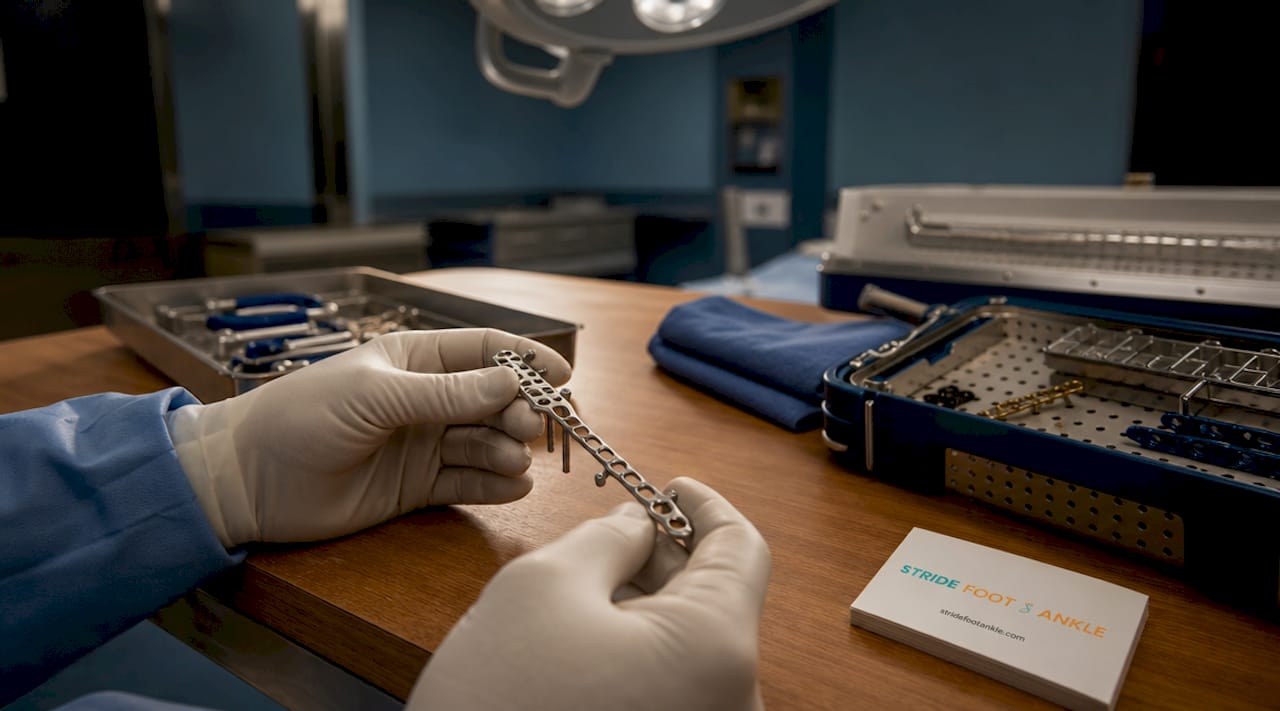
Hardware loosening is a separate but related problem. A screw that has lost its grip in the bone creates micro-movement at the implant-bone interface, generating inflammation and pain with weight-bearing activity. Patients often describe this as a deep, grinding sensation that worsens after prolonged standing or walking.
Nerve damage and sensitization
Nerve sensitization causes ongoing pain after hardware implantation even when imaging looks completely normal. The nervous system can remain hypersensitive long after the structural problem has resolved, a phenomenon called central sensitization. This explains why some patients report burning, shooting, or electric-shock sensations near the implant site despite X-rays showing perfectly positioned hardware with no loosening.
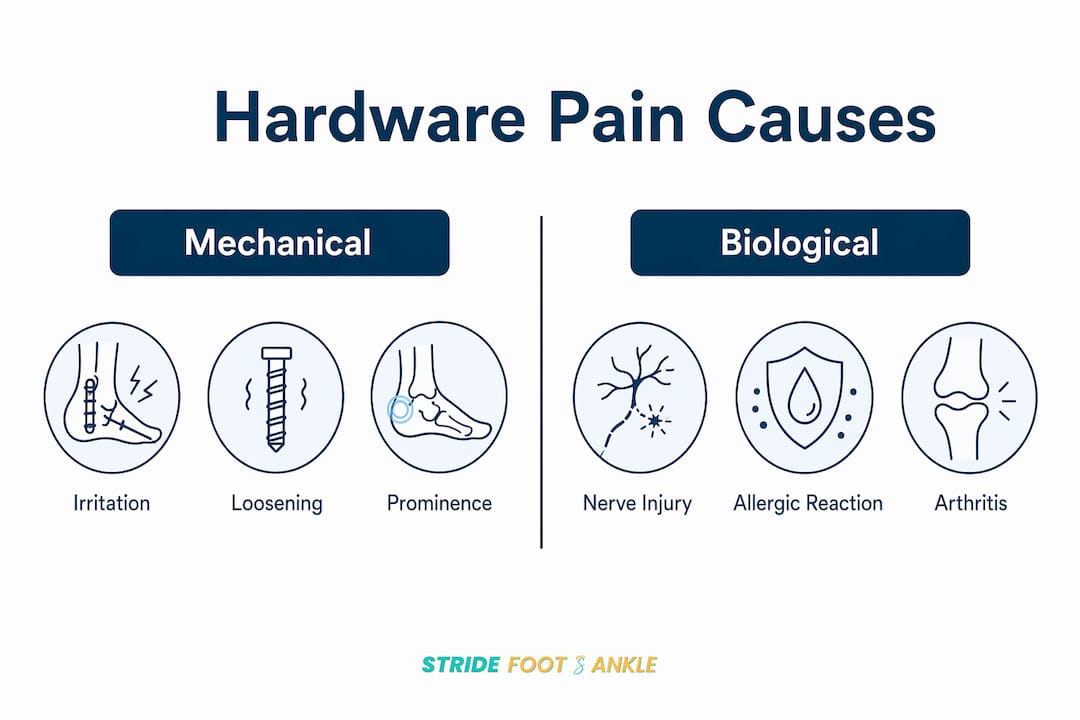
Nerve damage during the original surgery, whether from retraction, direct injury, or scar tissue formation, can also create a neuroma or chronic neuropathic pain pattern. This type of pain does not respond well to standard anti-inflammatory medications and requires a targeted neurological approach.
Metal hypersensitivity and immune reactions
Chronic hardware pain can originate from immune hypersensitivity to metal ions released by the implant over time. Titanium and cobalt-chromium alloys are generally well tolerated, but a subset of patients develops a localized or systemic inflammatory response. The key diagnostic indicator is inflammation without bacterial infection. Symptoms often include persistent swelling, skin changes near the implant, and pain that worsens progressively rather than improving after the initial healing period.
Post-traumatic arthritis
Hardware placed across or near a joint can accelerate cartilage breakdown, particularly if the original injury involved joint surface damage. Post-traumatic arthritis generates pain that mimics mechanical hardware irritation but originates in the joint itself. Distinguishing between the two requires targeted imaging and, in some cases, a diagnostic injection.
| Pain cause | Common symptoms | Diagnostic clue |
|---|---|---|
| Mechanical irritation | Localized tenderness, swelling | Palpable hardware prominence |
| Nerve sensitization | Burning, shooting pain | Normal X-ray, abnormal sensation |
| Metal hypersensitivity | Progressive swelling, skin changes | Inflammation without infection |
| Post-traumatic arthritis | Joint stiffness, activity pain | Joint space narrowing on imaging |
Pro Tip: If your pain started months or years after surgery rather than immediately post-op, metal hypersensitivity or post-traumatic arthritis is more likely than simple mechanical irritation. Timing is a critical diagnostic clue.
How is pain from surgical screws and plates diagnosed?
Diagnosing surgical hardware pain requires a layered evaluation: physical examination first, imaging second, and specialized testing when the cause remains unclear. A single X-ray is rarely sufficient to explain persistent discomfort.
Imaging and its limitations
X-rays are the standard first step and can reveal hardware loosening, fracture around the implant, or obvious malpositioning. However, X-rays may appear normal despite pain being caused by soft tissue irritation, nerve sensitization, or metal hypersensitivity. Mechanical integrity on imaging does not guarantee a pain-free outcome. This is one of the most important points to understand: a “clean” X-ray does not mean your pain is imaginary or untreatable.
MRI provides better visualization of soft tissue, including tendons, nerves, and fluid collections around the hardware. CT scanning offers detailed bone assessment and is particularly useful when evaluating hardware loosening or stress fractures near screw holes. The role of imaging in podiatry extends well beyond simple fracture assessment, and choosing the right modality matters significantly.
Specialized diagnostic tests
When imaging is inconclusive, clinicians use additional tools to isolate the pain source:
- Diagnostic nerve blocks: A targeted injection of local anesthetic near a suspected nerve can confirm whether that nerve is driving the pain. If the block provides temporary relief, nerve involvement is confirmed.
- Metal allergy patch testing: Dermatology-based patch testing for nickel, cobalt, and chromium can identify metal hypersensitivity before attributing pain to other causes.
- Diagnostic joint injections: Corticosteroid or anesthetic injections into the adjacent joint distinguish hardware pain from post-traumatic arthritis.
- Laboratory markers: Elevated inflammatory markers such as C-reactive protein or erythrocyte sedimentation rate suggest infection or immune reaction rather than simple mechanical irritation.
Pro Tip: Bring a written timeline of your symptoms to your evaluation appointment. Note when pain started relative to your original surgery, what activities worsen it, and whether it is constant or intermittent. This information dramatically shortens the diagnostic process.
The most important diagnostic principle is differential diagnosis. Infection, mechanical failure, nerve injury, and immune reaction can all produce similar symptoms but require completely different treatments. Treating a metal hypersensitivity reaction with antibiotics, for example, will produce no improvement and delay appropriate care.
What non-surgical treatments are available for hardware pain?
Non-surgical management is the first-line approach for hardware discomfort, featuring pain medications, physical therapy, and activity modification. Surgery is reserved for cases that do not respond to conservative care or where hardware poses a safety risk. Most patients benefit from working through these steps systematically before considering removal.
Over-the-counter analgesics and anti-inflammatories: Nonsteroidal anti-inflammatory drugs such as ibuprofen or naproxen reduce inflammation around the implant and provide short-term pain relief. These are appropriate for mild to moderate mechanical irritation but are less effective for neuropathic or hypersensitivity-driven pain.
Prescription medications for nerve pain: When nerve sensitization is the primary driver, medications such as gabapentin or duloxetine target the neurological component directly. These require a physician’s prescription and ongoing monitoring but can significantly reduce burning or shooting pain that does not respond to standard anti-inflammatories.
Custom physical therapy: A physical therapist experienced in post-surgical rehabilitation can design a program that reduces mechanical stress on the hardware while rebuilding strength and mobility. Physical therapy for foot pain is particularly effective when hardware irritation is aggravated by muscle imbalances or abnormal gait patterns that developed during the original recovery period.
Activity modification and orthotic support: Reducing high-impact activities temporarily and using custom orthotics or supportive footwear can offload pressure from prominent hardware. In the foot and ankle specifically, a well-fitted orthotic can redistribute weight away from the implant site and reduce daily pain levels substantially.
Nerve desensitization techniques: For patients with confirmed nerve sensitization, graded desensitization programs use tactile stimulation and progressive loading to retrain the nervous system. This approach is evidence-based for chronic post-surgical pain and works best when started under the guidance of a pain specialist or trained physical therapist.
Corticosteroid injections: A targeted injection near the hardware can reduce localized inflammation and provide a diagnostic window. If the injection produces significant relief, it confirms inflammation as the primary driver and may justify repeating the treatment before pursuing surgery.
Pro Tip: Conservative treatment for hardware pain typically requires at least 6 to 12 weeks of consistent effort before outcomes can be fairly assessed. Stopping physical therapy after two weeks because pain has not fully resolved is one of the most common reasons patients move to surgery prematurely.
The limitation of conservative care is straightforward: it manages symptoms without removing the source. If the hardware is prominently positioned, infected, or causing ongoing nerve compression, no amount of physical therapy will resolve the underlying problem. That is when surgical evaluation becomes appropriate.
When and how is surgical removal of screws and plates considered?
Hardware removal surgery is indicated when conservative treatment fails, when infection is present, or when the implant itself is causing structural damage. The decision requires a thorough pre-surgical evaluation because symptom relief via hardware removal varies. Localized pain that clearly originates from the hardware improves more reliably than generalized or widespread pain.
Criteria that warrant removal
- Persistent pain that has not responded to at least 3 to 6 months of conservative treatment
- Confirmed hardware loosening or implant failure on imaging
- Active infection around the implant, since infections on metal surfaces are difficult to resolve with antibiotics alone
- Confirmed metal hypersensitivity with progressive symptoms
- Hardware prominence causing skin breakdown or tendon impingement
- Hardware interfering with a planned revision or reconstructive procedure
What the surgical procedure involves
Hardware removal surgery uses the same incisions as the original operation and is performed under general anesthesia. The procedure is typically faster and less invasive than the original surgery because the bone has already healed and the hardware is being extracted rather than placed. Surgeons use specialized extraction tools to remove screws, plates, rods, or pins without damaging the surrounding bone.
Recovery and risks
Recovery may take up to 6 weeks with an increased fracture risk due to temporary bone weakening after removal. The screw holes left in the bone create stress risers, points where the bone is structurally weaker, until remodeling fills them in. Patients are typically advised to avoid high-impact activity and may require a protective boot or brace during this window.
| Factor | Hardware removal | Conservative management |
|---|---|---|
| Best suited for | Localized hardware pain, infection, loosening | Mild to moderate pain, nerve sensitization |
| Recovery time | Up to 6 weeks with activity restriction | Ongoing, no surgical downtime |
| Pain relief likelihood | Higher for hardware-specific pain | Variable, symptom management only |
| Key risk | Temporary fracture susceptibility | Pain persistence without source removal |
| Requires surgery | Yes | No |
Pre-surgical consultation is essential to set realistic expectations. Patients who expect complete pain resolution after removal sometimes experience partial improvement or, in cases where nerve sensitization has become the dominant driver, no change at all. A qualified surgeon will discuss these probabilities honestly before proceeding.
Key takeaways
Surgical hardware pain requires accurate diagnosis before treatment, because mechanical, neurological, and immune causes each demand a different approach.
| Point | Details |
|---|---|
| Identify the pain source first | Mechanical irritation, nerve sensitization, and metal hypersensitivity require different treatments. |
| Conservative care comes first | Physical therapy, medications, and activity modification should be tried for 6 to 12 weeks before surgery. |
| Normal imaging does not rule out pain | X-rays can appear normal while nerve sensitization or hypersensitivity drives significant discomfort. |
| Hardware removal has real risks | Bone weakening after removal requires up to 6 weeks of protective activity restriction. |
| Localized pain responds best to removal | Generalized or widespread pain is less likely to improve after hardware extraction. |
What I’ve learned about hardware pain that most patients aren’t told
Patients come to me frustrated after being told their X-rays look fine. They have been living with aching, burning, or sharp pain near their implant for months, sometimes years, and they feel dismissed. The imaging-pain disconnect is real, and it is one of the most underappreciated issues in post-surgical care.
What I have seen consistently is that mechanical and biological causes of hardware pain almost always overlap. A plate that is mechanically sound can still trigger a low-grade immune response. A nerve that was stretched during the original surgery can remain sensitized long after the bone has healed perfectly. Treating one factor without evaluating the other leads to incomplete relief, and that is exactly what happens when patients cycle through treatments without a clear diagnostic framework.
The other misconception I encounter regularly is that hardware removal is a guaranteed fix. It is not. Removal is the right answer for specific, well-defined indications: confirmed loosening, infection, prominent hardware causing tissue damage, or verified hypersensitivity. When the pain is primarily neurological, removing the hardware does not retrain the nervous system. Those patients need a multidisciplinary approach that includes pain specialists alongside their surgeon.
My honest advice is this: push for a thorough evaluation before accepting either “just live with it” or “let’s take it out.” There is a meaningful middle ground of conservative treatment, targeted diagnostics, and specialist collaboration that most patients never fully explore. Choosing a foot and ankle specialist with experience in post-surgical complications, rather than a general practitioner, makes a measurable difference in how quickly you get to the right answer.
— Ramil
Get expert care for hardware-related foot and ankle pain
If you are dealing with persistent discomfort from screws or plates placed during a previous foot or ankle surgery, you do not have to manage it alone.
Stridefootankle, led by Dr. Nahad Wassel in Las Vegas, specializes in diagnosing and treating foot and ankle hardware pain with a patient-centered approach that starts with a thorough evaluation before recommending any procedure. Whether your symptoms point toward conservative management or surgical removal, Dr. Wassel uses precise diagnostic tools and personalized treatment planning to give you a clear path forward. You can also learn more about ankle surgery types and recovery to understand your options before your first appointment. Schedule a consultation today and start striding confidently again.
FAQ
What are the most common symptoms of painful surgical hardware?
The most common symptoms include localized tenderness directly over the implant, swelling, and pain that worsens with activity. Some patients also experience burning or shooting sensations if nerve sensitization is involved.
Can screws and plates cause pain years after surgery?
Yes. Hardware pain can develop months or years after the original procedure due to progressive metal hypersensitivity, post-traumatic arthritis, or hardware loosening over time. A delayed onset of symptoms does not mean the implant was placed incorrectly.
Is hardware removal always necessary for painful screws and plates?
No. Non-surgical treatments including physical therapy, anti-inflammatory medications, and activity modification resolve symptoms in many patients. Removal is considered when conservative care fails or when a specific structural or infectious cause is confirmed.
How long does recovery take after hardware removal surgery?
Recovery typically takes up to 6 weeks, during which patients must protect the bone from fracture while the screw holes remodel. High-impact activity is restricted during this period, and a protective boot or brace is often recommended.
Will removing the hardware guarantee pain relief?
Relief is more likely when pain is clearly localized to the hardware site. Patients with generalized pain or significant nerve sensitization may experience only partial improvement, which is why thorough pre-surgical evaluation and realistic expectations are critical before proceeding.
Recommended
- Post-Surgery Foot Care Steps for Safe Recovery – Stride Foot & Ankle – Dr. Nahad Wassel
- Why Do Kids Need Ankle Surgery? A Parent’s Guide – Stride Foot & Ankle – Dr. Nahad Wassel
- Foot pain podiatry: Las Vegas diagnosis and treatment guide – Stride Foot & Ankle – Dr. Nahad Wassel
- How to prepare for foot surgery: steps, recovery, and expert tips – Stride Foot & Ankle – Dr. Nahad Wassel
Recent Comments