

TL;DR:
- Foot pain is common among Las Vegas residents due to extended hours on hard surfaces, often leading to persistent discomfort. A structured routine combining supportive footwear, gentle stretching, strengthening exercises, and professional care can provide lasting relief and improve foot health, especially for those with diabetes or chronic conditions. Consistency and early intervention are key to preventing complications, with expert podiatric guidance available for complex or stubborn cases.
Foot pain is one of the most frustrating problems you can live with, and in a city like Las Vegas, where residents spend long hours on hard casino floors, concrete sidewalks, and sun-baked pavement, the strain on your feet is relentless. You may have tried soaking your feet, buying new shoes, or following a random online stretch routine, only to find the pain returns within days. The truth is, most self-care advice circulating online is incomplete, and following the wrong steps can actually make things worse. This guide brings together clinical evidence and practical podiatric wisdom to give you a structured, step-by-step foot care routine that actually delivers lasting pain relief and better foot health.
Table of Contents
- What you need for a safe and effective foot care routine
- Step-by-step daily routines for pain relief and healthy feet
- Preventing common mistakes and staying safe
- Verification: Tracking results and knowing when to seek help
- What Las Vegas patients overlook about foot care routines
- Expert podiatry care for lasting results in Las Vegas
- Frequently asked questions
Key Takeaways
| Point | Details |
|---|---|
| Preparation matters | Using the right tools and safety measures ensures routines help, not harm. |
| Strengthening wins over stretching | Targeted strengthening exercises outperform stretching alone for pain and function. |
| Avoid common mistakes | Over-exfoliation, improper moisturization, and unsupervised diabetic care cause complications. |
| Track progress and seek help | Monitor improvement; consult professionals early for persistent or worsening symptoms. |
| Las Vegas-specific risks | Local activity levels and environmental factors require foot care routines tailored to city living. |
What you need for a safe and effective foot care routine
Before you start any routine, having the right tools and knowing the right boundaries makes the difference between progress and setbacks. Think of this as your foundation. Without it, even the best exercises will fall short.
Essential tools and footwear
Here is what you need on hand before starting your routine:
- Pumice stone or foot file (medium grit, not aggressive): For gentle callus management only
- Fragrance-free moisturizing cream: Look for urea-based formulas (10 to 25% urea), which hydrate without clogging pores
- Nail clippers with a straight edge: Curved blades increase the risk of ingrown toenails
- Supportive footwear: Shoes with adequate arch support, a wide toe box, and a cushioned heel; avoid flat-soled shoes and flip-flops for daily wear
- Resistance bands: Lightweight and versatile for strengthening toe and ankle muscles
- Emery board or nail file: For smoothing rough nail edges after trimming
- Clean, dry towel: Specifically for drying between your toes after washing
Supporting footwear is not just a convenience. Plantar fasciitis guidelines consistently recommend supportive footwear and gradual activity increases to address biomechanics-related injuries, including the stretching of the plantar fascia (the thick band of tissue along the bottom of your foot) and strengthening of toe flexors and ankle muscles. Choosing the right shoes is, in many ways, the first therapeutic step you take.
Key safety considerations before you begin
| Consideration | General population | Diabetic patients |
|---|---|---|
| Exfoliation | Gentle, once or twice weekly | Avoid aggressive scrubbing; consult a podiatrist |
| Moisturizing | Daily, on damp skin, avoiding between toes | Daily inspection included; avoid moisture between toes |
| Callus/corn treatment | Gentle pumice use allowed | Self-treating calluses risks serious infection; always see a provider |
| Nail trimming | Straight across, not too short | Extra caution; consider professional trimming |
| Footwear inspection | Check for fit and support | Inspect inside of shoes daily for debris or rough seams |
For diabetic patients, the stakes of DIY foot care are much higher. Reduced circulation (peripheral vascular disease) and nerve damage (peripheral neuropathy) mean minor skin breaks or infections can escalate quickly. This is why screening for chronic conditions before starting any home routine is so important.
Pro Tip: Always moisturize your feet while the skin is still slightly damp after washing. This locks in moisture more effectively than applying cream to completely dry skin.
Good general foot care essentials also include washing your feet daily with mild soap and lukewarm (never hot) water, especially important in Las Vegas summers where heat accelerates bacterial and fungal growth.
Step-by-step daily routines for pain relief and healthy feet
Once your tools and special needs are ready, here’s how to create a routine that targets both pain and proactive foot health.

Morning routine (10 to 15 minutes)
Your feet have been resting for hours and need gentle activation before you put full body weight on them.
- Calf and Achilles stretch (2 to 3 minutes): Before getting out of bed, flex your foot upward, pulling toes toward your shin. Hold 30 seconds, repeat three times per foot. This targets the plantar fascia and reduces that sharp “first step” pain common with plantar fasciitis.
- Toe curls with a towel (2 minutes): Place a small towel flat on the floor and use your toes to scrunch and drag it toward you. This activates the intrinsic foot muscles that support your arch.
- Ankle circles (1 minute): Rotate each ankle clockwise and counterclockwise 10 times. This improves circulation and prepares your joints for movement.
- Footwear check: Before putting on shoes, run your hand inside to check for debris, rough seams, or worn areas that might cause friction.
- Supportive footwear on immediately: Avoid walking barefoot on hard tile or concrete floors, especially if you have heel pain or arch issues.
Evening routine (15 to 20 minutes)
The evening is when you repair and recover from the day’s demands.
- Warm foot soak (5 minutes, optional): Use lukewarm water only. Add Epsom salt for minor muscle soreness. Do not soak if you have open wounds, diabetes-related skin changes, or active infections.
- Gentle exfoliation (2 minutes, two to three times per week): Use a pumice stone on callused areas only. Light circular motions. Never force or scrape aggressively.
- Drying and inspection (2 minutes): Pat feet dry completely, paying careful attention between the toes. Check for redness, swelling, blisters, or skin changes.
- Moisturizing (2 minutes): Apply urea-based cream to the entire foot except between the toes. Massage in gently, which also improves local circulation.
- Strengthening exercises (5 to 8 minutes): These are the exercises that physical therapy guidelines consistently prioritize for improving foot function. Strengthening outperforms stretching alone in long-term outcomes.
Specific evening strengthening exercises include:
- Marble pickups: Use toes to pick up marbles from the floor and drop them into a cup. Targets toe flexor strength.
- Heel raises: Standing on both feet, rise onto your toes and slowly lower. Progress to single-leg as you get stronger.
- Resistance band toe extensions: Loop a band around your toes and extend the foot against gentle resistance.
Pro Tip: Track your morning heel pain on a scale of 1 to 10 each day for two weeks. If you don’t see at least a 2-point reduction, it’s time to adjust your routine or consult a podiatrist.
Comparing routines: General foot pain vs. plantar fasciitis
Research shows that stretching reduces pain and disability, but strengthening takes outcomes further by improving functional ability. Here’s how the two common scenarios compare:
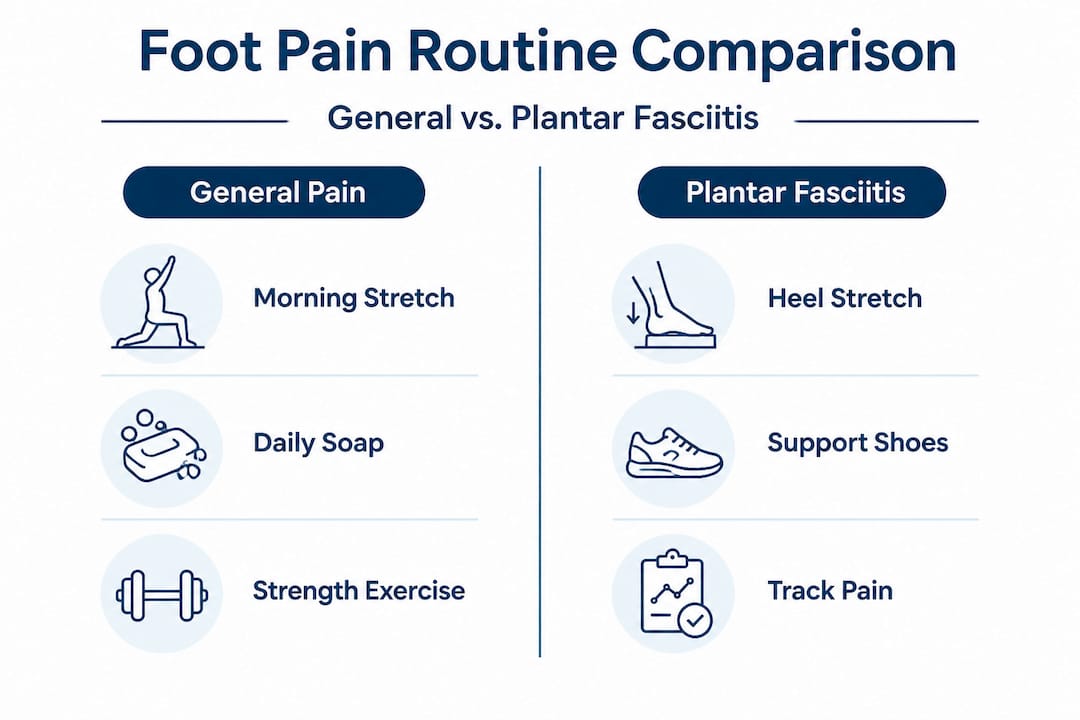
| Routine element | General foot pain | Plantar fasciitis specifically |
|---|---|---|
| Morning stretch | Calf and Achilles | Plantar fascia-specific stretch, first thing before standing |
| Strengthening priority | Balanced ankle and toe exercises | Strong emphasis on toe flexors and calf eccentrics |
| Footwear | Supportive daily wear | Add heel cup inserts or custom orthotics |
| Activity progression | Gradual increase as pain decreases | Strict pacing; avoid sudden mileage increases |
| Rest days | 1 to 2 per week | Essential; avoid overloading the fascia during flares |
| Professional guidance | Recommended for persistent pain | Recommended early if conservative care fails |
For those managing arthritis-related discomfort, adjust the routine by reducing impact and focusing on range-of-motion exercises instead of high-resistance strengthening.
As a benchmark to keep in mind: plantar fasciitis accounts for 15% of foot pain and is most common in adults between 40 and 60 years old. The encouraging news is that conservative treatments are effective in the majority of cases before advanced interventions like injections or surgery become necessary.
Preventing common mistakes and staying safe
Even with the best routines, mistakes can happen. Here’s how to avoid the most frequent ones and keep your feet healthy long-term.
The most common pitfalls
- Over-exfoliating: Many people believe more is better when it comes to removing rough skin. In reality, aggressive exfoliation thickens calluses over time because the skin responds to repeated trauma by producing more protective tissue. Use a pumice stone gently and no more than three times per week.
- Moisturizing between the toes: Applying cream between your toes traps moisture and creates an ideal environment for fungal infections like athlete’s foot, which is particularly common in Las Vegas’s warm climate. Moisturize everywhere else, but keep the spaces between your toes dry.
- Skipping rest days: Foot pain routines require recovery time. Doing strengthening exercises every single day without breaks can cause overuse injuries, especially in the tendons around the ankle and the plantar fascia itself.
- Wearing unsupportive footwear “just for a moment”: A five-minute walk to the mailbox in worn-out shoes can undo the progress from days of exercises. Consistent supportive footwear is a non-negotiable part of recovery.
- Attempting to self-treat corns and calluses with blade tools: Over-the-counter corn razors and callus shavers are linked to significant skin injuries, particularly in patients who lack full sensation in their feet.
Critical warning for diabetic patients
If you have diabetes, standard foot care advice does not fully apply to you. The combination of reduced sensation and impaired blood flow means that vascular and neurological checks go beyond basic hygiene routines. You need professional assessments, not just daily maintenance.
“The biggest mistake diabetic patients make is assuming their feet are fine because they don’t feel pain. Reduced sensation means injuries can go unnoticed for days, by which time serious complications may already be underway. Regular podiatric screenings are not optional for this group; they are essential.”
Signs that demand immediate professional attention include:
- Redness, warmth, or swelling in any part of the foot
- Skin breaks, blisters, or sores that are slow to heal
- Black or discolored areas on toes or the sole of the foot
- A new odor coming from the foot
Knowing how to recognize early infection signs can be the difference between a minor treatment and a serious complication. Similarly, issues like ingrown toenails may seem minor but can become infected quickly if not handled correctly. For callus concerns that seem more complex, professional safe callus care options are available and far safer than DIY blade tools.
Troubleshooting when your routine isn’t working
If you’ve followed your routine for two to three weeks and haven’t noticed any improvement, consider these factors:
- Footwear mismatch: Your shoes may not be providing the level of support your specific foot structure needs. Arch type (flat, neutral, or high arch) significantly affects which shoes and insoles work best.
- Exercise technique errors: Exercises done with improper form can reinforce poor movement patterns and cause additional strain. A podiatrist or physical therapist can identify subtle errors quickly.
- Underlying structural issues: Conditions like bone spurs, stress fractures, or tendon tears require imaging to diagnose and won’t resolve with home routines alone.
- Inadequate hydration: In Las Vegas’s dry desert heat, dehydration affects connective tissue elasticity, making your fascia and tendons more prone to injury and slower to recover.
Verification: Tracking results and knowing when to seek help
Finally, knowing what to expect and when to reach out for help keeps your routine working for you.
How to track your progress
Measuring your results doesn’t have to be complicated. A few simple methods go a long way:
- Daily pain log: Rate your foot pain on a 1 to 10 scale every morning before your first steps. Note which activities triggered pain the previous day. Even basic notes help you and your provider identify patterns.
- Functional milestones: Track whether you can walk a certain distance without pain, climb stairs comfortably, or stand for specific periods. Improvements in function often appear before pain scores drop significantly.
- Swelling assessment: At the end of each day, check whether your feet appear more or less swollen than the day before. Persistent or worsening swelling signals that your routine may be too aggressive.
- Sleep quality: Foot pain frequently disrupts sleep. If you start sleeping more soundly, that’s a meaningful marker of improvement worth noting.
- Footwear wear patterns: Every few weeks, examine the sole of your primary shoes. Uneven wear patterns (heavy wear on the inside or outside edge) suggest gait problems that may need professional correction.
Pro Tip: Take a photo of both feet every two weeks under the same lighting. Visual changes in swelling, skin color, and callus thickness are often easier to spot in photos than they are in day-to-day observation.
When to stop the routine and see a podiatrist
Conservative treatments are effective in most cases, but they have limits. The following situations call for professional evaluation rather than continued home management:
- Pain that persists beyond two to three weeks of consistent home care
- Sharp, shooting, or burning pain that radiates up the leg
- Visible deformity in the foot or toes that appears new or worsening
- Numbness or tingling that doesn’t resolve with rest
- Any open wound that isn’t healing within a week
Don’t wait too long. Early professional intervention almost always leads to better outcomes and shorter recovery times than delayed care. You can start with routine checkups to establish a baseline, or browse additional foot health tips tailored to Las Vegas residents dealing with specific conditions.
What Las Vegas patients overlook about foot care routines
Beyond routines, there’s an overlooked truth all Las Vegas residents should be aware of. Most people who come through our doors have one thing in common: they started their foot care journey chasing quick fixes. A new pair of shoes here, a YouTube stretch there, maybe a gel insert from the pharmacy. These aren’t wrong choices, but they are incomplete ones.
The uncomfortable reality is that the most important part of a foot care routine isn’t what you do in the first week. It’s what you continue doing in week eight, month three, and beyond. Targeted strengthening exercises, done consistently over months, create lasting biomechanical changes that no single product or treatment can replicate. Yet most patients abandon strengthening the moment their pain improves, which is precisely when those exercises are doing their best long-term work.
Las Vegas also presents specific environmental challenges that most generic foot care guides completely ignore. The extreme heat softens adhesives in shoe soles faster, accelerating wear. Hard casino floors and polished marble surfaces transfer ground reaction forces directly to the foot with little absorption. Dry desert air dehydrates skin and connective tissue, making the plantar fascia and Achilles tendon less pliable and more injury-prone. Your routine needs to account for all of this.
There’s another pattern we see too often, particularly in high-activity individuals and diabetic patients: ignoring early warning signs because the pain isn’t “bad enough yet.” The threshold for seeking help should be much lower than most people apply. A two-week stretch of morning heel stiffness that doesn’t resolve is not something to push through. It’s a signal. Treating it early, before inflammation becomes chronic or structural changes occur, is dramatically more effective and less expensive.
Finally, the idea that screenings are only for people who are already in serious trouble is simply wrong. Regular podiatric check-ins, especially for people over 50, those with diabetes, and high-activity residents, can catch issues like early tendon degeneration, vascular changes, and nerve compression before they become disabling. Patient-centered podiatry is designed around exactly this kind of proactive relationship between patient and provider.
The fastest route to lasting foot health isn’t a better stretch. It’s a smarter, more consistent approach that combines home routines with professional oversight when it counts.
Expert podiatry care for lasting results in Las Vegas
Your home routine is a powerful foundation, but some problems need more than a pumice stone and a resistance band. If your pain is persistent, your condition is complex, or you simply want the confidence of knowing a specialist is in your corner, professional podiatric care in Las Vegas is the natural next step.

At Stride Foot & Ankle, Dr. Nahad Wassel and the team provide expert podiatry care that complements and builds on the routines you’re establishing at home. From conservative treatments and orthotics to advanced interventions for stubborn conditions, every plan is personalized to your foot structure, lifestyle, and goals. For patients with wounds that aren’t healing, specialized wound care services are available, including access to ultrasound wound healing therapy, a technology uniquely offered in Las Vegas through this practice. Take the next step toward pain-free living and request an appointment today.
Frequently asked questions
How often should I do foot care routines if I have chronic pain?
Daily routines are ideal, combining morning stretches with evening strengthening, but adjust the intensity based on your pain level that day. For persistent symptoms, consult a podiatrist, since consistent stretching and strengthening produce the best outcomes when supervised and progressed appropriately.
What routines are safest for diabetics with foot issues?
Diabetics should prioritize daily inspection, gentle moisturizing (avoiding between the toes), and supportive footwear while avoiding self-treatment of calluses and corns entirely. Because self-treating these conditions significantly raises the risk of infection, regular professional screenings are a critical part of any safe diabetic foot care routine.
Can stretching routines alone fix heel pain?
Stretching reduces pain and is a good starting point, but research confirms that strengthening improves function more effectively than stretching alone, especially for conditions like plantar fasciitis where muscle weakness contributes to the problem.
What signs mean I need professional help with my feet?
If your foot pain lasts more than two weeks, worsens despite home care, or if you notice signs of infection such as redness, swelling, warmth, or fever, those are clear signals to seek podiatric care promptly rather than continuing to self-manage.
Is it necessary to moisturize toes as well as feet?
Apply moisturizer to the entire surface of the foot but not between the toes. Moisturizing between toes traps excess moisture and promotes fungal infections, so always dry those areas thoroughly after washing and leave them cream-free.
Recent Comments