

TL;DR:
- Foot pain is often mismanaged through temporary fixes like medication or surgery, when targeted physical therapy addresses root causes for lasting recovery. Early intervention with evidence-based exercises and manual therapy can prevent chronic issues, reduce the need for injections or surgery, and is highly cost-effective. Engaging actively in personalized PT plans, especially in active cities like Las Vegas, optimizes outcomes and restores proper foot function.
Foot pain is one of the most common complaints among Las Vegas residents, yet it remains one of the most mismanaged. Many people reach for pain medications, buy over-the-counter shoe inserts, or simply push through the discomfort, hoping it will resolve on its own. Others assume surgery is the only real fix. The truth is, choosing physical therapy for foot pain is often the most effective, evidence-backed path to lasting recovery, and most people never fully explore it. This guide clarifies exactly how physical therapy works, who benefits most, and what you can expect as a Las Vegas patient.
Table of Contents
- Why physical therapy is essential for foot pain recovery
- How physical therapists treat foot conditions: Evidence-based methods
- When to choose physical therapy for foot pain: Key scenarios and outcomes
- Getting the best results from physical therapy in Las Vegas
- The uncomfortable truth about foot pain: Why PT beats shortcuts
- Connect with expert foot care in Las Vegas
- Frequently asked questions
Key Takeaways
| Point | Details |
|---|---|
| PT addresses root causes | Physical therapy treats underlying dysfunction, not just symptoms, for lasting foot pain relief. |
| Cost-effective and avoids surgery | PT often prevents the need for invasive treatments and has high cost-effectiveness according to recent studies. |
| Proven results for common foot issues | Conditions like plantar fasciitis and arthritis respond well to evidence-based PT programs. |
| Active participation is key | Consistent involvement in therapy and at-home routines drive the best outcomes. |
Why physical therapy is essential for foot pain recovery
Most people treat foot pain the same way they treat a headache: mask the symptom and move on. That approach might work for a mild inconvenience, but it almost never works for structural or biomechanical foot problems. Physical therapy takes a fundamentally different approach by identifying and correcting the root cause of your pain, not simply quieting it for a few hours.
“Addressing the root cause of foot pain through targeted physical therapy prevents the cycle of recurring injury that so many patients experience when they only treat the symptoms.”
Consider plantar fasciitis (pronounced “plan-tar fash-ee-EYE-tiss”), a condition where the thick band of tissue running along the bottom of your foot becomes inflamed. It is one of the most common causes of heel pain in active adults. Many patients receive a cortisone (steroid) injection for temporary relief, but repeated injections carry a real risk of tissue damage and fat pad atrophy. Physical therapy addresses the tightness, weakness, and faulty movement patterns that caused the inflammation in the first place. A multimodal PT approach, including taping, short foot exercises, and heel raises, has been shown in randomized controlled trials to outperform conventional treatment for both foot posture correction and pain reduction.
The cost argument is also compelling. When you weigh long-term outcomes, PT is 98% cost-effective at a $50,000 per quality-adjusted life year (QALY) threshold, a standard benchmark used in healthcare economics. That means for virtually every foot pain patient, physical therapy delivers measurable health gains at a price the healthcare system considers efficient.
Key reasons physical therapy is the preferred first-line intervention:
- It targets muscle imbalances, poor mechanics, and soft tissue dysfunction that drive pain
- It reduces or eliminates the need for steroid injections, which carry tissue damage risks with repeated use
- It helps you avoid surgery, which always carries risks including infection, nerve damage, and extended recovery
- It builds long-term capacity so your foot can withstand the demands of daily life and activity
- It is cost-effective and often covered by insurance for medically necessary conditions
Exploring your options for general foot and ankle care early gives you the best chance of avoiding more invasive treatments down the line.
Pro Tip: Starting PT at the first sign of persistent foot pain, rather than waiting until the pain becomes severe, dramatically lowers your risk of developing a chronic condition. Chronic issues take significantly longer to treat and often require more intensive interventions.
With a foundation in the importance of targeted PT, let us explore exactly how the process works for foot injuries.
How physical therapists treat foot conditions: Evidence-based methods
Physical therapists use a carefully selected set of tools tailored to your specific injury, movement patterns, and goals. This is not a one-size-fits-all approach. A Las Vegas hiker dealing with plantar fasciitis has different needs than a casino worker who stands on hard floors for eight hours a day. Understanding what your therapist might use helps you engage more actively in your own recovery.
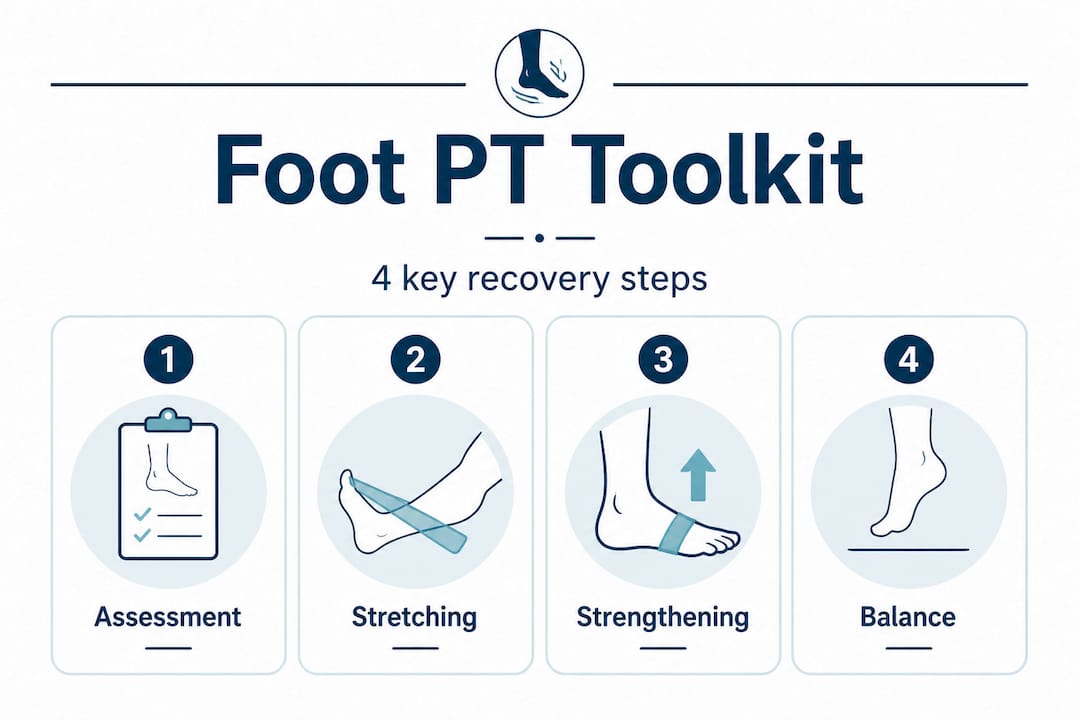
A step-by-step look at a typical PT plan for foot pain:
- Initial assessment: Your therapist evaluates your gait (the way you walk), joint mobility, muscle strength, and pain triggers. They look at how your entire lower body moves, since hip weakness and poor ankle mobility often contribute to foot pain.
- Stretching program: Targeted stretches for the gastrocnemius (the large calf muscle), soleus (the deeper calf muscle), and plantar fascia itself. The APTA guidelines for plantar fasciitis specifically recommend these stretches as foundational, with dry needling shown to provide relief for up to six months in appropriate candidates.
- Strengthening exercises: Toe flexor exercises (like towel scrunches or marble pickups), heel raises, and ankle stabilization work to rebuild the strength that protects your foot with every step.
- Manual therapy: Hands-on joint mobilization and soft tissue work to restore normal movement and reduce pain. This is particularly helpful for stiff joints following injury or prolonged inactivity.
- Taping and orthotics guidance: Kinesiology taping can offload inflamed tissue and support proper foot mechanics while healing occurs. Your therapist can also guide you on whether custom or prefabricated orthotics are appropriate, and how they fit into an active rehab plan.
- Proprioceptive training: Balance and coordination exercises that retrain the small muscles and nerve receptors in your foot and ankle. Research on PT for foot pain confirms this approach reduces societal costs by approximately $2,708 per patient and gains 0.09 QALYs compared to conventional management.
- Education and activity modification: Your therapist will coach you on footwear, surface choices, and how to modify your activity without losing fitness during recovery.
Here is a quick look at how the major PT methods compare for common foot conditions:
| Treatment method | Best for | Evidence strength | Expected timeline |
|---|---|---|---|
| Stretching (calf and plantar fascia) | Plantar fasciitis, Achilles tendinopathy | Strong (multiple RCTs) | 4 to 8 weeks |
| Strengthening exercises | All foot/ankle conditions | Strong | 6 to 12 weeks |
| Manual therapy | Stiff joints, post-surgical recovery | Moderate to strong | 3 to 6 weeks |
| Dry needling | Plantar fasciitis, myofascial trigger points | Moderate | 4 to 6 sessions |
| Taping (kinesiology or rigid) | Plantar fasciitis, ankle instability | Moderate | Ongoing during activity |
| Proprioceptive training | Ankle sprains, balance issues, post-surgery | Strong | 4 to 8 weeks |
Understanding foot rehabilitation outcomes helps set realistic expectations and reinforces why sticking with your plan matters, even when progress feels slow.
Pro Tip: Ask your PT specifically about dry needling if you have stubborn plantar fasciitis or trigger point pain. Not all therapists are certified in this technique, but when performed by a trained provider, it can accelerate recovery significantly and bridge the gap between stretching alone and more invasive options.
Understanding the toolkit of physical therapy is critical, but when should you choose PT versus other interventions? That is what we will cover next.
When to choose physical therapy for foot pain: Key scenarios and outcomes
Knowing when physical therapy is the right choice can save you months of pain, thousands of dollars, and unnecessary procedures. The answer is more often than you might think.
Physical therapy is especially effective in these scenarios:
- Early and mild cases: If you have had foot pain for less than three months and it has not severely limited your mobility, PT is almost always the best first step. Research confirms that early intervention with strengthening and active rehab gives you the best chance of full recovery.
- When you want to avoid surgery: Conditions like plantar fasciitis, posterior tibial tendon dysfunction (weakness of the tendon on the inner side of the ankle), and mild bunion pain often respond very well to PT, helping many patients avoid the operating room entirely.
- Post-surgical recovery: After a procedure like bunion correction or Achilles repair, PT is critical for restoring strength, flexibility, and balance. Reviewing your options for preparing for foot surgery includes understanding how PT fits into your recovery roadmap.
- Chronic pain and recurrence: If your foot pain keeps coming back despite rest and shoe changes, PT targets the underlying dysfunction that passive approaches miss.
- Arthritis management: Low-impact strengthening and range of motion exercises support joint health without aggravating inflammation. Learning more about arthritis and foot pain reveals how early movement is far better than prolonged rest for joint conditions.
Here is a straightforward comparison to help you see when each option makes the most sense:
| Condition and stage | Physical therapy | Surgery | Steroid injections |
|---|---|---|---|
| Early plantar fasciitis (under 3 months) | Preferred | Not recommended | Optional short-term bridge |
| Chronic PF (over 6 months, PT failed) | Continue or advance | Consider | Limited additional benefit |
| Mild to moderate bunion pain | Preferred for symptom management | Consider if severe deformity | Rarely used |
| Post-surgical recovery | Required | N/A | Rarely indicated |
| Ankle sprain (grade 1 to 2) | Preferred | Not recommended | Avoid in most cases |
| Achilles tendinopathy | Preferred | Last resort | Use with caution |
| Severe structural deformity | Supportive role | Preferred | Temporary relief only |
Red flags that signal you should seek evaluation right away:
- Sudden, severe pain after a fall, twist, or impact (possible fracture or ligament tear)
- Numbness, tingling, or burning that does not go away (possible nerve involvement)
- Swelling that does not reduce after 48 to 72 hours of basic first aid
- Pain that significantly limits your ability to bear weight for more than a week
- Visible deformity of the foot or ankle
When you visit a specialist, discussing nonsurgical options for tendon injuries is a critical conversation to have before jumping to more invasive decisions.
Pro Tip: Do not settle for a passive treatment plan that only involves rest, orthotics, and ice. While these tools have a place, the research is clear that active physical therapy, exercises you perform regularly, consistently outperforms passive approaches for nearly all foot and ankle conditions.
Once you know when PT is best, you will want to get the most from your sessions. Let us dive into what high-quality physical therapy looks like in Las Vegas.
Getting the best results from physical therapy in Las Vegas
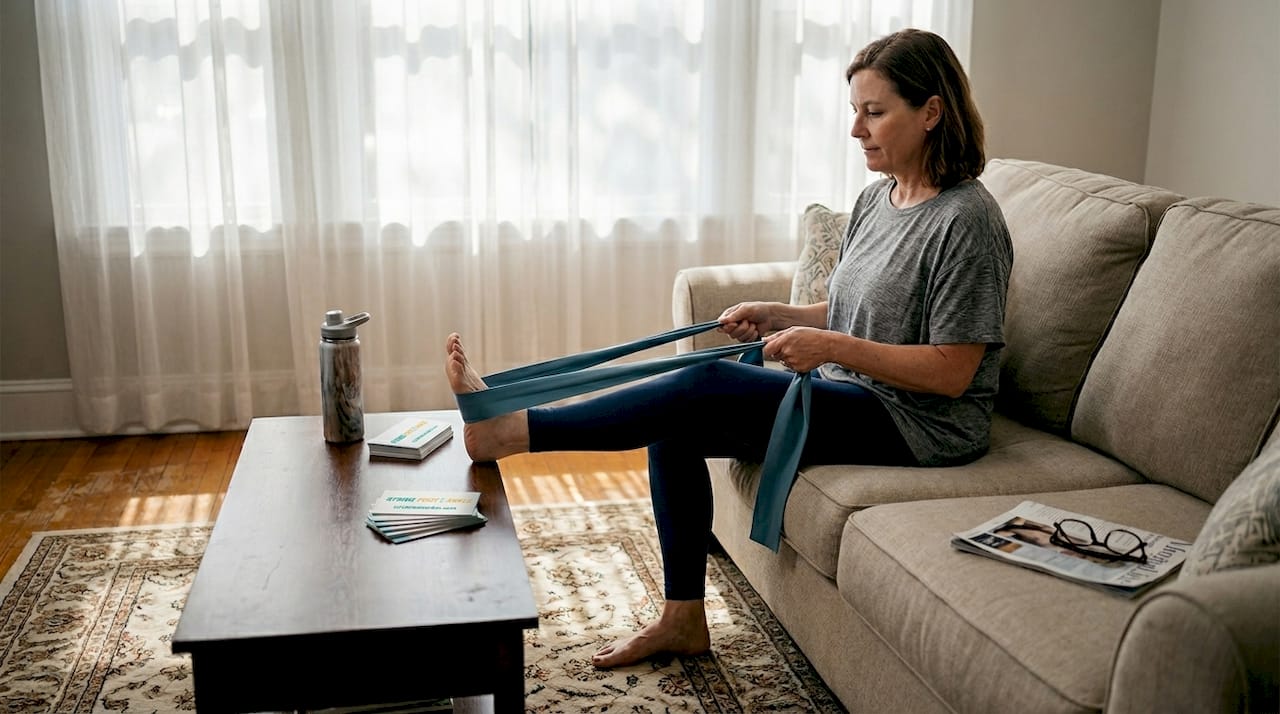
Signing up for physical therapy is only the beginning. The patients who recover fastest and most completely are the ones who actively engage with their program between sessions. That means more than just showing up. It means preparing for each visit, doing your home exercises, tracking your progress, and communicating honestly with your provider.
Steps to prepare for each physical therapy session:
- Wear appropriate footwear. Bring the shoes you typically wear for work, walking, or sports. Your therapist needs to see how your actual footwear affects your mechanics.
- Write down your symptoms. Before each session, note where your pain was, when it was worst, what activities triggered it, and whether it improved or changed since your last visit. This information is genuinely useful.
- Complete your home exercises first. Arriving having done your assigned exercises tells your therapist how your body is responding and allows them to adjust the program accordingly.
- Arrive a few minutes early. Warming up with a short walk helps your tissues loosen and gives you a baseline reading on your pain level before the session begins.
- Prepare specific questions. Whether it is about returning to a sport, adjusting your work schedule, or understanding why a particular exercise matters, asking questions helps you stay invested and motivated.
Common mistakes that slow down recovery and how to avoid them:
- Skipping home exercises: PT visits alone are rarely enough. Studies on foot muscle strengthening confirm that consistent daily exercise between sessions is what actually builds lasting capacity and prevents recurrence.
- Returning to activity too soon: Pain reduction does not equal full healing. Tissues need time to rebuild their structural integrity. Let your therapist clear you before resuming high-impact activity.
- Stopping PT the moment you feel better: This is one of the most common mistakes. Feeling better is a milestone, not the finish line. The final phase of PT builds the strength and resilience that protects you long-term.
- Not tracking your progress: Keep a simple log or use a notes app. Record your pain level (on a 0 to 10 scale), which exercises you completed, and any changes in symptoms. This gives both you and your therapist valuable data.
- Avoiding communication about setbacks: If an exercise causes sharp pain or your symptoms worsen after a session, say so immediately. A good PT will adapt your plan. Pushing through the wrong kind of pain can delay or reverse progress.
Research specifically supports proprioceptive training for improving balance without requiring changes in range of motion, which is particularly valuable for patients who have had multiple ankle sprains or are recovering from foot surgery. This means even if your joint flexibility is limited, you can still make meaningful progress with the right exercises.
Las Vegas presents unique challenges for foot health. Hard casino floors, extended time standing in dress shoes for hospitality workers, long hikes in Red Rock Canyon, and high-impact fitness trends all place demands on your feet that require a locally aware, activity-specific approach to rehab. A good PT in Las Vegas understands these demands and builds your program around them.
Armed with this foundation and actionable strategies, let us pull these insights together into a fresh perspective on the real value of foot-focused PT.
The uncomfortable truth about foot pain: Why PT beats shortcuts
Here is something most general health advice will not tell you directly: the majority of foot pain cases we see in Las Vegas could have been resolved, or significantly reduced, months earlier with a proper physical therapy program. Instead, patients arrive having tried three or four other approaches first. Shoe inserts. Steroid injections. Rest. More rest. Sometimes a second injection. Then they come in frustrated, deconditioned, and with a problem that has now become chronic.
Temporary fixes are seductive because they work just enough to keep you hoping. A cortisone shot may reduce your heel pain for six to eight weeks. New shoes might take the edge off. But none of these interventions teach your foot how to function properly under load. They do not restore the muscle balance, tissue flexibility, or neuromuscular coordination that your foot needs every single day.
The uncomfortable reality is that foot pain is almost never random. There is a reason your plantar fascia is inflamed, or your Achilles keeps flaring up. Physical therapy exists to find that reason and correct it. That is not a passive process. It requires commitment. It requires doing exercises when you are tired. It requires honesty with your provider about your progress. It is harder than getting a shot. But the outcomes are genuinely different.
We also want to challenge the idea that only severe foot pain deserves expert attention. Mild, nagging foot discomfort is your body sending a signal. When you ignore it, that signal gets louder. When you address it early, with targeted exercise and the guidance of a skilled therapist, you often prevent the progression to a serious injury entirely. Las Vegas is an active city. Whether you are hiking, cycling, playing pickleball, or simply navigating an enormous resort property on foot, your feet are working hard. They deserve expert care, not shortcuts.
Working with top foot doctors in Las Vegas means partnering with specialists who see PT not as an alternative to medical care, but as a cornerstone of it. The most advanced podiatric practices integrate physical therapy into a broader treatment philosophy, one where surgery is a carefully considered last resort, not a default.
Connect with expert foot care in Las Vegas
If this guide has helped you see your foot pain in a new light, the next step is getting a personalized evaluation from a team that understands both the science and the real-life demands you face every day.
At Stride Foot & Ankle, we offer comprehensive foot care options that span the full spectrum, from early PT guidance and conservative management to advanced surgical interventions when they are truly necessary. Dr. Nahad Wassel and the team are committed to giving every patient a clear, honest plan built around their specific condition and goals. Whether you are exploring nonsurgical foot pain solutions or need guidance on foot surgery preparation and recovery, we are here to help you stride confidently toward recovery. Request your appointment today and take the first real step forward.
Frequently asked questions
What foot conditions benefit most from physical therapy?
Plantar fasciitis, tendon injuries, mild arthritis, and post-surgical recovery respond best to evidence-based physical therapy interventions. APTA guidelines specifically recommend targeted stretching of the gastrocnemius, soleus, and plantar fascia along with strengthening of toe flexors and ankle muscles as core treatments.
How soon should I start physical therapy after a foot injury?
Early physical therapy delivers the best outcomes, particularly for mild to moderate foot pain or following surgery. Research confirms that early PT strengthening is critical for building capacity and preventing chronic issues from developing.
Is physical therapy for foot pain covered by insurance in Las Vegas?
Most insurance plans do cover PT for medically necessary foot conditions, but coverage varies by plan and provider. Always check your specific benefits before starting, and ask your provider’s office to help verify your eligibility.
Can physical therapy help me avoid foot surgery?
Yes, and the evidence supports it strongly. PT is recognized as a first-line, cost-effective treatment that meets the 98% probability threshold for cost-effectiveness, and it consistently reduces or eliminates the need for surgical intervention in appropriate candidates.
What should I expect during my first PT session for foot pain?
Your therapist will assess your movement patterns, identify pain triggers, and begin building a customized plan. Based on APTA guidelines, that plan will likely include targeted stretching, progressive strengthening, and hands-on techniques tailored to your specific condition and lifestyle.
Recent Comments