

TL;DR:
- Conservative foot care includes non-surgical treatments like orthotics, therapy, medications, and footwear modifications.
- It resolves conditions such as plantar fasciitis and diabetic ulcers with high success rates within months.
- Early, consistent, and multi-modal conservative approaches often prevent the need for surgery and promote better outcomes.
Foot pain has a way of making surgery feel like the obvious answer. You’re limping through your morning routine, dreading every step, and someone in your life has already mentioned a procedure. But the assumption that foot pain automatically leads to the operating room is one of the most persistent misconceptions in podiatric care. Conservative care succeeds in 70 to 90 percent of plantar fasciitis cases within just 6 to 12 months, and similar evidence holds for many other foot and ankle conditions. This guide walks you through exactly what non-surgical foot care looks like, how well it works, and when it’s the smarter path forward.
Table of Contents
- What is conservative foot care?
- How effective is conservative foot care? (Evidence and outcomes)
- When conservative care works—and when it doesn’t
- Why a podiatrist’s approach matters: Nuance, synergy, and high-risk care
- Why surgery should be the last resort—and what most people get wrong about foot recovery
- Expert conservative care in Las Vegas: Your next steps
- Frequently asked questions
Key Takeaways
| Point | Details |
|---|---|
| High success rates | Conservative foot care resolves most common foot pain and injuries without surgery. |
| Root cause solutions | Biomechanical therapies like orthotics and physical therapy address underlying problems, not just symptoms. |
| Expert guidance matters | A skilled podiatrist combines treatments and customizes care, especially for high-risk patients. |
| Know when to escalate | Surgery is only needed if conservative treatments fail after 6-12 months or serious complications arise. |
| Better outcomes, lower costs | Effective conservative care reduces healthcare costs and prevents complications like amputations. |
What is conservative foot care?
Conservative foot care is any treatment approach that addresses foot and ankle problems without surgery. The philosophy behind it is straightforward: before cutting, try every evidence-based, non-invasive option available. This approach focuses on treating the root causes of pain, not just masking symptoms, and it gives your body a structured chance to heal.
Podiatrists use several core techniques under the conservative care umbrella:
- Custom and prefabricated orthotics: These shoe inserts are designed to support arches, redistribute pressure, and correct biomechanical misalignment. Think of them as corrective lenses for your feet.
- Physical therapy and targeted exercises: Stretching programs, strengthening protocols, and manual therapy address muscle imbalances and improve flexibility.
- Medications: Anti-inflammatory drugs, topical agents, and cortisone injections reduce pain and inflammation during acute phases.
- Footwear modifications: Changing shoe type, adding cushioning, or using specialized footwear for specific conditions can dramatically shift how your feet load and move.
- Wound care and offloading: For diabetic foot ulcers and pressure injuries, specialized dressings, offloading boots, and regular monitoring keep wounds clean and promote healing.
- Watchful waiting and monitoring: Some conditions, when caught early, respond well to structured observation combined with lifestyle changes.
The underlying goal across all these methods is biomechanical correction. When your foot lands incorrectly with every step, it creates repetitive stress. Conservative care interrupts that cycle by correcting alignment, reducing overload on injured tissues, and giving healing structures the support they need. You can explore the full range of general foot care options available for foot and ankle conditions to get a clearer sense of what might apply to your situation.
The most common conditions treated conservatively include plantar fasciitis (heel pain caused by inflammation of the band of tissue along the bottom of the foot), mild Achilles tendonitis, flatfoot, diabetic foot ulcers, bunions in early stages, stress fractures, and ingrown toenails. These conditions share one important trait: given the right environment, time, and treatment, most of them respond without a single incision.
Pro Tip: If you’ve just been diagnosed with a foot condition, ask your podiatrist specifically which conservative options have been tried or should be tried first. A clear plan with milestones is a sign of expert, patient-centered care.
How effective is conservative foot care? (Evidence and outcomes)
With a clear sense of the treatments, let’s examine how well conservative care actually works and for whom.
The numbers are more impressive than most patients expect. Conservative care resolves plantar fasciitis in 70 to 90 percent of cases within 6 to 12 months of consistent treatment. That’s not a small or marginal effect. That’s a rate comparable to or exceeding many surgical outcomes, without the recovery time, anesthesia risks, or cost burden of an operation.
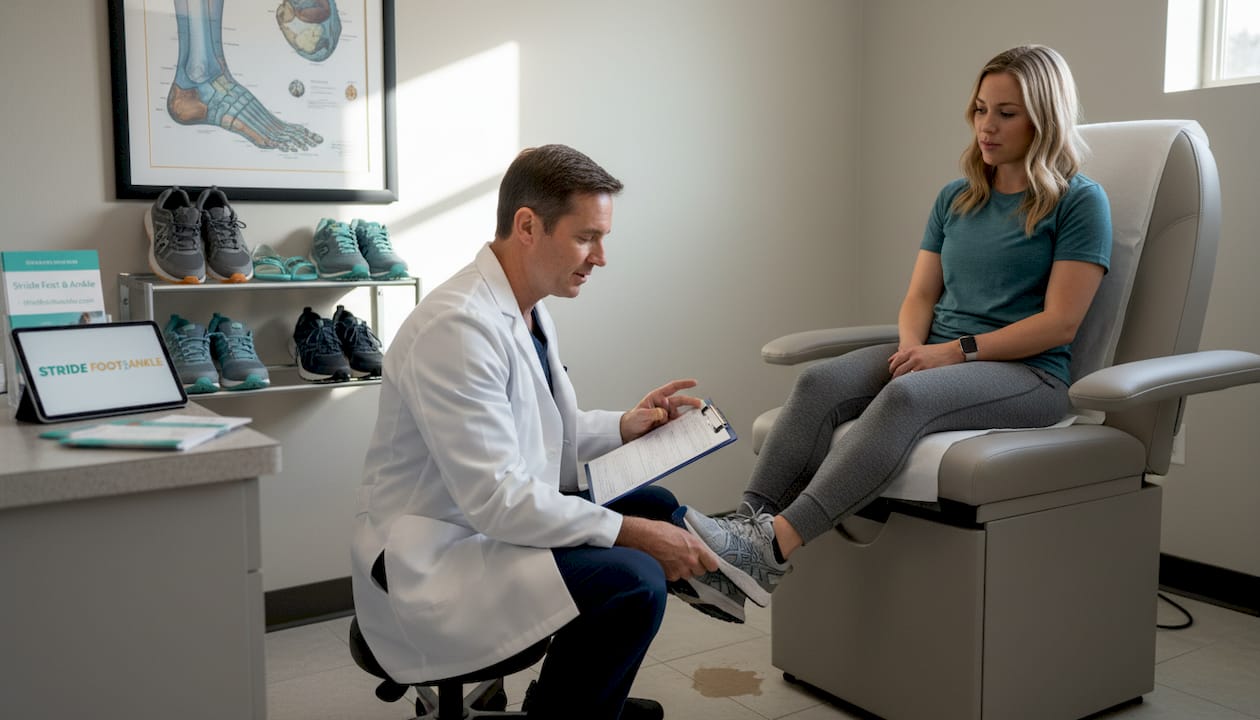
The financial picture is equally compelling. Research shows that combining physical therapy with podiatry reduces treatment costs by approximately $2,708 and gains 0.09 quality-adjusted life years (QALYs) compared to standard care alone. A QALY is a measure of how much healthy, comfortable life a patient gains. Even a small QALY gain translates to real improvement in daily function and wellbeing.
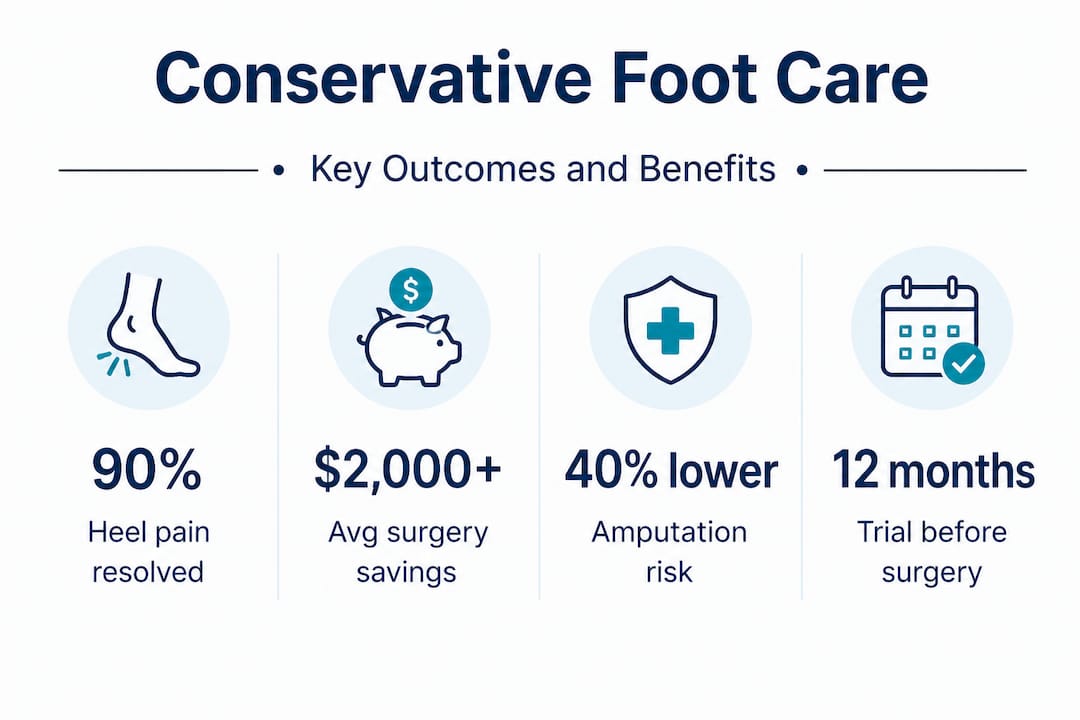
For diabetic patients, the stakes are even higher. Podiatric conservative management, including regular offloading, wound monitoring, and preventive care, reduces mortality odds by 69 percent and improves limb-salvage survival by 26 percent compared to patients who do not receive specialist podiatric care. Those are not modest improvements. That is the difference between keeping a leg and losing one.
Effectiveness by condition: A comparison
| Condition | Conservative approach | Approximate success rate | Timeframe |
|---|---|---|---|
| Plantar fasciitis | Stretching, orthotics, PT | 70 to 90% | 6 to 12 months |
| Flatfoot (mild to moderate) | Orthotics, footwear changes | Positive pain and alignment improvement | Ongoing |
| Diabetic foot ulcers | Offloading, wound care, monitoring | 69% lower mortality odds | Ongoing |
| Achilles tendonitis | Eccentric exercises, orthotics | 60 to 80% | 3 to 6 months |
| Ingrown toenails (early) | Padding, proper trimming, soaks | High, for mild cases | Weeks to months |
| Plantar warts | Topical agents, pads, monitoring | Variable, often resolves | Weeks to months |
For flatfoot, orthotics show measurable positive impacts on both pain levels and bone alignment, even if the changes are gradual. The key word here is “positive.” Conservative care moves the needle in the right direction, often without ever needing to escalate.
Here’s something patients often don’t realize: conservative care is also effective for conditions you might not expect. Treating warts conservatively with topical acids or targeted padding can resolve even stubborn plantar warts over time. Similarly, nonsurgical toenail care manages most ingrown toenail cases without any cutting beyond basic nail trimming.
“The best intervention is often the one that gives the body the right conditions to fix itself, not the one that requires the most equipment or the sharpest blade.” This is the guiding principle behind podiatric conservative care, and evidence increasingly supports it.
Here are the four most important outcomes research consistently shows for conservative foot care:
- Pain reduction in the majority of patients across common diagnoses, often within the first few months of treatment.
- Improved function and mobility, allowing patients to return to daily activities, work, and exercise sooner.
- Lower healthcare costs compared to surgical pathways when treatment is well-managed and timely.
- Reduced amputation risk in diabetic patients through proactive monitoring and wound management.
These are not theoretical benefits. They reflect what real patients experience when they commit to a structured conservative program supervised by a knowledgeable podiatrist.
When conservative care works—and when it doesn’t
While the numbers are impressive, not every condition is a fit for conservative treatment, and timing matters significantly.
Conservative care performs well for a specific set of circumstances. It is most effective when treatment begins early, when the condition is structurally stable, and when the patient can commit to the program consistently. Conditions like stable stress fractures, mild osteoarthritis (joint degeneration that hasn’t reached a severe stage), early-stage Achilles tendonitis, and diabetic foot ulcers that are clean and not infected are ideal candidates for conservative management. These conditions have clear, evidence-supported protocols that work when followed properly.
However, conservative care has well-defined limits. If a patient has undergone 6 to 12 months of correctly implemented conservative treatment without meaningful improvement, surgery may be the appropriate next step. Other situations that push past the conservative threshold include gross joint instability (when the ankle or foot cannot bear weight safely), active and spreading infection that does not respond to antibiotics, and vascular compromise (when blood supply to the foot is severely restricted). These situations require urgent escalation, and staying in conservative mode too long can cause real harm.
Conservative care: When it’s the right choice vs. when to escalate
| Situation | Conservative approach appropriate? | Notes |
|---|---|---|
| Plantar fasciitis, less than 12 months | Yes | Begin with stretching, orthotics, PT |
| Mild to moderate flatfoot | Yes | Custom orthotics plus footwear change |
| Stable stress fracture | Yes | Offloading boot, activity restriction |
| Early ingrown toenail | Yes | Soaking, padding, proper trimming |
| Diabetic foot ulcer, no deep infection | Yes | Offloading, wound care, close monitoring |
| Persistent pain after 12 months of conservative Tx | Reassess | Surgical consult may be warranted |
| Gross joint instability | No | Surgical stabilization likely required |
| Active spreading infection | No | Urgent medical management needed |
| Severe vascular compromise | No | Vascular surgery consult required |
Common pitfalls in conservative management are worth knowing about. Patients sometimes start treatment, feel better after a few weeks, and stop before healing is complete. This is one of the most consistent mistakes in foot care recovery. Tendons and fascia take time to fully remodel. Stopping orthotics early or skipping physical therapy exercises because the pain lessened is a reliable recipe for relapse.
Watch for these warning signs that conservative care is not working as expected:
- Pain that is worsening, not improving, after 6 to 8 weeks of treatment
- New neurological symptoms like numbness, tingling, or burning that spreads
- Visible deformity developing or progressing
- Skin breakdown or wound that is not healing or is getting larger
- Fever or systemic signs of infection alongside a foot wound
- Loss of the ability to bear weight despite treatment
Pro Tip: Track your pain score on a simple 1 to 10 scale every two weeks. If you’re not seeing a gradual downward trend by week 8, that’s important information to bring to your podiatrist. It’s not a failure. It’s data that helps guide your care.
For nonsurgical tendon care, the monitoring window is especially important. Tendons respond to conservative care more slowly than muscles, and the temptation to rush into a surgical fix is strong. But most tendon injuries respond well to eccentric loading exercises, bracing, and orthotics given adequate time.
Why a podiatrist’s approach matters: Nuance, synergy, and high-risk care
Given these strengths and limits, how does an expert podiatrist amplify the success and safety of conservative approaches?
The short answer is that podiatrists don’t just prescribe generic treatments. They analyze how your specific foot and ankle mechanics are contributing to your pain, then build a treatment plan around that analysis. A stock orthotic from a pharmacy shelf and a custom-made orthotic from a board-certified podiatrist are not the same tool. Biomechanical correction addresses root causes like equinus (limited ankle flexibility) or structural misalignment in ways that symptom-only approaches simply cannot replicate.
Here’s how a well-trained podiatrist approaches conservative care differently from a general approach:
- Biomechanical evaluation: A gait analysis and structural examination identify exactly where your foot mechanics are failing, not just where the pain is.
- Custom orthotic fitting: Based on the biomechanical finding, orthotics are designed to address your specific alignment needs, not a generic foot shape.
- Coordinated physical therapy: The podiatrist prescribes specific exercises targeting the identified weaknesses, often coordinating with a physical therapist for hands-on care.
- Wound care and advanced healing tools: For complex wounds, tools like ultrasound wound healing therapy can accelerate tissue repair in ways that standard wound dressings alone cannot achieve.
- Ongoing monitoring and adjustment: Conservative care is not a set-it-and-forget-it plan. Your podiatrist tracks your progress and adjusts the approach as your condition evolves.
For diabetic patients, this level of oversight is not a luxury. It is a clinical necessity. Podiatric conservative management for diabetics, including structured offloading, infection surveillance, and preventive foot screenings, prevents amputations far more effectively than episodic, non-specialist care. Research consistently shows that specialist podiatric management reduces amputation rates and improves overall survival for diabetic foot patients.
The real power of podiatrist-led conservative care lies in combination therapy. Combining PT and orthotics creates a synergistic effect that neither treatment achieves alone. Physical therapy improves strength, flexibility, and neuromuscular control. Orthotics change the mechanical environment the foot operates in. Together, they address both the functional and structural dimensions of the problem. Surgery, by contrast, changes anatomy but does nothing to correct the movement patterns or muscle imbalances that often drove the injury in the first place.
“Surgery can fix structure. It cannot fix function. Conservative care, when done well, addresses both. That is a meaningful clinical advantage for the right patient.”
This is why an experienced podiatrist will often recommend a well-designed conservative program even in cases where surgery is technically possible. The risks of any surgical procedure, including infection, nerve injury, scarring, and prolonged recovery, must always be weighed against the potential benefits. For the majority of foot and ankle conditions, those risks are avoidable with skilled conservative management. Stay up to date on conservative care insights to learn more about how this evolving field continues to improve outcomes.
Why surgery should be the last resort—and what most people get wrong about foot recovery
Building on the value of specialized care, let’s look deeper at why the “last resort” mindset serves patients best and what misconceptions often block successful recovery.
Surgery feels decisive. You go in with a problem and come out with something fixed. That narrative is appealing, especially when you’ve been in pain for weeks and feel like nothing is working. But this view misunderstands what surgical recovery actually involves. Most foot surgeries require 6 to 12 weeks of non-weight-bearing recovery, followed by months of rehabilitation. That’s often longer than a well-managed conservative program would take to produce comparable or better results.
One of the biggest misconceptions patients carry into the clinic is that conservative care is passive. That it just means rest and maybe a few stretches. In reality, a properly designed conservative program is active, demanding, and often more rigorous than people expect. Custom orthotics need to be worn consistently, not occasionally. Eccentric exercises for Achilles tendonitis need to be done daily for months, not a few times a week when convenient. The research supporting conservative care is based on consistent adherence, not casual effort.
Patient impatience is one of the most clinically significant barriers to successful conservative care outcomes. People want results in two weeks. Foot and ankle tissues, especially tendons, ligaments, and fascia, operate on a biological timeline that does not bend to urgency. Rushing to surgery because progress feels slow is one of the most common ways patients shortchange themselves.
Here’s the nuance that experienced podiatrists understand well: subtle orthotic alignment changes can drive meaningful clinical benefits, but those benefits unfold over months, not days. A slight medial heel wedge, a small arch adjustment, or a minor change in forefoot posting can redistribute load in ways that progressively reduce tissue stress with every step. That effect compounds over thousands of steps per day. The math works in your favor, but only if you stay consistent.
The most underutilized strategy in foot care recovery is the combination approach. Patients who receive a single intervention, either orthotics alone or physical therapy alone, consistently show lower success rates than those who receive coordinated, multi-modal care. Yet patients often stop at one treatment because they weren’t told to continue another, or because insurance coverage made them choose. A good podiatrist advocates for the full program because that is what the evidence supports.
The bottom line is this: if you’ve been offered surgery without a thorough trial of conservative management, it’s worth asking whether every non-surgical option has genuinely been explored. Choosing a top podiatrist means finding someone who will give you that honest assessment, someone who sees surgery as a tool, not a default.
Expert conservative care in Las Vegas: Your next steps
Armed with evidence and perspective, you’re ready for action. Here’s how to take the next step with a conservative care expert in Las Vegas.
At Stride Foot & Ankle, Dr. Nahad Wassel leads a patient-centered practice built on the principle that the best outcome is the one that gets you moving again with the least disruption to your life. That means starting with the full range of general conservative care options before considering anything more invasive.
Whether you’re dealing with chronic heel pain, a diabetic foot wound, a sports injury, or a structural issue you’ve been putting off, the first step is a thorough biomechanical assessment. From there, Dr. Wassel builds a personalized plan that may include custom orthotics, coordinated physical therapy, medication management, or cutting-edge tools like ultrasound-guided wound healing. You’ll know exactly what you’re doing, why you’re doing it, and what success looks like. Reach out today to schedule your assessment and start striding confidently toward recovery.
Frequently asked questions
What does conservative foot care include?
Conservative foot care involves non-surgical treatments like orthotics, physical therapy, medications, footwear changes, and regular monitoring. These approaches support arches, redistribute pressure, and correct alignment to treat root causes rather than just symptoms.
How long should conservative care be tried before considering surgery?
Most experts recommend a 6 to 12 month trial of conservative treatments before evaluating the need for surgery, unless there are signs of gross instability or severe infection. Conservative care often fails after 6 to 12 months without improvement, or when there is vascular compromise, which are the clearest signals to escalate.
Are orthotics really effective for foot pain?
Research shows that orthotics positively impact pain and bone alignment, especially for flatfoot and plantar fasciitis, though individual results depend on consistent use and proper fitting by a qualified podiatrist.
How does conservative care help diabetics prevent foot amputation?
Podiatric conservative care that includes offloading and monitoring reduces mortality and amputation risk significantly, giving diabetic patients a far better chance of keeping their limbs compared to those without specialist care.
Does insurance cover conservative foot care treatments?
Most health insurance plans cover common conservative treatments like orthotics, physical therapy, and wound care, but specific coverage varies by plan and provider, so it’s worth verifying your benefits before starting treatment.
Recommended
- General Foot & Ankle Care – Stride Foot & Ankle
- Blog – Stride Foot & Ankle – Dr. Nahad Wassel
- Ingrowing Toenails Can Be Treated – Stride Foot & Ankle – Dr. Nahad Wassel
- Arthritis Can Be Painless in your Feet – Stride Foot & Ankle – Dr. Nahad Wassel
- Why chiropractic is often better than surgery after accidents
- Le Infiltrazioni Ortopediche: Un Sollievo Efficace per il Dolore Articolare | Dr. Umberto Celentano
Recent Comments