

TL;DR:
- Foot conditions worsen due to mechanical overload, tissue degeneration, and systemic health issues working together, especially when unaddressed. Untreated problems can escalate from minor pain to serious complications like ulcers and amputations, highlighting the importance of early professional assessment. Managing all three factors simultaneously is essential to prevent long-term damage and improve foot health outcomes.
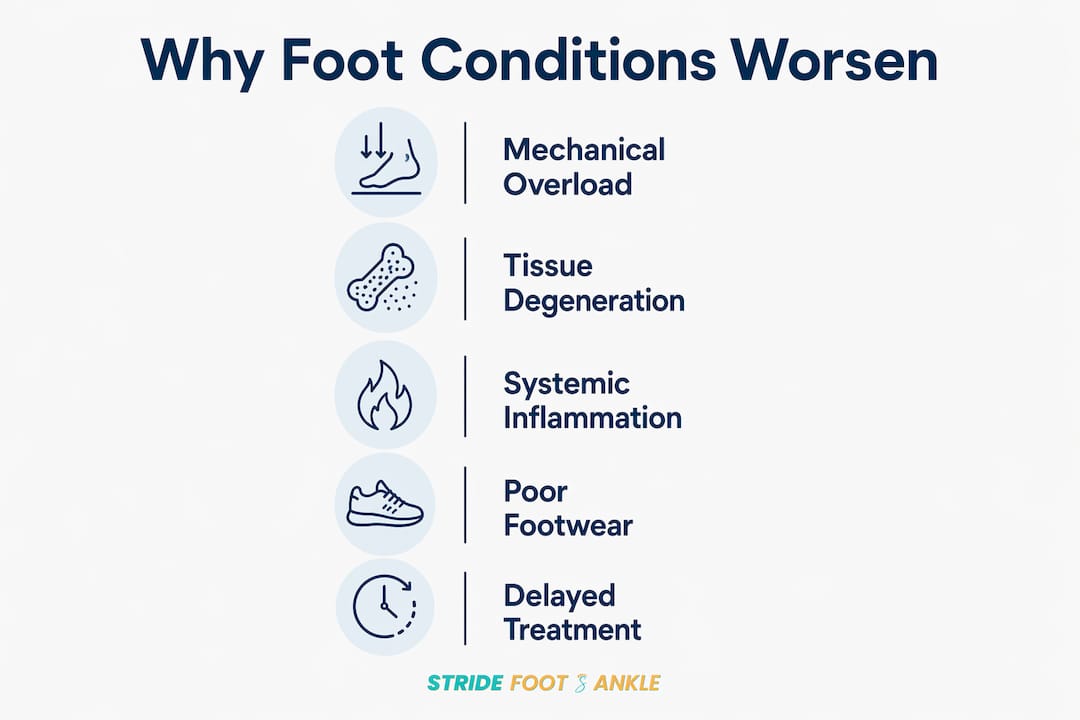
Foot conditions worsen primarily because mechanical overload, tissue degeneration, and systemic inflammation act together to block healing and increase damage over time. These three forces rarely work alone. When one goes unaddressed, it amplifies the others, turning a manageable problem into a chronic one. Understanding why foot problems increase gives you the power to interrupt that cycle before it leads to serious complications. This article explains each driver in plain terms, backed by clinical evidence, and points you toward the management steps that actually work.
Why foot conditions worsen: the mechanical factors
Mechanical overload is the most common reason foot conditions worsen. Every step you take places force equal to roughly 1.5 times your body weight through your foot. When that load exceeds what your tissues can handle, or when it repeats before healing is complete, you get daily re-injury on top of existing damage.
Poor biomechanics accelerate this process. Flat feet, high arches, and gait abnormalities all shift pressure away from its natural distribution points. Flat feet, for example, cause the arch to collapse inward with each step, straining the plantar fascia and the tendons along the inner ankle. High arches concentrate load on the heel and ball of the foot, leaving the midfoot underloaded and the surrounding soft tissue overworked. These patterns do not correct themselves without intervention.
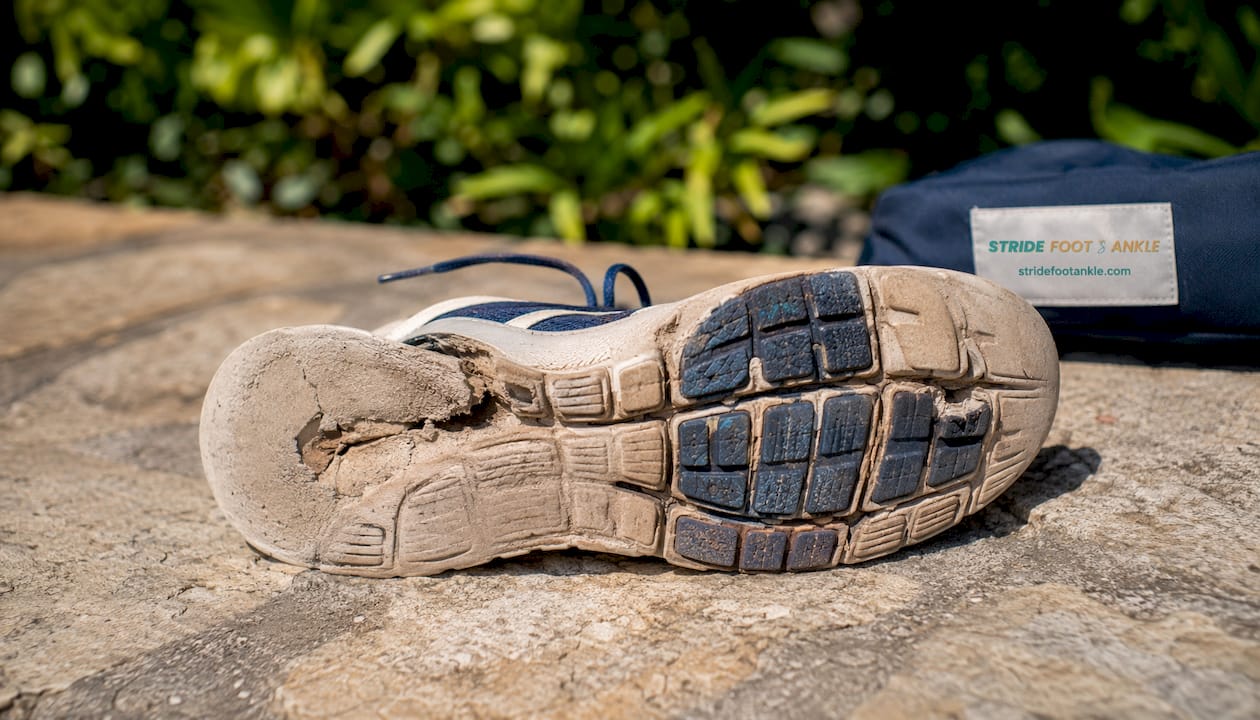
Footwear is a direct contributor to how foot issues develop. Worn-out shoes lose their midsole cushioning long before the upper shows visible damage. A shoe that looks fine may provide almost no shock absorption. Narrow toe boxes compress the forefoot, worsening bunions and hammertoes. High heels shift body weight forward onto the metatarsal heads, a pressure zone not designed for sustained loading.
Obesity increases the risk of chronic foot issues by about 60% due to mechanical overload. That figure reflects how dramatically excess body weight multiplies the forces acting on foot structures with every step. Activity changes matter too. Suddenly increasing your daily step count, switching from a desk job to a standing role, or starting a new exercise program without a gradual buildup all create mechanical stress spikes that tissues cannot absorb quickly enough.
- Flat feet and overpronation: Cause medial arch strain, posterior tibial tendon stress, and plantar fasciitis.
- High arches (cavus foot): Concentrate pressure on the heel and metatarsal heads, increasing stress fracture risk.
- Gait abnormalities: Compensatory limping from one painful foot transfers excess load to the knee, hip, and opposite foot.
- Worn or ill-fitting footwear: Removes cushioning, alters pressure distribution, and restricts natural toe splay.
- Sudden activity increases: Spike mechanical load before tissues have adapted, triggering overuse injuries.
Pro Tip: Replace athletic shoes every 300–500 miles of use, not just when the upper wears out. The midsole compresses silently and loses shock absorption well before visible damage appears.
How does tissue degeneration worsen chronic foot pain?
Tissue degeneration is the biological reason why rest alone rarely fixes a long-standing foot problem. Acute inflammation is the body’s repair signal. It brings blood flow, immune cells, and growth factors to damaged tissue. That process works well for short-term injuries. The problem starts when the injury repeats before repair is complete.
Tissue degeneration in plantar fasciitis transitions inflammation into chronic damage that rest alone cannot repair. This shift is called tendinopathy or fasciopathy, depending on the structure involved. The tissue stops trying to heal and instead fills with disorganized collagen, losing both strength and flexibility. The same process occurs in Achilles tendinopathy, where the tendon thickens but weakens structurally.
Aging compounds this problem. Fat pad thinning of around 33% by age 50 reduces the natural shock absorption under the heel and ball of the foot. Less cushioning means more force reaches the underlying bone and connective tissue with every step. This is why foot pain that was manageable at 35 can feel significantly worse at 50 without any single new injury.
The stages of tissue breakdown follow a recognizable pattern:
- Reactive phase: Acute inflammation after a new injury or sudden load increase. Pain is sharp and localized. Tissue is still intact but swollen.
- Disrepair phase: Repeated stress prevents full healing. Collagen production becomes disorganized. The tissue weakens even as swelling subsides.
- Degenerative phase: Structural breakdown is established. Cells within the tissue begin to die. Pain may temporarily ease during activity, which misleads patients into thinking they are recovering.
- Chronic pain phase: The tissue cannot self-repair. Pain returns consistently, often worse in the morning or after rest, because the degenerated tissue stiffens when unloaded.
- Complication phase: Structural failure, such as a plantar fascia rupture or Achilles tendon tear, becomes a real risk.
Chronic foot pain results from tissue degeneration, mechanical overload, and systemic inflammation acting together. That overlap explains why treating only one factor rarely produces lasting relief.
Pro Tip: If your foot pain “warms up” and feels better after 10–15 minutes of walking, do not interpret that as improvement. Pain that eases mid-activity is a classic sign of degenerative tissue change, not healing.
What systemic health factors influence why foot conditions worsen?
Systemic health conditions change the biological environment inside your foot. Even with perfect mechanical care, a body that cannot deliver adequate blood flow, control inflammation, or repair tissue efficiently will struggle to heal foot injuries. This is the layer of foot health that patients most often overlook.
Diabetes is the most significant systemic risk factor. Peripheral neuropathy, a nerve damage complication of diabetes, removes the pain signal that normally warns you of injury. Patients with neuropathy can develop wounds, pressure sores, and fractures without feeling them. Peripheral arterial disease, common in long-term diabetes, reduces blood flow to the foot, starving tissues of the oxygen and nutrients needed for repair. Between 15–34% of people with diabetes will develop a foot ulcer during their lifetime. That statistic reflects how quickly unmanaged systemic disease converts minor foot issues into life-threatening complications.
Obesity contributes beyond mechanical load. Adipose tissue produces pro-inflammatory cytokines, chemical messengers that sustain low-grade systemic inflammation. That inflammation slows tissue repair and increases sensitivity to pain. Poor circulation and infections increase the risk of foot ulcer complications, delayed healing, and potential amputations, especially in patients with diabetes or peripheral arterial disease.
Nutrition and blood sugar control directly determine how fast foot tissue heals. High blood glucose impairs white blood cell function, making infections harder to fight. Deficiencies in vitamin D, zinc, and protein slow collagen synthesis, the process that rebuilds damaged connective tissue. Healing environments influenced by blood sugar control, nutrition, and inflammation determine recovery speed even when mechanical care is correct.
| Systemic factor | Effect on foot health | Key risk |
|---|---|---|
| Diabetes (neuropathy) | Removes pain warning signals | Undetected wounds and fractures |
| Peripheral arterial disease | Reduces blood flow to foot tissues | Delayed healing, ulceration |
| Obesity | Increases mechanical load and systemic inflammation | Chronic overuse injuries |
| Poor nutrition | Slows collagen synthesis and immune response | Prolonged recovery, infection risk |
| Systemic inflammation | Sustains tissue breakdown, impairs repair | Transition from acute to chronic pain |
How do untreated foot issues lead to serious complications?
Untreated foot problems follow a predictable escalation. What begins as a minor ache or a small blister can progress to infection, structural damage, and permanent mobility loss. The mechanism is a cascade, where each unaddressed problem creates the conditions for the next, more serious one.
Peripheral neuropathy is the most dangerous enabler of this cascade. When you cannot feel pain in your foot, you continue walking on injured tissue. A small blister becomes a deep wound. A stress fracture goes unnoticed until the bone collapses. Ignoring foot pain and injuries leads to joint stress changes that can cause arthritis and reduced mobility. This is not a distant risk. It is the documented outcome for patients who delay care.
The complications that follow untreated foot conditions include:
- Ulceration: Open wounds that resist healing, particularly in patients with diabetes or poor circulation. These require specialized wound care and carry a high infection risk.
- Osteomyelitis: Bone infection that develops when surface wounds penetrate deep tissue. Treatment requires prolonged antibiotics or surgical debridement.
- Charcot foot: A severe complication of neuropathy where bones fracture and the foot arch collapses, often without pain. The foot deforms rapidly if not immobilized.
- Amputation: Major amputations carry a 5-year mortality rate over 50% in diabetic patients. This outcome is largely preventable with early intervention.
- Compensatory joint damage: Limping to avoid pain in one foot shifts load to the knee, hip, and lower back. Over time, this causes foot arthritis and degenerative joint disease in structures far from the original injury.
Most non-acute foot conditions improve within 6–12 weeks with appropriate conservative care. Seeking professional assessment when symptoms persist beyond 3–4 weeks prevents the transition from an acute problem to a chronic, complicated one. The window for straightforward treatment closes faster than most patients expect.
Key Takeaways
Foot conditions worsen when mechanical overload, tissue degeneration, and systemic health factors combine to block healing, making early professional assessment the single most effective way to prevent serious complications.
| Point | Details |
|---|---|
| Mechanical overload drives re-injury | Worn footwear, poor biomechanics, and weight gain multiply daily stress on foot tissues. |
| Degeneration replaces inflammation | Chronic conditions like plantar fasciitis involve structural tissue breakdown that rest alone cannot reverse. |
| Systemic factors block healing | Diabetes, poor circulation, and nutrition deficiencies impair tissue repair regardless of mechanical care. |
| Untreated issues escalate fast | Ignored foot pain leads to ulcers, joint damage, and in severe cases, amputation. |
| Early care changes outcomes | Symptoms persisting beyond 3–4 weeks warrant professional evaluation to prevent chronic progression. |
What I’ve learned about why patients stay stuck
I have seen a consistent pattern in patients who arrive with conditions that should have been straightforward to treat months earlier. They rested. They iced. They took anti-inflammatories. They waited. And their foot got worse anyway.
The misunderstanding is almost always the same. Patients treat foot pain as a single problem with a single solution. In reality, the causes of foot pain layer on top of each other. A runner with flat feet and early plantar fasciitis who also carries excess weight and has pre-diabetes is dealing with three separate drivers simultaneously. Addressing only the inflammation with a cortisone injection, as many patients request, masks the pain without touching the mechanical or metabolic causes. Repeated cortisone injections suppress symptoms but may weaken foot tissues, making the structural problem worse over time. I have watched patients cycle through injections for two years while their tissue integrity quietly deteriorated.
The other pattern I see is patients who underestimate the significance of “warming up.” They tell me their foot hurts when they first get up, but it feels fine after a few minutes of walking. They interpret that as a good sign. It is not. Pain that eases mid-activity is a hallmark of degenerative tissue change, not recovery. The tissue is simply warming and becoming more pliable. The underlying damage is still progressing.
My strongest advice is this: get a comprehensive foot assessment that addresses all three layers, mechanical, biological, and systemic, before committing to any single treatment. A plan that ignores one layer will fail. The patients who recover fully are the ones who treat the whole picture, not just the symptom they can feel.
— Ramil
Foot care at Stridefootankle for patients in Las Vegas
Persistent foot pain deserves more than rest and over-the-counter insoles. At Stridefootankle, Dr. Nahad Wassel provides board-certified podiatric care that addresses the mechanical, biological, and systemic factors driving your symptoms.

Whether you are managing plantar fasciitis, diabetic foot concerns, or pain that has not responded to self-care, Stridefootankle offers general foot and ankle care built around your specific condition and goals. The practice emphasizes conservative foot care first, using footwear guidance, orthotics, physical therapy referrals, and targeted interventions to relieve pain and protect long-term function. If you are in Las Vegas and your foot symptoms have lasted more than a few weeks, scheduling a professional evaluation is the most direct path to getting better.
FAQ
Why do foot conditions keep getting worse despite rest?
Rest relieves acute inflammation but does not rebuild degenerated tissue. Conditions like plantar fasciitis and Achilles tendinopathy involve structural breakdown that requires active rehabilitation targeting biomechanics and systemic health, not passive recovery alone.
What are the early signs of worsening foot issues?
Morning stiffness that takes more than a few minutes to ease, pain that spreads beyond its original location, and swelling that persists overnight are all signs that a foot condition is progressing rather than resolving.
How does diabetes make foot conditions worse?
Diabetes causes peripheral neuropathy, which removes pain signals, and peripheral arterial disease, which reduces blood flow. Together, these impair wound detection and healing, allowing minor injuries to escalate into ulcers or infections without warning.
When should I see a podiatrist for foot pain?
Seek professional evaluation if symptoms persist beyond 3–4 weeks, if pain is worsening rather than improving, or if you have diabetes, poor circulation, or any condition that affects healing. Early assessment prevents chronic progression.
Can footwear choices really cause foot conditions to worsen?
Yes. Worn-out shoes lose midsole cushioning silently, and narrow or high-heeled footwear shifts pressure onto structures not designed for sustained load. Correcting footwear is one of the most direct ways to reduce mechanical stress and slow symptom progression.
Recommended
- How to Prevent Foot Ulcers: a Guide for At-Risk Patients – Stride Foot & Ankle – Dr. Nahad Wassel
- Foot Numbness: Causes, Diagnosis, and Treatment – Stride Foot & Ankle – Dr. Nahad Wassel
- Flat Foot: Causes, Symptoms, and Treatment Options – Stride Foot & Ankle – Dr. Nahad Wassel
- How to Improve Foot Mobility: Exercises and Tips – Stride Foot & Ankle – Dr. Nahad Wassel
Recent Comments