

TL;DR:
- Pediatric heel pain, mainly caused by Sever’s disease, results from Achilles tendon tension irritating the heel growth plate. Treatment involves activity modification, ice, calf stretches, heel cups, and footwear, with most children fully recovering in six to eight weeks. Persistent or severe cases require professional evaluation, physical therapy, or custom orthotics to ensure complete recovery.
Treating pediatric heel pain means addressing calcaneal apophysitis, commonly called Sever’s disease, the leading cause of heel pain in children aged 8–14 who play high-impact sports. The condition irritates the growth plate where the Achilles tendon attaches to the heel bone. Effective treatment follows a conservative, stepwise protocol: reduce high-impact activity, apply ice after exercise, and perform daily calf and Achilles stretches. Clinical guidelines and recent research confirm that most children recover fully within 6–8 weeks with consistent home care, without surgery or prolonged rest.
What are the main causes and symptoms of pediatric heel pain?
Sever’s disease is the most common cause of heel pain in children aged 8–14, particularly those active in soccer, basketball, gymnastics, and running. It develops when the Achilles tendon pulls repeatedly on the heel’s growth plate during rapid growth spurts, causing inflammation and pain. The growth plate in a child’s heel is softer and more vulnerable than adult bone, which is why children are affected and adults are not.
Recognizing the symptoms
The pain typically appears during or immediately after running, jumping, or prolonged standing. Your child may limp after practice, walk on their toes to avoid heel contact, or complain of a deep ache at the back of the heel. Squeezing the sides of the heel, a test called the “squeeze test,” usually reproduces the pain and is a reliable clinical indicator.
Sever’s disease differs from adult conditions like plantar fasciitis, which involves the connective tissue along the bottom of the foot. In children, the pain is located at the back and bottom of the heel, not along the arch. This distinction matters because the treatment approach is different.
How doctors confirm the diagnosis
Diagnosis is primarily clinical, meaning a podiatrist examines the foot and reviews your child’s activity history. Imaging such as X-rays is not required to diagnose Sever’s disease but may be ordered to rule out stress fractures, bone cysts, or other structural problems when symptoms are severe or do not improve. Parents should also be aware of other common pediatric foot issues that can mimic heel pain, including flat feet and tendon problems.
Key symptoms to watch for:
- Pain at the back or bottom of the heel during or after activity
- Limping or toe-walking after sports practice
- Tenderness when you squeeze the sides of the heel
- Stiffness in the morning or after sitting for a long period
- Reduced willingness to participate in sports or physical activity
What tools and methods are needed to treat pediatric heel pain effectively?
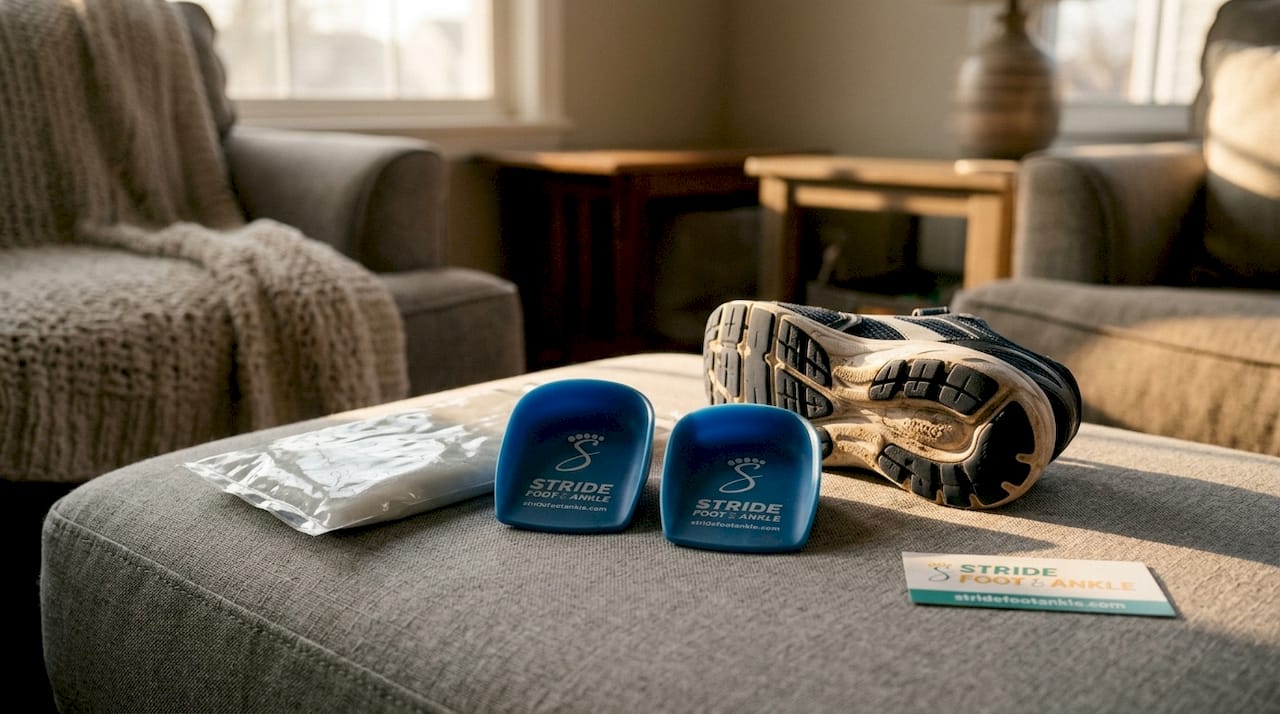
Effective children’s heel pain relief requires a short list of practical tools used consistently. The core components are activity modification, ice therapy, targeted stretching, heel cups, and appropriate footwear. No single tool works in isolation. The combination of these elements, applied consistently over 4–6 weeks, produces the best outcomes.
The essential treatment toolkit
Heel cups work best in lace-up athletic shoes with adequate cushioning. Using them inside thin-soled cleats without padding often worsens discomfort rather than relieving it. This is a common mistake parents make when their child plays soccer or baseball. Pair heel cups with shoes that have a firm heel counter and a slight heel elevation to reduce Achilles tension.
Over-the-counter anti-inflammatory medications like ibuprofen can help during acute flares. However, prolonged NSAID use is not recommended for children. Short-term use under parental supervision is appropriate after particularly painful activity sessions.
Pro Tip: Buy heel cups in pairs and place one set in your child’s school shoes and another in their athletic shoes. Consistency throughout the day reduces cumulative Achilles tension on the growth plate.
| Tool or Method | Purpose | How to Use |
|---|---|---|
| Activity modification | Reduces load on the growth plate | Cut high-impact activity by 30–50%; substitute swimming or cycling |
| Ice therapy | Controls post-activity inflammation | Apply for 10–20 minutes after exercise, never directly on skin |
| Calf and Achilles stretches | Relieves tendon tension on the heel | 3 times daily, 30 seconds per repetition, both straight and bent knee |
| Heel cups | Cushions and elevates the heel | Use in lace-up athletic shoes with adequate padding |
| Supportive footwear | Reduces ground impact forces | Firm heel counter, slight heel elevation, adequate arch support |
| Short-term ibuprofen | Manages acute pain flares | Brief use after painful activities, with parental supervision |
How to implement a step-by-step treatment plan at home
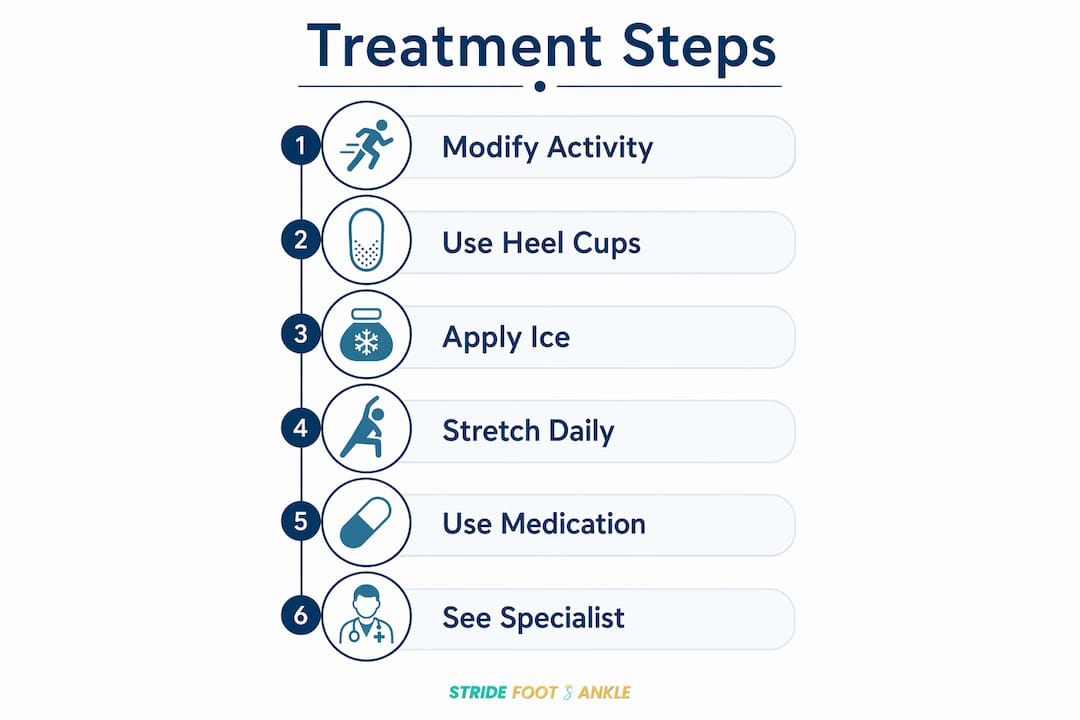
The most effective home protocol for pediatric foot pain treatment combines relative rest, targeted stretching, and consistent use of supportive gear. Most children resolve symptoms within 6–8 weeks using this tiered approach. The key word is “relative” rest. Stopping all activity entirely is unnecessary and counterproductive.
The six-step home protocol
Reduce high-impact activity by 30–50%. Your child does not need to stop moving entirely. Cut running and jumping volume in half. Replace high-impact sessions with swimming, cycling, or walking on flat surfaces. Relative rest maintaining 50–70% of usual activity preserves cardiovascular fitness and keeps your child mentally engaged with physical activity.
Apply ice for 10–20 minutes after every activity session. Wrap an ice pack in a thin towel and place it on the heel. Never apply ice directly to skin. This step controls post-activity inflammation and reduces the cumulative irritation that slows healing.
Perform calf and Achilles stretches three times daily. Tight calves increase Achilles tendon tension on the heel growth plate. Stretching both the gastrocnemius (straight-knee stretch) and the soleus (bent-knee stretch) addresses both muscles. Hold each stretch for 30 seconds and repeat three times per session. Do this in the morning, after school, and before bed.
Use heel cups in every pair of shoes your child wears. Consistency matters more than the quality of the heel cup. A basic silicone heel cup worn all day reduces cumulative load on the growth plate far more effectively than an expensive cup worn only during sports.
Apply the pain-monitoring activity modification model. Daily Achilles-tendon loading exercises combined with a pain-monitoring model are safe and feasible for managing Sever’s disease. The model works like this: allow activity as long as pain stays at 3 out of 10 or below during exercise and returns to baseline within 24 hours afterward. If pain exceeds that threshold, reduce the activity level for the next session. This approach improves compliance and reduces the psychological burden of feeling “injured.”
Track symptoms weekly and adjust accordingly. Keep a simple log of your child’s pain level before and after activity each day. Most parents see clear improvement by week 3–4. If symptoms plateau or worsen after week 6, that is the signal to seek professional evaluation.
Pro Tip: Set a phone alarm for the three daily stretch sessions. Adherence to the stretching schedule is the single biggest predictor of recovery speed. Treatment failures most often arise from inconsistent stretching, not from the wrong tools.
Common mistakes to avoid
Skipping stretches on “good days” is the most frequent error. Pain-free days feel like recovery, but the underlying growth plate irritation persists until the full 4–6 week protocol is complete. A second common mistake is returning to full sports participation the moment pain disappears. Gradual progression based on pain feedback prevents reinjury and supports long-term recovery. A third mistake is using heel cups only in sports shoes while ignoring school footwear, where children spend most of their day.
When should you see a doctor for heel pain in children?
See a podiatrist when heel pain persists beyond 6–8 weeks of consistent home treatment, when pain is severe enough to cause constant limping, or when your child refuses to bear weight on the foot. These signs suggest the condition may be more complex than typical Sever’s disease or that the home protocol needs clinical adjustment.
What a clinical evaluation involves
A podiatrist will perform a physical examination, review your child’s activity history, and assess foot mechanics including arch height, gait pattern, and Achilles flexibility. Imaging through X-ray rules out stress fractures, bone tumors, and other structural causes that can mimic Sever’s disease. MRI is rarely needed but may be used in complex or atypical cases.
Advanced treatment options
Physical therapy is the most effective clinical escalation for persistent cases. A physical therapist designs a progressive loading program that rebuilds Achilles tendon tolerance while protecting the growth plate. Sessions typically run 4–8 weeks.
Custom orthotics outperform standard heel cups and general footwear modifications in managing the biomechanical contributors to pediatric heel pain. Clinical reviews show improved outcomes with tailored orthotic devices compared to off-the-shelf options. Custom orthotics address individual foot mechanics such as overpronation or high arch, which standard insoles cannot correct.
Extracorporeal shockwave therapy (ESWT) uses sound waves to stimulate tissue healing. It shows promise for pediatric heel pain, but ESWT remains experimental due to small study cohorts and limited long-term safety data in children. Clinicians should discuss this option only after conservative measures have been exhausted.
Warning signs that require prompt evaluation:
- Pain that wakes your child from sleep
- Swelling, redness, or warmth around the heel
- Inability to bear weight after a sports injury
- No improvement after 6–8 weeks of consistent home care
- Pain in both heels simultaneously with no clear activity trigger
What preventive measures protect your child’s foot health long-term?
Prevention focuses on managing load during growth spurts and building tissue resilience before symptoms develop. Children who have had Sever’s disease once are at higher risk of recurrence during the next growth spurt, making prevention a year-round priority.
Building a prevention routine
Regular calf and Achilles stretching during growth spurts is the single most protective habit. Growth spurts cause the bones to lengthen faster than the surrounding muscles and tendons, which increases tension on the heel growth plate. Daily stretching keeps that tension manageable.
Appropriate footwear is the second pillar of prevention. Shoes should provide a firm heel counter, adequate cushioning, and a slight heel elevation. Flat-soled shoes and worn-out sneakers increase Achilles tension and ground impact forces. Replace athletic shoes every 4–6 months for active children, or sooner if the midsole shows visible compression.
Prevention habits that make a real difference:
- Stretch calves and Achilles tendons daily during growth spurts, not just when symptoms appear
- Replace athletic shoes regularly before the cushioning breaks down
- Increase sports training volume gradually, no more than 10% per week
- Include cross-training activities like swimming and cycling to reduce repetitive impact on the heel
- Monitor your child’s pain levels during and after activity and act early when discomfort appears
Pro Tip: At the start of each sports season, have your child do a two-week “pre-season” stretching program before full training begins. This primes the Achilles tendon and calf muscles for the increased load and significantly reduces the risk of a Sever’s disease flare.
Gradual progression in physical activity is critical. Sudden spikes in training volume, such as doubling practice sessions at the start of a new season, are a primary trigger for Sever’s disease flares. Coaches and parents should coordinate to ensure training loads increase steadily. For guidance on safe return to sports after a heel pain episode, a structured protocol helps children rebuild confidence and physical capacity without risking reinjury.
Cross-training is underused as a prevention tool. Swimming and cycling maintain cardiovascular fitness and lower-body strength without loading the heel growth plate. Children who cross-train during high-risk growth periods show fewer recurrences than those who focus exclusively on a single high-impact sport.
Key Takeaways
Treating pediatric heel pain effectively requires consistent stretching, relative rest, and supportive footwear applied together over 4–8 weeks, with professional evaluation when symptoms persist beyond that window.
| Point | Details |
|---|---|
| Sever’s disease is the primary cause | It affects children aged 8–14 and involves growth plate irritation from Achilles tendon tension. |
| Relative rest outperforms full rest | Maintain 50–70% of usual activity and substitute swimming or cycling to support healing. |
| Stretching consistency drives recovery | Perform calf and Achilles stretches three times daily; skipping on pain-free days is the most common treatment failure. |
| Heel cups need the right footwear | Use them in lace-up athletic shoes with cushioning; thin-soled cleats reduce their effectiveness. |
| Seek professional care after 6–8 weeks | Persistent symptoms warrant clinical evaluation, possible custom orthotics, and physical therapy. |
What I’ve learned from watching parents manage this condition
Parents often make one of two mistakes. They either pull their child out of all activity the moment heel pain appears, or they push through the pain hoping it will resolve on its own. Neither approach works well. Total rest creates anxiety in active kids and delays the tissue adaptation needed for recovery. Ignoring pain allows cumulative damage to build up and extends the recovery timeline.
The pain-monitoring model changed how I think about this condition. Allowing children to stay active within a defined pain threshold, specifically keeping discomfort at or below 3 out of 10 during activity, produces better outcomes than a blanket “no sports” rule. Kids stay engaged, parents feel less guilty, and the recovery timeline actually shortens.
I’ve also seen parents over-rely on ibuprofen. It reduces pain in the short term, which can mask the feedback signal that tells a child to slow down. Use it sparingly, after particularly hard sessions, not as a daily management tool.
The other thing I’d tell every parent: Sever’s disease resolves completely. Every child who follows the protocol consistently gets better. The growth plate closes as your child matures, and the condition cannot persist into adulthood. That reassurance matters. Knowing the outcome is certain makes it easier to stay consistent with the stretching, the footwear changes, and the activity modifications that actually drive recovery. If you are ever uncertain about your child’s symptoms, early consultation with a podiatrist is always the right call. Conservative foot care resolves the vast majority of pediatric heel pain cases without surgery or prolonged treatment.
— Ramil
Stride Foot & Ankle: expert care for your child’s heel pain
When home treatment is not enough, your child deserves a clinical evaluation from a specialist who understands pediatric foot mechanics.
Stridefootankle, led by Dr. Nahad Wassel in Las Vegas, offers accurate diagnosis, advanced imaging, custom orthotics, and personalized treatment plans for children with persistent heel pain. Dr. Wassel’s approach combines conservative care with evidence-based protocols to get your child back on their feet as quickly and safely as possible. Whether your child needs a biomechanical assessment, a custom orthotic fitting, or a structured physical therapy referral, Stridefootankle provides comprehensive foot and ankle care tailored to each patient’s needs. Schedule an appointment today and get a clear plan for your child’s recovery.
FAQ
What is Sever’s disease and why does it cause heel pain?
Sever’s disease, or calcaneal apophysitis, is a growth plate condition affecting children aged 8–14. The Achilles tendon pulls on the heel’s growth plate during activity, causing inflammation and pain at the back of the heel.
How long does it take for pediatric heel pain to resolve?
Most children recover within 6–8 weeks with consistent activity modification, daily calf stretching, ice therapy, and heel cups. Symptoms that persist beyond 8 weeks warrant a professional evaluation.
Can my child keep playing sports with Sever’s disease?
Yes, with modification. The pain-monitoring model allows activity as long as pain stays at 3 out of 10 or below and returns to baseline within 24 hours. Complete rest is rarely necessary and often counterproductive.
When should I take my child to a podiatrist for heel pain?
See a podiatrist if pain persists beyond 6–8 weeks of home treatment, if your child cannot bear weight, or if there is visible swelling or redness around the heel. These signs may indicate a more complex condition requiring clinical assessment.
Do custom orthotics help children with heel pain?
Custom orthotics outperform standard heel cups for children with biomechanical contributors to heel pain such as overpronation or high arches. Clinical reviews confirm better outcomes with tailored orthotic devices compared to off-the-shelf options.
Recommended
- Foot pain podiatry: Las Vegas diagnosis and treatment guide – Stride Foot & Ankle – Dr. Nahad Wassel
- Step-by-step foot care routines for pain relief – Stride Foot & Ankle – Dr. Nahad Wassel
- What is pediatric foot pain? A parents’ guide to causes and care – Stride Foot & Ankle – Dr. Nahad Wassel
- Guide to Common Pediatric Foot Problems: Causes, Signs, Care – Stride Foot & Ankle – Dr. Nahad Wassel
Recent Comments