

TL;DR:
- Custom orthotics are prescription devices created from a cast or scan of your foot to correct biomechanics or protect tissue. They are most effective when matched to specific diagnoses and used alongside other conservative treatments. Costs vary, with insurance coverage often available for qualified cases.
Custom orthotics are prescription medical devices made from a cast or 3D scan of your individual foot. Unlike store-bought insoles, they are designed by a clinician to correct your specific biomechanics or protect vulnerable tissue. The American Podiatric Medical Association recognizes them as a conservative, non-surgical treatment for conditions ranging from plantar fasciitis to diabetic foot ulcers.
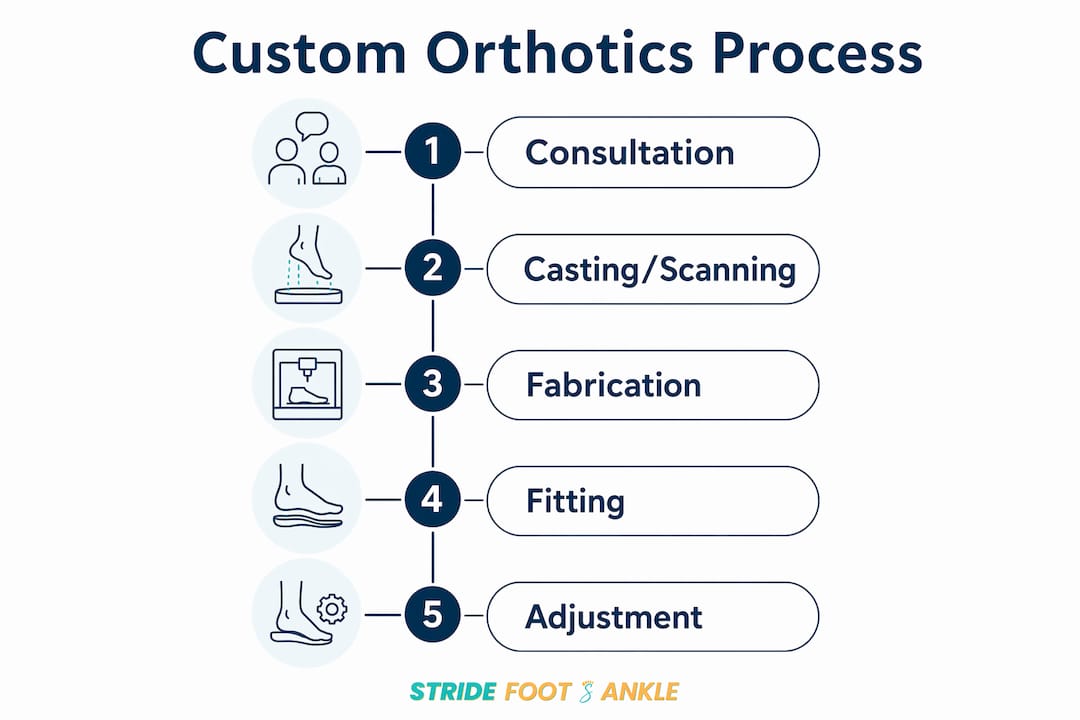
Table of Contents
- What exactly are custom orthotics, and what types exist?
- How are custom orthotics made, from exam to fitting?
- How do orthotics actually change the way your foot feels and functions?
- Which conditions respond well to custom foot orthotics?
- Custom orthotics vs. store-bought inserts: which one do you actually need?
- What should you expect at your orthotic appointment and afterward?
- What does the research actually say about custom orthotics?
- How much do custom orthotics cost, and does insurance cover them?
- What are the real limitations and risks of custom orthotics?
- How do you get custom orthotics? Step-by-step next steps
- Key Takeaways
- A clinician’s perspective on what orthotics can and cannot do
- Ready to find out if custom orthotics are right for you?
- Useful sources
- FAQ
What exactly are custom orthotics, and what types exist?
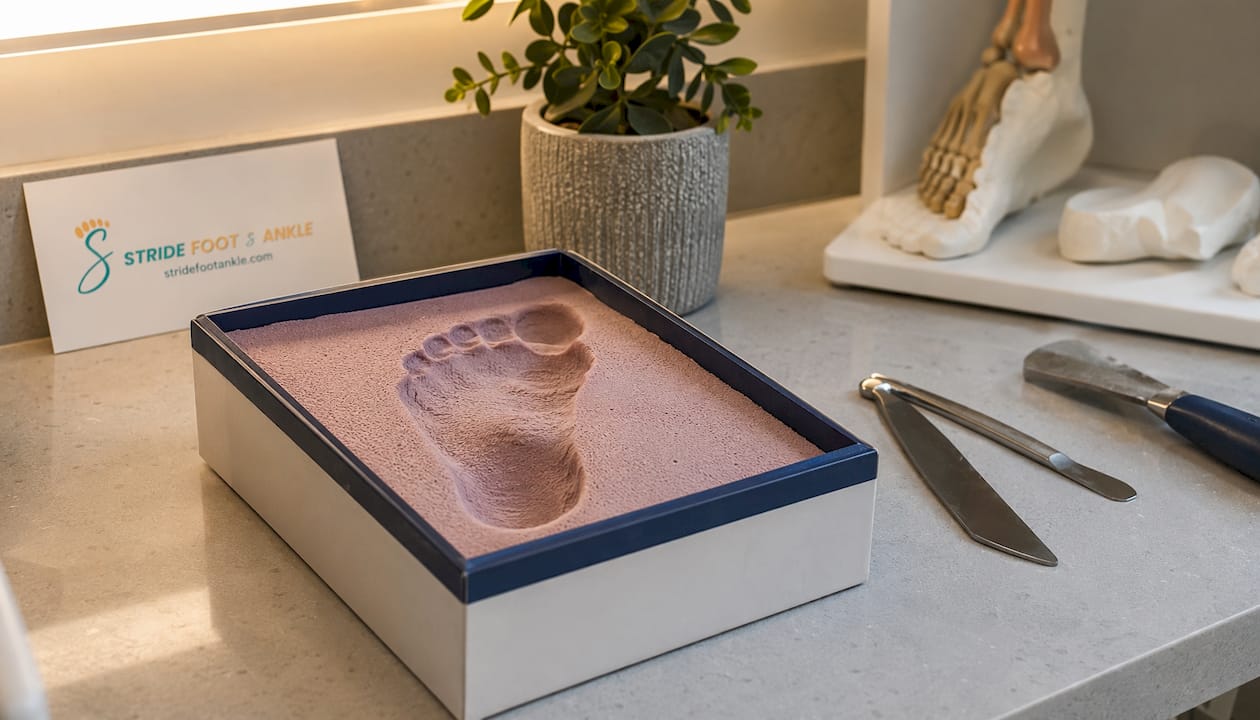
Custom orthotics are shoe inserts uniquely manufactured for a single patient from a plaster cast, foam impression, or 3D digital scan of their feet. They are not mass-produced by size. A clinician prescribes them after a physical exam and biomechanical assessment, targeting a specific diagnosis rather than general comfort.
There are two core categories, and the distinction matters for your treatment plan.
Functional orthotics are built to control abnormal motion and correct alignment. They use semi-rigid or rigid materials such as polypropylene, carbon fiber, or graphite. Common uses include:
- Overpronation and flat-foot alignment correction
- Shin splints and tibial stress management
- Tendonitis linked to faulty gait mechanics
- Bunion-related pain caused by excessive forefoot loading
Accommodative orthotics prioritize cushioning and pressure redistribution over mechanical correction. They use softer materials like EVA foam, cork, or Pelite-type composites. Common uses include:
- Diabetic foot ulcer prevention and total-contact offloading
- Metatarsalgia (ball-of-foot pain) relief
- Arthritic joints requiring pressure reduction
- High-arch (cavus) feet needing shock absorption
Pro Tip: Functional orthotics are intentionally firmer than a cushioned insole. If your device feels stiff at first, that rigidity is doing the corrective work. Expecting softness is one of the most common reasons patients abandon devices that are actually working.
You can read more about selecting the right device type based on your specific condition and footwear needs.
How are custom orthotics made, from exam to fitting?
The process runs from clinical evaluation through lab fabrication to a fitting appointment, typically spanning two to four weeks from your first visit to receiving the finished device.
- Clinical evaluation. Your podiatrist reviews your medical history, examines your foot structure, and observes your gait. Pressure mapping or video gait analysis may be used to identify load patterns.
- Impression or scan. The clinician captures your foot shape in a neutral subtalar position rather than a full weight-bearing stance. This is critical: an impression taken while you simply stand captures your existing deformity rather than guiding the foot toward corrected motion. Methods include plaster casting, foam box impressions, or 3D laser scanning.
- Lab fabrication. A specialized lab selects shell materials and top covers based on the prescription. Traditional milling cuts the shell from a polypropylene blank. Increasingly, labs use 3D printing technologies such as FDM, MJF, or SLS to produce variable-thickness shells with targeted stiffness in specific plantar zones, which is particularly useful for complex offloading needs.
- Fitting appointment. You try the devices in your most-worn shoes. The clinician checks contact, pressure points, and heel cup fit, then makes any necessary modifications on the spot or sends the device back to the lab for adjustment.
- Follow-up. A check-in at four to six weeks confirms the devices are performing as intended and allows for fine-tuning.
How do orthotics actually change the way your foot feels and functions?
Custom orthotics reduce mechanical pathology by altering load distribution across the plantar surface and controlling joint motion throughout the gait cycle. They do not strengthen muscles or repair damaged tissue directly. What they do is reduce the mechanical stress that is aggravating the problem, giving injured structures a chance to recover.
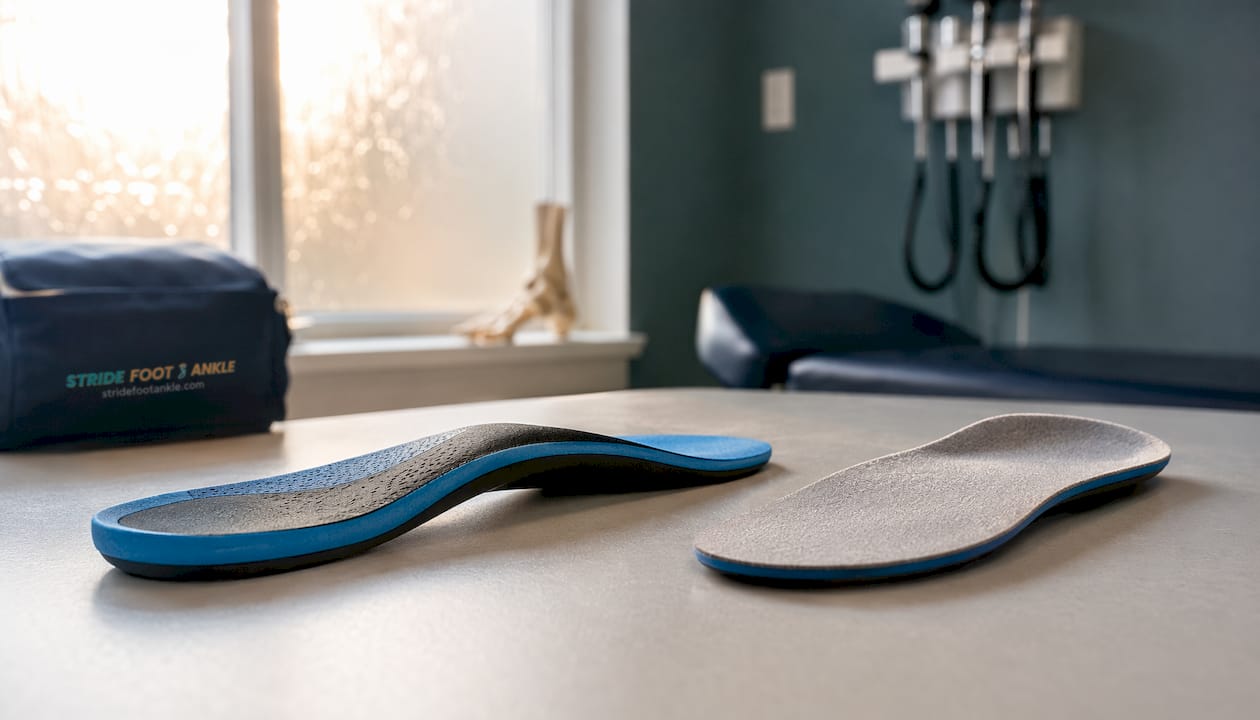
The subtalar joint controls the chain of motion from heel strike through toe-off. When that joint moves excessively inward (overpronation), it increases tensile strain on the plantar fascia, loads the medial knee, and shifts tibial rotation. A functional orthotic with a medial heel post limits that inward collapse, reducing strain at each step.
For plantar fasciitis specifically, correcting arch support lowers the repetitive pull on the fascia’s calcaneal attachment. Patients often notice reduced morning pain within a few weeks of consistent wear. That said, orthotics reduce load; they rarely resolve the underlying condition on their own. The APMA’s clinical guidance consistently positions orthotics as one component of a broader treatment plan that may include stretching, physical therapy, or shoe modifications.
Which conditions respond well to custom foot orthotics?
Custom orthotics help a wide range of mechanical and pressure-related foot problems. The key is matching the device type to the underlying pathology.
- Plantar fasciitis: Arch support and heel cushioning reduce tensile load on the fascia. Functional devices are most common here.
- Flexible flat feet: Medial posting corrects excessive pronation and reduces downstream knee and hip strain.
- Cavus (high-arch) feet: Accommodative devices absorb shock that a rigid arch cannot distribute naturally.
- Bunion-related pain: Metatarsal pads and toe spacers within a custom shell offload the first MTP joint.
- Shin splints: Functional orthotics reduce tibial torsion forces during running and walking.
- Achilles tendonitis: A heel lift within the orthotic reduces strain on the tendon during push-off.
- Diabetic foot ulcer prevention: Total-contact accommodative devices redistribute plantar pressure away from high-risk areas, a well-established use case supported by NCBI Bookshelf research.
- Metatarsalgia: Metatarsal domes shift load proximally, relieving ball-of-foot pain.
- Rheumatoid and arthritic joints: Accommodative devices cushion inflamed joints and reduce shear forces.
For complex deformities or neuromuscular conditions, a JAAOS clinical review recommends collaboration with a certified orthotist and possible escalation to ankle-foot orthoses (AFOs). Standard custom foot orthotics are one part of a broader toolkit.
Custom orthotics vs. store-bought inserts: which one do you actually need?
The core distinction is patient-specific prescription versus mass-produced sizing. A store-bought insert is designed for an average foot shape. A custom orthotic is designed for your foot, your diagnosis, and your gait pattern.
Custom orthotics:
- Precise fit from a cast or scan of your individual foot
- Clinician-prescribed for a specific diagnosis
- Semi-rigid or soft materials chosen for your pathology
- Strong biomechanical control potential
- Higher upfront cost; often covered partially by insurance
- Lifespan of two to five years with proper care
- Adjustable and warrantied through your provider
Over-the-counter (OTC) inserts:
- Generic sizing; fit varies by brand and foot shape
- No prescription or clinical exam required
- Primarily foam or gel; limited corrective potential
- Lower cost; no insurance involvement
- Typically replaced every six to twelve months
- No clinical follow-up or adjustment
| Feature | Custom orthotics | OTC inserts |
|---|---|---|
| Fit precision | Individual cast or scan | Generic size-based |
| Biomechanical control | High (functional) or targeted (accommodative) | Low to moderate |
| Cost | Higher; insurance may apply | Low |
| Insurance likelihood | Possible with prescription and medical necessity | Rarely covered |
| Lifespan | Two to five years | Six to twelve months |
| Best-use case | Diagnosed condition, failed OTC trial, complex deformity | Mild discomfort, prevention, cost constraints |
Try an OTC insert first if: your symptoms are mild, you have no formal diagnosis, or you want to test whether added arch support helps before committing to a clinical evaluation. Give it four to six weeks of consistent wear. If pain persists or worsens, that is your signal to schedule a podiatry evaluation.
The clinical benefits of custom orthotics become most apparent when OTC options have already been tried and fallen short.
What should you expect at your orthotic appointment and afterward?
Your first appointment is primarily diagnostic. Expect a thorough exam, not just a quick foot measurement.
- Bring your most-worn shoes and any previous inserts or orthotics. Your footwear tells the clinician as much as your foot does.
- Gait and biomechanical assessment. The clinician watches you walk, checks your range of motion, and assesses subtalar and midfoot alignment.
- Impression or scan. Taken in a neutral position (see the manufacturing section above). This takes roughly ten to fifteen minutes.
- Lab turnaround. Most labs return finished devices within two to four weeks. Some offer expedited fabrication.
- Fitting appointment. You wear the orthotics in your shoes and walk while the clinician observes. Minor grinding or padding adjustments happen on the spot.
- Break-in schedule. Start with one to two hours of wear on day one, adding an hour or two each day over one to two weeks. Muscles and ligaments need time to adapt to the corrected position.
- Follow-up at four to six weeks. Report any pressure points, skin irritation, or persistent discomfort. Adjustments at this stage are normal and expected.
Pro Tip: Be specific about your daily activities at the first appointment. A device designed for office shoes will not perform the same in a running shoe. Honest lifestyle information leads to a more realistic device design.
What does the research actually say about custom orthotics?
The evidence is genuinely mixed, and that is worth saying plainly. Custom orthotics show clear biomechanical and pressure-redistribution advantages in selected populations, but many clinical trials find no statistically significant superiority over prefabricated devices for pain outcomes across all conditions.
An NCBI Bookshelf systematic review found that custom-made devices are generally considered the gold standard, yet comparative effectiveness varies by condition and more high-quality cost-effectiveness data are still needed. The JAAOS review highlights custom orthoses as most justified for complex deformity and cases where OTC options have failed, and recommends certified orthotist involvement for difficult presentations.
Where the evidence is strongest: diabetic foot ulcer prevention, plantar fasciitis combined with other conservative care, rheumatoid arthritis pressure management, and post-surgical offloading.
Where evidence is limited: chronic low back pain, general knee pain without a clear biomechanical driver, and mild flat feet in otherwise asymptomatic adults.
The APMA’s position is consistent with this nuance: orthotics work best as part of a multimodal conservative care plan that includes exercise, footwear modification, and patient education, not as a standalone solution.
How much do custom orthotics cost, and does insurance cover them?
Costs vary considerably based on device complexity, materials, and provider. Custom orthotics generally cost more than OTC inserts, and that gap reflects the clinical exam, casting or scanning, lab fabrication, fitting, and follow-up care bundled into the process.
Insurance and payment basics:
- Many health insurance plans cover custom orthotics when a podiatrist documents medical necessity and provides a formal prescription.
- Most plans that cover orthotics limit coverage to one pair per calendar year.
- FSA (Flexible Spending Account) and HSA (Health Savings Account) funds can typically be used for prescription orthotics.
- Medicare Part B may cover therapeutic shoes and inserts for patients with diabetes under specific criteria.
- Always verify your plan’s durable medical equipment (DME) benefit before your appointment.
Lifespan and care:
- Well-maintained custom orthotics typically last two to five years, depending on activity level and materials.
- Signs you need replacement: visible shell cracking, top cover wear-through, or return of the original symptoms despite consistent wear.
- Clean top covers with a damp cloth; avoid soaking or machine washing.
- Replace top covers (the soft layer) every twelve to eighteen months while keeping the shell.
- Check shoe fit regularly; a worn-down heel counter undermines even the best orthotic.
What are the real limitations and risks of custom orthotics?
Custom orthotics are not right for every patient or every situation. Setting realistic expectations is part of responsible care.
Common limitations include:
- Break-in discomfort. Corrective devices feel unfamiliar at first. Some patients experience temporary soreness in the arch, calf, or knee as their gait pattern shifts.
- Footwear incompatibility. A device designed for a lace-up shoe will not fit a dress flat or a sandal. Lifestyle and shoe variety must be factored into the prescription.
- Non-adherence. An orthotic that sits in a drawer provides no benefit. Patients who find devices too bulky or uncomfortable for their preferred footwear often stop wearing them.
- Muscle dependency concerns. Some research notes that prolonged exclusive reliance on orthotics may reduce intrinsic foot muscle activation over time. Pairing orthotics with foot strengthening exercises is widely recommended.
- Limited evidence for some pain types. For non-mechanical pain or systemic conditions without a clear biomechanical driver, orthotics may offer little benefit.
- Poor fit from inadequate impression technique. A device is only as good as the cast or scan it was made from.
Red flags requiring prompt medical review:
- New or worsening skin breakdown, blisters, or pressure sores under the device
- Numbness or tingling that begins or worsens after starting orthotic wear
- Increased pain after the initial break-in period has passed
- Any open wound or ulceration, particularly in patients with diabetes
Diabetic patients should inspect their feet daily and contact their podiatrist immediately if any skin change appears.
How do you get custom orthotics? Step-by-step next steps
Schedule a podiatry evaluation first. Everything else follows from that appointment.
- Schedule with a board-certified podiatrist. Bring your most-worn shoes, any previous orthotics or inserts, and a list of your symptoms, activities, and footwear habits.
- Undergo the clinical exam. Your podiatrist will assess your foot structure, gait, and any imaging findings. Imaging such as X-rays may be ordered to rule out structural pathology.
- Discuss your goals and lifestyle. Be specific: running, standing all day at work, and casual walking each require different device designs.
- Receive your prescription. The prescription specifies device type, shell material, posting, top cover, and any special features.
- Impression or scan is taken. This happens at the same visit or a follow-up, depending on the clinic’s workflow.
- Wait for lab fabrication. Typically two to four weeks. Some clinics offer in-house or expedited options.
- Attend your fitting appointment. Walk in the devices, report any discomfort, and follow the break-in schedule provided.
- Return for follow-up. At four to six weeks, your podiatrist confirms fit and function and makes any needed adjustments.
Questions to ask your provider:
- What is my diagnosis, and which device type is prescribed for it?
- What materials are being used, and why?
- What is the return or adjustment policy if the fit is not right?
- Does the device come with a warranty?
- What will my insurance cover, and what will I owe out of pocket?
- Should I combine orthotics with physical therapy or exercises?
Bring your most-worn pair of shoes to every appointment, including the fitting. A clinically ideal device that does not fit your shoes will not get worn.
Key Takeaways
Custom orthotics are prescription devices made from a cast or scan of your foot, prescribed for a specific diagnosis, and most effective when combined with other conservative care.
| Point | Details |
|---|---|
| What they are | Prescription medical devices made from a cast or 3D scan of your individual foot, not mass-produced insoles. |
| Two core types | Functional orthotics correct biomechanics with rigid materials; accommodative orthotics cushion and redistribute pressure with softer materials. |
| OTC vs. custom | Try a store-bought insert for mild symptoms first; seek a custom prescription when OTC options fail or symptoms are severe. |
| Evidence nuance | Research supports custom orthotics most strongly for diabetic foot protection, plantar fasciitis, and complex deformity; evidence is mixed for general pain. |
| Lifespan | Custom orthotics typically last two to five years; OTC inserts generally last six to twelve months. |
| Next step in Las Vegas | Stridefootankle offers board-certified podiatric evaluation, casting, and individualized orthotic prescription for patients in the Las Vegas area. |
A clinician’s perspective on what orthotics can and cannot do
The most persistent misconception I see is that a custom orthotic is a cure. Patients arrive expecting the device to fix the problem permanently, and when symptoms return after they stop wearing it, they conclude the orthotic failed. It did not. An orthotic manages mechanical load; it does not remodel bone, rebuild tendon, or correct muscle weakness on its own.
What I find genuinely underappreciated is how much the shoe matters. A beautifully fabricated orthotic placed inside a worn-out sneaker with a collapsed heel counter is working against itself from the first step. The device and the shoe are a system. Clinicians who skip the footwear conversation are leaving a significant variable uncontrolled.
The other thing worth saying plainly: for many patients, a well-chosen prefabricated insert combined with targeted exercises and a shoe change will get them eighty percent of the way there. Custom orthotics earn their cost when the diagnosis is complex, when OTC options have genuinely been tried and failed, or when the stakes are high, as they are for a diabetic patient at risk of ulceration. Recommending a custom device to every patient with foot pain is not conservative care. It is overtreatment. The goal is matching the intervention to the actual clinical need.
Ready to find out if custom orthotics are right for you?
Foot pain that lingers beyond a few weeks deserves a proper clinical evaluation, not another trip to the pharmacy aisle. At Stridefootankle, Dr. Nahad Wassel provides board-certified podiatric care in Las Vegas, including comprehensive biomechanical assessment, digital scanning, and individualized orthotic prescription as part of a conservative foot care plan.
To schedule an evaluation, bring your most-worn shoes, any previous orthotics, and a clear description of your symptoms and daily activities. Dr. Wassel’s team will assess your foot structure, discuss your goals, and determine whether a custom device, a prefabricated option, or a different conservative approach is the right fit for your situation. Schedule your appointment today and take the first step toward moving without pain.
Stridefootankle serves patients in the Las Vegas area. This article is general health information, not personalized medical advice. Consult a qualified podiatrist for evaluation and treatment specific to your condition.
Useful sources
The following authoritative sources were used in preparing this article and are recommended for further reading:
- APMA: Prescription Custom Orthotics and Shoe Inserts — The American Podiatric Medical Association’s patient-facing overview of custom orthotic indications, types, and clinical standards.
- NCBI Bookshelf: Custom-Made Foot Orthotics for People With Lower Limb Conditions — A systematic review covering evidence for custom orthotics across conditions including diabetic foot, plantar heel pain, and rheumatoid arthritis.
- NCBI Bookshelf: Custom-Made vs. Prefabricated Foot Orthoses — A comparative review of custom versus prefabricated devices, including biomechanical outcomes and cost-effectiveness gaps.
- JAAOS: Orthotic Devices for the Foot and Ankle (2024) — A recent clinical review covering device selection, complex deformity management, and orthotist collaboration recommendations.
- Cleveland Clinic: Orthotics — Definition, Risks, Benefits, Types & Tips — A clinically reviewed patient guide covering orthotic types, the prescription process, and when to seek professional evaluation.
This article is for general informational purposes only and does not constitute personalized medical advice. For diagnosis and treatment specific to your condition, please consult a licensed podiatrist or qualified healthcare professional.
FAQ
How much do custom orthotics usually cost?
Custom orthotics cost more than store-bought inserts due to the clinical exam, casting or scanning, lab fabrication, and fitting appointments involved. Many health insurance plans cover them when a podiatrist documents medical necessity and provides a formal prescription; FSA and HSA funds can also be applied.
Are custom orthotics really worth the money?
For patients with a diagnosed mechanical condition, failed OTC trials, or high-risk situations like diabetic foot care, custom orthotics are generally worth the investment. They typically last two to five years with proper care and are adjusted to your specific diagnosis, which prefabricated inserts cannot replicate.
What are the negatives of orthotics?
Common downsides include an initial break-in period with temporary soreness, potential footwear incompatibility, and the risk of reduced intrinsic foot muscle activation with prolonged exclusive use. Clinicians typically recommend pairing orthotics with strengthening exercises to offset this concern.
Will insurance pay for custom orthotics?
Many insurance plans cover custom orthotics when prescribed by a podiatrist with documented medical necessity, though most limit coverage to one pair per calendar year. Medicare Part B covers therapeutic inserts for qualifying diabetic patients under specific criteria. Always verify your plan’s durable medical equipment benefit before your appointment.
Recommended
- Orthotics for Foot Pain: What You Need to Know – Stride Foot & Ankle – Dr. Nahad Wassel
- How to Improve Foot Mobility: Exercises and Tips – Stride Foot & Ankle – Dr. Nahad Wassel
- High Arched Feet: Causes, Footwear, and Treatment – Stride Foot & Ankle – Dr. Nahad Wassel
- Corns and Calluses: Causes, Treatment, and Prevention – Stride Foot & Ankle – Dr. Nahad Wassel
Recent Comments