

TL;DR:
- Ankle arthritis involves cartilage deterioration in over 30 foot and ankle joints, causing pain and limited movement.
- Early diagnosis, conservative treatments, and proper footwear can effectively manage symptoms and delay progression.
Ankle arthritis is defined as the gradual breakdown of cartilage within one or more of the over 30 joints in the foot and ankle complex, causing pain, stiffness, and reduced mobility. The three most common forms are post-traumatic arthritis, osteoarthritis, and inflammatory conditions like rheumatoid arthritis. Each type damages cartilage through a different mechanism, but all produce the same result: bone rubbing against bone, swelling, and loss of function. If you are feeling persistent ankle pain or morning stiffness that limits your daily movement, understanding this condition is the first step toward getting real relief.
What causes ankle arthritis?
Ankle arthritis develops when cartilage, the smooth tissue that cushions the joint, wears down or is destroyed. The cause determines how quickly that process unfolds and which joints are affected first.
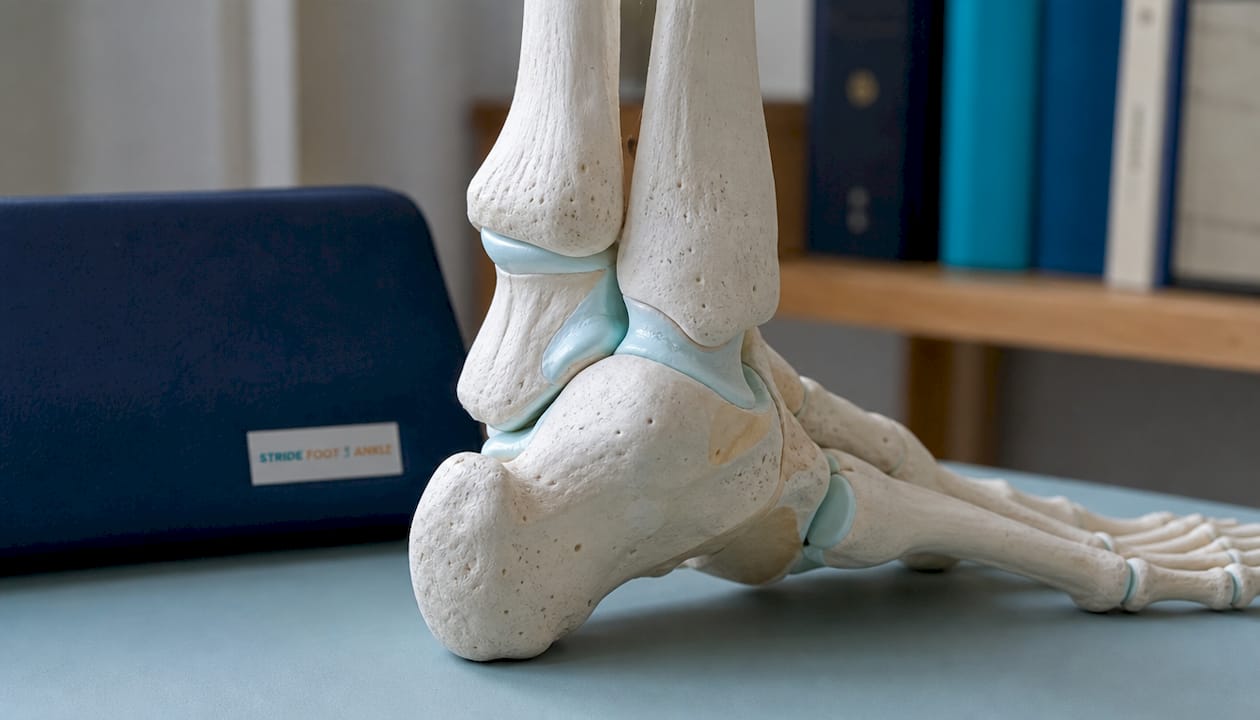
Post-traumatic arthritis is the leading cause of ankle joint degeneration. It develops after a prior ankle fracture or repeated sprains that left the ligaments stretched or torn. Ligament instability creates uneven joint loading, meaning one part of the cartilage absorbs far more force than it should. Over years, that concentrated pressure grinds the cartilage down. Many patients are surprised to learn that a sprain they “walked off” a decade ago is now driving their arthritis. The connection between old ankle injuries and later post-traumatic arthritis is one of the most underrecognized patterns in foot and ankle care.
Osteoarthritis follows a wear-and-tear pattern. Cartilage thins gradually over decades of normal use, accelerated by excess body weight, repetitive high-impact activity, or natural joint alignment problems. Unlike post-traumatic arthritis, osteoarthritis tends to develop slowly and symmetrically.
Inflammatory arthritis, including rheumatoid arthritis, psoriatic arthritis, and gout, attacks cartilage through an immune-driven process. The body’s own immune system triggers joint inflammation, which erodes cartilage from the inside out. Rheumatoid arthritis often affects multiple joints at once and requires systemic medication in addition to local joint care.
The common causes of ankle arthritis include:
- Prior ankle fractures or dislocations that altered joint alignment
- Repeated ankle sprains leading to chronic ligament laxity
- Osteoarthritis from age-related cartilage thinning
- Rheumatoid arthritis and other autoimmune inflammatory conditions
- Gout, which deposits uric acid crystals that damage cartilage
- Joint malalignment from flat feet or high arches that shifts load unevenly
Pro Tip: If you have had multiple ankle sprains in your life, tell your podiatrist even if those injuries feel like ancient history. Ligament laxity from old sprains is a direct driver of cartilage breakdown, and catching it early changes your treatment options significantly.
What symptoms indicate ankle arthritis?
Ankle arthritis symptoms range from a dull background ache to sharp, activity-limiting pain. Recognizing the full pattern helps you describe your condition accurately to a clinician and get a faster, more accurate diagnosis.
Pain and swelling are the two most consistent signs. The pain is often felt not just at the ankle joint itself but also in the middle or back of the foot, which surprises many patients. Swelling tends to worsen after prolonged standing or walking and improves with rest. Stiffness is especially noticeable first thing in the morning or after sitting for an extended period.
You may also notice:
- Dull aching pain during or after activity, even low-impact walking
- Sharp, stabbing discomfort during sudden movements or uneven terrain
- Morning stiffness lasting more than 15 minutes after waking
- Swelling around the ankle that fluctuates with activity levels
- Reduced range of motion, making it hard to flex or point the foot fully
- Joint locking or seizing sensations mid-step, as if the ankle catches
- Tenderness to touch along the joint line or surrounding soft tissue
- A grinding or clicking sensation when moving the ankle through its range
Symptoms are not constant. Symptom fluctuations with activity and inflammation are a defining feature of ankle arthritis. You may have weeks that feel manageable followed by flare-ups triggered by increased activity, cold weather, or a minor misstep. That variability is not a sign that the condition has resolved. It reflects the cyclical nature of joint inflammation.
One detail worth noting: arthritis can be painless in its early stages, particularly in the foot. Some patients only notice stiffness or a subtle change in their gait before pain becomes obvious. Catching the condition at that stage gives you far more treatment options.
How is ankle arthritis diagnosed?
Ankle arthritis diagnosis combines a clinical examination with targeted imaging. No single test confirms the condition alone. The clinician builds a picture from your history, physical findings, and imaging results together.
Clinical examination
The exam focuses on where your pain is located, how your ankle moves, and whether the joint feels unstable. Your clinician will assess your gait, check for swelling, and apply pressure along specific joint lines to identify the source of discomfort. Range of motion testing reveals how much cartilage loss has already occurred.
Imaging: X-rays and MRI
Weight-bearing X-rays are the standard first imaging step. They show joint space narrowing, bone spurs, and alignment under the load your ankle actually carries during daily life. Non-weight-bearing images often miss true structural changes because the joint is not compressed. That distinction matters clinically.
The table below outlines the primary diagnostic tools and what each one reveals:
| Diagnostic Tool | What It Shows | Best Used For |
|---|---|---|
| Weight-bearing X-ray | Joint space, bone alignment, spurs | Initial diagnosis, severity staging |
| MRI | Cartilage quality, ligament damage, soft tissue | Early-stage or complex cases |
| CT scan | Bone detail, fracture patterns | Surgical planning |
| Clinical exam | Pain location, range of motion, stability | All stages, guides imaging choice |
MRI adds detail that X-rays cannot provide. It detects cartilage thinning before bone changes appear on X-ray, and it reveals ligament damage that may be driving joint instability. Understanding imaging in podiatry helps you ask better questions at your appointment and understand what your results actually mean.
Pro Tip: Always ask for weight-bearing X-rays specifically. If your imaging was done lying down, the results may underestimate how much joint space you have actually lost. This is a common gap in initial evaluations that can delay accurate diagnosis.
What treatment options are available for ankle arthritis?
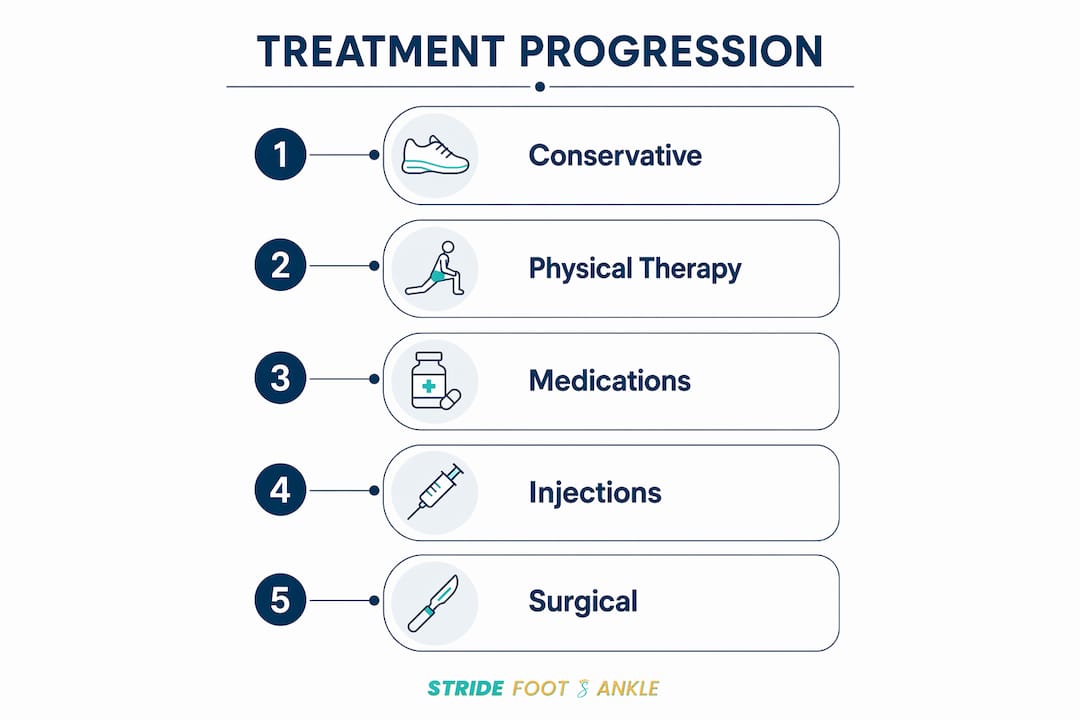
Ankle arthritis treatment follows a clear progression: start with the least invasive options, assess response, and escalate only when needed. Joint-preserving treatments are always prioritized before joint-sacrificing surgeries like fusion or total ankle replacement. That principle guides every well-structured treatment plan.
Nonsurgical treatments
The following steps form the foundation of conservative care:
- Activity modification: Reduce high-impact activities like running or jumping. Replace them with swimming, cycling, or walking on even surfaces to maintain fitness without grinding the joint.
- Physical therapy: Targeted exercises strengthen the muscles around the ankle, improving joint stability and reducing the load on damaged cartilage.
- Orthotics and bracing: Custom orthotics correct alignment problems that accelerate cartilage wear. Ankle braces reduce instability and protect the joint during activity. Exploring nonsurgical treatment options early gives you the widest range of choices.
- Medications: Nonsteroidal anti-inflammatory drugs (NSAIDs) like ibuprofen or naproxen reduce inflammation and pain. Topical anti-inflammatory gels applied directly to the ankle offer an alternative for patients who cannot tolerate oral medications.
- Corticosteroid injections: Steroid injections into the joint reduce inflammation quickly and can provide weeks to months of relief. They are most effective during flare-ups and when combined with physical therapy.
- Hyaluronic acid injections: These injections supplement the joint’s natural lubricating fluid. Evidence for their effectiveness in ankle arthritis is more limited than for knee arthritis, but some patients report meaningful symptom reduction.
- Light therapy: Emerging evidence supports light therapy for joint pain as a conservative adjunct to reduce inflammation and support tissue recovery in joint conditions.
Surgical treatments
Surgery becomes the right conversation when conservative care no longer controls symptoms and quality of life is significantly affected. The two primary surgical options are:
- Ankle fusion (arthrodesis): The joint surfaces are fused together, eliminating painful motion. It is highly effective for pain relief but permanently removes ankle movement. Patients adapt well for most daily activities.
- Total ankle replacement (arthroplasty): The damaged joint surfaces are replaced with prosthetic components. This preserves ankle motion and is increasingly preferred for active patients with good bone quality.
The choice between fusion and replacement depends on your age, activity level, bone quality, and the specific joints involved. Reviewing ankle surgery options in detail with your surgeon gives you a realistic picture of what each procedure involves and what recovery looks like.
Pro Tip: Treatment for ankle arthritis is not a straight line. Symptom fluctuations mean your plan should flex with your condition. A good clinician adjusts your physical therapy intensity, orthotic use, and medication approach based on how you are doing month to month, not on a fixed schedule.
How can you manage ankle arthritis daily?
Daily management of ankle arthritis centers on reducing joint load, maintaining strength, and protecting the joint from unnecessary stress. These habits do not replace clinical care. They make clinical care work better.
- Choose low-impact exercise: Swimming, cycling, and elliptical training maintain cardiovascular fitness and joint mobility without the impact forces of running. Aim for consistency over intensity.
- Wear the right footwear: Shoes with a moderate heel-to-toe drop reduce the range of motion your ankle needs to complete each step. Completely flat shoes increase ankle motion demands and worsen symptoms. A small heel elevation of 8–12 millimeters is often enough to make a noticeable difference.
- Manage your weight: The ankle joint bears forces up to five times your body weight with every step. Even a modest weight reduction meaningfully lowers the cumulative stress on damaged cartilage over thousands of steps per day.
- Use anti-inflammatory strategies consistently: Cold packs after activity, elevation during rest, and topical anti-inflammatory products all help manage day-to-day swelling. Consistency matters more than any single intervention.
- Track your symptoms: Keep a simple log of pain levels, activity, and flare-up triggers. This information helps your clinician adjust your treatment plan based on real patterns rather than memory alone.
- Communicate changes to your care team: New symptoms, a sudden increase in swelling, or a change in pain character all warrant a conversation with your podiatrist. Early adjustments prevent minor flare-ups from becoming major setbacks.
Exploring inflammation reduction techniques as part of a broader daily routine gives you more tools to stay comfortable between clinical appointments.
Key takeaways
Ankle arthritis is a progressive but manageable condition. The most effective approach combines early diagnosis, consistent joint-preserving care, and a treatment plan that adapts to symptom changes over time.
| Point | Details |
|---|---|
| Cartilage breakdown drives the condition | Ankle arthritis destroys the cushioning cartilage across any of the 30+ joints in the foot and ankle. |
| Past injuries are the leading cause | Post-traumatic arthritis from old sprains and fractures is the most common driver of ankle joint degeneration. |
| Weight-bearing X-rays are essential | Standard non-weight-bearing images underestimate joint space loss; always request weight-bearing views. |
| Conservative care comes first | Joint-preserving treatments like orthotics, physical therapy, and injections are exhausted before surgery is considered. |
| Daily habits reduce joint load significantly | Footwear choice, weight management, and low-impact exercise each reduce the forces acting on damaged cartilage. |
What I have learned from watching patients manage ankle arthritis
Working closely with patients who live with ankle arthritis has changed how I think about this condition. The biggest mistake I see is treating it like a problem with a fixed endpoint. Patients expect to find the right treatment, complete a course of therapy, and be done. Ankle arthritis does not work that way.
The patients who do best are the ones who accept that their plan will change. They come in after a flare-up ready to adjust, not frustrated that the previous approach “stopped working.” The previous approach did not fail. Their symptoms shifted, and the plan needs to shift with them. That mindset is genuinely the most powerful tool in managing this condition long term.
The second thing I have learned is that early diagnosis changes everything. Patients who come in when they first notice persistent stiffness or mild pain after activity have far more options than those who wait until they can barely walk. The joint-preserving window is real, and it closes as cartilage loss advances. If something feels off in your ankle, do not wait for it to become severe before seeking an evaluation.
Finally, footwear matters more than most patients expect. I have seen patients get significant relief simply by switching from flat shoes to ones with a moderate heel-to-toe drop. It sounds almost too simple, but the biomechanics are clear. Reducing the range of motion your ankle needs per step reduces cumulative stress over thousands of steps per day. Small changes, applied consistently, add up.
— Ramil
Ankle arthritis care at Stridefootankle
Ankle pain that limits your daily life deserves a thorough, expert evaluation. Stridefootankle, led by Dr. Nahad Wassel in Las Vegas, provides personalized diagnosis and treatment for ankle arthritis at every stage of the condition.

Dr. Wassel’s approach covers the full spectrum of care, from weight-bearing imaging and custom orthotics to corticosteroid injections and surgical options like ankle fusion and total ankle replacement. Every treatment plan is built around your specific symptoms, activity goals, and imaging findings. Whether you are in the early stages of joint stiffness or managing advanced arthritis, the general foot and ankle care team at Stridefootankle is ready to help you move with less pain and more confidence. Schedule a consultation today and get a clear picture of where your ankle health stands.
FAQ
What is ankle arthritis, exactly?
Ankle arthritis is the breakdown of cartilage within the ankle joint, causing bone-on-bone friction, pain, swelling, and stiffness. It affects one or more of the over 30 joints in the foot and ankle complex.
Can an old ankle sprain cause arthritis years later?
Yes. Ligament laxity from a past sprain creates uneven joint loading that accelerates cartilage wear, often leading to post-traumatic arthritis years or even decades after the original injury.
How is ankle arthritis different from general ankle pain?
General ankle pain often resolves with rest and has a clear acute cause. Ankle arthritis produces persistent pain, morning stiffness, and reduced range of motion that worsen progressively over time rather than resolving on their own.
Is ankle arthritis always treated with surgery?
No. The majority of patients manage ankle arthritis successfully with conservative care including physical therapy, orthotics, medications, and injections. Surgery is considered only when nonsurgical options no longer provide adequate relief.
What type of shoes help with ankle arthritis symptoms?
Shoes with a moderate heel-to-toe drop of roughly 8–12 millimeters reduce the range of motion the ankle needs per step, lowering joint stress and pain compared to completely flat footwear.
Recommended
- Arthritis: Symptoms, Types, and Treatment Options – Stride Foot & Ankle – Dr. Nahad Wassel
- Tendonitis: Symptoms, Causes, and Treatment Options – Stride Foot & Ankle – Dr. Nahad Wassel
- Joint Pain: Causes, Relief Options, and Treatment – Stride Foot & Ankle – Dr. Nahad Wassel
- Foot and Ankle Swelling: Causes, Remedies, and Red Flags – Stride Foot & Ankle – Dr. Nahad Wassel
Recent Comments