

Thick toenails in older adults usually come down to two things: normal aging or a fungal infection, according to research reviewed by the National Center for Biotechnology Information, which notes that nail fungus affects roughly 10% of the U.S. population. Trauma, psoriasis, and circulation problems account for most other cases. Home trimming is often safe, but Mayo Clinic and the podiatrists at Stride Foot & Ankle both advise faster evaluation if there’s pain, discoloration, or diabetes involved.
TL;DR:
- Fungal infections affect about 10% of the U.S. population, with rates increasing sharply after age 60, especially among diabetics and those with circulation issues.
- Visual signs distinguishing fungal nails include yellow, crumbly texture, odor, and nail separation, whereas age-related thickening is usually uniform, odorless, and stable.
- Softening nails with warm water and trimming straight in small sections using proper tools helps prevent injury and reduces infection risk at home.
- Red flags such as severe pain, rapid color change, or wounds require prompt medical evaluation by a podiatrist, particularly for people with diabetes or circulation problems.
- Treatment options range from regular debridement and topical antifungals for mild cases to oral antifungals or nail removal procedures for severe infections, with long growth cycles affecting recovery time.
Table of Contents
- What Causes Thick Toenails in Elderly Adults
- How to Tell Aging Nails From a Fungal Infection
- Safe At-Home Nail Care and Trimming Steps
- When to See a Podiatrist for Thick Toenails
- Professional Treatment Options for Thick Toenails
- Preventing Recurrence: Footwear and Foot Hygiene
- What Stride Foot & Ankle Sees in Practice
- Helping a Parent Trim Their Nails Without a Fight
- Book a Foot Health Evaluation With Stride Foot & Ankle
- Sources
- FAQ
What Causes Thick Toenails in Elderly Adults
Nail growth slows with age, and that slowdown lets keratin, the protein that makes up the nail plate, build up in layers instead of shedding evenly. The result is a nail that looks yellowed, ridged, and noticeably thicker than it did a decade earlier. That’s the most benign version of the story.
The less benign version is onychomycosis, the clinical name for toenail fungus. It’s the most common nail disease affecting the U.S. population, and the PMC review on onychomycosis puts prevalence at around 10% nationally. Rates climb sharply among people over 60. Fungus thrives in the same conditions that become more common with age: reduced circulation, tighter footwear, and less frequent nail trims.
A handful of other conditions show up often enough to name directly:
- Repetitive trauma from tight shoes, running, or years of minor stubbing injuries
- Psoriasis, which can pit and thicken nails even without a fungal component
- Peripheral vascular disease, where reduced blood flow slows nail repair and growth regulation
- Onychogryphosis, a severe thickening and curving sometimes called “ram’s horn nail,” most common in nails that have gone untrimmed for a long time
Certain risk factors stack the odds further: diabetes, immune suppression from medication or illness, and regular exposure to communal wet spaces like locker rooms, gyms, or shared pools.
How to Tell Aging Nails From a Fungal Infection
The clearest tell is color and texture. Fungal nails typically turn yellow, white, or brown, crumble at the edges, carry a faint odor, and sometimes separate from the nail bed entirely. Age-related thickening tends to be more uniform, gradual, and free of smell or color change.
A few visual clues worth remembering:
- Yellow, green, or brown discoloration, especially with a chalky or crumbly texture, points toward fungus
- A nail lifting away from the skin underneath (onycholysis) is a red flag for infection, not simple aging
- Thickening that’s been stable for years, with a consistent grayish or yellowish tint and no smell, leans toward age or old trauma
- Sudden changes in a single nail, rather than several, often point to a localized injury rather than systemic disease
Quick fact: Fungal infections drive a meaningful share of nail changes in people over 60, which is why the PMC onychomycosis review recommends lab confirmation, such as a KOH prep or fungal culture, before starting any prolonged treatment course.
Anyone with diabetes, neuropathy, or documented poor circulation should have a much lower threshold for getting a professional look. What might be a cosmetic annoyance in a healthy 70-year-old can become an entry point for infection in someone with reduced sensation or blood flow.
Safe At-Home Nail Care and Trimming Steps
Thick nails resist ordinary clippers, and forcing the issue is how caregivers end up with a bleeding toe and a frightened parent. Softening the nail first makes the whole process safer and far less physically demanding.
Here’s the process Mayo Clinic and podiatric guidance both support:
- Set up good lighting and stable seating. A bright lamp and a comfortable chair matter more than people expect, since most nicks happen from squinting in poor light.
- Soak the feet for 5 to 10 minutes in warm water to soften the nail plate, a step Mayo Clinic’s nail-trimming guidance specifically recommends for thickened nails.
- Dry the foot thoroughly, especially between the toes, since trapped moisture is exactly what fungus needs to spread.
- Use nail nippers built for thick nails, not standard clippers. Nippers give better leverage and a cleaner cut without crushing the nail plate.
- Cut in small, straight sections working from one corner toward the center, rather than trying to cut the whole width in one motion.
- File rough edges with an emery board to prevent snagging on socks or catching on shoes.
- Stop immediately if you see bleeding, notice pain, or feel resistance that suggests the nail is thicker than the tool can safely handle.
Skip metal nail files that can gouge skin, and avoid sharp scissors, which tend to split thick nails unpredictably instead of cutting them cleanly.
Pro Tip: Trim right after a shower or bath, when the nail is naturally softened, instead of running a separate soak. It saves a step and gets the timing right without extra effort.
Clean tools with rubbing alcohol between uses, and never share nippers or files between household members, since fungal spores transfer easily on shared tools. If trimming becomes physically difficult, or if you’re caring for someone with diabetes, that’s the moment to call a clinician rather than push through it.

When to See a Podiatrist for Thick Toenails
Thickened nails alone rarely require urgent care. What changes the calculation is a specific set of warning signs that suggest infection, injury, or a circulation problem underneath the surface.
Red flags that warrant a prompt clinical visit:
- Severe pain, swelling, or visible drainage around the nail
- Rapid color change, especially deep red, purple, or black discoloration
- A sore or wound near the toe that isn’t healing within a couple of weeks
- Diabetes, neuropathy, or any diagnosed circulation problem
- Physical inability to trim the nail safely at home, regardless of the reason
People with diabetes or peripheral vascular disease should seek professional foot care earlier than others, since reduced sensation and poor circulation raise the risk of complications from even a minor nail injury, according to a clinical review of foot problems in older adults.
At a first visit, a podiatrist typically checks circulation with a pulse or capillary refill test, tests sensation for signs of neuropathy, and takes a nail sample for KOH prep or fungal culture if infection is suspected. Comprehensive assessment often goes beyond the nail itself. Podiatric guidance on elderly foot care points out that gait, pressure distribution, and footwear fit all factor into fall risk, which makes a nail complaint a reasonable excuse for a broader foot health check. Imaging gets added when there’s suspicion of bone involvement or a deep infection. Same-visit debridement is common and gives most patients immediate relief.
Professional Treatment Options for Thick Toenails
Treatment depends heavily on cause, severity, and what the patient’s overall health can tolerate. Not every thick nail needs medication. Some just need a skilled trim on a regular schedule.
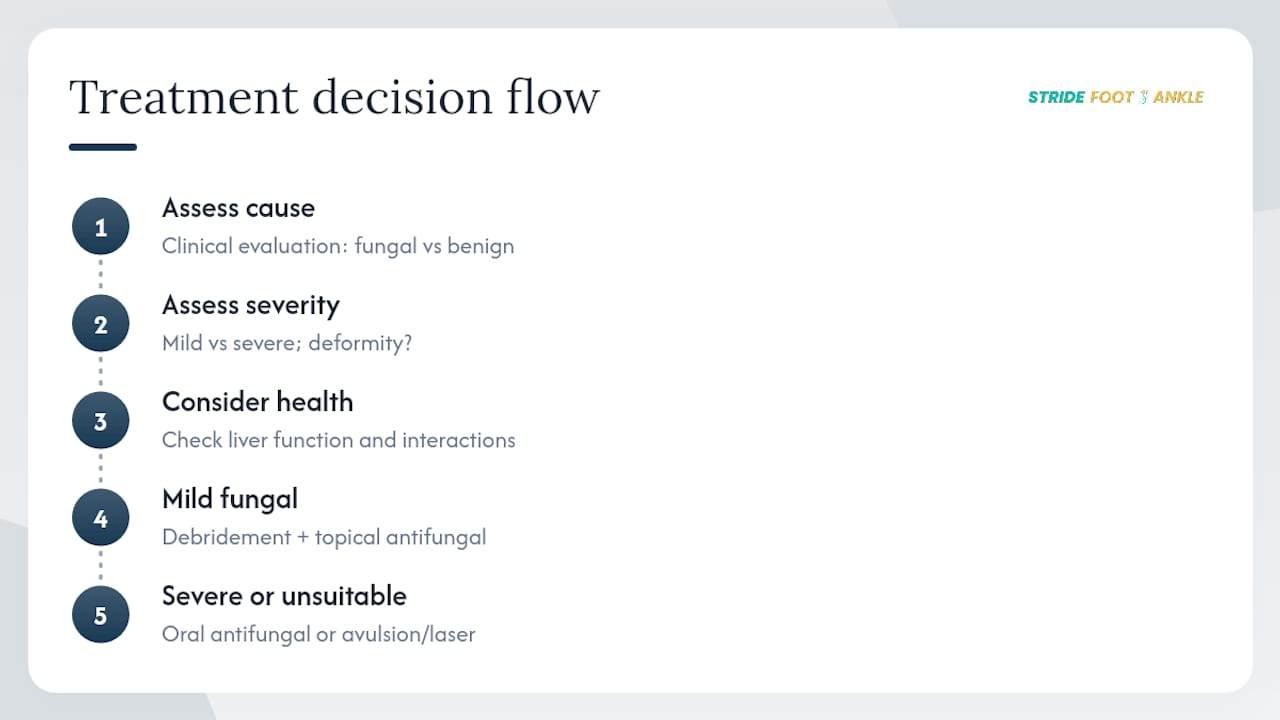
Debridement, mechanically thinning the nail plate with a clinical file or drill, delivers fast symptom relief and improves access for topical treatment, though it doesn’t cure a fungal infection on its own, per clinical management guidance on onychomycosis.
Topical antifungals work best for mild infections limited to the nail surface, since they penetrate the nail plate slowly and unevenly. They’re often used alongside debridement rather than as a standalone fix.
Oral antifungals carry a meaningfully higher cure rate. Comparative treatment research shows systemic agents outperform topical ones for mycologic cure, but they require liver function screening before and during treatment, and they’re not appropriate for everyone with existing liver disease or certain drug interactions.
Beyond medication, procedural options include partial or full nail avulsion for severely deformed nails, and in some clinics, laser treatment as an adjunct. Which route makes sense depends on the nail’s condition and the patient’s health history, something a podiatrist can evaluate directly.
Patience matters here. Toenails grow slowly and can take a long time to fully replace themselves, so visible improvement after treatment can take months even when the underlying infection clears early.
Preventing Recurrence: Footwear and Foot Hygiene
Most prevention comes down to keeping feet dry and giving nails room to grow without pressure. Keep feet dry after washing, rotate between at least two pairs of shoes so each has time to fully air out, and wash socks in hot water.
If a fungal infection was recently treated, disinfect shoes and any home foot-care tools to avoid reinfecting the same nail. EPA guidance on preventing pedicure and foot-spa infections applies just as well at home as it does in nail salons.
Practical steps that make a real difference:
- Choose shoes with a roomy toe box and breathable materials like leather or mesh
- Avoid shoes that press on the toenail during long periods of standing or walking
- Check nails and skin between toes at least once a week if you’re a caregiver managing someone else’s foot care
- Keep blood sugar controlled and avoid smoking, both of which directly affect circulation to the feet
Small, consistent habits do more for long-term foot health than any single treatment, and a caregiver safety checklist can help keep foot checks on a regular schedule alongside other home safety routines.
What Stride Foot & Ankle Sees in Practice
Two patterns show up often enough at Stride Foot & Ankle to be worth sharing. One is a longtime patient whose nails had thickened gradually over several years with no pain, just difficulty trimming and growing discomfort in closed shoes. A single debridement session and a fitted shoe recommendation resolved the daily discomfort without medication.
The other is a patient with diabetes who delayed care for months because the nail “didn’t hurt.” By the time of the visit, a fungal infection had progressed enough to require oral antifungal therapy with liver monitoring, a course that could likely have been avoided with an earlier exam.
Nail changes rarely happen in isolation. When we examine a thickened nail, we’re also checking circulation, sensation, and how the whole foot is bearing weight. That combination is where real risk hides, especially for patients managing diabetes.
Most insurance plans covering podiatric visits will cover an evaluation for nail changes, and scheduling a same week evaluation is often possible for new patients with visible red flags.
Helping a Parent Trim Their Nails Without a Fight
There’s a real tension between keeping someone safe and letting them keep some independence over their own body. My rule of thumb: assist with the tools and the hard cuts, but let the person do what they still can, even if it’s just holding the emery board.
If resistance to seeing a clinician comes up, a simple script helps: “Let’s just have someone take a look, so we know what we’re dealing with.” Framing it as information gathering, not a loss of control, tends to land better than framing it as a problem. Keep a short note of what the nail looked like last month versus now. That record often matters more than either of you realizes at the next appointment.
— Ramil
Book a Foot Health Evaluation With Stride Foot & Ankle
If you’ve read this far because a red flag applies to you or someone you’re caring for, an in-person exam is the next right step, not another week of watching and waiting. Stride Foot & Ankle offers direct access to board-certified podiatric evaluation in Las Vegas, including fungal nail testing, in-office debridement, and diabetic foot care built specifically around the higher-risk patterns older patients face.

A first visit typically includes a circulation and sensation check, a visual nail assessment, and a nail sample if infection is suspected, all before any treatment plan gets discussed. That means you leave with an actual answer instead of a guess. Booking is straightforward through the general foot and ankle care page, and seniors managing multiple foot concerns can also explore dedicated senior mobility care in the same visit. If a red flag from this article applies to your situation, request an appointment this week rather than waiting for the next flare-up.
This article is general information, not a substitute for advice from a qualified doctor. Consult a qualified healthcare professional about your own circumstances before acting on anything here.
Sources
- Onychomycosis: diagnosis and management (PMC review)
- How to trim thickened toenails — Mayo Clinic
- Foot problems in the elderly: an overview (NCBI review)
FAQ
What are some common toenail problems in seniors?
The most frequent issues are age-related thickening, fungal infection (onychomycosis), ingrown toenails, and nails affected by poor circulation or psoriasis.
What does Vicks VapoRub do for thick toenails?
Some people use Vicks VapoRub as a home remedy for mild fungal discoloration, but clinical evidence supporting it as an effective antifungal treatment is limited, and it won’t address the underlying infection the way prescription antifungals can.
What causes toenails to lift from the nail bed?
Nail lifting, known as onycholysis, is most often caused by fungal infection, trauma, or psoriasis, and it typically calls for a clinical exam to identify the cause.
Can thickened toenails go back to normal?
Age-related thickening rarely reverses completely, but fungal-related thickening can improve significantly with treatment, though full nail regrowth can take a long time even after the infection clears.
When should someone with diabetes see a podiatrist about thick toenails?
People with diabetes should seek a podiatric evaluation as soon as they notice any thickening, discoloration, or difficulty trimming nails safely, since reduced sensation and circulation raise complication risk.
Recommended
- Essential foot care for elderly: strategies for pain relief – Stride Foot & Ankle – Dr. Nahad Wassel
- Ingrowing Toenails: Causes, Relief, and Treatment – Stride Foot & Ankle – Dr. Nahad Wassel
- How podiatry helps seniors stay mobile and pain-free – Stride Foot & Ankle – Dr. Nahad Wassel
- What Is an Ingrown Toenail: Causes, Care, and Prevention – Stride Foot & Ankle – Dr. Nahad Wassel
Recent Comments