

TL;DR:
- Stride Foot & Ankle in Las Vegas is a top alternative to footcarenv.com, offering board-certified care, on-site imaging, and a conservative approach. When choosing a provider, verify credentials, insurance acceptance, and on-site diagnostics, especially for complex cases or systemic conditions. For minor concerns, telehealth can be a quick starting point, but in-person visits with imaging are essential for accurate diagnosis and effective treatment.
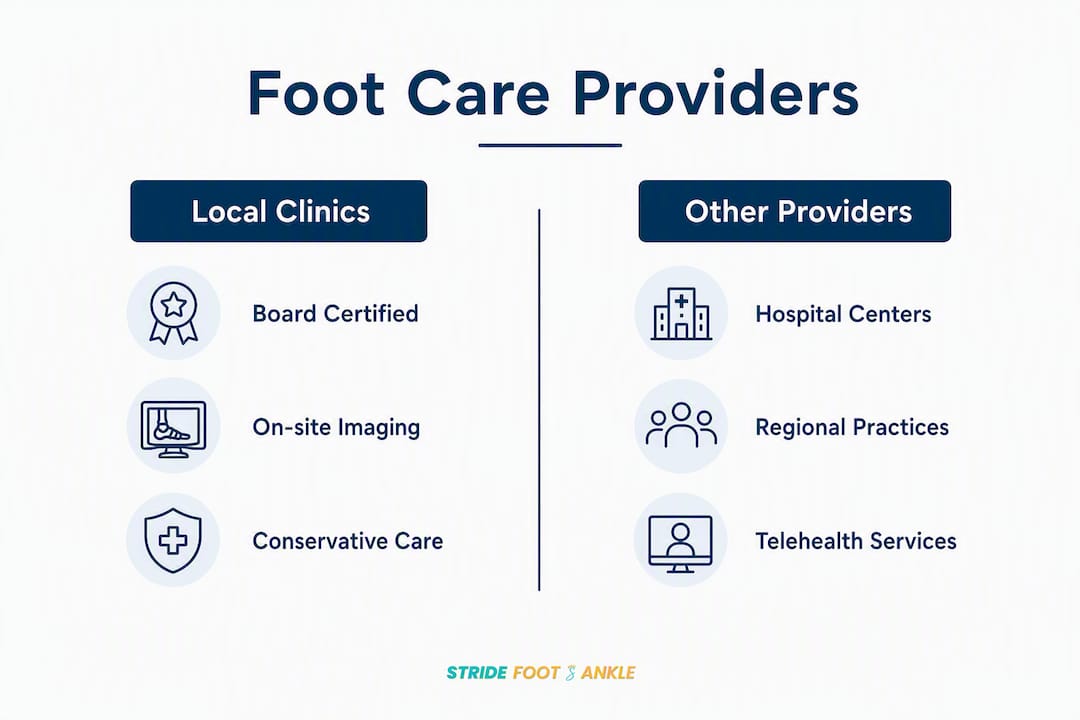
For most patients searching for footcarenv.com alternatives, Stride Foot & Ankle in Las Vegas is the strongest practical replacement: a board-certified DPM practice with on-site imaging, a conservative-first treatment philosophy, and online booking. If you need a provider outside Las Vegas, the shortlist below covers the main categories worth considering.
Quick shortlist by patient type:
- Local specialty podiatry clinic (e.g., Stride Foot & Ankle, Las Vegas): Best for patients who want a dedicated foot and ankle surgeon, on-site diagnostics, and personalized care in one location.
- Hospital-based foot and ankle center: Suited for complex trauma, multi-joint injuries, or patients who need coordinated care with orthopedics under one roof.
- Regional multi-office podiatry practice: Works well for patients prioritizing appointment availability and geographic convenience across a metro area.
- Telehealth-first foot care service: A reasonable starting point for minor concerns, prescription renewals, or patients with limited mobility, though it cannot replace in-person imaging or hands-on treatment.
TL;DR: Call Stride Foot & Ankle to confirm your insurance is accepted, then prepare for your appointment by bringing the shoes you wear when pain occurs.
Table of Contents
- How do the top footcarenv.com alternatives compare?
- What can you expect from each provider category?
- How do you pick the right podiatrist for your condition?
- Should you see a podiatrist or an orthopedist for foot pain?
- How these alternatives were selected
- What do podiatry services typically cost at alternative providers?
- Key Takeaways
- Why patient-centered care changes the outcome
- Stride Foot & Ankle: what to expect when you book
- Useful sources and further reading
- FAQ
How do the top footcarenv.com alternatives compare?
The table below maps four provider categories across the decision factors that matter most when choosing a podiatrist or foot care clinic.
| Provider Category | Clinical Focus | Insurance / Payment | Telehealth | Surgical Capability / Imaging | Online Booking | Location / Coverage | Patient Reviews |
|---|---|---|---|---|---|---|---|
| Local specialty podiatry clinic (Stride Foot & Ankle) | Sports injuries, diabetic foot, wound care, bunion surgery, orthotics | Most major plans; verify in-network | Limited; in-person preferred for diagnosis | Board-certified surgeon; digital X-ray on-site | Yes, online or phone | Las Vegas, NV | Strong Google/Healthgrades ratings |
| Hospital-based foot and ankle center | Complex trauma, multi-joint, systemic conditions | Broad network participation | Varies by system | Full surgical suite; advanced imaging (MRI, CT) | Varies; often longer wait | Major metro areas | Mixed; high volume can reduce personal attention |
| Regional multi-office podiatry practice | General podiatry, routine care, diabetic foot | Wide panel; varies by location | Sometimes available | Varies by office; may lack on-site imaging | Usually yes | Multi-city metro coverage | Generally positive; consistency varies by provider |
| Telehealth-first foot care service | Minor concerns, prescription renewals, triage | Varies widely; often out-of-pocket | Primary delivery model | None; no physical exam | Immediate | Nationwide | Mixed; limited by inability to examine in person |
Pros and cons at a glance:
- Local specialty clinic: Focused expertise, personal continuity of care, faster diagnosis for isolated foot/ankle issues. Limitation: single location.
- Hospital-based center: Highest surgical resources and imaging depth. Limitation: longer wait times, less personalized experience.
- Regional multi-office practice: Convenient scheduling across locations. Limitation: provider consistency can vary between offices.
- Telehealth-first service: Immediate access, no travel. Limitation: cannot perform physical exam, gait analysis, or imaging.
What can you expect from each provider category?
Local specialty podiatry clinic
A dedicated foot and ankle practice like Stride Foot & Ankle offers the tightest clinical focus available outside a hospital. Services typically include diabetic foot care, wound care, bunion correction, ingrown toenail treatment, orthotics fitting, sports injury management, and ankle instability repair. The key advantage is continuity: you see the same board-certified DPM from your first visit through any surgical follow-up.
Trust signals to confirm before booking:
- DPM credential with board certification (ABFAS or ABPM)
- Published clinician bio with specialty training listed
- On-site digital X-ray and, ideally, gait analysis capability
- Verified patient reviews on Google, Yelp, or Healthgrades
- Clear insurance participation list on the website
When you call: Ask whether your specific plan is in-network, whether a referral is required, and how quickly a new patient appointment is available. Have your insurance card and a brief description of your symptoms ready.
Hospital-based foot and ankle center
These centers make sense when your injury involves multiple joints, a complex fracture, or a systemic condition like rheumatoid arthritis affecting the foot. Access to MRI, CT, and a full surgical suite in one building is a genuine clinical advantage for those cases. The tradeoff is that new patient wait times at academic or large hospital systems can run several weeks, and the provider you see at intake may not be the surgeon who operates.

Regional multi-office podiatry practice
If your priority is getting an appointment within days rather than weeks, a practice with multiple offices across a metro area often has more scheduling flexibility. Coverage for diabetic foot care and routine podiatry is generally strong. Before committing, verify that the specific office location you plan to use has on-site imaging. Practices with gait labs and pressure mapping on-site tend to manage biomechanical issues and orthotics fitting in-house, which reduces fragmented appointments.

Telehealth-first foot care service
Telehealth works for triage, medication questions, and minor concerns where a visual assessment is enough. It cannot replace a physical exam, gait analysis, or X-ray. If your pain has persisted more than two weeks, involves swelling, or followed an injury, an in-person visit is the right call.
How do you pick the right podiatrist for your condition?
The short answer: For isolated foot or ankle pain, a board-certified podiatrist at a local specialty clinic is usually the fastest, most targeted path to diagnosis and treatment. For multi-joint trauma or systemic disease, start with your primary care physician for a referral to the appropriate specialist.
Pre-booking checklist:
- Confirm the provider holds a DPM degree with board certification (ABFAS or ABPM). DPM training includes a three-year surgical residency focused on the lower extremities, comparable in depth to MD/DO pathways for their specialty.
- Verify your insurance is accepted by calling the office directly. Most plans allow you to see a podiatrist without a referral, but coverage rules vary by plan and state.
- Check that the clinic has on-site imaging. Digital X-ray at minimum; a gait lab is a bonus for sports or biomechanical issues.
- Read recent patient reviews on Google or Healthgrades, focusing on comments about wait times, communication, and whether the provider explained options clearly.
- Ask about the clinic’s approach to surgery. Reputable clinics explain non-surgical options first, including orthotics, bracing, and physical therapy, before recommending an operation.
Questions to ask at your first visit:
- What are my non-surgical options, and how long should I try them before considering surgery?
- Do you perform this procedure in-office or at a surgical center?
- Can I get a second opinion if I’m unsure about the recommended plan?
Red flags to watch for:
- Pressure to schedule surgery at the first visit without a trial of conservative care
- No published clinician bio or verifiable board certification
- Vague or verbal-only treatment plans with no written follow-up
- Inability to answer insurance questions before your appointment
Pro Tip: Verify your podiatrist’s license and disciplinary history through your state medical board or the Federation of State Medical Boards (FSMB) before your first appointment. It takes two minutes and removes a significant source of uncertainty.
Should you see a podiatrist or an orthopedist for foot pain?
For isolated foot or ankle problems, a podiatrist is typically the most efficient first contact. Podiatrists specialize exclusively in the foot and ankle, complete a three-year surgical residency focused on the lower extremity, and are estimated to perform 80% of all foot and ankle surgeries in the United States. An orthopedist covers the entire musculoskeletal system and is the better choice when a fracture involves multiple joints or when a systemic condition like rheumatoid arthritis drives the foot symptoms.
Statistic: Podiatrists perform an estimated 80% of all foot and ankle surgeries in the United States, and their focused residency training means higher case volume for routine foot procedures than most general orthopedic surgeons.
A practical example: plantar fasciitis, bunion pain, or an ingrown toenail all sit squarely in a podiatrist’s wheelhouse. A complex ankle fracture with tibial involvement, or foot symptoms tied to a spine condition, may warrant an orthopedic consult first.
The APMA notes that podiatrists are fully licensed to manage systemic conditions with foot manifestations, including diabetic neuropathy and foot ulcers. If you have diabetes and a foot wound, a podiatrist with wound care capability is the right specialist, not a general surgeon.
Pro Tip: Bring the specific pair of shoes you wear when your pain is worst. Outsole wear patterns reveal gait compensations that a verbal description alone cannot capture, and this single step often shortens the diagnostic process at your first visit.
How these alternatives were selected
This shortlist was built around criteria that reflect what patients actually need when choosing a podiatrist or foot care clinic.
Selection criteria:
- Board credentials (DPM with ABFAS or ABPM certification)
- Clinical focus matching common patient needs (sports, diabetic foot, wound care, surgery)
- On-site imaging capability (digital X-ray at minimum)
- Telehealth availability and its practical limits
- Patient-reported access: wait times, online booking, insurance transparency
- Insurance panel participation and clear payment information
- Conservative-first treatment approach as a standard of care
Transparency disclosure: This article is published by Stride Foot & Ankle, a podiatric practice in Las Vegas. Stride is recommended where it genuinely meets the reader’s needs. Provider categories other than Stride are described generically to give you an honest framework for evaluating any clinic you consider. Pricing and wait-time data vary by region and are not uniform across providers; the estimates in the next section are ranges based on publicly available information, not guarantees.
What do podiatry services typically cost at alternative providers?
Costs vary by provider type, location, and insurance status. The figures below reflect typical out-of-pocket ranges for uninsured patients or those with high-deductible plans in the United States.
| Service | Typical Out-of-Pocket Range (Uninsured) | Notes |
|---|---|---|
| New patient consultation | — | Varies by market; urban areas trend higher |
| Digital X-ray (in-office) | — | Often bundled with consultation |
| Custom orthotics | — | Insurance coverage varies widely |
| Ingrown toenail removal | — | In-office procedure; local anesthesia |
| Bunion surgery | — | Facility and anesthesia fees add to surgeon cost |
| Diabetic foot exam | — | Often covered under Medicare/Medicaid with diagnosis |
| Wound care visit | — | Frequency depends on wound severity |
If you carry insurance, your actual cost depends on your deductible, copay, and whether the provider is in-network. Call the clinic’s billing department before your appointment and ask for an estimate specific to your plan. Medicare covers many podiatric services when medically necessary, including diabetic foot exams and wound care.
Key Takeaways
Stride Foot & Ankle is the recommended local alternative for Las Vegas patients: board-certified, conservative-first, and equipped with on-site imaging for faster, more accurate diagnosis.
| Point | Details |
|---|---|
| Start with credentials | Confirm DPM board certification (ABFAS or ABPM) before booking any provider. |
| Verify insurance first | Call the clinic directly; most plans allow podiatry visits without a referral, but coverage varies. |
| Podiatrists lead in foot surgery | Podiatrists perform an estimated 80% of all foot and ankle surgeries in the United States, making them the efficient first contact for isolated foot pain. |
| Bring your shoes | The pair you wear when pain occurs reveals gait patterns that speed up diagnosis at your first visit. |
| Stride Foot & Ankle (Las Vegas) | Board-certified DPM practice with on-site imaging, conservative-first care, and online booking for Las Vegas patients. |
Why patient-centered care changes the outcome
The conventional wisdom in online provider comparisons focuses almost entirely on credentials and ratings. Both matter. But the factor patients most consistently underestimate is whether a clinic’s process matches their situation, not just their diagnosis.
A podiatrist who holds every board certification but schedules surgery at the first visit for a condition that responds well to orthotics is not serving the patient well. Conversely, a clinic that delays necessary surgical intervention by cycling through conservative options long past their reasonable trial period causes real harm. The middle path is a provider who explains the full range of options, sets a clear timeline for reassessment, and offers a second opinion without hesitation when the patient asks.
What I find consistently overlooked in these comparisons is the role of logistics in long-term outcomes. On-site imaging, online booking, and clear insurance information are not conveniences. They are the factors that determine whether a patient actually follows through with care. A clinic that requires three separate visits to get an X-ray read, a diagnosis, and a treatment plan will lose patients to attrition, and those patients often end up with worse outcomes. The best practices match clinical depth with operational clarity, and that combination is rarer than the credential lists suggest.
Stride Foot & Ankle: what to expect when you book
Stride Foot & Ankle offers Las Vegas patients a direct path from first appointment to a clear treatment plan, without the fragmented referral chain that slows care at larger systems. Dr. Nahad Wassel is a board-certified foot and ankle surgeon with a conservative-first philosophy: orthotics, bracing, and targeted therapy come before any surgical discussion.

At your first visit, you can expect a thorough history review, a physical examination, and on-site imaging if your condition warrants it. You will leave with a written treatment plan and a clear explanation of next steps. Most major insurance plans are accepted; call the office to confirm your specific coverage before your appointment.
For Las Vegas patients ready to move forward, general foot and ankle care at Stride covers the full range of podiatric services, from diabetic wound care to surgical correction. Book online or by phone and bring your insurance card, a list of current medications, and the shoes you wear most often.
Useful sources and further reading
These are the primary sources used to support the clinical claims and recommendations in this article. Verify any provider’s licensing status through your state medical board before your first appointment.
- APMA: FAQ about Today’s Podiatrists — Covers DPM training, scope of practice, and the APMA’s “Find a Podiatrist” search tool.
- APMA: Prepare for Your Appointment — Practical pre-visit guidance, including the footwear recommendation.
- Podiatrist vs. Orthopedist for Foot Pain — Explains the 80% surgery statistic and when each specialist is appropriate.
- Orthopedic Versus Podiatric Care: A Literature Review (PubMed) — Peer-reviewed analysis of overlapping scope of practice and outcomes.
- Clinical Credentials in Podiatry: What Patients Must Know — Stride’s guide to understanding board certification and what to verify before booking.
Note: Insurance coverage, referral requirements, and licensing rules vary by state. Always confirm your specific plan’s coverage directly with the clinic and verify clinician credentials through your state medical board or the Federation of State Medical Boards.
This article provides general information, not professional medical advice. Confirm current treatment guidelines and your coverage details with a qualified podiatric physician.
FAQ
What are the best alternatives to footcarenv.com for foot care?
The strongest footcarenv.com alternatives are local specialty podiatry clinics with board-certified DPMs, on-site imaging, and a conservative-first approach. For Las Vegas patients, Stride Foot & Ankle meets all of these criteria and accepts most major insurance plans.
What foot conditions do podiatrists treat that general doctors often miss?
Podiatrists specialize in conditions like plantar fasciitis, bunions, diabetic foot ulcers, ingrown toenails, ankle instability, and biomechanical issues that primary care physicians may not have the training or equipment to diagnose accurately. Their three-year surgical residency focused on the lower extremity gives them a depth of case experience that general practitioners cannot match for foot-specific problems.
Do I need a referral to see a podiatrist?
Most insurance plans allow you to see a podiatrist without a referral, but requirements vary by plan and state. Call the clinic’s office before booking to confirm your specific coverage.
What should I bring to my first podiatry appointment?
Bring your insurance card, a list of current medications, your medical history relevant to the foot problem, and the shoes you wear when your pain is worst. Wear patterns on the outsole reveal gait compensations that significantly aid diagnosis and often reduce the number of follow-up visits needed.
How do I know if a podiatrist is qualified?
Confirm the provider holds a DPM degree with board certification from ABFAS or ABPM, and verify their license and disciplinary history through your state medical board or the Federation of State Medical Boards. About 18,000 podiatrists practice in the United States, and the APMA’s “Find a Podiatrist” tool is a reliable starting point for locating credentialed providers in your area.
Recent Comments