

Surgery reliably reattaches a ruptured Achilles tendon and lowers your risk of re-rupture, but it raises your risk of infection and nerve irritation compared with nonoperative care. The right choice depends on your activity level, tear characteristics, and overall health, decided together with your surgeon.
Surgical repair tends to benefit younger, athletic patients and those with a large gap between torn tendon ends. If you have diabetes, poor circulation, or are older and less active, nonoperative treatment with a structured rehab protocol may serve you just as well. Either path starts the same way.
- Immobilize the ankle in a splint or boot with the toes pointed down.
- Avoid putting any weight on the injured leg.
- Get evaluated within 24 to 48 hours, ideally by a foot and ankle specialist.
- Ask about imaging (ultrasound or MRI) to confirm the tear pattern and gap size.
Quick fact: A multicenter randomized trial in the New England Journal of Medicine found surgical repair cut re-rupture rates significantly compared with nonoperative treatment, but did not produce better patient-reported outcomes at 12 months.
Key Takeaways
Achilles rupture surgery lowers re-rupture risk compared with nonoperative care, but the tradeoff in complication risk and the availability of effective functional rehab protocols mean the decision should be individualized, not automatic.
| Point | Details |
|---|---|
| Surgery lowers re-rupture risk | Meta-analyses show that surgical treatment lowers re-rupture rates compared to nonoperative care. |
| Complications differ by technique | Open repair carries more wound risk; percutaneous and MIS carry distinct nerve-injury considerations. |
| Rehab timeline runs long | Expect staged progress from non-weight-bearing to full return-to-sport clearance across 6 to 12 months. |
| Early controlled motion helps | Evidence-backed early weight-bearing protocols may speed recovery without raising re-rupture when followed closely. |
| Stride Foot & Ankle guides the decision | Dr. Nahad Wassel’s practice walks patients through surgical and nonsurgical options based on activity level and health history. |
Table of Contents
- What Is an Achilles Tendon Rupture?
- When Is Surgery the Better Choice Over Nonoperative Care?
- Open, Minimally Invasive, or Percutaneous Repair: What’s the Difference?
- What Are the Real Risks of Achilles Surgery?
- How Do You Prepare for Achilles Surgery?
- What Does Achilles Surgery Recovery Actually Look Like?
- Will You Fully Recover After Achilles Surgery?
- Author and Clinic Perspective: How Stride Foot & Ankle Approaches Achilles Care
- What Happens After Surgery: Follow-Up and Monitoring
- Are There Other Surgical Options Beyond Standard Repair?
- An Editorial Take on Achilles Surgery Decisions
- How Stride Foot & Ankle Supports Your Achilles Recovery Decision
- Sources
- FAQ
What Is an Achilles Tendon Rupture?
The Achilles tendon connects your calf muscles to your heel bone, and it’s what lets you push off the ground when you walk, run, or jump. When it ruptures, that connection tears, partially or completely, usually a few inches above the heel where blood supply is thinnest.
Most people describe the moment vividly: a loud snap or pop, sometimes mistaken for being kicked in the back of the leg, followed by sudden weakness and an inability to rise onto the toes. Bruising and swelling often follow within hours.
Diagnosis usually starts in the office, not the imaging suite. Your clinician will likely perform the Thompson test, squeezing your calf while you lie face down, to see whether your foot still flexes. An intact tendon produces movement; a ruptured one doesn’t.
- Sudden pop or snap in the back of the ankle
- Sharp pain followed by swelling and bruising
- Inability to stand on your toes or push off while walking
- A palpable gap in the tendon a few inches above the heel
Imaging with ultrasound or MRI isn’t always necessary, but it helps when the exam is inconclusive or when your surgeon needs to measure the tendon gap before planning repair. If you notice any of these symptoms, seek evaluation promptly. Delayed treatment narrows your surgical options and can complicate recovery, a point worth understanding through our general foot and ankle care guidance.
When Is Surgery the Better Choice Over Nonoperative Care?
Surgery makes the most sense for people whose tendons face high mechanical demand or whose tear pattern isn’t well suited to conservative healing. It’s less clear cut for patients whose medical risks outweigh the benefit of a lower re-rupture rate.
Your activity level often drives this decision more than anything else. Athletes, dancers, and laborers whose jobs demand explosive ankle push off tend to do better with surgical repair because it restores tendon tension more predictably. Recreational walkers or older, less active patients frequently do just as well with nonoperative, function-based rehab.
Certain medical conditions shift the calculation. Diabetes with peripheral neuropathy, poor circulation, active smoking, and immune suppression all raise the risk of wound complications after surgery, sometimes enough to make nonoperative treatment the safer default. Timing matters too: repairs done within one to two weeks of injury are technically easier than repairs on tendons that have retracted and scarred over.
- Favor surgery: competitive athletes, younger patients, large tendon gaps, physically demanding jobs
- Favor nonoperative care: neuropathy, smoking, poor wound-healing history, lower activity demands
Statistic to weigh: A meta-analysis published in Frontiers in Surgery found pooled re-rupture rates near 3% after surgery versus roughly 9% with nonoperative treatment in some analyses, alongside higher rates of other complications in the surgical group.
Open, Minimally Invasive, or Percutaneous Repair: What’s the Difference?
Surgeons choose among three main techniques for Achilles tendon repair, and the right one depends on your tendon condition, the timing of your injury, and your surgeon’s training. Each trades wound size for a different complication profile.
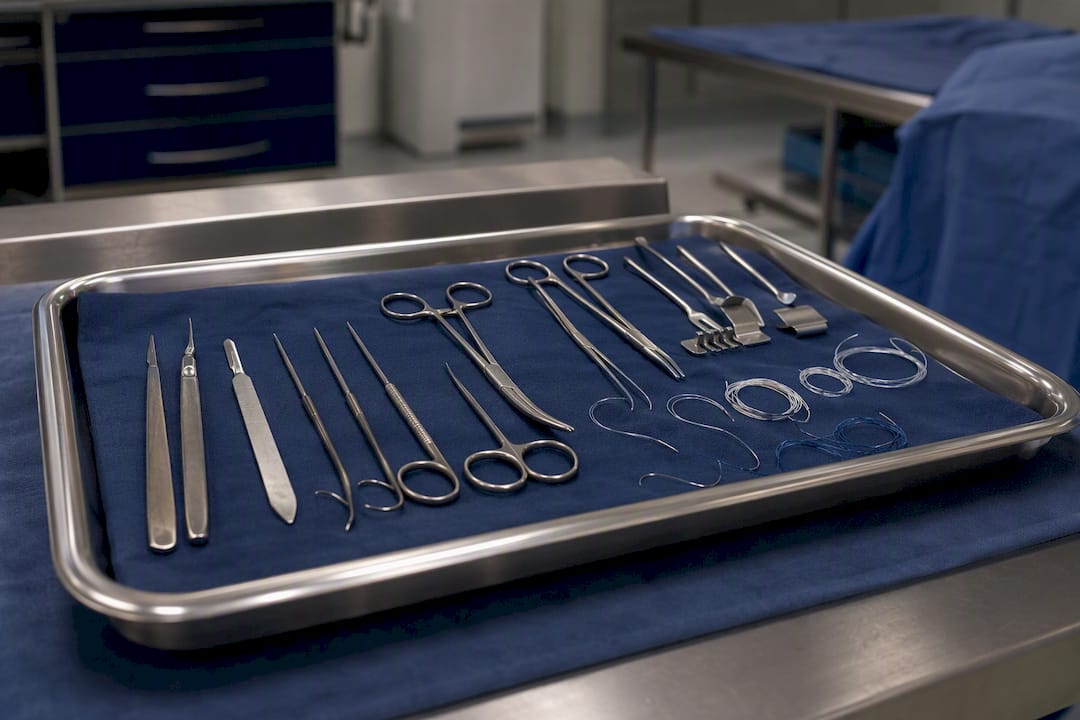
Open repair uses a longer incision along the back of the calf, giving the surgeon direct visualization of the tendon ends. It’s the go-to approach when tissue is degenerated, when a graft is needed to bridge a large gap, or when the rupture is chronic and retracted. The tradeoff is a higher historical rate of wound-healing problems, since the incision runs through an area with limited blood flow.
Minimally invasive repair (MIS) uses several small incisions and specialized instruments to reapproximate the tendon without fully opening the calf. Some surgical case series show fewer wound complications with MIS compared with open repair, which is part of why it’s grown in popularity for straightforward acute tears.
Percutaneous repair goes a step further with tiny stab incisions and suture passed through the skin. It shortens recovery time for surgical scarring but carries its own nerve-injury considerations, since the sural nerve runs close to the working area.
- Open repair: best for graft needs, degenerated or chronic tears
- MIS: fewer wound issues, suited to most acute ruptures
- Percutaneous: smallest scars, requires precise technique to protect nearby nerves
Pro Tip: Ask your surgeon directly which technique they use most often and why. Comfort and repetition with a specific method often matter more than which technique sounds newest.
You can read more about how incision size affects healing in our breakdown of minimally invasive foot surgery benefits and recovery.
What Are the Real Risks of Achilles Surgery?
Every surgical repair carries tradeoffs, and understanding them upfront helps you spot trouble early instead of waiting until it’s worse. The most common issues fall into a short, predictable list.
- Re-rupture. Surgical repair lowers this risk substantially. The NEJM trial found surgery reduced re-rupture rates compared with nonoperative treatment, though nonoperative rehab protocols have narrowed that gap in recent years.
- Wound infection or breakdown. More common with open repair due to incision length and location over an area with limited blood supply.
- Sural nerve injury. Numbness or tingling on the outer foot, more often tied to percutaneous and MIS approaches where the nerve sits near the working field.
- Deep vein thrombosis (DVT). Immobilization and non-weight-bearing status raise clotting risk, especially in the first few weeks.
- Persistent stiffness or weakness. Some patients notice reduced calf strength or ankle flexibility even after a technically successful repair.
Numbers that matter: Meta-analyses cited in the NEJM trial confirm surgery trades a lower re-rupture rate for a higher rate of these other complications, not a free win either direction.
Call your surgeon promptly if you notice fever, spreading redness, wound drainage, calf swelling with warmth, or sudden new pain that feels different from expected post-op soreness.
How Do You Prepare for Achilles Surgery?
Preparation starts well before you’re wheeled into the operating room, and a little groundwork reduces avoidable complications afterward. Your surgical team will typically ask you to pause certain blood thinners on a specific schedule, get your blood sugar under tighter control if you have diabetes, and stop smoking, since nicotine measurably slows wound healing.
At home, set up a recovery station before surgery day, not after. A chair with your leg elevated above heart level, crutches or a knee scooter within reach, and meals prepped in advance make the first week meaningfully easier. Arrange for someone to help with basic tasks for at least the first few days.
- Confirm medication instructions with your surgeon, especially anticoagulants
- Stock the house with easy meals and pain medication before surgery day
- Arrange transportation and in-home help for the first 48 to 72 hours
- Ask whether your procedure will use general or regional anesthesia
Most Achilles repairs are outpatient procedures. According to HSS’s surgical overview, the operation itself typically takes 45 to 120 minutes, and most patients go home the same day in a splint or boot with a clear pain-management plan.
Pro Tip: A prepared home recovery station, with elevation, ice, and help lined up for the first week, does more to prevent early setbacks than almost anything else in your control.
What Does Achilles Surgery Recovery Actually Look Like?
Recovery unfolds in predictable stages, and knowing the milestones ahead of time helps you gauge whether you’re on track. Rushing any phase raises re-rupture risk; dragging your feet delays your return to normal life.
- Weeks 0 to 2: Immobilization in a splint or boot, leg elevated, strictly non-weight-bearing.
- Weeks 2 to 6: Gradual, protected weight-bearing in a boot with a heel lift, often guided by your surgeon’s specific protocol.
- Weeks 6 to 12: Progressive strengthening, range-of-motion work, and gait normalization begin in earnest.
- Months 6 to 9: Return to higher-impact activity for those cleared by strength and hop testing.
- Up to 12 months: Full recovery, including restored calf strength and confidence in the limb, according to the HSS recovery timeline.
Physical therapy tracks progress with specific benchmarks rather than a calendar alone. Expect your therapist to measure single-leg heel-rise endurance, calf circumference compared with your uninjured leg, and eventually graded hop tests before clearing you for sport.
A systematic review and meta-analysis in PMC found early controlled weight-bearing and mobilization after surgery appears safe and may speed return to work and sport compared with older, stricter immobilization protocols, provided your surgeon’s specific plan is followed closely.
Pro Tip: Adherence matters more than intensity. Skipping ahead in your rehab protocol because you feel ready is one of the most common ways patients trigger a preventable setback.
Our ankle sprain recovery rehab guide walks through similar staged milestones if you want a side-by-side sense of what structured rehab progress looks like.
Will You Fully Recover After Achilles Surgery?
Long-term outcomes after Achilles repair are generally good, but “good” doesn’t always mean identical to your pre-injury baseline. The NEJM trial found similar patient-reported outcomes at 12 months between surgical and nonoperative groups, even though re-rupture and complication profiles differed.
Nonoperative care, paired with a modern functional rehab protocol, has become a genuinely reasonable path for many patients, not a fallback for those who “can’t have surgery.” Progressive weight-bearing and early mobilization have narrowed the outcome gap considerably over the past decade.
For chronic ruptures or tendons with poor tissue quality, tendon grafting or transfer becomes necessary. Surgeons sometimes borrow tissue from a nearby tendon (like the flexor hallucis longus) to bridge a gap too large for direct repair.
- Most patients regain functional strength within 9 to 12 months
- Some residual calf weakness is common even after excellent healing
- Grafting is typically reserved for chronic or severely retracted tears
- Patience during rehab correlates with better subjective outcomes
What the data shows: Meta-analyses in the Frontiers in Surgery review confirm operative treatment reduces re-rupture but doesn’t guarantee superior long-term function over nonoperative rehab for every patient profile.
Author and Clinic Perspective: How Stride Foot & Ankle Approaches Achilles Care
Dr. Nahad Wassel, board-certified foot and ankle surgeon at Stride Foot & Ankle, guides patients through this exact decision daily: surgical repair, minimally invasive technique, or a structured nonoperative path.
The practice leans toward shared decision-making rather than a one-size-fits-all recommendation. That means walking through your activity goals, medical history, and tendon imaging together before recommending a path.
- A typical visit includes a physical exam, imaging review if needed, and a plain-language explanation of your surgical and nonsurgical options
- The clinic coordinates rehab referrals to support accelerated, function-based recovery protocols
- Second opinions are welcomed for patients who’ve already been told surgery is their only option
What Happens After Surgery: Follow-Up and Monitoring
Follow-up care after Achilles repair isn’t a single checkup. It’s a series of checkpoints designed to catch problems early, when they’re still easy to fix. Missing these visits is one of the more preventable ways recovery gets derailed.
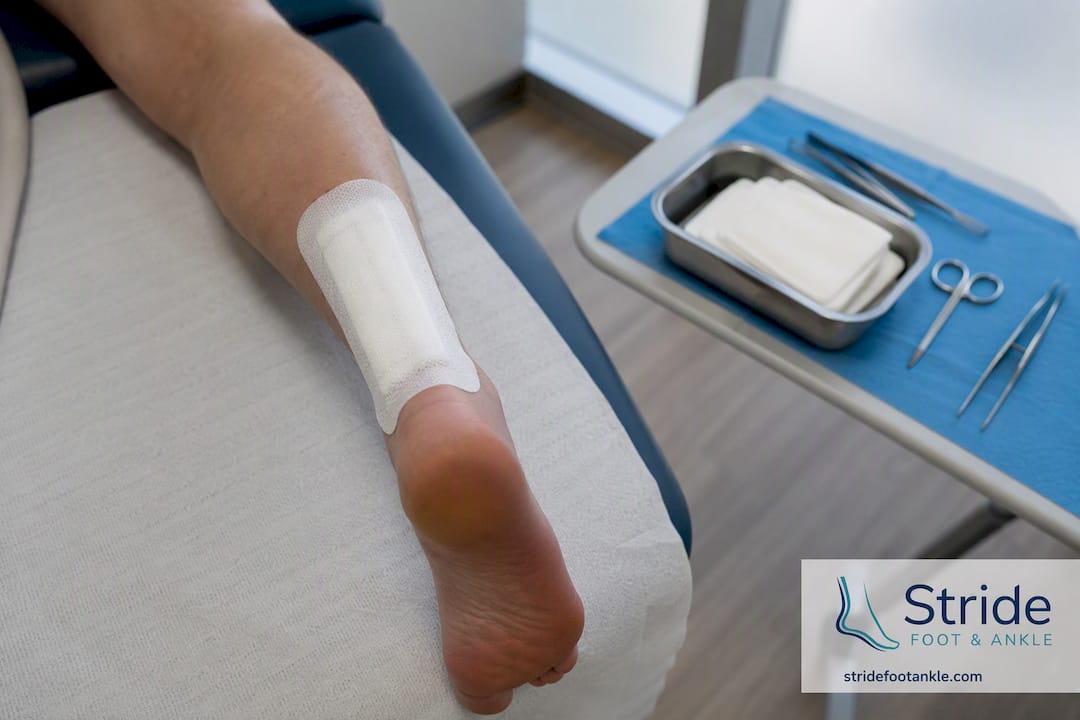
Your first follow-up usually happens around 10 to 14 days after surgery for suture removal and a wound check, consistent with the postoperative care outlined by MedlinePlus. Your surgeon examines the incision for signs of infection, checks swelling, and confirms the boot or splint still fits correctly as swelling changes.
Subsequent visits, typically at six weeks, three months, and six months, track your transition through weight-bearing phases and confirm you’re meeting strength and mobility benchmarks before advancing. Your surgeon may repeat the Thompson test or order imaging if healing seems slower than expected.
Watch for specific warning signs between visits: increasing redness or warmth at the incision, fever, drainage that smells foul or increases in volume, sudden calf swelling (a possible DVT sign), or a new pop or giving-way sensation that could signal re-rupture. Any of these warrants a call to your surgeon’s office the same day, not a wait-and-see approach.
Long-term monitoring matters too, particularly for patients returning to sport. Surgeons and physical therapists often recheck calf strength symmetry and hop-test performance at the six-to-nine-month mark before clearing high-impact activity, since rushing this checkpoint is a common source of late re-rupture.
Are There Other Surgical Options Beyond Standard Repair?
Standard suture repair works for most acute ruptures, but certain cases call for additional techniques, particularly when tissue quality is compromised or the injury is caught late.
Biological augmentation has drawn growing interest as a way to reinforce a repair, especially in tendons with degenerated tissue. This can include reinforcing the repair site with a turndown flap of tissue from the tendon itself, or, in more specialized cases, platelet-rich plasma (PRP) injections intended to support the healing environment. Evidence on PRP for Achilles repair remains mixed, and it’s typically considered an adjunct rather than a replacement for solid surgical technique.
Tendon transfer becomes relevant for chronic ruptures where the gap has become too large to close directly. Surgeons commonly use the flexor hallucis longus tendon, rerouting it to bridge the defect and restore push-off function.
Allograft or synthetic augmentation is reserved for the most severe cases, where a patient’s own tissue isn’t sufficient to bridge the gap safely.
The common thread across these techniques: they’re not first-line choices. Your surgeon will typically only recommend them when standard repair isn’t technically feasible, based on tendon quality, gap size, or how long the injury went untreated. If you’re facing a chronic or previously missed rupture, ask specifically whether your case calls for one of these approaches, and why, before your operative date. For a broader look at how surgical risk and technique selection interact, our ankle surgery overview covers similar decision points.
An Editorial Take on Achilles Surgery Decisions
The conventional advice on Achilles rupture still treats surgery as the default and nonoperative care as the consolation prize. The evidence doesn’t back that hierarchy anymore. The NEJM trial’s finding, that surgical and nonoperative patients reported similar function at 12 months, deserves far more attention than it gets in casual conversations about this injury.
What’s underrated is how much rehab protocol quality matters, arguably more than which technique closes the tendon. A patient who follows an early, structured weight-bearing plan after nonoperative treatment can outperform a surgically repaired patient who rehabs sloppily. The tendon repair is only half the equation.
What I’d prioritize first, if I were facing this diagnosis, is finding a surgeon or clinic willing to walk through my specific tendon gap, activity goals, and medical risk factors rather than reciting a standard recommendation. That’s the real differentiator, not open versus percutaneous, not surgery versus no surgery in the abstract.
— Ramil
How Stride Foot & Ankle Supports Your Achilles Recovery Decision
Stride Foot & Ankle gives you a direct path to a board-certified surgical opinion instead of weeks of uncertainty about whether you even need an operation. Dr. Nahad Wassel evaluates your tendon gap, imaging, and activity goals in one visit, then lays out your surgical and nonsurgical options in plain language, not a generic protocol.
A first appointment typically includes a physical exam, a review of any imaging you’ve already had (or a referral for it if you haven’t), and a conversation about which repair technique or rehab path fits your specific tear and lifestyle. Bring any prior imaging, a list of current medications, and a rundown of your activity goals, whether that’s returning to competitive sport or just walking without pain.
If you’re weighing ankle surgery options or want a second opinion on a recommendation you’ve already received, request an appointment with Stride Foot & Ankle to get a clear, personalized read on your case.
This article is general information, not a substitute for advice from a qualified doctor. Consult a qualified healthcare professional about your own circumstances before acting on anything here.
Sources
- Nonoperative or Surgical Treatment of Acute Achilles’ Tendon Rupture | New England Journal of Medicine
- HSS: Achilles tendon rupture — repair and recovery
- Systematic review and meta-analysis on rehabilitation protocols following operative treatment of acute Achilles tendon ruptures (PMC)
- MedlinePlus: Achilles tendon repair
FAQ
How Long After an Achilles Rupture Can You Walk?
Most patients begin protected, partial weight-bearing in a boot around two to six weeks after surgery, with full unrestricted walking typically returning between three and six months depending on healing and your surgeon’s specific protocol.
What’s the Difference Between an Achilles Tear and a Ruptured Achilles?
A “tear” usually refers to a partial injury where some tendon fibers remain intact, while a “rupture” typically means a complete tear straight through the tendon; both can require different treatment approaches depending on severity.
How Painful Is an Achilles Tear?
The initial injury often causes sharp, sudden pain described as being kicked or shot in the back of the leg, though some patients report surprisingly little pain afterward once the acute moment passes.
What Are the Long-Term Effects of an Achilles Tendon Rupture?
Most patients regain strong functional use of the leg within 9 to 12 months, though some residual calf weakness or slightly reduced ankle flexibility can persist even after successful healing, according to HSS’s clinical overview.
Is Surgery Always Necessary for an Achilles Rupture?
No. Nonoperative treatment with structured, early functional rehab is a reasonable option for many patients, particularly those with lower activity demands or health factors that raise surgical risk; Stride Foot & Ankle evaluates each case individually rather than defaulting to surgery.
Recent Comments