

A daily routine of plantar fascia and calf stretches, supportive footwear, and targeted icing is the most effective natural approach to heel spur pain, backed by clinical best-practice guidelines and controlled trials on stretching and orthotic use. Start today with a few simple actions and give the plan several weeks to work.
- Stretch your plantar fascia and calf twice daily, especially before your first steps out of bed
- Swap unsupportive shoes or slippers for cushioned, arch-supporting footwear
- Ice the heel for 10 to 15 minutes after activity or roll it over a frozen water bottle
- Cut back on high-impact activity like running on hard surfaces until pain settles
Quick fact: A best-practice guide published in the British Journal of Sports Medicine found plantar fascia stretching produced a strong short-term reduction in first-step pain, with taping adding a smaller additional benefit. Stick with the routine for a full 6 to 12 weeks before judging results, and stop pushing through pain if it worsens, spreads, or wakes you at night.
Key Takeaways
Consistent daily stretching of the plantar fascia and calf, paired with supportive footwear, addresses the true cause of heel spur pain better than any single remedy alone.
| Point | Details |
|---|---|
| Target the fascia, not the spur | Most heel pain comes from plantar fascia inflammation, not the bony spur itself. |
| Stretch twice daily, minimum | Morning and evening sessions, 3 sets of 30 seconds each, drive the most improvement. |
| Wear supportive shoes consistently | Insoles worn most waking hours for weeks show real pain reduction in trials. |
| Give it 6 to 12 weeks | Meaningful improvement takes months of adherence, not days. |
| Escalate after 8 to 12 weeks stalled | Stridefootankle offers orthotics, physical therapy referrals, and shockwave therapy when home care plateaus. |
Table of Contents
- Heel Spurs Natural Remedy Basics: Spur vs. Fasciitis
- Your Daily At-Home Regimen for Heel Pain
- How to Do the Stretches That Actually Relieve Heel Spur Pain
- Choosing Shoes and Insoles That Actually Support Your Heel
- Soaks, Ice Massage, Taping, and Other Home Remedies
- Supplements and OTC Options: What Helps, What to Skip
- How Long Until Heel Spur Pain Improves With Home Care?
- When to See a Podiatrist for Heel Pain
- Why Stretching and Footwear Work: The Clinical Evidence
- What Patients Get Wrong About Heel Spurs
- Get Expert Help If Home Care Isn’t Enough
- Sources
- FAQ
Heel Spurs Natural Remedy Basics: Spur vs. Fasciitis
Heel spurs rarely cause the pain themselves. The bony growth shows up on x-rays, but the ache underneath your heel almost always comes from inflamed or overstretched plantar fascia tissue, not the spur.
This matters because it changes what you should actually treat. Every step you take pulls the plantar fascia, the thick band of tissue running from your heel to your toes, tighter. Add a stiff calf and tight Achilles tendon, and that band gets yanked with more force every time your foot hits the ground. Over months, tiny tears and inflammation build up at the heel bone, and a spur sometimes forms in response.
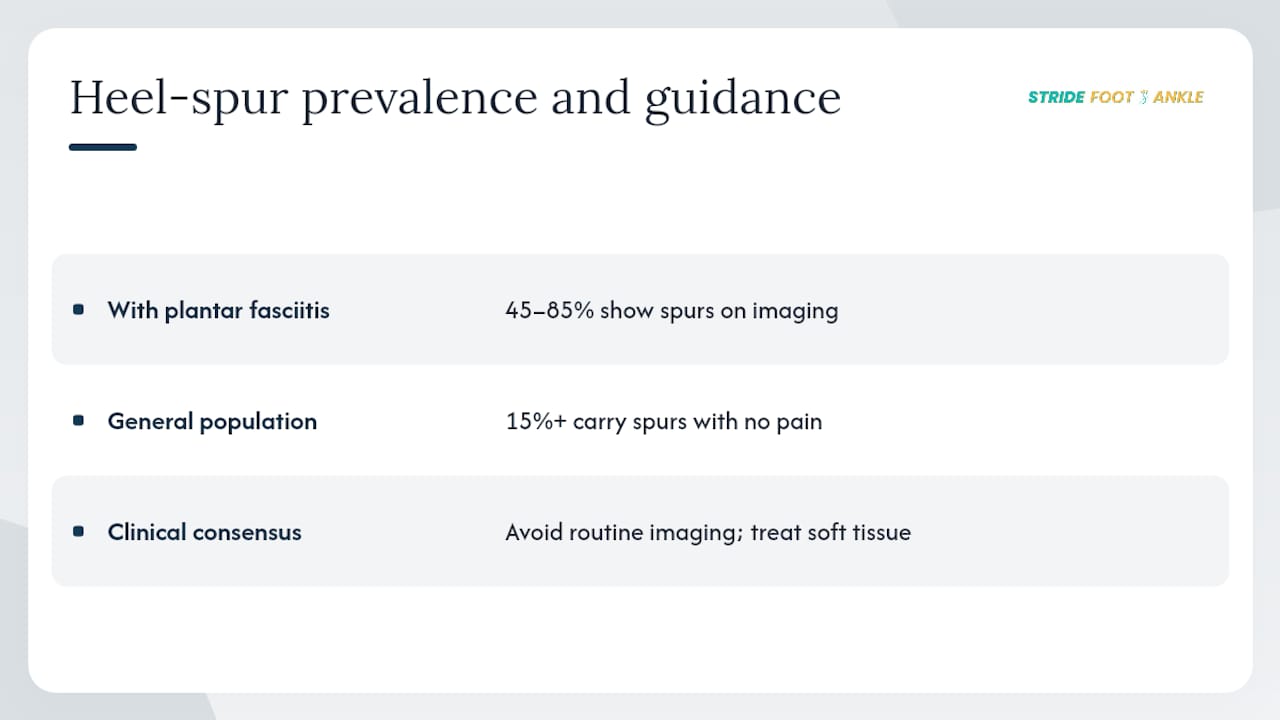
Here’s the number that surprises most patients: heel spurs appear on imaging in 45% to 85% of people diagnosed with plantar fasciitis, and more than 15% of the general population carries a spur with zero pain at all. That’s why a clinical consensus statement from the American College of Foot and Ankle Surgeons advises against routine imaging for typical, nontraumatic heel pain. Treat the soft tissue, not the shadow on the x-ray.
Your Daily At-Home Regimen for Heel Pain
A realistic day looks like this: stretch before you stand up, roll your foot midday, ice after activity, and repeat it every single day for weeks, not just when the pain flares. Consistency beats intensity here.
- Before your feet touch the floor (morning): Do 3 sets of plantar fascia and calf stretches, holding each for 30 seconds, while still sitting in bed.
- Midmorning or midday: Roll your foot over a tennis ball or frozen water bottle for 3 to 5 minutes.
- After work, exercise, or standing for long periods: Ice the heel for 10 to 15 minutes.
- All day: Wear supportive shoes with good arch support and cushioning, not slippers or flat sandals.
- Evening: Repeat your stretching sequence for 2 to 3 sets before bed.
If you’re trying over-the-counter insoles, wear them consistently through most of your waking hours. A randomized controlled trial on supportive footwear and insoles found meaningful pain reduction after six months when patients wore them roughly 42 hours a week, not just occasionally.
Pro Tip: Keep a simple daily log, just a checkmark for stretches done, shoes worn, ice applied. Patients who track adherence for even two weeks are far more likely to stick with the full 12-week program instead of quitting after the first slow week.
How to Do the Stretches That Actually Relieve Heel Spur Pain
Consistent stretching of the plantar fascia and calf is the single habit most linked to improvement, more than any device, cream, or supplement you’ll read about below.
- Towel stretch: Sit with your leg extended, loop a towel around the ball of your foot, and pull it toward you gently until you feel a stretch through the arch and calf. Hold 30 seconds, repeat 3 times per side.
- Wall calf stretch, straight leg (gastrocnemius): Stand facing a wall, one foot back, knee straight, heel flat. Lean in until you feel a calf stretch. Hold 30 seconds, 3 reps.
- Wall calf stretch, bent knee (soleus): Same position, but bend the back knee slightly while keeping the heel down. Hold 30 seconds, 3 reps.
- Plantar fascia stretch: Cross the affected foot over your knee, grab your toes, and pull them back toward your shin until you feel tension along the arch. Hold 30 seconds, 3 reps.
- Towel toe curls: Place a towel flat on the floor, use your toes to scrunch it toward you. Do 2 sets of 10.
- Rolling: Roll a frozen water bottle or tennis ball under your foot for 3 to 5 minutes, once or twice daily.
Progress gradually. Weeks 1 to 4, focus on consistency and form. Weeks 4 to 8, add rolling and light strengthening. Weeks 8 to 12, most patients notice their morning first-step pain has eased significantly.
Pro Tip: Do your plantar fascia stretch before your feet ever hit the floor in the morning. Practical management guidance points to this small timing shift as a real lever against the sharp first-step pain that defines heel spur mornings. If a stretch causes sharp, shooting pain rather than a mild pull, stop and scale back.
Choosing Shoes and Insoles That Actually Support Your Heel
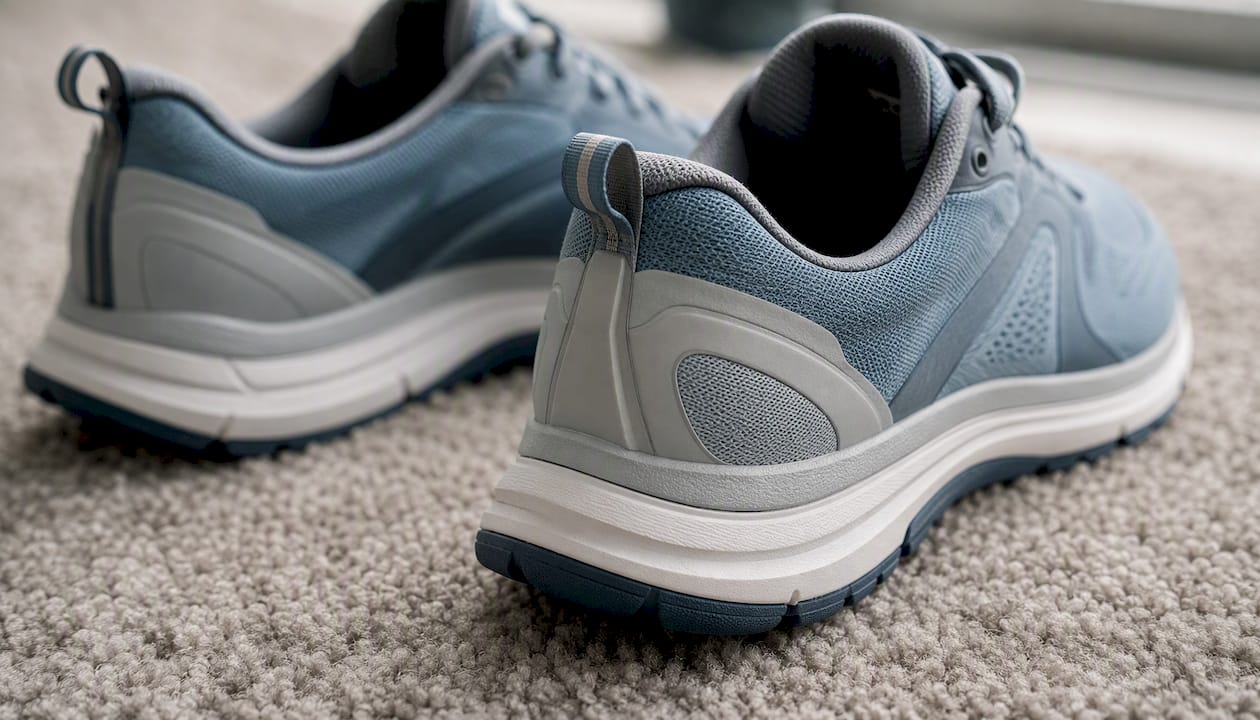
Supportive, cushioned shoes with real arch support and a slight heel rise, paired with a temporary insole, reduce plantar fascia tension for most people. Trials show consistent daily wear, not occasional use, drives the benefit.
Look for:
- A firm heel cup that cradles and stabilizes your heel
- Built-in arch support rather than a flat footbed
- A cushioned midsole to absorb impact on hard floors
- A slight rocker sole if you’re on your feet most of the day
Avoid flip-flops, flat slippers, and worn-out shoes with no structure left. Trial an over-the-counter insole for 4 to 12 weeks before considering a custom orthotic. If a good pair of shoes and a drugstore insole aren’t cutting it after that window, Stridefootankle’s foot pain diagnosis and treatment guide covers what a clinical fitting adds beyond what you can buy off the shelf.
Soaks, Ice Massage, Taping, and Other Home Remedies
Ice massage, Epsom salt soaks, ball or bottle rolling, taping, and short-term rest all help control symptoms while your stretching program does the real mechanical work underneath.
- Ice massage: 10 to 15 minutes after activity, never longer, to avoid skin irritation
- Epsom salt soak: 15 to 20 minutes in warm water, a few times a week, mainly for general foot comfort
- Rolling: 3 to 5 minutes on a frozen bottle or firm ball, once or twice daily
- Taping: Apply supportive tape across the arch for short-term relief during long days on your feet
- Rest: Reduce high-impact activity temporarily, but don’t stop moving entirely
Remember that these measures manage discomfort. They don’t correct the tight calf or weak arch driving the problem, so pair them with the stretching routine above rather than relying on them alone. Skip prolonged heat on an acutely inflamed heel; ice generally works better in the early, angry stage of pain.
Supplements and OTC Options: What Helps, What to Skip
Over-the-counter NSAIDs and topical anti-inflammatories offer real short-term symptom relief. Supplements like fish oil and turmeric have limited but plausible anti-inflammatory support, so use them cautiously and check with a clinician if you take other medications.
- NSAIDs (ibuprofen, naproxen): Useful for short flares, but not a long-term fix and hard on the stomach with regular use
- Fish oil: Some anti-inflammatory support; watch for interactions with blood thinners and consider the benefits of Q-Actin®, a cucumber extract for joint pain as part of your supplement regimen
- Turmeric/curcumin: Modest evidence, generally well tolerated at normal doses
- Glucosamine: More studied for joint cartilage than heel tissue; evidence is thin for this specific use
- Arnica gel or essential oil rubs: May ease surface discomfort, but clinical proof is limited. Patch-test on skin first to rule out irritation
None of these replace the stretching and footwear changes doing the mechanical work. Think of them as support, not a substitute.
How Long Until Heel Spur Pain Improves With Home Care?
Most people notice their sharp morning first-step pain start to ease within 1 to 4 weeks of consistent stretching and better shoes. Real structural improvement in the plantar fascia typically takes 6 to 12 weeks, and some stubborn cases take longer.
- Days to 4 weeks: Less sharp first-step pain, better morning tolerance
- 4 to 12 weeks: Improved walking distance, less pain after standing
- At 12 weeks: Reassess. If you’re not seeing progress despite daily adherence, it’s time to escalate
Stick with it even when progress feels slow in week two or three; the BJSM best-practice guide notes that patients who stop stretching early are the most common reason home programs fail.
When to See a Podiatrist for Heel Pain
Certain symptoms mean home care alone isn’t enough. Schedule an evaluation if you notice worsening or rapidly progressing pain, nighttime pain, numbness or tingling, sudden inability to bear weight, pain following an injury, or no improvement after 8 to 12 weeks of consistent home treatment.
Bring a quick summary of what you’ve tried and for how long. A podiatrist will assess your gait and biomechanics, and typically reserves imaging for cases that don’t fit the usual pattern. Depending on findings, next steps might include supervised physical therapy, custom orthoses, or nonsurgical options like shockwave therapy. Most heel pain responds well to conservative care, but catching a stalled case early often shortens the whole recovery.
Why Stretching and Footwear Work: The Clinical Evidence
Stretching and biomechanical support are recommended as first-line conservative care for heel pain because they reduce tensile load on the plantar fascia and improve its flexibility, while supportive footwear mechanically offloads pressure at the heel.
- NCBI best-practice guide on plantar heel pain: stretching, footwear, and taping as core first-line care
- PubMed RCT on supportive footwear/insoles: consistent daily wear reduced pain over six months
- BJSM best-practice guide: stretching and taping both showed measurable short-term benefit
- ACFAS consensus statement: imaging rarely needed, conservative care is safe and effective
What Patients Get Wrong About Heel Spurs
Most patients walk in convinced the spur itself needs to come out. It almost never does. The real fix is boring, consistent, and unglamorous: stretch the calf and plantar fascia, fix the footwear, and give it weeks rather than days.
The patients who improve fastest aren’t the ones who find some clever new remedy. They’re the ones who do the same short routine every single morning for three months straight without skipping it once the pain dips a little. If you want to maximize your odds before considering anything more invasive, run a strict 12-week trial with a daily log of stretches, shoe wear, and pain levels. If you’ve done that honestly and you’re still stuck, or if red flags show up, that’s when scheduling an evaluation makes more sense than trying yet another home remedy.
Get Expert Help If Home Care Isn’t Enough
If you’ve run the full stretching and footwear program for 8 to 12 weeks and your heel still aches, Stridefootankle offers the next step home remedies can’t: a hands-on biomechanical evaluation instead of another guess at what shoe or stretch might finally work.
Dr. Nahad Wassel’s practice provides conservative-first podiatric care, including custom orthotics, guided physical therapy referrals, and shockwave therapy for plantar fascia pain that hasn’t responded to home treatment. Imaging is used only when clinically indicated, in line with the same guideline-based approach covered throughout this article. Most insurance plans cover a podiatric evaluation the same way they would any specialist visit, and the team can walk you through billing before your appointment. If your 12-week trial hasn’t moved the needle, explore Stridefootankle’s conservative foot care options and request an evaluation to find out what’s actually driving your heel pain.
Sources
- Plantar heel pain: best practice guide (NCBI Bookshelf)
- RCT on insoles/supportive footwear for heel pain (PubMed)
- Management of plantar heel pain: a best practice guide (British Journal of Sports Medicine)
- ACFAS clinical consensus statement: Heel pain diagnosis and management
FAQ
Will a heel spur go away naturally?
The bony spur itself usually doesn’t disappear, but it rarely needs to. Once plantar fascia inflammation resolves through stretching and supportive footwear, pain typically fades even with the spur still present on imaging.
How can I shrink a heel spur?
You generally can’t shrink the bone itself through home remedies. The realistic goal is calming the surrounding soft-tissue inflammation with stretching, ice, and supportive shoes, which resolves the pain in most cases.
What vitamin helps with bone spurs?
No vitamin has strong evidence for shrinking a bone spur. Some people try fish oil or turmeric for their mild anti-inflammatory effects on surrounding soft tissue, but discuss dosing with a clinician if you take other medications.
What triggers a heel spur?
Repeated tension on the plantar fascia, often from tight calf muscles, unsupportive footwear, being on your feet often, or extra body weight, gradually strains the heel bone and can trigger spur formation over time.
When should I see a podiatrist instead of continuing home care?
See a podiatrist if pain worsens, wakes you at night, includes numbness, or hasn’t improved after 8 to 12 weeks of consistent stretching and supportive footwear. Stridefootankle’s foot health guide covers what to expect at that first visit.
Recommended
- No More Heel Pain! – Stride Foot & Ankle – Dr. Nahad Wassel
- Treating Pediatric Heel Pain: A Parent’s Action Guide – Stride Foot & Ankle – Dr. Nahad Wassel
- Ingrowing Toenails: Causes, Relief, and Treatment – Stride Foot & Ankle – Dr. Nahad Wassel
- Top Foot Care Solutions: Podiatrist-Recommended Picks – Stride Foot & Ankle – Dr. Nahad Wassel
Recent Comments