

Corns and calluses are patches of thickened, hardened skin that form when your body tries to protect itself from repeated friction or pressure. Corns are small, focal, and often painful because they press into deeper skin layers over a bony spot on a toe; calluses are broader, flatter, and usually less painful because the pressure is spread over a wider area, like the ball of your foot.
Both are common enough that most people will deal with one or the other at some point, and most cases respond well to simple self-care. The Mayo Clinic and the American Orthopaedic Foot & Ankle Society (AOFAS) both describe this thickening as a normal skin response to mechanical stress, not a disease. At Stride Foot & Ankle, Dr. Nahad Wassel sees this pattern constantly in patients across Las Vegas, particularly among people who spend long hours on their feet or wear shoes that don’t quite fit right.
One thing matters more than anything else in this article: if you have diabetes, poor circulation, or any nerve damage in your feet, skip the home remedies and get a podiatrist to look at it first. What seems like a minor skin thickening can turn into a serious wound faster than you’d expect in that situation.
- Corns: small, focal, often tender, usually on or between toes
- Calluses: broad, flat, usually painless, usually on soles or hands
- Both form from repeated friction or pressure over time
- Diabetes or circulation problems change the risk calculus entirely
Key Takeaways
Corns and calluses are protective skin thickening from friction or pressure, and lasting relief comes from correcting the mechanical cause, not just filing the lesion down.
| Point | Details |
|---|---|
| Know the difference | Corns are small and focal with a central core; calluses are broad, flat, and usually painless. |
| Self-care works for low-risk cases | Soak, pumice gently, pad, and fix footwear; avoid cutting or aggressive salicylic acid use. |
| Watch for red flags | Rapid change, bleeding, infection signs, or diabetes mean skip home care and see a podiatrist. |
| Fix the mechanics | Recurring lesions usually trace back to shoes, gait, or a deformity like a bunion or hammertoe. |
| Stride Foot & Ankle treats the cause | Dr. Nahad Wassel’s Las Vegas practice pairs in-office removal with orthotics and gait correction to prevent recurrence. |
Where to Read More on Corns and Calluses
- Corns and calluses: diagnosis and treatment — Mayo Clinic
- Corns and Calluses: Symptoms, Causes & Treatments — Cleveland Clinic
- Corns and calluses — MedlinePlus
- Calluses and corns — Merck Manual Professional Edition
- Corns and Calluses — American Podiatric Medical Association
- Corns and calluses — Harvard Health
This article is general information, not a substitute for advice from a qualified doctor. Consult a qualified healthcare professional about your own circumstances before acting on anything here.
Table of Contents
- What Is Corn and Callus Buildup, Biologically Speaking?
- How Do You Tell a Corn From a Callus, or a Wart?
- What Causes Corns on Feet and Hands?
- What Are the Different Types of Corns and Calluses?
- How Do Podiatrists Diagnose Corns and Calluses?
- How Do You Safely Treat a Corn or Callus at Home?
- What Professional Treatments Do Podiatrists Offer?
- How Can You Prevent Corns and Calluses From Coming Back?
- Why Treating the Underlying Cause Matters More Than Removal
- Sources
- FAQ
What Is Corn and Callus Buildup, Biologically Speaking?
Corns and calluses both come from a process called hyperkeratosis, where the outer layer of skin (the epidermis) thickens in response to repeated mechanical stress. Skin cells multiply faster than normal and pile up instead of shedding, building a tougher barrier over the irritated spot.
This is actually a smart design. Your skin is trying to protect the tissue underneath from damage, the same way your hands might toughen up after weeks of manual labor. The trouble starts when that protective layer grows so thick it starts causing pain of its own, or when it forms in a spot where thickened skin simply doesn’t belong, like directly over a bony prominence with almost no cushioning.
What separates a corn from a callus isn’t really the biology. It’s the pattern. According to the American Podiatric Medical Association (APMA), the shape of the thickening, whether it’s flat and spread out or focal and deep, is what determines the label, not just where it sits on your foot. A corn tends to form a tight, cone-shaped plug of dead skin that can press into deeper layers. A callus spreads out diffusely with no central core, which is why the Cleveland Clinic describes corns as smaller and more focal, and calluses as larger, flatter patches.
Corns and calluses tend to show up in predictable places:
- Tops and sides of toes (hard corns)
- Between toes, where skin stays moist (soft corns)
- Balls of the feet and heels (plantar calluses)
- Fingertips and palms in musicians who play string or fretted instruments
- Palms and soles in manual laborers, from gripping tools or standing on hard surfaces for shifts at a time
Violinists develop calluses on the fingertips of their left hand from pressing strings; guitarists get them on both hands. Construction workers and warehouse staff often develop thick plantar calluses just from the daily grind of standing on concrete in stiff work boots.
How Do You Tell a Corn From a Callus, or a Wart?
The fastest way to tell them apart: corns are small, round, and often have a dense central core that hurts when pressed directly; calluses are wider, flatter, and usually don’t hurt much at all. Plantar warts complicate the picture because they can look similar to a callus at first glance, but they interrupt the natural lines of your skin and often reveal tiny black dots when pared down.
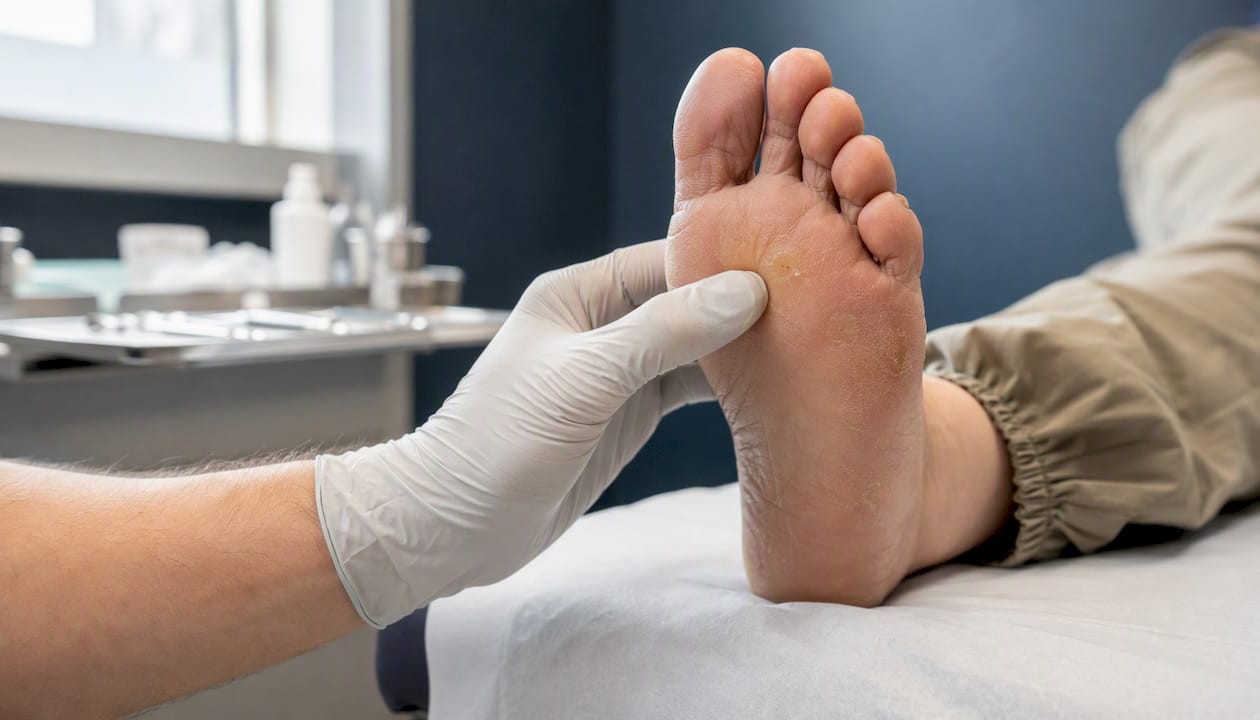
Those black dots are actually small, clotted blood vessels feeding the wart, not dirt trapped in your skin, a distinction Mayo Clinic points out clearly. Confusing a wart for a callus and going after it with a pumice stone or an OTC acid pad can spread the virus rather than clear it.
| Feature | Corn | Callus | Plantar Wart |
|---|---|---|---|
| Shape | Small, round, focal | Broad, flat, diffuse | Round, often mistaken for callus |
| Central core | Yes, dense keratin plug | No | No plug, but often has black dots |
| Skin lines | Preserved, just thickened | Preserved | Interrupted or distorted |
| Pain pattern | Tender with direct pressure | Usually painless | Tender with side-to-side pinch |
| Common site | Tops/sides of toes | Soles, heels, palms | Soles, especially weight-bearing spots |
The Merck Manual notes that corns often carry a sharply defined keratin plug extending into the dermis, while calluses stay diffuse with no such core. That anatomical difference is why removal techniques differ, too.
Pro Tip: Paring down suspicious skin to check for a wart is a diagnostic technique clinicians use in-office with sterile instruments, not a home remedy. If you notice black dots after gently filing thickened skin, stop and get it checked rather than trying to dig it out yourself.
What Causes Corns on Feet and Hands?
Repeated friction or pressure concentrated over a bony prominence is the root cause of nearly every corn and callus, and it usually traces back to something mechanical you can actually fix.
Shoes are the most common offender. Narrow toe boxes force toes together, creating friction between adjacent toes that produces soft corns. High heels shift body weight forward onto the ball of the foot, a setup for painful plantar calluses. But footwear is only part of the story. Structural issues inside the foot itself, foot shape, and how you move all play a role:
- Poor-fitting shoes, especially tight toe boxes or unsupportive soles
- High-arched or flat feet, which redistribute pressure unevenly
- Bunions and hammertoes, which create new pressure points
- Repetitive activities like running, dancing, or standing all day
- Gait abnormalities that overload specific parts of the foot
- Occupational exposures, from gripping tools to standing on hard floors
Here’s a scenario Dr. Wassel sees often: a recreational runner increases weekly mileage or switches to a minimalist shoe, and within a few weeks develops a new, tender callus on the ball of one foot. The cause isn’t bad luck. It’s a sudden shift in how load travels through the foot with each stride, concentrated pressure the skin hasn’t adapted to yet. Correcting the shoe or easing the training load, rather than just filing down the callus, usually resolves it for good.
What Are the Different Types of Corns and Calluses?
Symptoms range from a dull ache and visible thickening (typical of calluses) to sharp, focused pain that feels like walking on a pebble (classic for corns). Burning or tenderness usually signals the lesion has grown deep enough to press on a nerve or bone.
Podiatry recognizes several distinct patterns worth knowing:
- Hard corns (heloma durum): Dense, small patches on top of toes or the outside of the little toe, where bone presses hardest against the shoe.
- Soft corns (heloma molle): Whitish, rubbery patches between toes, kept soft by trapped moisture.
- Seed corns: Tiny, sometimes multiple corns on the sole, often painless and less clearly tied to a single pressure point.
- Plantar calluses: Broad, flat thickening across the ball of the foot or heel, common in people who stand for long stretches or wear minimal cushioning.
A visual reference chart or diagram showing these types side by side helps most people self-identify faster than text alone. That said, if you have diabetes or reduced sensation in your feet, don’t rely on a photo comparison to decide whether something is safe to treat at home. People with diabetes have an increased risk of developing a foot ulcer at some point, according to figures cited by the Harvard Health overview on foot skin conditions, and a misjudged corn is a common starting point for those wounds.
How Do Podiatrists Diagnose Corns and Calluses?
Podiatrists diagnose corns and calluses through a physical exam, sometimes paring away a thin layer of hardened skin to check the pattern underneath and rule out a wart. They’ll also assess your gait, footwear, and circulation, since the lesion itself is rarely the whole problem.
A typical evaluation includes:
- A history of your footwear, activity level, and any previous foot injuries or surgeries
- A visual and tactile exam of the lesion’s shape, depth, and location
- Careful paring to check for a central core (corn) versus black dots (wart)
- A gait assessment to spot pressure patterns that predict recurrence
- Imaging, if a bone deformity like a hammertoe or bunion is suspected as the driver
If you have diabetes, peripheral arterial disease, or any signs of infection, such as redness, warmth, drainage, or a foul odor near a corn or callus, seek podiatric care right away rather than attempting any home treatment. Delayed care in these situations is one of the most preventable paths to a serious foot wound.
Rapid changes in a lesion’s size, shape, or color, unexplained bleeding, or pain that’s disproportionate to what you’d expect from simple thickened skin are all reasons to get evaluated sooner rather than later, even without diabetes in the picture.
How Do You Safely Treat a Corn or Callus at Home?
For low-risk individuals, a simple routine works well: soften the skin by soaking, gently reduce thickness with a pumice stone, protect the area with padding, and fix the footwear or activity causing the pressure. Most people notice improvement within one to two weeks of consistent care.
- Soak the area in warm water for 5 to 10 minutes to soften the thickened skin.
- Gently file with a pumice stone or emery board, working in one direction, never with a razor, scissors, or any sharp blade.
- Apply a moisturizer with urea or lactic acid afterward to keep the skin pliable.
- Protect the spot with padding, such as a felt or foam donut pad that redistributes pressure away from the lesion.
- Reassess your shoes. If the same shoes caused it, they’ll cause it again; swap for a wider toe box or better cushioning.
- Repeat every few days, not daily, so you don’t over-thin healthy skin around the lesion.
Over-the-counter donut pads, plain pumice stones, and nonmedicated cushioning are reasonably safe for most healthy adults. Medicated pads containing salicylic acid deserve more caution: they work by chemically dissolving dead skin, but they can also burn healthy tissue around the corn if left on too long, and they are not appropriate for people with diabetes, neuropathy, or poor circulation.
Never cut a corn or callus with a blade, razor, or scissors at home. Home bathroom surgery on a corn is one of the more common ways a minor skin issue turns into an infected wound, particularly in people who don’t realize they have reduced sensation in their feet. Stridefootankle’s guide on safe home removal steps walks through the technique in more detail if you want a slower, more visual breakdown.
What Professional Treatments Do Podiatrists Offer?
A podiatrist treats both the symptom and the mechanical cause. Common in-office treatments include precise paring of thickened skin, durable protective padding, custom orthotics to redistribute pressure, and, in select cases involving a structural deformity, surgical correction.
- In-office paring: A podiatrist uses a sterile blade to shave down thickened skin quickly and painlessly, far more precisely than a pumice stone. Takes minutes, no downtime.
- Custom padding and cushioning devices: Built to fit your specific foot shape, these last longer and redistribute pressure more evenly than drugstore pads.
- Custom orthotics: Molded inserts that correct how weight travels across your foot, often the deciding factor in whether a callus comes back after treatment.
- Footwear guidance: Specific recommendations on toe box width, heel height, and material, based on your gait and foot structure.
- Surgical correction: Reserved for cases where a bunion, hammertoe, or other bone deformity keeps recreating the same pressure point despite conservative care.
What to expect at a first visit: a review of your footwear and activity history, a physical exam of the lesion and surrounding foot structure, possible in-office paring for immediate relief, and a conversation about whether orthotics, footwear changes, or further imaging make sense for your case.
How Can You Prevent Corns and Calluses From Coming Back?
Prevention comes down to removing the pressure and friction that created the lesion in the first place: better shoe fit, targeted cushioning, orthotics where needed, and correcting whatever structural or gait issue keeps concentrating force on one spot.
- Choose shoes with a wide, deep toe box that doesn’t compress your toes
- Avoid narrow, pointed shoes and high heels for daily wear
- Add cushioned insoles in shoes that fit but lack support
- Keep toenails trimmed straight across to reduce toe crowding
- Use protective pads on known pressure points before a lesion forms, not after
- Address bunions or hammertoes early, since they keep generating new pressure points
- Adjust training volume gradually if you’re increasing running or standing time at work
Pro Tip: An off-the-shelf insole is a reasonable first trial if your feet are relatively normal in shape and your callus is mild. But if you have high arches, flat feet, a bunion, or a callus that keeps returning despite good shoes, a gait analysis and custom orthotic from a podiatrist will address the actual mechanics instead of just cushioning the symptom. Readers dealing with high arches specifically may find this breakdown of footwear and treatment options useful before committing to an orthotic.
Why Treating the Underlying Cause Matters More Than Removal
Removing a corn or callus without fixing what caused it is a temporary fix. The skin will thicken right back up within weeks if the same pressure keeps hitting the same spot, which is the core message behind Mayo Clinic’s emphasis on addressing biomechanics, not just symptoms, as clinical guidance on treatment planning makes clear.
Consider two approaches to the same plantar callus. Approach one: pare it down, feel better for a month, watch it return because the shoe or gait problem was never addressed. Approach two: pare it down, then get fitted for an orthotic or switch to shoes that actually match your foot shape, and the callus stops coming back because the pressure driving it no longer exists.
Both the AOFAS and the APMA frame recurring corns and calluses as a signal to investigate biomechanics, not just a cosmetic nuisance to file away. In practice, that means:
- A gait exam to identify where pressure concentrates abnormally
- Orthotic fitting when foot shape or arch height is driving the problem
- Referral for surgical evaluation when a bunion, hammertoe, or other bone deformity is the real source
| Approach | What It Fixes | Recurrence Risk |
|---|---|---|
| Removal only (filing, OTC pads) | Symptom, temporarily | High if the cause isn’t addressed |
| Removal plus footwear correction | Symptom and moderate pressure sources | Lower |
| Removal plus orthotics or surgical correction | Symptom and structural cause | Lowest for deformity-driven cases |
A Clinic-Level View on Recurring Lesions
In practice, the patients who come back three or four times with the same callus almost always have an unaddressed structural issue, not bad luck or bad hygiene. A patient with a longstanding bunion, for example, might get temporary relief from paring alone for years before finally trying a custom orthotic or considering surgical correction, at which point the recurring lesion simply stops showing up. That pattern shows up often enough in podiatric practice that it’s worth treating recurrence itself as a diagnostic clue rather than a nuisance.
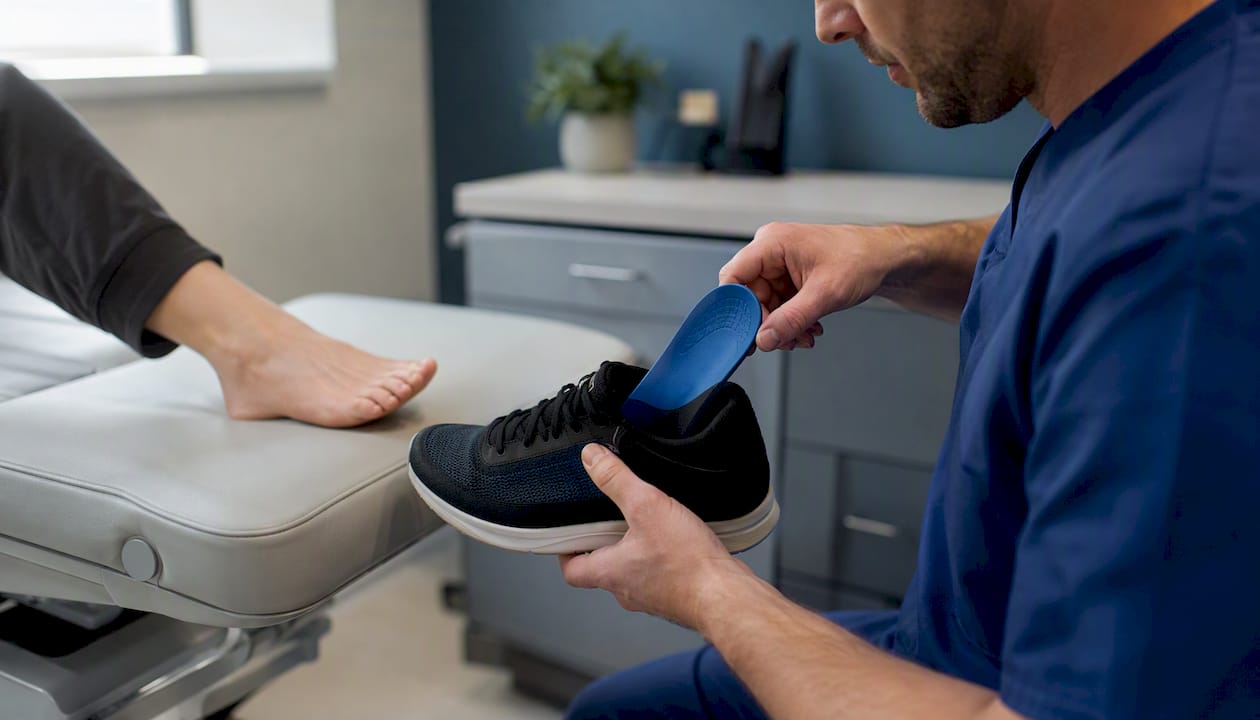
A conservative management plan for a mechanically driven plantar callus typically looks like this: paring for immediate relief, a properly fitted orthotic within two to four weeks, and a follow-up at six to eight weeks to confirm the callus hasn’t rebuilt. Most patients who stick with the orthotic see lasting improvement well beyond that window.
When You Need Expert Care for Corns and Calluses
If a corn or callus keeps coming back, causes real pain, or shows any sign of infection, that’s your cue to book a podiatry visit rather than keep managing it with pads and a pumice stone. At your first visit, expect a straightforward exam of the lesion, a look at your footwear and gait, and a plan that might include in-office paring, orthotics, or footwear changes depending on what’s actually driving it.

If you have diabetes, peripheral arterial disease, or reduced sensation in your feet, don’t wait for pain to guide your decision. Get it checked promptly, since early evaluation is what prevents a simple skin issue from becoming a wound. Stride Foot & Ankle in Las Vegas offers in-person evaluation for corns, calluses, and the biomechanical issues behind them, delivered by a board-certified foot and ankle surgeon who treats the cause, not just the callus in front of him. Browse the practice’s general foot and ankle care services to see the full range of conservative and surgical options, or go straight to scheduling a podiatrist appointment to get a specific date on the calendar.
Sources
- Corns and calluses – Diagnosis and treatment – Mayo Clinic
- Corns and Calluses: Symptoms, Causes & Treatments
- Corns and calluses – MedlinePlus
- Calluses and corns – Merck Manual Professional Edition
- Corns and Calluses – American Podiatric Medical Association (APMA)
- Corns and calluses – Harvard Health
FAQ
What Is the Difference Between a Corn and a Callus?
A corn is small, focal, and often has a dense central core that causes pain when pressed, while a callus is broader, flatter, and usually painless, since the pressure behind it spreads across a wider area.
How Do You Safely Remove a Corn or Callus?
Soften the skin with a warm soak, gently reduce it with a pumice stone, protect it with padding, and fix the footwear or activity causing the pressure; never cut a corn with scissors or a blade at home.
Do Corns and Calluses Go Away on Their Own?
They can shrink once the friction or pressure causing them stops, but most persist or return until the underlying shoe fit, gait issue, or foot deformity is corrected.
Should You Cut a Corn Out Yourself?
No. Cutting a corn at home risks infection and bleeding, and it’s especially dangerous for people with diabetes or poor circulation; a podiatrist can pare it safely in the office instead.
When Should You See a Podiatrist for a Corn or Callus?
See a podiatrist if the lesion is painful, bleeding, changing rapidly, or shows signs of infection, or if you have diabetes or peripheral arterial disease, since Stride Foot & Ankle and similar practices can pare it safely and address the cause behind it.
Recommended
- Corns and Calluses: Causes, Treatment, and Prevention – Stride Foot & Ankle – Dr. Nahad Wassel
- Corn and Callus Removal Steps: A Safe Home Guide – Stride Foot & Ankle – Dr. Nahad Wassel
- What Is an Ingrown Toenail: Causes, Care, and Prevention – Stride Foot & Ankle – Dr. Nahad Wassel
- Why See a Podiatrist? Your Complete Foot Health Guide – Stride Foot & Ankle – Dr. Nahad Wassel
Recent Comments