

Treat a mild ingrown toenail by soaking your foot in warm, soapy water for 10–20 minutes, 2–4 times daily, keeping the area clean and dry between soaks, and wearing shoes with a wide toe box. Continue this routine until the nail grows past the skin fold, which typically takes 2–12 weeks. If pain worsens, pus appears, or you have diabetes, see a podiatrist promptly.
Quick do’s and don’ts:
- Do soak in warm, soapy water or Epsom salt water 2–4 times daily
- Do gently lift the nail edge and place a small piece of cotton or dental floss underneath
- Do wear open-toed or wide-toed shoes during healing
- Do take acetaminophen or ibuprofen for pain relief as needed
- Don’t cut the nail or dig at the edges
- Don’t pick at the surrounding skin
- Don’t ignore spreading redness, fever, or pus — those signs require professional care
What causes ingrown toenails, and how do you recognize them?
An ingrown toenail, clinically called onychocryptosis, occurs when the nail plate grows into the surrounding skin, triggering inflammation and sometimes infection. The big toe is affected most often, though any toe can develop the condition. Clinical staging guides treatment decisions from conservative home care all the way to surgery.
Common causes:
- Cutting nails curved or too short, leaving a sharp edge that pierces the skin
- Tight, narrow, or pointed shoes that compress the toes
- Trauma or repetitive pressure on the toe
- Naturally curved or wide nail plates
- Poor foot hygiene or excessive sweating
Symptoms by stage:
- Stage I (mild): Redness, swelling, and pain along the nail edge; no infection present
- Stage II (moderate): Increased inflammation, possible drainage, early signs of infection
- Stage III (severe): Chronic inflammation, granulation tissue (overgrown skin), significant pain, and often active infection
Infection warning signs to watch for:
- Pus or cloudy discharge from the nail fold
- Spreading redness beyond the immediate toe area
- Skin that feels hot to the touch
- Fever or chills
- Nail discoloration or thickening
Teenagers and young adults are particularly prone to ingrown toenails, though the condition affects all ages. Patients with diabetes, peripheral arterial disease, or a weakened immune system face a higher risk of serious complications and should not attempt extended home treatment on their own.
How to treat an ingrown toenail at home, step by step
For Stage I cases with no signs of infection, conservative home care resolves most ingrown toenails without a clinic visit. The key is consistency and patience.
Step-by-step home treatment:
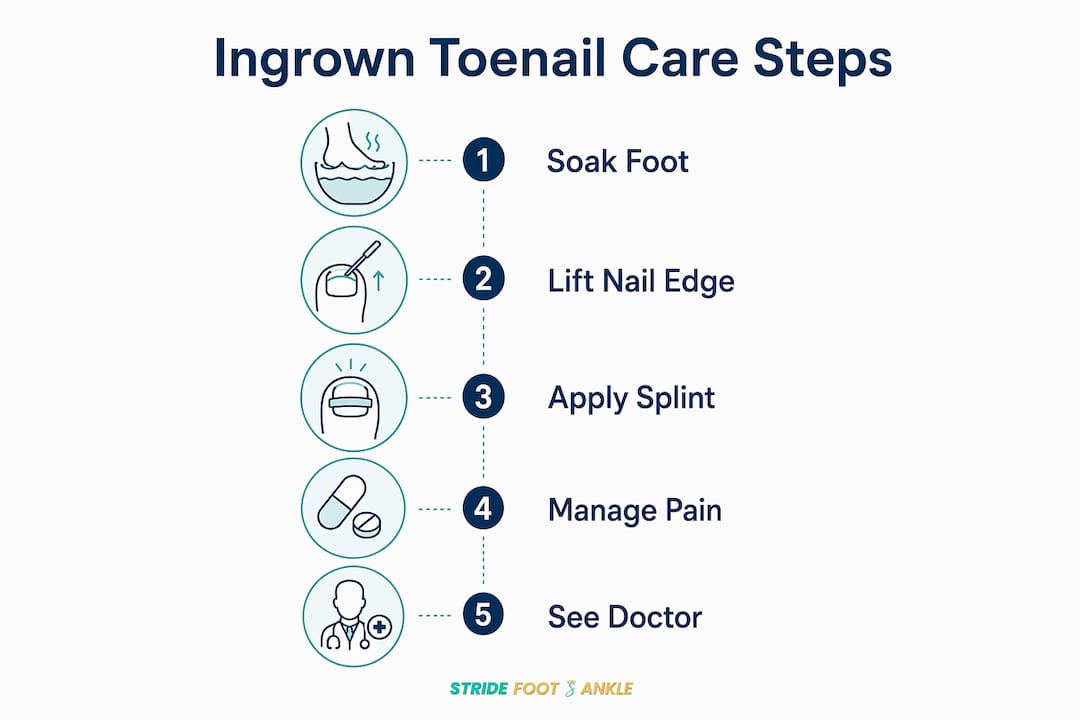
- Soak your foot. Submerge the affected toe in warm, soapy water or a few tablespoons of Epsom salt dissolved in warm water for 10–20 minutes, 2–4 times daily. This softens the skin and reduces inflammation.
- Dry thoroughly. Pat the toe completely dry after each soak. Moisture trapped around the nail fold encourages bacterial growth.
- Lift the nail edge. Using a clean cotton bud, gently push the skin fold away from the nail, starting at the base and working toward the tip.
- Place a small buffer. Tuck a tiny wisp of clean cotton or a strand of dental floss under the nail corner to keep it from pressing back into the skin. Replace this buffer every time you soak.
- Apply antiseptic or antibiotic ointment. A thin layer of over-the-counter antibiotic ointment and a clean bandage helps protect the area between soaks.
- Choose the right footwear. Wear open-toed sandals or shoes with a wide toe box throughout the healing period. Tight shoes undo every other step.
Pro Tip: A gutter splint, made from a small piece of vinyl tubing placed along the nail edge, provides immediate pressure relief and is a step up from cotton alone. Ask your pharmacist about nail splint kits, or ask your podiatrist to apply one at your first visit.
Pain management during home treatment is straightforward. Acetaminophen works well for most patients. Ibuprofen adds mild anti-inflammatory benefit, though it should be avoided immediately after any surgical procedure. Continue the soaking routine until the nail has clearly grown past the lateral skin fold, which can take 2–12 weeks.

What professional treatments are available for ingrown toenails?
When home care fails after about a week, or when the ingrown toenail is already at Stage II or III, a podiatrist or physician can offer targeted interventions. The right choice depends on severity, infection status, and whether the problem keeps coming back.
Nonsurgical physician-applied options:
- Cotton nail cast or gutter splint: A clinician places a protective splint along the nail edge, separating it from the skin fold. Cotton cast application resolves pain in 50% of patients within 24 hours.
- Nail braces and orthonyxial clips: These work similarly to orthodontic appliances, gently redirecting nail growth away from the skin over several weeks.
- Taping: The least invasive option; adhesive tape pulls the skin fold away from the nail edge, reducing pressure without any instruments.
Surgical options (performed under local anesthesia):
- Partial nail avulsion: The podiatrist removes a thin vertical strip of nail from the affected side. This relieves pressure immediately and gives the remaining nail a clean growth path. Partial removal preserves more nail structure than total avulsion and heals faster.
- Phenol chemical matrixectomy: After partial avulsion, phenol is applied to the nail matrix to permanently destroy the cells that produce the problematic nail edge. Phenol matrixectomy shows less than 5% recurrence rates, far lower than simple avulsion alone.
- Electrosurgical and laser matrixectomy: Newer techniques using radiofrequency ablation or carbon dioxide laser to destroy the matrix; outcomes are comparable to phenol with slightly different healing profiles.
A note on antibiotics: oral and topical antibiotics do not improve outcomes for typical ingrown toenail infections because the root problem is mechanical pressure, not bacteria alone. Antibiotics may be prescribed alongside surgery in severe infections, but they are not a standalone fix.
Local anesthesia, typically a digital block, makes all surgical procedures essentially painless during the procedure itself. Healing after partial avulsion with phenol takes roughly 6–8 weeks for most patients.
When should you see a doctor for an ingrown toenail?
Stop home treatment and contact a healthcare provider if any of the following apply. Waiting too long with a worsening ingrown toenail risks ulcers, bone infection (osteomyelitis), or systemic spread.
Seek professional care if you notice:
- Pus or discharge that does not clear within a day or two of soaking
- Redness spreading beyond the immediate toe
- Fever, chills, or feeling generally unwell
- Severe pain that over-the-counter medication cannot manage
- No improvement after 7 days of consistent home care
Seek care immediately if you have:
- Diabetes: Even mild foot problems can escalate to serious complications. Patients with diabetes should see a podiatrist at the first sign of an ingrown toenail, regardless of severity.
- Peripheral arterial disease: Reduced circulation slows healing and raises infection risk dramatically.
- Immunocompromise: Chemotherapy, steroid therapy, or other immune-suppressing conditions make even minor infections dangerous.
Untreated ingrown toenails at Stage III can develop granulation tissue that bleeds easily and creates a chronic wound environment. At that point, surgery is no longer optional; it is the only path to resolution. For patients concerned about preventing foot ulcers, early intervention is always the better choice.
How do you prevent ingrown toenails from coming back?
Prevention is mostly about two habits: trimming nails correctly and wearing shoes that give your toes room to breathe. Both are simple in principle and easy to get wrong in practice.
Nail trimming:
- Cut nails straight across, never curved along the edges
- Keep nails even with the tips of your toes, not shorter
- Use clean, sharp nail clippers; dull clippers tear rather than cut
- If you cannot see or reach your feet comfortably, have a podiatrist trim them
Footwear:
- Choose shoes with a wide, rounded toe box that does not compress the toes
- Avoid pointed or narrow dress shoes for extended daily wear
- Socks should fit without bunching or squeezing the toes
Daily foot care:
- Wash feet with soap and water daily; dry thoroughly, especially between toes
- Check feet regularly, particularly if you have diabetes or reduced sensation
- Let toes air out when possible to reduce moisture buildup
After surgery:
After partial nail avulsion, rest and elevate your foot for the remainder of the day. Light activity can usually resume within a few days as long as your shoes accommodate the dressing. Avoid swimming and strenuous activity until the wound has fully closed. Redress the toe every other day with clean gauze and a brief warm salt water soak. For patients with recurring problems, custom foot orthotics can help redistribute pressure and reduce the mechanical stress that drives recurrence.
Schedule a routine podiatrist visit if ingrown toenails keep returning despite proper trimming and footwear. Chronic recurrence usually signals an underlying nail shape or gait issue that conservative habits alone cannot fix.
Expert perspective from Dr. Nahad Wassel at Stridefootankle
Dr. Nahad Wassel, the lead podiatric surgeon at Stride Foot & Ankle in Las Vegas, approaches ingrown toenail treatment by matching the intervention precisely to the clinical stage. Stage I cases almost always respond to the soaking and cotton-lift routine described above. Stage II cases often benefit from a physician-applied gutter splint or nail brace before considering surgery. Stage III cases, with granulation tissue and chronic infection, need surgical resolution.
The most common mistake patients make is assuming antibiotics will solve the problem. They won’t, because the nail edge is still pressing into the skin. Removing that pressure, whether with a splint or a partial avulsion, is what actually allows the tissue to heal. Antibiotics play a supporting role in severe infections, but they are never the primary fix.
On the surgical side, Dr. Wassel favors phenol chemical matrixectomy for patients who have had two or more recurrences. The procedure permanently narrows the nail plate on the affected side, and recurrence rates below 5% make it the most durable option available. Local anesthesia via a digital block eliminates pain during the procedure, and most patients return to light activity within days.
Pro Tip: If your ingrown toenail has been treated at home for a week with no improvement, or if the skin around the nail feels warm and looks redder than the day before, that is your signal to call a podiatrist. Early intervention at Stage II is far simpler than waiting until Stage III.
For patients in Las Vegas seeking professional ingrown toenail care, Stridefootankle offers both conservative and surgical treatment options tailored to each patient’s stage, health history, and goals. Scheduling an appointment early keeps your options open and your recovery shorter.

Patients ready to stop managing pain on their own can explore comprehensive foot and ankle care at Stridefootankle, where Dr. Wassel’s team provides personalized, evidence-based treatment from the first visit forward.
Key Takeaways
Mild ingrown toenails respond well to consistent home care, but Stage III cases and high-risk patients require prompt professional treatment to avoid serious complications.
| Point | Details |
|---|---|
| Home care works for Stage I | Soak 10–20 minutes, 2–4 times daily; lift the nail edge with cotton or dental floss until the nail clears the skin fold. |
| Phenol matrixectomy prevents recurrence | Surgical phenol treatment shows less than 5% recurrence rates, far better than simple nail avulsion. |
| Antibiotics alone are not enough | Removing mechanical nail pressure is necessary; antibiotics support treatment in severe infections but do not resolve the core problem. |
| High-risk patients need immediate care | Patients with diabetes, peripheral arterial disease, or immunocompromise should see a podiatrist at the first sign of symptoms. |
| Prevention centers on two habits | Trim nails straight across at toe-tip length and wear shoes with a wide toe box to stop recurrence. |
FAQ
How long does it take for an ingrown toenail to heal at home?
With consistent soaking and cotton-lift care, a mild ingrown toenail typically resolves in 2–12 weeks, once the nail grows past the lateral skin fold. Stop home treatment and see a podiatrist if there is no improvement after 7 days.
What does a Stage III ingrown toenail look like?
A Stage III ingrown toenail shows chronic inflammation with visible granulation tissue, which appears as red, raised, moist-looking overgrown skin along the nail edge. It bleeds easily, is often infected, and does not respond to home care.
Can I treat an ingrown toenail myself if it is infected?
Mild redness without pus can still be managed at home with soaking and antiseptic ointment, but active pus, spreading redness, or fever means the infection has progressed beyond self-care. See a podiatrist or physician promptly in those cases.
Does ingrown toenail surgery hurt?
The procedure itself is painless because a local anesthetic digital block numbs the toe completely before any work begins. Some soreness returns as the anesthesia wears off, which acetaminophen typically manages well.
How do I stop ingrown toenails from coming back?
Cut nails straight across at toe-tip length, never curved or too short, and wear shoes with enough room that toes are not compressed. Patients with frequent recurrence may benefit from phenol matrixectomy, which permanently prevents regrowth on the treated nail edge.
Recommended
- Ingrowing Toenails: Causes, Relief, and Treatment – Stride Foot & Ankle – Dr. Nahad Wassel
- Ingrowing Toenails Can Be Treated – Stride Foot & Ankle – Dr. Nahad Wassel
- Can a Nail Salon Fix an Ingrown Toenail? – Stride Foot & Ankle – Dr. Nahad Wassel
- Pediatric Ingrown Toenails: A Parent’s Complete Guide – Stride Foot & Ankle – Dr. Nahad Wassel
Recent Comments