

TL;DR:
- Pediatric ingrown toenails occur when the nail edge grows into the surrounding skin, causing pain and potential infection. Proper nail trimming, footwear fitting, and early recognition help prevent complications and recurrence. Seek professional care if signs of infection appear or if home treatments do not improve symptoms within two weeks.
Pediatric ingrown toenails are defined as a condition where the edge of a child’s toenail grows into the surrounding skin, causing pain, redness, swelling, and sometimes infection. This is one of the most common child toenail issues seen in podiatric practice, and it affects children of all ages. Recognizing the symptoms early and knowing the right steps to take at home can prevent a minor irritation from becoming a serious problem. This guide explains pediatric ingrown toenails clearly, covering causes, symptoms, safe home care, and when to call a professional.
What causes pediatric ingrown toenails and who is most at risk?
Pediatric ingrown toenails develop when the nail plate curves downward and presses into the soft skin at the nail’s edge. The most common trigger is improper nail trimming. Cutting nails too short or rounding the corners encourages the nail to grow into the skin rather than straight out. This single grooming mistake is the leading cause of the condition in children.
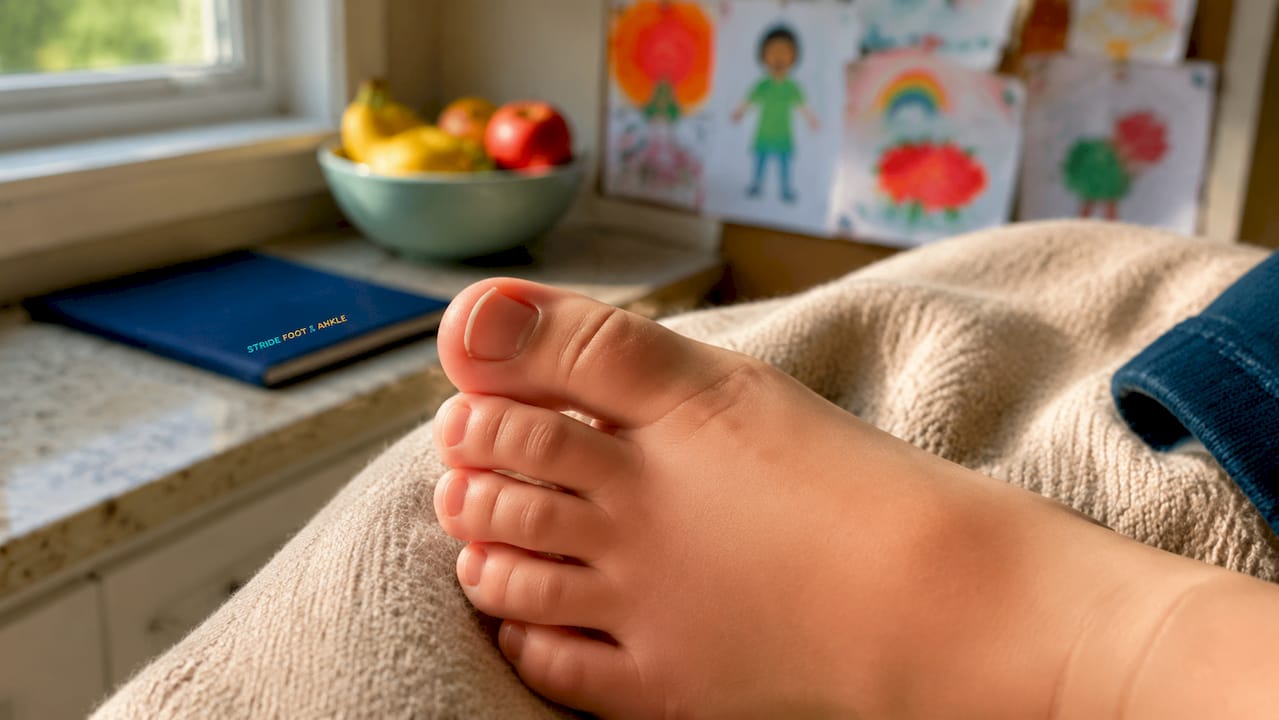
Tight shoes and socks also play a role. When footwear compresses the toes, it pushes the skin against the nail edge, creating constant pressure. Children going through rapid growth phases are especially vulnerable because their feet change size quickly, and parents often do not realize shoes have become too snug.
Some children are simply born with naturally curved or wide nails. This nail shape makes ingrown toenails more likely regardless of how carefully parents trim them. Trauma to the toe, such as stubbing it or dropping something on it, can also cause the nail to grow abnormally.
Improper grooming is actually more critical than footwear choices when it comes to causing this condition. That insight surprises many parents who focus only on buying the right shoes.
Children most at risk include:
- Toddlers and school-age children during rapid foot growth phases
- Children with naturally curved or fan-shaped nails
- Kids who participate in sports that put repeated pressure on the toes
- Children whose nails are trimmed by rounding the corners rather than cutting straight across
- Kids wearing hand-me-down shoes that do not fit properly
Pro Tip: Trim your child’s toenails straight across using blunt-tipped nail scissors. Leave a small white edge visible rather than cutting flush with the skin. This single habit prevents the majority of ingrown toenail cases.
How can parents recognize the signs and symptoms of ingrown toenails in children?
The earliest sign of an ingrown toenail is tenderness along one side of the nail, usually on the big toe. The skin next to the nail looks slightly red and feels sore when touched. At this stage, the condition is minor and often responds well to home care.
As the nail continues to press deeper into the skin, symptoms become more noticeable. The area swells, the redness spreads, and your child may start limping or refusing to wear shoes. Pain during normal walking is a reliable signal that the nail has progressed beyond mild irritation.
Infection is the most serious complication. The following signs indicate that an infection has developed and that professional evaluation is needed promptly:
- Pus or drainage from the skin next to the nail
- Spreading redness that moves beyond the immediate nail area
- Increased warmth around the toe, even when not being touched
- Fever in combination with any of the above nail symptoms
- Skin overgrowth where the tissue begins to fold over the nail edge
Signs of active infection including pus, spreading redness, fever, and warmth require professional medical attention. Waiting even a few days once infection sets in increases the risk of the problem spreading beyond the toe.
The difference between minor irritation and early infection is important. Minor irritation shows only localized redness and mild tenderness with no discharge. Infection produces visible pus, warmth, and worsening pain that does not improve with soaking. When in doubt, err on the side of calling your child’s doctor or a podiatrist.
What are safe home care treatments for minor pediatric ingrown toenails?
Safe home care for a minor ingrown toenail focuses on softening the tissue, reducing inflammation, and keeping the area clean. These steps work well when there is no sign of infection. If infection is present, skip home care and go straight to a healthcare provider.
The core home treatment protocol is straightforward:
- Soak the foot in warm, soapy water for 20 minutes, twice daily. Warm water soaks soften both the nail and the surrounding skin, which reduces pressure and helps the nail grow outward naturally.
- Dry the foot thoroughly after each soak. Moisture left between the toes creates conditions for bacterial growth.
- Apply an over-the-counter antibiotic cream such as Neosporin to the affected area after drying. This reduces the risk of infection while the nail heals.
- Cover loosely with a bandage to protect the area from friction inside shoes.
- Switch to open-toed shoes or sandals whenever possible during the healing period to reduce pressure on the nail.
- Monitor daily for any signs of worsening redness, swelling, or discharge.
Consistent twice-daily management is the key to success with home care. Skipping soaks or stopping treatment too early allows the nail to press back into the skin before it has fully grown clear.
Pro Tip: Add a small amount of Epsom salt to the warm soak water. It draws out minor inflammation and makes the soaking process more comfortable for children who are sensitive about having their feet touched.
One thing parents must never do is attempt to cut the nail edge out themselves. Home surgery on ingrown nails significantly increases the risk of serious infection, especially in young children whose immune responses are still developing. Digging into the skin or cutting a “V” notch in the nail are both ineffective and dangerous.
| Home Care Step | Frequency | Purpose |
|---|---|---|
| Warm soapy water soak | Twice daily, 20 minutes | Softens nail and skin, reduces pressure |
| Antibiotic cream application | After each soak | Prevents bacterial infection |
| Loose bandage | After each soak | Protects area from shoe friction |
| Open-toed footwear | During healing period | Reduces pressure on the nail |
| Daily monitoring | Once daily | Catches worsening signs early |
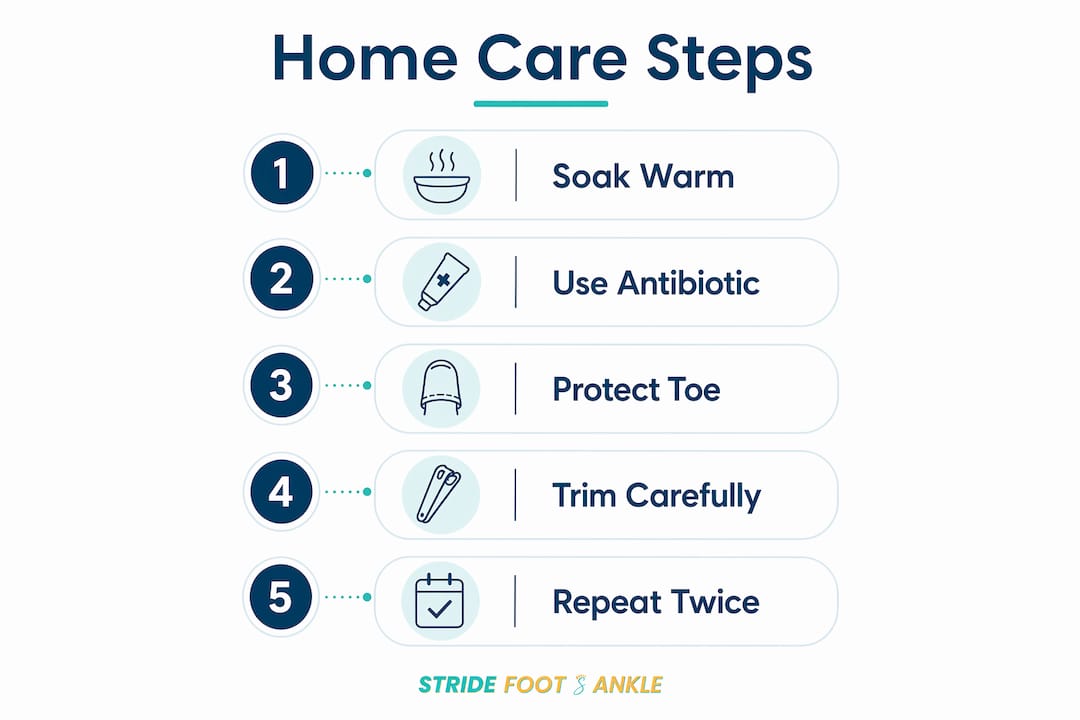
Most minor cases improve within one to two weeks of consistent home care. If symptoms have not improved after two weeks, or if they worsen at any point, professional evaluation is the right next step.
When should parents seek professional care for a child’s ingrown toenail?
Professional care is necessary when home treatment fails or when infection is already present. Untreated ingrown toenails can lead to serious infections that spread beyond the toe, particularly in children with weaker immune systems. Acting quickly protects your child from a much longer and more difficult recovery.
Seek professional care immediately if your child shows any of these signs:
- Pus or fluid draining from the nail area
- Redness spreading up the toe or onto the foot
- Fever alongside any nail symptoms
- Pain severe enough to prevent normal walking
- Skin growing over the nail edge (called hypergranulation tissue)
- No improvement after two weeks of consistent home care
- A child with diabetes or a compromised immune system, where any nail infection carries higher risk
A podiatrist or physician can remove the offending nail edge under local anesthesia in a brief office procedure. This is far less intimidating than it sounds. The toe is numbed, a small portion of the nail border is removed, and the child can typically return to normal activities within a day or two.
A newer noninvasive option called orthonyxia uses a small brace to gradually correct the nail’s curve without surgery. Research shows orthonyxia achieves 64.5% remission within 3 months and allows children to return to daily activities immediately after treatment. This approach is particularly well-suited for children who are anxious about procedures.
Healthcare providers consistently warn against what they call “bathroom surgery.” Attempting to cut into the skin at home to remove the nail edge is one of the most common ways parents accidentally worsen the condition. A professional procedure done under sterile conditions takes minutes and eliminates that risk entirely.
After a professional nail procedure, most children heal within one to two weeks. The provider will give specific aftercare instructions, which typically include daily soaks, antibiotic ointment, and bandage changes. Following those instructions closely prevents recurrence and speeds healing.
How can parents prevent ingrown toenails through proper nail care and footwear?
Prevention is the most effective long-term strategy for managing ingrown toenails in kids. Most cases are entirely avoidable with consistent nail care habits and the right footwear choices. The causes of ingrown toenails in children almost always trace back to correctable behaviors.
Core prevention habits every parent should follow:
- Trim nails straight across. Never round the corners. Leave a thin white edge visible at the tip of the nail.
- Trim after baths. Nails are softer after soaking, which makes clean cuts easier and reduces the chance of jagged edges.
- Check nail length weekly. Children’s nails grow faster than adults’ nails. A nail that was the right length last week can be too long this week.
- Buy shoes with adequate toe room. There should be about a thumb’s width of space between the longest toe and the end of the shoe.
- Avoid overly tight socks. Compression socks or socks that bunch at the toe create the same pressure as tight shoes.
- Teach older children proper nail care. As children reach school age, they can learn to trim their own nails correctly. Supervision until the habit is established prevents mistakes.
Pro Tip: When buying shoes for growing children, have their feet measured every two to three months. Children often cannot tell you their shoes are too tight because the discomfort develops gradually. A proper fit check removes the guesswork.
Pediatric foot health extends beyond the toenails. Teaching children to dry between their toes after bathing, wear moisture-wicking socks, and report foot pain early builds habits that protect their feet for life. Parents who treat nail care as a routine part of hygiene, rather than a task done only when problems arise, see far fewer repeat ingrown toenail episodes. For a broader view of common pediatric foot problems, understanding how ingrown nails fit into the larger picture of foot health helps parents stay ahead of issues before they become painful.
Key Takeaways
Early recognition and consistent home care resolve most pediatric ingrown toenails, but signs of infection require prompt professional evaluation to prevent serious complications.
| Point | Details |
|---|---|
| Definition and cause | Ingrown toenails occur when the nail edge grows into the skin, most often due to improper trimming. |
| Home care protocol | Soak twice daily for 20 minutes, apply antibiotic cream, and monitor for worsening signs. |
| Infection red flags | Pus, spreading redness, fever, or warmth require professional care, not continued home treatment. |
| Professional options | Podiatrists can remove the nail edge in-office; orthonyxia offers a noninvasive brace alternative. |
| Prevention | Trim nails straight across, choose properly fitted shoes, and check nail length weekly. |
What I’ve learned from watching parents manage this condition
Parents consistently underestimate how much nail trimming technique matters. I have seen children come in with recurring ingrown toenails whose parents had already bought new shoes, switched to wider socks, and tried every home remedy available. The problem kept coming back because no one had corrected the way the nails were being cut. Grooming technique is the single most controllable factor, and it gets overlooked almost every time.
The other pattern I see regularly is parents waiting too long to seek care once infection has set in. The concern is understandable. No parent wants to bring their child in for a procedure if home care might still work. But delays in professional evaluation increase the risk of worsening infection and extend the overall healing time significantly. A two-day wait when pus is already present can turn a five-minute office procedure into a more involved treatment course.
The good news is that most children do extremely well once they receive the right care. The orthonyxia brace option has been a genuine shift in how we approach this condition in younger patients. Many children who would previously have needed a nail procedure are now candidates for a noninvasive correction. That matters a lot when you are dealing with an anxious eight-year-old.
My honest advice to parents: learn the straight-across trimming technique, check your child’s shoes for fit every few months, and do not hesitate to call a podiatrist if home care is not working within two weeks. This condition is very treatable. The outcomes are excellent when parents act early and with the right information.
— Ramil
Stridefootankle’s approach to pediatric foot care
Children’s feet deserve the same level of expert attention as adult feet. At Stridefootankle, Dr. Nahad Wassel provides pediatric foot and ankle care that covers everything from ingrown toenail treatment to broader structural concerns. The practice emphasizes conservative treatment first, using procedures only when home care and noninvasive options have been exhausted.
Parents in Las Vegas can schedule an evaluation for their child’s ingrown toenail or any other foot concern directly through Stridefootankle. Dr. Wassel’s approach combines clinical precision with clear communication, so you leave every appointment knowing exactly what is happening and what to do next. Whether your child needs a simple nail procedure or ongoing pediatric nail care guidance, the practice is equipped to help your child get back on their feet comfortably.
FAQ
What exactly is a pediatric ingrown toenail?
A pediatric ingrown toenail is a condition where the edge of a child’s toenail grows into the surrounding skin, causing pain, redness, and swelling. The big toe is the most commonly affected digit.
How do I know if my child’s ingrown toenail is infected?
Infection signs include pus or drainage, spreading redness, warmth around the toe, and fever. Any of these symptoms require professional medical evaluation rather than continued home treatment.
Can I treat my child’s ingrown toenail at home?
Minor cases without infection respond well to twice-daily 20-minute warm soapy water soaks followed by antibiotic cream. Never attempt to cut into the skin or dig out the nail edge at home, as this increases infection risk significantly.
What does a podiatrist do for an ingrown toenail in a child?
A podiatrist numbs the toe and removes the offending nail edge in a brief office procedure. A noninvasive option called orthonyxia uses a small brace to gradually correct the nail’s curve, with research showing 64.5% remission within three months.
How can I prevent ingrown toenails from coming back?
Trim nails straight across leaving a thin white edge, check shoe fit every two to three months, and avoid tight socks. Consistent nail care habits eliminate the majority of recurrent ingrown toenail cases in children.
Recommended
- Ingrowing Toenails: Causes, Relief, and Treatment – Stride Foot & Ankle – Dr. Nahad Wassel
- Pediatric Concerns: Top 10 Foot Issues Parents Should Know – Stride Foot & Ankle – Dr. Nahad Wassel
- Treating Pediatric Heel Pain: A Parent’s Action Guide – Stride Foot & Ankle – Dr. Nahad Wassel
- Ingrowing Toenails Can Be Treated – Stride Foot & Ankle – Dr. Nahad Wassel
Recent Comments